English
 Español
 Français
 Deutsch
 Italiano
 Português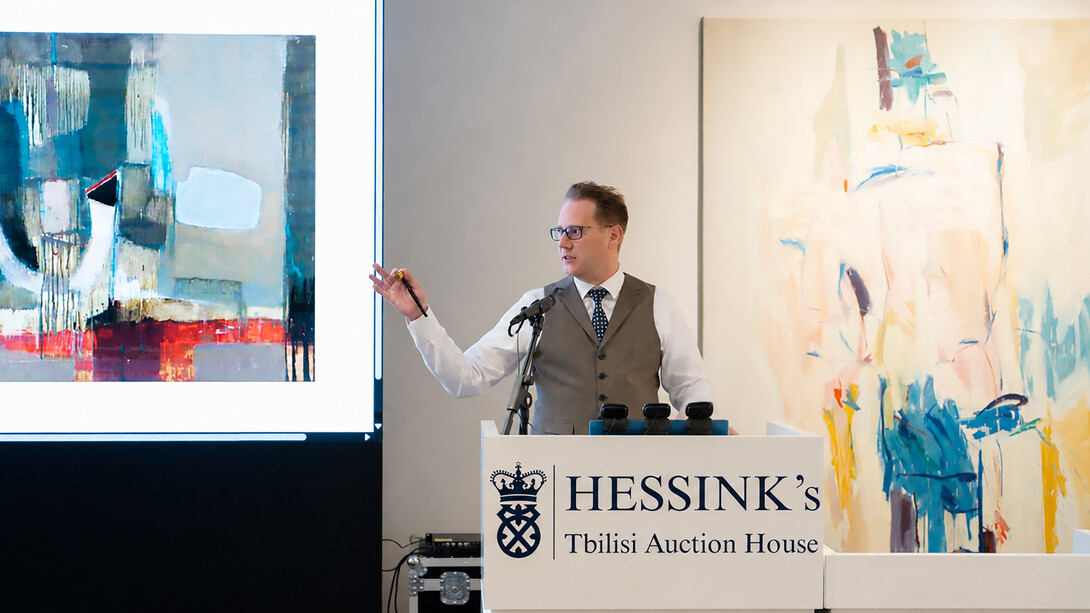
Some shifts do not arrive loudly. They do not announce themselves as historic in the moment. Instead, they unfold quietly, almost gently, until suddenly it becomes clear that something has changed.
This April in Tbilisi was one of those moments.
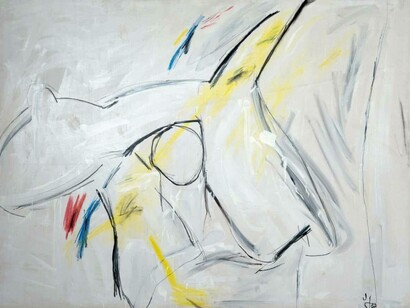
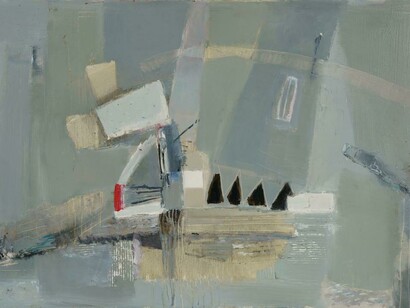
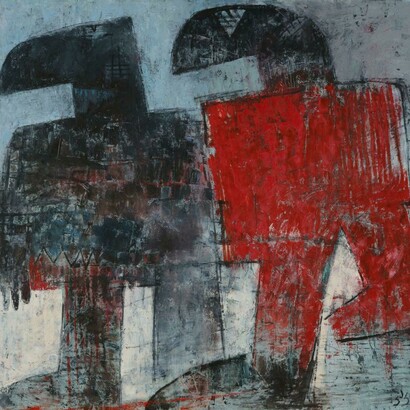
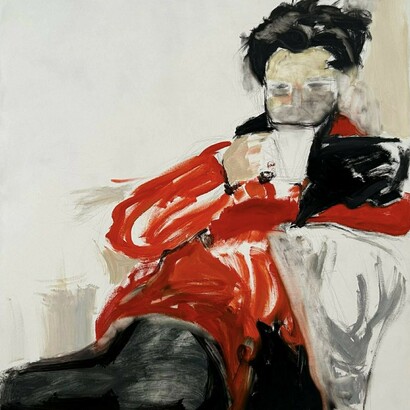
On April 27, the city hosted its first-ever international auction dedicated entirely to Georgian modern and contemporary art. Organised by Hessink’s Fine Art Auctioneers, the sale took place at the Museum of Modern Art and brought together 90 works spanning the twentieth century to today. What might have sounded, at first, like a single cultural event turned into something far more significant.
By the end of the evening, every single lot had been sold.
In the language of the art world, this is known as a “white glove” sale, a rare and highly respected result that signals not only strong demand but also precise curation and confidence in the market. The total hammer price reached €1,019,070, exceeding €1.3 million with premiums and taxes.
For a country that, until recently, did not exist as a standalone category in international auctions, this was not just a successful evening. It was a statement.
Georgian art has never lacked talent, depth, or history. What it has lacked, for years, is structure.
Traditionally, artworks circulated through galleries, private collectors, and personal networks. These systems worked, but they remained largely invisible to the outside world. Prices were often negotiated privately, and value was not always clearly defined in a public, measurable way.
An auction changes that entirely.
It creates a moment where value is established openly, in real time, through competition. It produces records, benchmarks, and a traceable history. It allows a painting in Tbilisi to be seen, evaluated, and acquired by collectors from across the world at the same time.
And that is exactly what happened.
The April sale attracted more than 300 guests in the room, while thousands joined online through platforms such as Drouot and Invaluable. Bidders came from across the globe, including the United States, the Netherlands, Belgium, Australia, Spain, and Switzerland.
For the first time, Georgian art was not only being appreciated. It was being actively positioned within a global system.
Those who attended the auction felt immediately that it was more than a transaction.
There was a rhythm to it. A tension that built with each bid. The subtle shifts in the room, the pauses, the sudden bursts of competition. It felt closer to a live performance than a formal sale.
The auctioneer guided the pace, but the energy came from the participants. Every bid carried intention. Every decision mattered.
Because in a market that is still forming, each purchase does more than secure a work. It helps define the future of that artist’s value.
This is what makes auctions powerful, especially in emerging markets. One sale can influence an entire body of work. A single result can become a reference point for collectors, galleries, and institutions.
And in this case, several results stood out immediately.
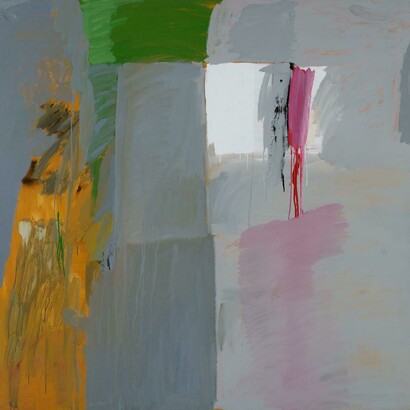
The highest price of the evening was achieved by Alexander (Shura) Bandzeladze’s monumental painting Dream of Noah (1989), which sold for €250,000, significantly above its estimate of €160,000 to €200,000.
Another work by Bandzeladze reached €150,000, confirming strong demand for his work and reinforcing his position as one of the key figures in Georgian abstraction.
Mamuka Tsetskhladze’s The Tiger sold for €130,000, exceeding expectations, while Iliko Zautashvili and Vera Pagava also performed solidly within their estimate ranges.
Beyond paintings, the sale demonstrated interest across different mediums. Lia Bagrationi’s installation 13 Aquarium and a Fish achieved €30,000, while a design piece by Guela Tsouladze sparked competitive bidding and ultimately sold for more than four times its starting price.
These results were not isolated. They collectively formed a new pricing landscape.
For the first time, Georgian artworks were being assigned clear, public values that will now be recorded, referenced, and used in future sales.
This moment did not happen overnight.
Until recently, Georgian artists were often grouped under broader categories such as Russian art, Eastern European art, or post-Soviet art. Their identity as a distinct market remained undefined.
The shift began gradually.
In 2023, Bonhams in London held a sale featuring Georgian and Armenian artists. In 2025, another auction titled 'Georgian Art Now' further explored the category, though with more modest results and a 64 per cent sell-through rate.
These early steps were important. They tested the waters and revealed both interest and limitations.
What happened in Tbilisi this April was different.
It was not an experiment. It was a fully realised event, executed with confidence, international reach, and a carefully curated selection of works.
And the result spoke clearly.
One of the most interesting aspects of the auction was the diversity of its participants.
While many high-value works were acquired by international collectors, there was also a visible presence of local buyers, including a younger generation.
Millennial and Gen Z collectors showed active interest, particularly in emerging artists and mid-range works. This signals an important cultural shift.
Art collecting in Georgia is no longer limited to a small, established circle. It is expanding, becoming more dynamic, and increasingly connected to global trends.
This matters for the long-term sustainability of the market.
Because a strong art market is not built only on record prices. It depends on consistent engagement across different levels, from emerging artists to established names, from first-time buyers to experienced collectors.
The significance of this event extends far beyond one evening.
Auction results are not temporary. They become part of a permanent record. They are used by galleries, museums, insurers, and collectors to evaluate artworks and build future strategies.
In that sense, April 27 created more than excitement. It created data.
And data builds markets.
Hessink’s have already announced future auctions, including another sale planned for the autumn. Meanwhile, events like the Tbilisi Art Fair continue to attract international attention and strengthen the ecosystem.
This continuity is essential.
Because one successful auction is a moment. Repeated success becomes a system.
Tbilisi has always been a city of layers. Its culture reflects a unique mix of influences, histories, and identities.
Its art scene has long mirrored that complexity.
What changed this April is not the art itself, but the way it is seen.
For the first time, Georgian artists were presented within a global framework that allows their work to be measured, compared, and valued alongside others internationally.
This does not diminish their uniqueness. It amplifies it.
Because visibility is not just about being seen. It is about being understood.
The auction did not answer every question about the future of the Georgian art market.
But it did something equally important.
It proved that the market is ready to exist.
It showed that there is demand, both locally and internationally. That collectors are willing to engage. That artists can achieve strong, competitive results.
And perhaps most importantly, it demonstrated that Georgian art can stand confidently on its own.
Not as part of another category.
Not as a footnote.
But as a market in its own right.
What happened in Tbilisi this April will not remain just a memory.
It will remain as a reference point.
A beginning.
And a moment when a city started to value its art not quietly, but out loud.