English
 Español
 Français
 Deutsch
 Italiano
 Português
Brother Vương was married to one of my cousins, the only daughter of my uncle Four in Tân Thành village. I never knew his exact age, but he seemed a few years older than I. She, my cousin, was slightly younger. When I was a boy, I visited her parents’ house when my parents returned to Tân Thành for their yearly pilgrimage to my mother’s origins. During the Lunar New Year, when the shop closed for a week, my mother always gathered us for that journey back to the village where she had been born, grown up, and first met my father.
Among the many children running about, all relatives, all noisy and sun-darkened, she stood out. Even as a child, without understanding beauty, I sensed she possessed it.
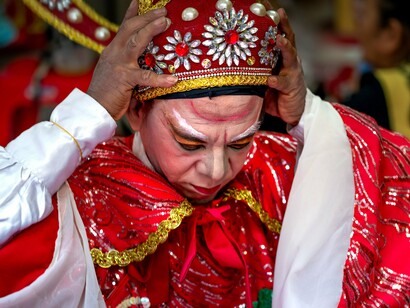
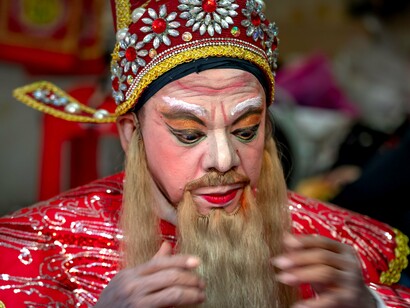
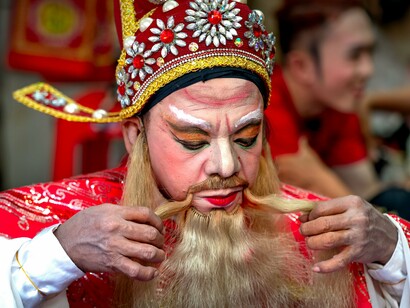
When she was fifteen or sixteen, I heard whispers that she had fallen for Brother Vương. He was a gifted Vọng Cổ singer, with a sweet, almost feminine voice, and she adored Cải Lương. Vọng Cổ (Nostalgia for the past) is a style of singing accompanied by a modified guitar; Cải Lương (Reformed Opera) is its theatrical home.
In the countryside, Cải Lương was not merely entertainment; it was a way of feeling, a way of remembering. Its melodies carried the emotional weight of a people who had endured too much history. Its lyrics were simple, but they spoke to the heart’s deepest longings. People quoted lines from the plays in daily life. To call someone “cải lương” was to say they were sentimental, indecisive, and prone to tears like the tragic heroes on stage.
Their love story began when a Cải Lương troupe came to Tân Thành. One of its actors fell ill, and the troupe needed a replacement. They recruited among the local youth. By chance or perhaps by the quiet logic of fate, someone introduced Vương to the troupe master. He tested his voice and was chosen to perform for a few nights. He adopted the stage name “Quốc Vương,” meaning “a king.” It was a reminder that sometimes destiny opens a door not through triumph, but through someone else’s misfortune.
He invited his close friends to watch the nightly performances. My cousin was among them. She was captivated not only by his voice but also by the glow of his brief fame. After that, whenever another troupe visited, he offered his services. They always welcomed him, giving him supporting roles. My sister-in-law once told me he had even been offered a permanent position with a touring troupe. But he declined. The rumour was that he chose to stay to care for his ageing parents. “He is truly a filial son,” she said, as an exclamation mark at the end of a sentence.
Later, he formed a small local group of young men and women who gathered at the market each night to practise singing and acting. He became their leader, choosing songs, assigning roles, and shaping their small artistic world. Naturally, my cousin became one of his most devoted admirers. I do not know what she dreamed of becoming, but I have no doubt that standing beside him on stage as a Cải Lương actress must have been high in her imagination.
The story unfolded as stories often do in the countryside: simply, inevitably. She married him when she had just turned sixteen or at most seventeen. In rural Vietnam, marriage was not governed by law but by circumstance. For centuries, children had been married off before they were ten. That custom has faded, but early marriage remains common. Life in the countryside does not wait for adulthood; it demands it.
After the wedding, she moved into his family home, a modest house built right on the beach of a fishing hamlet, just four kilometres from her parents’ house. It was small, yet crowded: his parents, two younger brothers, and one sister. His father owned a tiny fishing boat, only strong enough for the bay. Then his parents became seriously ill and needed constant care. His siblings were too young to help. Vương became the breadwinner. Each day he fished along the shore, competing with hundreds of others for food. His wife worked odd jobs in the rice fields, earning just enough rice to feed the family of seven.
Hardship has a way of eroding even the gentlest hearts. The couple who once sang together now argued over trivialities. The performance group dissolved. His dream of becoming a Cải Lương actor faded like a lantern in the wind.
In time, his face took on a permanent sadness, a sorrow that seemed to settle into his bones. He reminded me of the character in Nguyễn Công Hoan’s Kép Tư Bền, the actor who smiled on stage while his father lay dying. A man laughing outwardly, crying inwardly. Vương, who once played heroes and royals under the stage name “Quốc Vương,” now lived the harshest role of all: survival.
I still remember my last visit to his house. I arrived just after noon, drenched in sweat from riding under the scorching sun. His wife greeted me, and we stepped inside. His parents sat on a wooden divan. Vương was eating lunch at the table. He invited me to join him. The meal was simple: a few small fried fish and steamed vegetables.
After the meal, warmed by our conversation, he took out a guitar and dusted it off. He and his wife sang a Vọng Cổ duet, “Tình Anh Lính Chiến (Love From a Soldier)”. Their voices were slightly out of practise but still sweet. The song, with its tale of love and separation in wartime, struck a deep chord in me. It was as if they were singing their own lives: love interrupted, dreams deferred, fate unkind.
When I left, a heavy sadness followed me out the door. If I had a magic wand, I would have turned him into the actor he once dreamed of becoming. But life does not bend to our wishes. His face, worn, gentle, and full of unspoken sorrow, reminded me that the world is often harshest to those who dare to dream.
Some lives do not end in tragedy, yet they carry the quiet ache of unrealised possibility. And sometimes, that ache is the most human thing of all.