English
 Español
 Français
 Deutsch
 Italiano
 Português
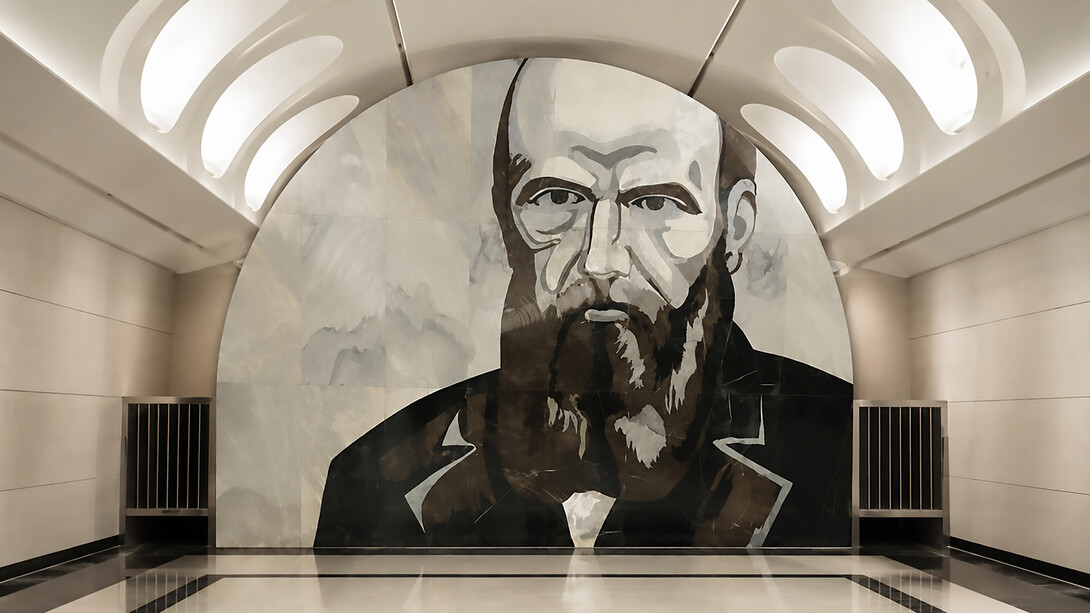
One of the questions asked by this book is, 'What is a crime?' It is an act which breaks the law and is punishable by imprisonment. The protagonist, Razkolnikov, argues that by the strict letter of the law, murder is a crime, but could there be a different interpretation? He spends the whole of the book trying to justify and exempt himself from what he has done.
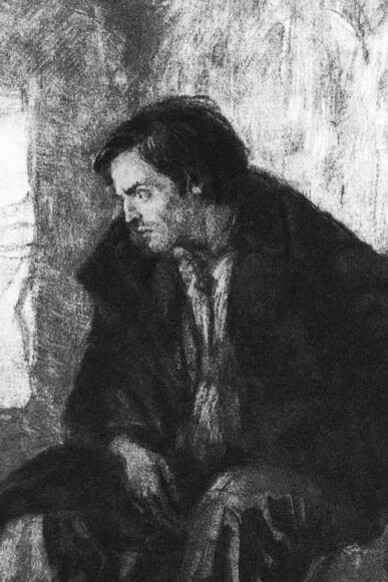
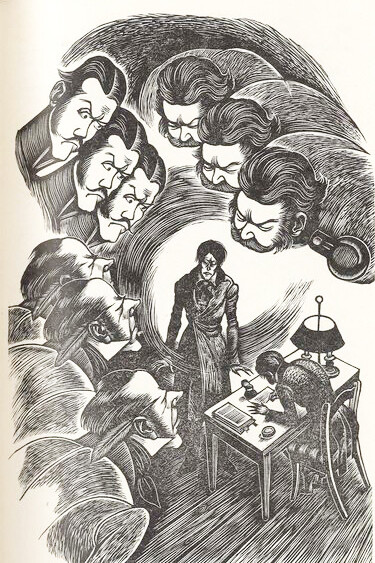
Razkolnikov had written an article published in a magazine which stated the perpetration of a crime will be followed by illness. After murdering the pawnbroker, he is consumed by fever, lethargy and inaction, which would support that assertion. Dostoevsky does a wonderful job of showing the reader how he becomes disconnected from reality. He is vacant and paranoid, even aggressive in his own defence and his attitude to other people. At the end of the article, there is a suggestion that certain people have a right to commit breaches of morality and criminal behaviour, and the law does not apply to them.
He refers to these people as extraordinary and those who live in submission and obey the law as ordinary. To him, all great men are criminals, or they cannot escape the common rut. Those men who are conservative in temperament are law-abiding and love to be controlled, compared to those who transgress the law, who are destroyers and disposed to destruction. They seek the destruction of the present for the benefit of the future. However, the masses would not condone their right and would punish them because of their conservative ideals. If the criminal has a conscience, he will suffer due to his mistake, and this will be his punishment along with prison.
When Razkolnikov speaks to Sonja, he tries to justify what he has done. He states that his mother has hardly anything, and his sister has a good education but has to work as a governess. Therefore, he sees all their hopes centred on him, but as a student he could not keep himself at university. Even if he had stayed for 10-12 years and obtained a teaching or clerical position, he argued that by this time his mother would have been worn out through grief and anxiety. By taking the old woman’s money, he could use it for the first year and maybe a little time after; this is his justification. He reflects that he could have stayed at university, but he didn’t; he became sulky and did not go out for days and did not work, eat or do anything. This is his reality. In contrast, according to his theory, those who are daring will be in the right, and this made him want to be daring. He wanted to find out if he was an ordinary man like everyone else or whether he could overcome barriers. Sonja states he did not have the right to take life, and Razkolnikov agrees that the devil has shown him he is an ordinary man. Again, there feels like the shifting of blame for his own actions.
When his mother sees the article in the magazine, she says he will soon be one of the leading men in Russian thought, and critics had claimed he was mad. The label of madness is based on his withdrawn and erratic behaviour; no one is aware he has committed murder. When he speaks to his sister, he admits that he thought about drowning, but he did not want to be afraid of the disgrace. It was pride that stopped him. Instead, he wanted to do good deeds to make up for this one piece of stupidity. By viewing his actions as stupidity, he also feels further away than ever from seeing his actions as a crime. Looking at the general population, he views everyone as a scoundrel and a criminal at heart. Yet if he were not publicly condemned for his actions, the general population would be wild with righteous indignation.
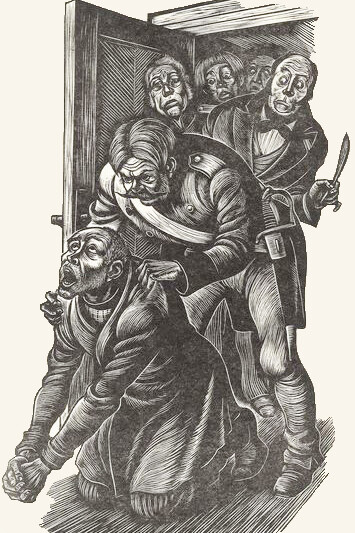
Raskolnikov is sent to prison in Siberia as a second-class convict. At the trial, lawyers discussed why he did not acknowledge the money in the purse, and they came to the conclusion that he had not looked. The crime must therefore be due to a temporary derangement, homicidal mania without the desire for gain. When asked about his motive, he answered it was his miserable position, his poverty and helplessness, his desire to provide for his first steps in life and the 3,000 roubles he expected to find. It is a testament to the imbalance of his mind that he did not take the money, which was the reason for the murder.
When Razkolnikov meets Sonja, he is ashamed, not because of his appearance, his shaved head and fetters, but because of his wounded pride, which made him ill. He judged himself severely but could find no fault in his past, only a blunder which could have happened to anyone. Again, there is no acceptance of personal responsibility. He had come to grief through a decree of blind fate, and now he must submit to what he sees as the idiocy of the sentence. Mere existence had never been enough for him; he wanted more. Due to the strength of his desires, he had thought himself a man to whom more was permissible. Those benefactors of mankind who had snatched power for themselves instead of inheriting it ought to have been punished, but they succeeded and were deemed right; as he didn’t succeed, he had no right to take that step. At the end of his sentence, he did not know that his new life would cost great striving and suffering.
Dostoevsky appears to suggest no one is above the law, despite the injustices wrought on the general population by poverty. In fact, those who suffer most, like Sonja, forced into prostitution, and Katerina Ivanovna, who is ill with TB, are financially compensated with gifts to secure their future from those who had previously exploited others.