English
 Español
 Français
 Deutsch
 Italiano
 Português
When fear displaces reason, the result is often irrational hatred and division.
(Al Gore, 2012)
Nothing on this earth exists in isolation. Everything is connected to everything. Apartheid is no different. It was not a system that was merely shaped and formed in the isolation of South Africa. Rather, as was hinted at in the previous article, it was a smooth and polished thought gradually defined by the rivers of time and the flow and movement of people and ideas from all over the world.
It is impossible to state definitively, “x point in time is the start of Apartheid.”
The traditional narrative places the starting point with the arrival of the Dutch in the Cape and their interaction with the indigenous Khoisan population as laying the foundation and drawing the blueprint for the system of segregation that would follow in the 20th century. While this is partly true, this only tells part of the story of apartheid. In this article, it will be argued that apartheid was a localized example of global ideas, swirling around and taking on various forms throughout the world in different contexts.
A brief history of South Africa: a long line in the sand
History goes back a long time in South Africa, and there is a reason why it is often referred to as one of the cradles of mankind. Sadly, much of the gloriously rich and deep tapestry of South African history has been associated with the dark stain of apartheid. However, it should go without saying that the history of this remarkable country runs much deeper than the evils of apartheid.
First of all, South Africa and the region's history need to be looked at without the lens of the externally enforced political borders we see today. Geography was the line drawer before man was. And the people that inhabited this region the longest, the Khoisan (an amalgamation of the Khoi pastoralists and the San hunter-gatherers), have been tied to this region for well over 100,000 years. Of course, the human story begins in this region, but for the purpose of the article, let us focus on the more recent history of the region.
Approximately 6000 years ago, starting in Central Africa, the Bantu began migrating southward through the continent. Bantu itself means “the people,” and as an ethnic group, it can be difficult to narrow down a definition of who exactly the Bantu were. It would take more than this very superficial article to explore sufficiently. This is one of the key aspects of defining African history: Africa is not Europe, and how people found solutions to life on the African continent is not the same as how people found solutions to life on the European continent.
History can only tell the story with evidence found through archaeology. And archaeology can only find the evidence if it is being looked for. Finally, only the evidence that survives the ages can be used to provide definitive proof of anything. Sadly, as a consequence of colonization, no European nation wanted to find evidence of civilization. Or culture. The opposite was true. There was more motivation to destroy, remove, erase, or use aliens and lost cultures from other regions to explain any evidence of civilization and culture, thereby justifying and supporting the colonial system and the bringing of culture to the uncultured and barbaric Africa.
The Bantu reached South Africa just under 2000 years ago. This is important because part of the mythology of the Afrikaner nationalists who designed apartheid justified their dominance of the land by claiming it was empty land and they reached the territories at a similar time to the Bantu. From the evidence available, this is not true. With the arrival of the Bantu came new ethnicities to the region, new identities, new creation myths, and new methods of survival in the harsh southern African region. The Bantu and the Khoisan interacted in a variety of ways, ranging from raiding to trading. The interaction went so far as to even influence language, as the Xhosa, for example, took on the click language of the Khoisan, something that is not evident in Bantu speakers found further north of the region. As with all interactions, it is always multidirectional.
A pale specter haunts the waves
Then came Europe, seeking new routes to trade and spread the European myths of capital, Christianity, and culture. The glory of European civilization. Initially, the Portuguese were the first to blaze the path, but they never established any form of permanent settlement. Rather, it was the Dutch in 1652 and their mercantile and Protestant-minded worldview that was brought to the Cape, right at the southernmost tip of the continent.
The Dutch time in the Cape is multifaceted and would take several articles to merely begin to understand. For this article, let us limit it to saying there were two main views coming from the Netherlands as to how to go about interacting with the local population: segregation or integration. There were different times in those early years when both were looked at as legitimate paths forward for the fledgling settlement. Ultimately, and sadly, the path of segregation was the one that was finally chosen.
To be clear, the Cape Colony was not a colony governed by a government organization in the Netherlands. It was a corporate colony. It was a colony governed by the Dutch East India Company (VOC). Again, multiple articles would be needed to explore the VOC; here, it will be enough to point out the fact that colonization in South Africa began, not with religion, not with civilization, but because of capitalism. This is a point that will be returned to later on.
The Dutch ruled the expanding Cape Colony until 1795; this was when the British took control. The arrival of the British had one key consequence, and that was the fact that the former leaders in the region, the Dutch, were marginalized. Their power and authority were diminished, and they found themselves in the uncomfortable position of being the inferior. This bred resentment. This resentment grew, and in 1835, what became known as the Great Trek was undertaken by the Voortrekkers (pioneers in Afrikaans). It is not a coincidence that it began the year after slavery was abolished, as many of those who participated in the Great Trek were slave owners who had made their money through grain and wine production that utilized slave labor.
Armed with an unwavering faith in their destiny, a faith in God, and, oh yes, guns, the Voortrekkers made their way into the harsh, brutal, and stunningly beautiful interior of South Africa. An interior that was already inhabited by the Bantu, who were not a monolithic ethnic group but had formed into many different ethnic identities. Each group had differing reactions to the Voortrekkers, from open hostility to willingness to trade.
Many of the leaders of the Great Trek took on mythological status in the formation of the Afrikaans identity that was born as a consequence of this migration. Many parallels can be drawn between the Voortrekkers and the American pioneers who moved westward. The long-term influence this had on the formation of the Afrikaans identity and cultural psychology cannot be understated. By the middle of the 19th century, these people had established two republics: the South African Republic and the Orange Free State. The most important thing to note for this article is the fact that there was no separation between church and state. That is to say that religion played a significant role in the political ideas of these young nations.
A quirky side note to this can be seen in Johannesburg to this day. In the formative years of the city, built around the extraction of gold, the leaders at the time were staunchly religious and quite opposed to excessive consumption of alcohol. This ran counter to the miners, who were huge fans of the occasional drink or ten. The town planners were informed that by law, only one bar was allowed per city block. The solution to this was to have very small city blocks, therefore allowing for more bars. The United Kingdom acknowledged the independence of the South African Republic in 1852 and, in 1854, the independence of the Orange Free State.
And South Africa's history could have been markedly different had this been the end of the story. A region of agriculturalists living side by side with the larger global trade network of the coast, governed by the British. Some of the agricultural societies would have been white and Afrikaans; others would have been African, Xhosa, Zulu, and various other Bantu ethnicities. Sadly, this was not to be the case.
South Africa has the minerals
In 1867, Erasmus Stephanus Jacobs had a Eureka moment. In Hopetown, near Kimberley, this 15-year-old boy was about to change the course of South African and, in some ways, world history. This unremarkable young man had discovered a 20-carat diamond. This really upset the British. They were more than happy to allow the Afrikaners their independence, so long as they just had farms. But now they had diamonds, and that was just too much. So the British Empire, the most advanced military nation on earth, went to war with some farmers in 1880, just in time for Christmas. There were many reasons given to justify this war, but none of them carried as much weight as the economic reason. Sadly for the British, they lost. But they also learned from this loss. And this was by no means the end for British interests in the region.
Not long after the first Anglo-South African War, in 1886, Jan Gerrit Bantjes made another discovery that would truly and incomprehensibly change the face of South Africa. He found gold. The discovery of gold on the Witwatersrand would birth cities and fortunes. And trigger yet another war.
The failure to defeat the Boers in the First Anglo-South African War was not going to be repeated. From 1899 to 1901, the British Empire once again sent the most advanced military in the world to take on a group of rebellious farmers. But this time, they had a secret weapon: concentration camps. By squeezing the Boer women and children into tiny camps free of the negative effects of good hygiene practice and healthy food, the British Empire could finally resolve the pesky Boer problem.
The Afrikaners would never forget this experience. In the same way the Great Trek defined their cultural mythology, so too would this experience at the hands of the British shape their cultural identity, and in so doing, it would shape South African politics in the middle of the 20th century.
The 20th century
While the First and Second World Wars would be remembered for European battlefields, there is a reason why they are named as World Wars. In the First World War, the Afrikaner experience of the Anglo-South African War still stung. There was no real desire to in any way aid the British. Yet, the young South African Union of Boer Republics and British territories had little choice but to join in on behalf of the British. Then, when World War 2 came around, again the Afrikaans people had very little desire to aid the British, with many seeing far more cultural similarities with the Germans. In particular, the new ideas of racial superiority were gaining traction, not just in Germany, but equally so in England with the likes of Mosley and his Blackshirts, or in the USA with George Lincoln Rockwell.
Ultimately, the government's decision to join in support of Britain gave the rising Afrikaans nationalists all the energy they needed, and by 1948, the National Party became victorious. Afrikaans Nationalists now had the power to put their ideas of race and society into practice. And this was the birth of apartheid proper, in name, in action, and in legislation.
Now, rather than going into detail regarding the legal frameworks of apartheid, we will instead look at two key factors that shaped the formation of apartheid: gold and international scientific racism.
Gold
The extraction of gold needs a few things: it needs the gold to be in the ground, it needs people to take it out of the ground, and it needs wealthy individuals to own the ground. This equation plays out in different ways, but it is almost always the same equation, whether in the American gold rushes, the Australian gold rushes, or the South African gold rush. What made the South African gold rush somewhat unique was the nature of the gold itself. Due to the low-quality nature of the gold, it required more processing to make it a viable commodity.
This put a limit on the profitability of the extraction of the gold. For the men that owned the land and that would ultimately become truly wealthy from the gold rush, the best way to maximize their profit was to reduce the wages. However, since this was the late 19th century and early 20th century, unfortunately for these wealthy individuals, most of the labor working the mines was immigrant labor from Europe. Labor that had imported unionism. They were organized and knew that in their organization they had power.
This conflict between the interests of the miners and the interests of the mine owners sparked into full-scale rebellion in the 1920s in what came to be referred to as the Rand Rebellion. Ultimately, the government and Jan Smuts sent in the military to restore order. Essentially, private capital interests put pressure on the government's legitimate ability to use violence to violently crush the interests of organized labor. Organized white labor.
This did not make for good headlines. White people read the news, and they were not happy with white people dying.
This made life difficult for the interests of capital. They now needed a new labor supply that could be extorted into putting their lives at risk for little to no pay, thereby guaranteeing the continued profitability of the mine owners. The answer was simple: exploit the ready supply of African labor.
This was achieved by utilizing a few of the acts that were foundational to apartheid legislation later on. One such act was the Industrial Conciliation Act No. 11 of 1924.
which laid the groundwork for job reservation by excluding non-whites from membership of registered trade unions and prohibiting the registration of non-white trade unions. Another act was the Minimum Wages Act of 1925. This act would extend job reservation and promote white employment, with certain trades being designated as whites-only jobs.
Finally, there was the Mines and Works Act (Colour Bar Act) No. 25 of 1926. This was an act that fully codified the idea that there were specific jobs for specific races. Skilled jobs for whites and unskilled jobs for non-whites.
In the same way that the Cape Colony was birthed by capitalism, apartheid's roots could be traced to the same source.
Scientific racism and white supremacy
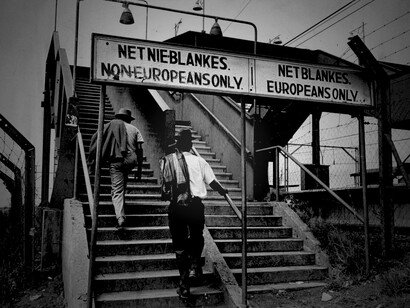
Finally, we get to the core of apartheid: racism. From the beginning of European and African interaction, there had been shifts between integration and segregation. By the 20th century, the harshest form of segregation became the core idea of the South African nation. This idea did not come from nowhere; in fact, its roots can be traced to German, American, and British scientists and academic institutions.
In the 19th century, scientists such as Francis Galton started the theory of eugenics, the idea of breeding the most superior humans and the removal of “undesirable” traits from the human animal. This idea started in Europe but quickly spread to the colonies and merged with established ideas of the racial superiority of the European.
In the South African context, this idea, and the very idea of evolution, clashed with established religious ideas. As previously mentioned, the establishment of the Boer Republics was very much driven by religious ideology, and there was no such thing as the separation of church and state. The very concept of evolution and eugenics ran counter to the religious theory of God creating the perfect world, with the white man at the top of the pyramid.
However, with the discovery of gold and the rapid urbanization that followed, the Afrikaner leaders were faced with a problem, and this problem was referred to as the poor white problem. It goes as follows: if whites are superior by the will of God, then why did the so-called poor whites exhibit behavior that went against the ideals of the Afrikaner culture: sobriety, hard work, frugality, and pride in family?
This problem challenged some of the apartheid architects ideas that Africans were inferior by nature and that they were incapable of ever achieving the “heights” of European and White superiority. The poor whites were a significant spanner in the works.
The answer came in the form of the environment. By the mid-20th century, and with the establishment of key apartheid legislation such as the Group Areas Act (1950), it ensured that no white people were living in urban slum conditions, whilst simultaneously guaranteeing that all non-Whites were. In this way, they could prove racial superiority merely by failing to acknowledge the importance of the environment.
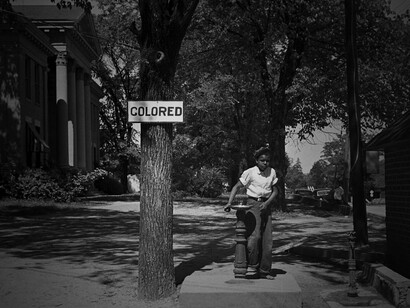
By the end of the 20th century, genetics had become increasingly used as a moral justification for the apartheid system. There was close collaboration with American geneticists coming from the Southern states of the USA, and they were even doing tours and speaking at academic venues from the 1960s onwards. By this stage, Afrikaans Christian Nationalism was less central to the National Party and its project, and increasingly science was used as a means to build a modern and Western, and capitalist bulwark against the rising threat of communism and decolonization in the region.
The end that never happened
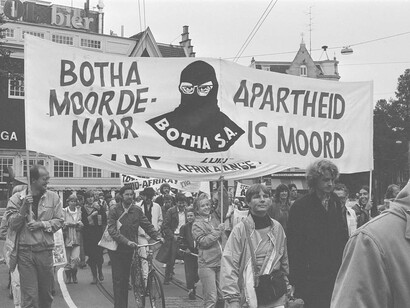
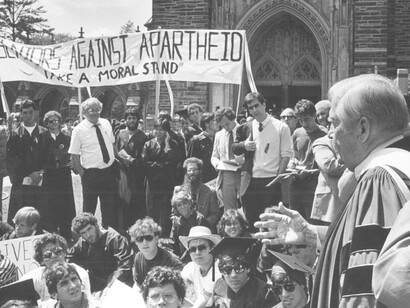
Ultimately, all the science and all of the justifications were not enough to keep the National Party in power. International support dried up. Being anti-Communist was not enough to keep South Africa in line with a changing USA in the 1980s. By the 1990s, cracks had begun to form. For many white South Africans, change was needed. After all, the shops were emptier and emptier, and when it began to affect the consumer lifestyle of the middle class, then change needed to happen.
So in the mid-1990s, a miracle occurred, and it truly was a miracle. A mostly peaceful transition of power took place. It very nearly didn't, and there were plenty of nationalist hardliners who were more than happy for a violent end to their reign. Equally, there were many in the resistance movement who were more than happy to take the path of violence. The fact that South Africa did not explode into a flaming ball of vengeance and violence is a miracle.
Power was transferred from a White Nationalist government to the ANC. The economy was not.
Apartheid ended in a legislative sense. However, it never fully ended in a cultural, psychological, or economic sense. Wealth is still in the hands of a few. The African majority continues to live in intentionally designed slums, built with the intention of proving racial inferiority. The ANC quickly made Chris Hani's great fear come true: “What I fear is that the liberators emerge as elitists who drive around in Mercedes-Benzes and use the resources of this country to live in palaces and to gather riches” by selling the nation to the highest bidder.
Capitalism founded the first colony under the Dutch caretakers. Capitalism drove the formation of apartheid with the gold industry's need for cheap and exploitable labor. Capitalism thrived when the house of cards all came crashing down. Now, capitalism is the true winner of the post-apartheid world, where everything in South Africa is a for-profit reality: education, healthcare, security, and transport.
More worrying is what this all means in the 21st century.
In the next and final part of this series, the threat of a new type of apartheid looming on the horizon represents a massive danger for all of humanity.