English
 Español
 Français
 Deutsch
 Italiano
 Português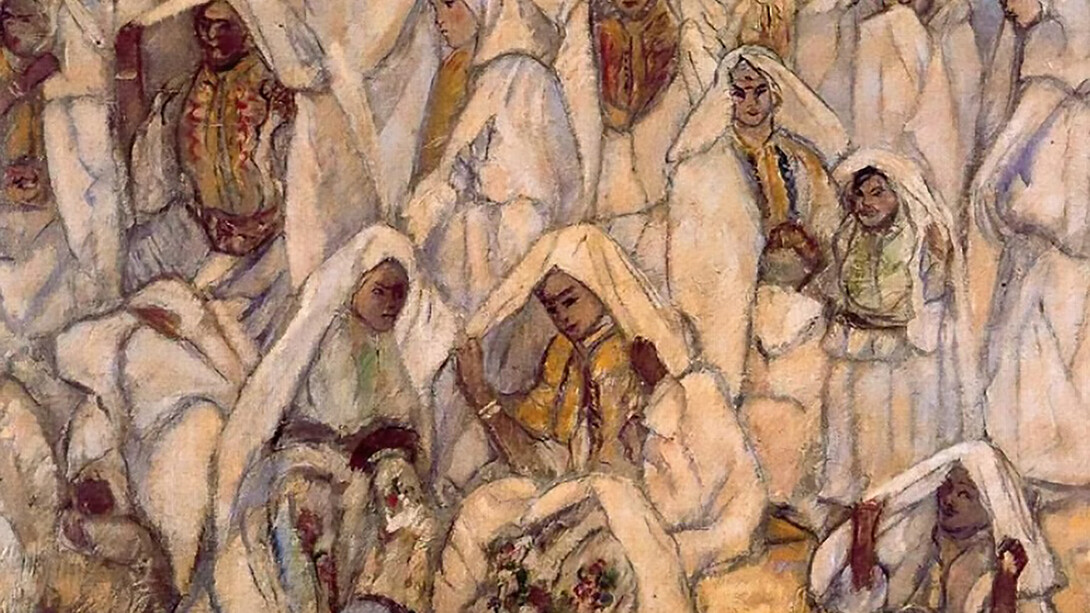
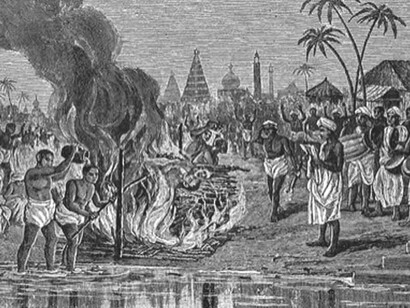
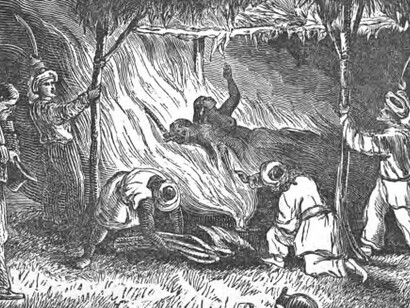
In Jules Verne’s 1873 novel Around the World in Eighty Days, Phileas Fogg arrives in India just in time to stop a funeral. On a pyre lies a young widow, unconscious, about to be consumed by fire—a practice known as Sati. Fogg, the British gentleman of precision and moral clarity, acts without hesitation. He carries her away. She never speaks. She is never asked if she wanted to die, if she believed in the ritual, or if she wished to live.
In Fogg, Verne concedes his admiration for British order, rationality, and the moral duty to correct “barbaric” customs. The Englishman embodies the values of European cultural and moral paternalistic superiority; therefore, Verne celebrates the British ‘civilizing mission’ in India. Fogg knows Sati is wrong. He is aware he has to stop it because, as Verne portrays him, he is the civilized one among those barbaric men on their way to commit an atrocious crime. For Sati is a crime even though the male committee processing to the pyre are not conscious of its criminal characteristic: they are about to immolate a woman on her husband’s funeral pyre because it is a tradition, a social practice, which has apparently been accepted as a social norm sanctioned by the Gods. This is what the great orientalist Henry Thomas Colebrooke once described in his 1799 essay, ‘On The Duty of a Faithful Widow.’
The novelist views Fogg’s bold action as heroic. Nowadays, postcolonial critics may rather define it as an attempt at silencing a woman under the garments of epic salvation because Fogg does not intervene as a peer, a partner, or even a witness—but as a sovereign outsider whose moral certainties override context, choice, or cultural meaning. The scene is not just about rescue. In reality, it is about the performance of civilizing power, where liberation is imposed, not negotiated. Is this intervention a triumph of justice? This aspect may be difficult to get at. It is a woman’s life that is in the balance, and no reasonable person could plead in favor of someone’s death sentence. But the way this scene is described tells us more of an orientalist narrative than it points the reader to other central questions.
First of all, what does "Sati" mean in the Indian (Hindu) social-historical imaginary1? Secondly, is it not possible and desirable to discuss the issue in a sincere and genuine dialogue with a) Indian women and b) Indian thought in general? Finally, the central question is that of freedom: the freedom of women’s bodies and lives as individuals capable of making their own rational decisions. We can assume that they are able to engage in a dialectic discussion that questions and challenges the social-historical institution in which they live.
To paraphrase Castoriadis, the Gods may not exist, yet the effects of divine laws are nonetheless effective. In the colonial context, the latter often conflict with the laws of the colonial masters2. We can also interpret this scene differently, against the grain; this woman—whose name is Aouda, as we happen to know eventually—is swept from one world to another as she swaps roles, switching from a doomed Indian widow to the role of silent companion to a British ‘gentleman’ without her explicit consent, voice, or subjectivity. However, the above-mentioned issues are not exclusive to Sati and British India. They underlie the colonial kind of rapport, and its later persistence in postcolonial countries is challenged by the presence of the descendants of the natives they once ruled.
Verne was French. France failed to rule India after the defeats of Plassey (1757) and Buxar (1764). Many years, even more than a century, had passed since the British ousted the French from almost all of India. There was no contention over this part of South Asia at this moment. In France, the Third Republic was making its first steps in the aftermath of the defeat Prussia inflicted upon Napoleon the 3rd. This Republic was that of the modern colonial Empire, on the one hand, and of the Laïcité (or French Secularism) on the other. Both colonial expansion and laicity would be the core questions that frame the ongoing debates on the wearing of the hijab in contemporary France.
Since the 1980s3 and the case of the "foulard islamique" that happened in Drancy, a Paris suburb. Muslim girls have been almost systemically excluded from public secondary schools for wearing the hijab. A protracted conflict between values started, which has continued to this day. In 2019, Jean-Michel Blanquer—then minister of National Education in the government of Edouard Philippe during the first presidency of Emmanuel Macron—declared that ‘what the veil (hijab) tells about the feminine condition is incompatible with our values.’ Therefore, pupils’ mothers should either remove their veils or renounce being voluntary chaperones on the occasion of school excursions. In 2020, President Emmanuel Macron declared that secularism was a “bulwark” against separatism (Élysée, 2 February 2020).
In French politics and in the media, separatism is a term that is now synonymous with Islam in the public discourse, together with the renewed and re-qualified concept of entrism. They reveal a paranoid fantasy that seems to resurface from orientalist marshes painted with the colors of an imaginary crusade against no less imaginary neo-Saracens who, like their ancestor Hannibal, stay ‘Ante Portas.’ France has not outlawed the hijab; it could not without undermining the concept of religious freedom that the country took so many centuries to achieve in blood and pain. But it has barred it from public secondary schools. Between 2004 and 2023, the successive governments serving under Macron extended restrictions to competitive sports, all under the guise of “neutrality” and “gender equality.”
These measures are justified by laïcité—the French model of secularism—which demands the neutrality of public institutions. In reality, the restriction on the hijab went hand in hand with the shift of the political balance toward the Right and Far-Right, who declared their ideological Jihad towards Muslim citizens, their origins, and their cultural inheritances in the name of both laicity and Christianity. While the law is formally universal, its application is indeed not.
It disproportionately affects Muslim girls, whose faith is treated as a threat—not because of violence, but because it is visible, indigenous, and refuses to assimilate quietly. In 2024, two Muslim women were attacked, beaten, and stripped of their veils. The women were insulted (‘sale arabe, sale chienne’) and threatened to be decimated like the Palestinians. Another woman was attacked a week later, right after she got out of the hospital for her chemotherapy. Again, the woman was beaten and had her hijab stripped while being insulted.
These facts sadly come after thirty years of debate on what could be dubbed the “veil question” that has been tormenting French society since 1989. The problem emerged after a decade of a troubled relationship with North African ‘minorities,’ after the “Marche des beurs” (15 October - 3 December 1983) and the killing of Malik Oussekine (1964-1986) by the police during the night between the 5th and 6th of December 19864. Some say that the recrudescence of hijab wearing was also due to the emulation of the (compulsory) dress code of the Islamic Republic of Iran by second-generation girls of Muslim background. This latter claim remains, however, quite unsubstantiated. As a matter of fact, many of the official and mediatic attitudes toward hijab may rather be the resurgence of colonial policies that date back to the times of French colonial rule in Algeria (1830-1962). More particularly, unveiling rituals took place as a strategy to undermine the struggles of Algerians for their independence.
Civilizing by unveiling
Stripping women of their veils is anything but new: French colonial authorities used to perform public sessions of forced unveilment during Algeria's independence war/revolution. Seemingly, this habit has passed down into the postcolonial French far-right milieus nostalgic of the times when the ‘Arabs’ were subjected to white men who bore the burden of civilizing Algerians with so much benevolence. The fact is that Algerian women wore the haik and the hijab more often than they used to before the independence war (1954-1962). And more women decided to wear the haik and hijab. The motivations were diverse: on the one hand, hiding their faces and wearing loose clothes helped hide weapons and compromising documents aimed at the FLN partisans. In ‘Sociology of a Revolution, Year V of the Algerian Revolution’ (1959), Franz Fanon thus described the situation:
Et les policiers qui interpellent juste à trois mètres de vous une femme voilée qui ne semble pas particulièrement suspecte. Et la bombe, on a deviné à l’expression pathétique du responsable qu’il s’agissait de cela, ou le sac de grenades, retenus au corps par tout un système de ficelles et de courroies5.
The recrudescence of the hijab in the Algerian public space was also the statement of their recovered identity: Native women showed their pride in being Algerian, Arabo-Berber, and Muslim women. Thus, wearing traditional garments was an explicit declaration of resistance. Of course, colonial authorities had to take countermeasures against this habit. As a tactic of psychological warfare, the colonial authorities adopted a pseudo-feminist posture and compelled many women to have their haik and hijab and headdress removed during public exhibitions of unveilment6. As surprising as it may seem, (European) women got involved in these ‘ceremonies’ of unveilment.
The psychological warfare relied on the feminist ideology of emancipation to ‘encourage’ native women to renounce their traditional garments and adopt a European outlook. Thus, the colonial civilizing mission went hand in hand with dogmatic feminism, just like socialist progressivism considered that European rule was the necessary transformative power to provoke a proletarian revolution among the ‘backward’ natives7. In the colonizers’ minds, conquering women was the first step to obtaining the submission of men. In other words, it was the prelude to the subjugation of the Fellagahs, the Mujahid, the Resistants, the Partisans, or—in the language of the colonial authorities and the army—the Terrorists. Indeed, what then bothered the French was not the fact that women were, allegedly, subjected to male dominance. Nor were they annoyed by the native social structures, which they had already partly managed to undermine after 132 years of colonial rule.
The hijab and the hijab were, above all, symbols. Besides their danger, these clothes were disturbed because of their indigenous character. The hijab and hijab stood against the white men as a wall that protected their lust for oriental charms. To paraphrase Fanon and Said, most (European) men imagined that beneath the hair lay a Douanier Rousseau’s Snake Charmers8, their bodies as naked as the Moorish women in the painting by Chasserieau9. Colonial fantasy imagined the hijab and the hijab as prisons. Or, at least, they saw them as obstacles to the release of their manly sex drives.
These considerations are not aimed at gratuitously claiming that the native society was a paradise of freedom and women’s emancipation. Like most societies, Algerian culture had and has both negative and positive points. Yet, there has been, and there is a gross essentialization and flagrant signs of ignorance, either unconscious or voluntary. Orientalism was a corpus of knowledge and artistic inspirations that often reached peaks of sublimity. It nevertheless carried gross, vulgar, and lustful fantasies at the same time, and the view that colonial officials had of Algerian women in the 1950s had little to do with the ethnographies and philological works of Gabriel Honoreau, for instance. Had orientalistic views been better documented, the affair of veils and clothing might have gone more smoothly. At least, one could have hoped so. Instead, these officials’ knowledge was just crass, and this ignorance continued in the political and media regards of the native’s (immigrants’) children in France.
Hijab, chador, burqa, niqab, and abaya: the great confusion
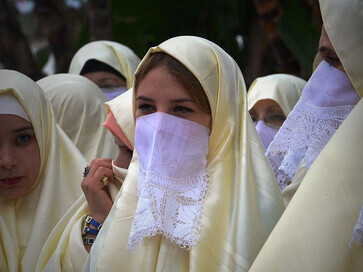
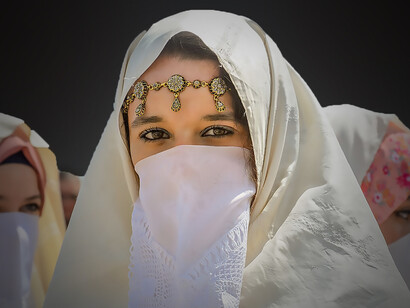
To the mainstream media and the right-wing politicians, Muslims are all the same: intruders and invaders. Whenever they are French citizens, they are considered to be only “Français de papiers.” This xenophobic expression has been used by the former minister of interiors10 and is a legacy of the French Far Right’s antisemitism11—today's Muslims are the Jews they once hated. Thus, it is no surprise that there is so much ignorance and rushed confusion among the different forms of ‘Islamic veils’ that one may encounter in the West nowadays. Not taking an interest in the differences of veils and their culture of provenance is indeed ignoring the diverse subterranean phenomena that happen in the so-called Muslim world. This is not only a proof of idiocy, but it is also geopolitically dangerous.
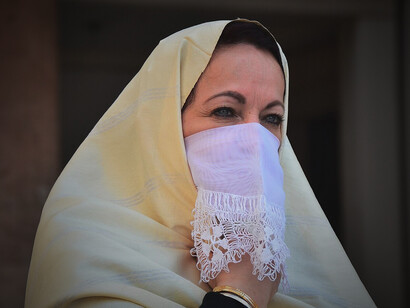
Had it been better known, all-rounder TV pundits may have reflected on the reasons why girls and women of North African background now tend to wear the niqab instead of the hijab or hijab that their grand- or great-grandmothers used to wear. If these ‘experts’ were genuinely so, they would have sought the necessary knowledge to discuss the topic seriously. They would have known better how to ground their argument and know what phenomenon they were battling against. They ought to understand two important points. First, the veil is a cloth borne by women in West Asia and North Africa long before the advent of Islam12 and the subsequent conquests that led to the rise of a Muslim Empire. As a symbol of patriarchal social norms, the veil was first imposed on both married and free women in Assur (nowadays Iraq), according to tablets of the 12th century B.C.
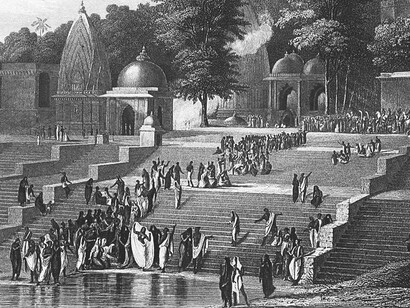
Similarly, the Avagunthana or Ghoonghat was a veil that was borne as a sign of modesty and humility, quite like, somehow, the wearing of a hat by 19th-century gentlemen. With the practice of Purdah, there is stricter sex segregation in Northern India, however. This practice regards Hindu, Muslim, and Zoroastrian women alike. Purdah is, for Muslims and Zoroastrians, generally associated with the burqa. This garment was worn by upper-class married women to avoid the potential lust of their husbands’ male relatives; As said, it was not uniquely worn by Muslims. Only with the Taliban's access of the Taliban to power did the burqa become compulsory in Afghanistan. The fact is that the Taliban follow an extremist interpretation of the Wahabi sect, which is in turn a derivation of the rigorous Hanbali school of Islamic law and jurisprudence.
If we are to talk about an allegedly European civilization, it may then be worth pointing out that Greek women also wore a veil3, which is often represented in urns and vases. For a long time in Christendom, women also had to wear a veil. In France, it was (at least formally) prohibited for women to wear trousers unless it was authorized expressly by the local prefect until the 31st of January 2013. Though this law had long since fallen into disuse, it tells us that official views on the feminine condition were not as liberal and progressive as they seemed in the country of George Sand and Simone de Beauvoir.
Nevertheless, it must be acknowledged that the feminine condition has improved since the times of the French Revolution, when the claims of women were still considered a problem. France is the country of Olympe de Gouge and the Suffragettes, after all, and French women have a long way to go towards emancipation. For instance, they had the right to vote—and, indeed, to run for elections—since, on paper, 1944, but practically since the Municipal Elections of May 1945.
Contrastingly, the condition of Tunisian women is considered more innovative and sometimes more advanced in Tunisian law codes than in many of the West. What the adversaries of the veils (the plural is here purposely utilized) fail to look at and to listen to is the voices of feminism coming from the southern shores of the Mediterranean. They overlook, or rather underlook, the courage of Algerian women who faced the horrors of the Algerian Civil War in the 1990s and the struggles of Kurdish women across Turkey, Iraq, Iran, and Syria, as they are eager to stress quite too easily the suffering and oppression of Afghan women. To address the issue, the media should pay attention to the words of the great champion and Algeria’s national hero Hassiba Boulmerka, who in the 1990s challenged the threats by the adepts of the FIS and its armed branches: the question of hijab remains between God and her.
Conclusion
What precedes is not a plea for the hijab. Neither is it for Anglo-Saxon secularism, nor is it for the extremist application of French laicity. Rather, these lines have hopefully emphasized the necessity of genuine dialogue engaging a sincere confrontation with Islam beyond orientalist clichés and fantasies about the Crusades and the defense of Christian civilization and values under the cover of laicity, or secularism. The point here is that in their way of engaging the debate, the public sphere is facing two monologues and the impossibility of turning it into an authentic dialogue. Laïcité was, in France, the result of many centuries of religious violence (dating back, at least, to the Early Modern Wars of Religion) and the solution to promote the possibility of living together. This is, moreover, a closer interpretation of the original Latin ‘Religio.’
Laicity was also the admission of the impossibility for the French to make their own religious revolution, according to Edgar Quinet. A revolution that Quinet’s closest intellectual friend sought in the Indian epic and religious oeuvres; that is, the ‘Bible of Humanity,’ which succeeded Quinet’s ‘La Renaissance Orientale.’ Laïcité was probably the greatest progress of the Third Republic. But it was designed as a weapon against the Church, saying nothing, however, about French women wearing veils in the street. Neither was it thought of as a weapon against women wearing the hijab in the street: in these times, women wearing the haik and hijab depended on the colonial codes of personal law and were therefore submitted to the Islamic customs. Just like their European counterparts, they had no voice anyway; they were silenced like Aouda, whose salvation depended on the sovereign resolution of a foreigner, one whose people were then in India: Phileas Fogg.
References
1 Cornelius Castoriadis, L’Institution Imaginaire de la Société, Paris, Seuil 1975.
2 Idem.
3 France24. (2019, October 20). 30 ans de controverses et polémiques autour du port du voile islamique en France. France24.
4 L’Humanité. (2022, December 6). 37 ans après la mort de Malik Oussekine, un combat pour la mémoire.
5 Frantz Fanon, Sociologie d’une Révolution, L’an V de la Révolution Algérienne, Maspero, 1959.
6 Le Monde. (n.d.). Afrique. Le Monde.
7 Marx, K. (1853, June 6). Letter to J. Weydemeyer. In Marxists Internet Archive.
8 Henri “douanier” Rousseau (1844-1910), La Charmeuse de Serpent, painted in 1907, Musée d’Orsay, Paris.
9 Théodore Chasseriau, Femme Mauresque Sortant du Bain/Moorish Woman Leaving the Bath, AKA Interior of a Harem, oil painted in 1856.
10 Le Parisien. (2024, September 24). Rétablir l’ordre, triche à Intervilles : qui est Bruno Retailleau, le nouveau ministre de l’Intérieur? Le Parisien.
11 Sikhalov, Sergeï: Français de Papier, Paris, Seuil 2025.
12 May Makarem, ‘Le voile n’est pas récent, il remonte à la nuit des temps’ in L’Orient-Le Jour, 28 décembr 2022. L’Orient-Le Jour. (2024, October 3). Le voile n’est pas récent : il remonte à la nuit des temps. L’Orient-Le Jour.
13 Llewellyn-Jones, L. (2003). Aphrodite’s Tortoise, Swansea, U.K., 2003.