English
 Español
 Français
 Deutsch
 Italiano
 Português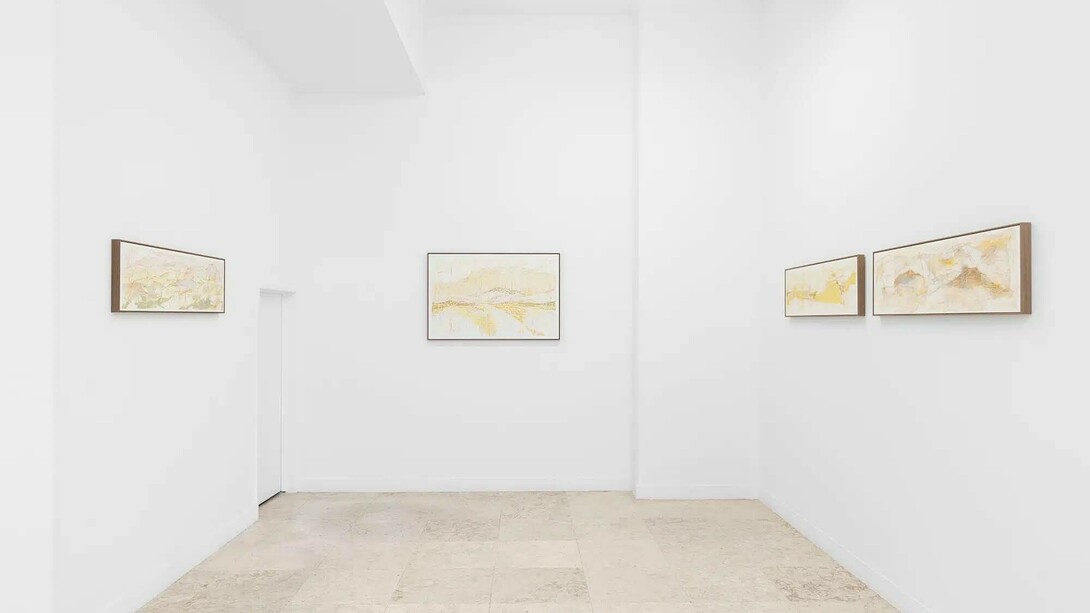
The eye is always moving.
(David Hockney)
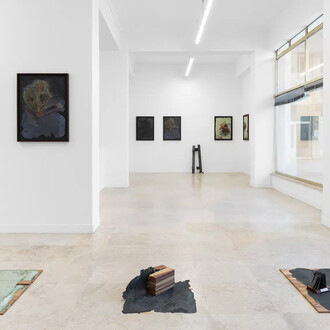
For some time now, landscape has come to inhabit Marta Ubach’s painting. If, in Da torre, it was the silences and contemplation of the places where the words of Alexandre Herculano resonated, then in Não sei quem são, mas são os de sempre it was the leaves pressed against the earth that recorded the existence of the landscape. Since her first exhibition in 1998, we have become familiar with her distinctive figurative language, poised between strangeness and the everyday, unease and contemplation, the visible and the diffuse. Her pictorial universe has often engaged in dialogue with History—both Art History and the history of civilizations—as well as with heritage and literature, bringing together different geographies and artistic and literary references.
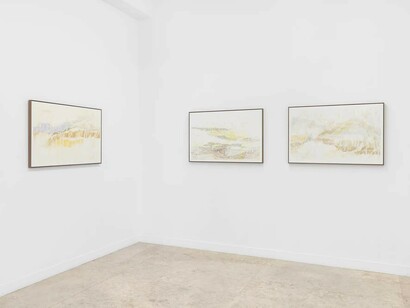
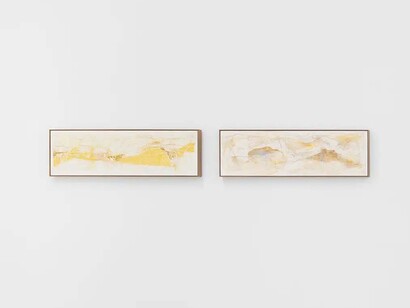
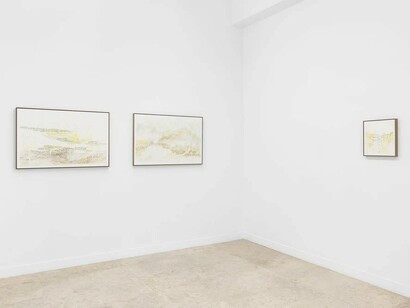
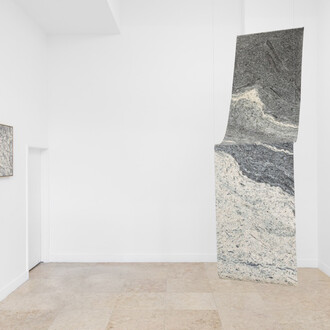
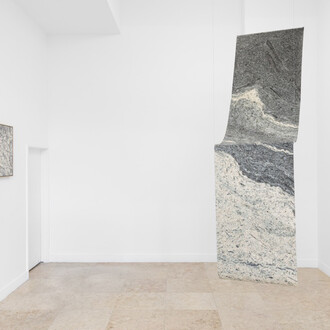
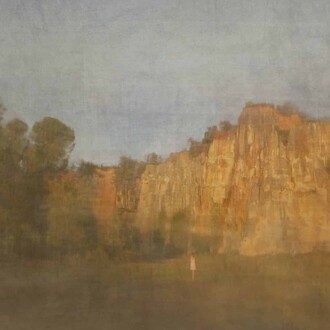
In A montanha (The mountain), Marta Ubach does not bring us—or at least does not reveal—these familiar characters. The landscape appears on its own, complete and self-contained, without inhabitants, occupants, or visitors. One is tempted to paraphrase: I do not know where they are. In this exhibition, the artist plays with perspective, infusing these landscapes with a certain abstract, even Cubist quality through the juxtaposition of multiple viewpoints. Layers seem at times to overlap, at others to diverge or emerge, while at the center of everything lies the probing gaze. After all, as Tiago Salazar wrote, “Seeing is everything that occupies the painter Marta.” Color and composition create a symbiosis of horizontality and verticality: color conveys the fullness of the horizon, while line connects earth and sky. The viewer is left with the illusion of soaring above these valleys and slopes, carried by the wind. At the end of the journey, one might simply say: I saw the mountain.
(Text by Ana Matos. June 2026)