English
 Español
 Français
 Deutsch
 Italiano
 Português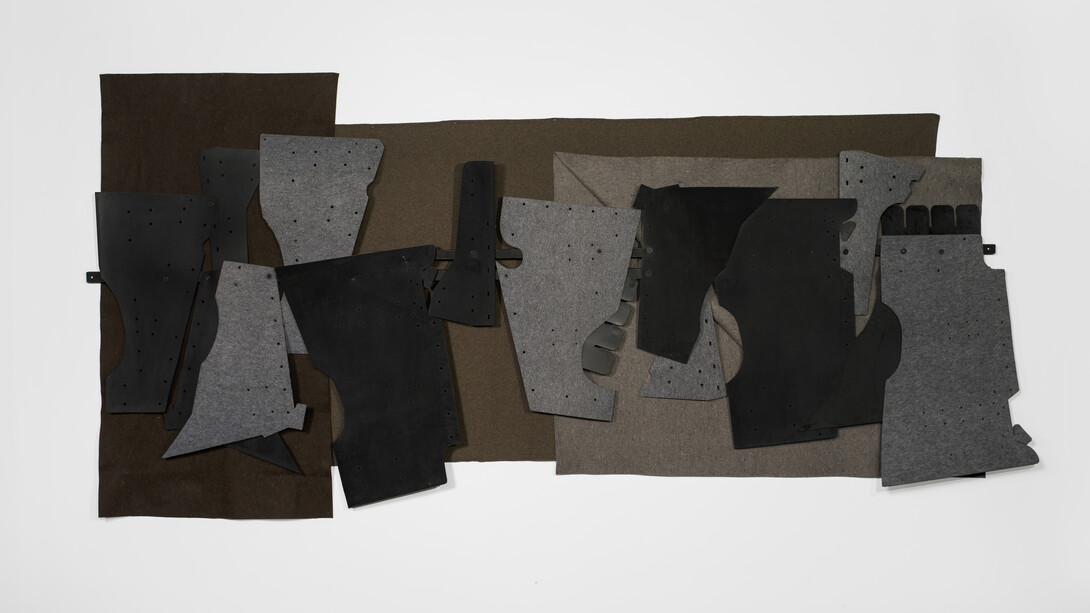
Galeria Nave is pleased to announce a solo exhibition by Sonia Navarro at the Sociedade Nacional de Belas Artes in Lisbon.
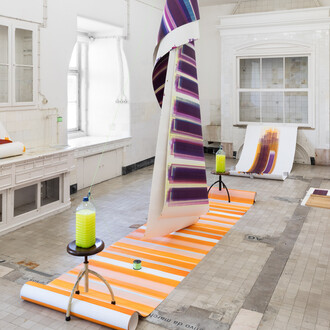
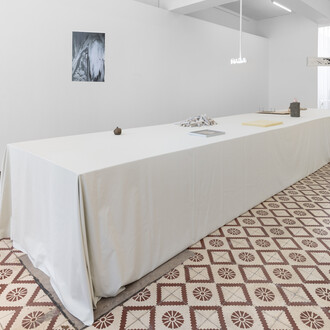
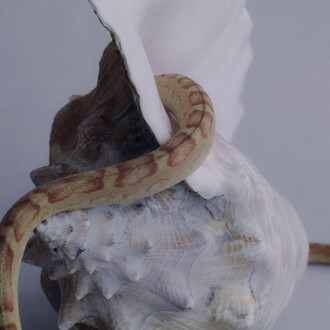
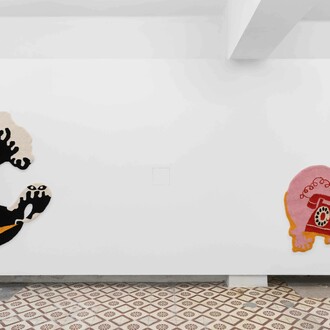
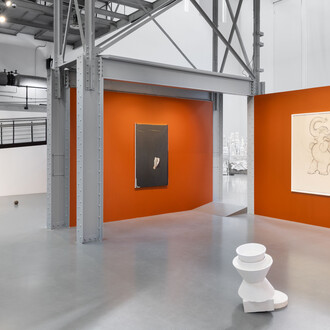
The Sociedade Nacional de Belas Artes (SNBA) in Lisbon will host the solo exhibition Pão e fio (Bread and thread) by the Spanish visual artist Sonia Navarro, opening on 29 October. Curated by Susana González, the exhibition is funded by the Región de Murcia through the Instituto de las Industrias Culturales y las Artes as part of the initiative to promote the internationalisation of Murcian creators, under the promotion and coordination of Mercedes Cerón (Galeria Nave). The project brings together works from different periods of the artist's career, whose practice draws on textile materials and traditions historically rooted in domestic work, subsistence economies, and the dynamics of care.
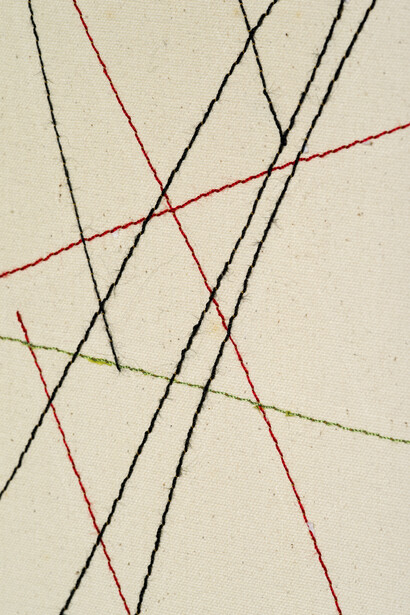
Bread and thread, which give the exhibition its title, condense two essential human needs — nourishment and protection — and evoke forms of labour, particularly female, traditionally rendered invisible and seldom recognised by professional value systems. Through sewing, embroidery, and the reuse of materials, Navarro reclaims these ancestral forms of knowledge and positions them firmly at the centre of contemporary artistic practice.
‘Sonia Navarro's work is deeply connected to a family genealogy: sewing spans three generations of women in her family — her grandmothers, her mother Teresa, and the artist herself. This transmission of knowledge also extends to direct collaboration with seamstresses, embroiderers, and craftswomen, questioning the rigid notion of individual authorship and highlighting forms of shared production.’ – comments curator Susana González.
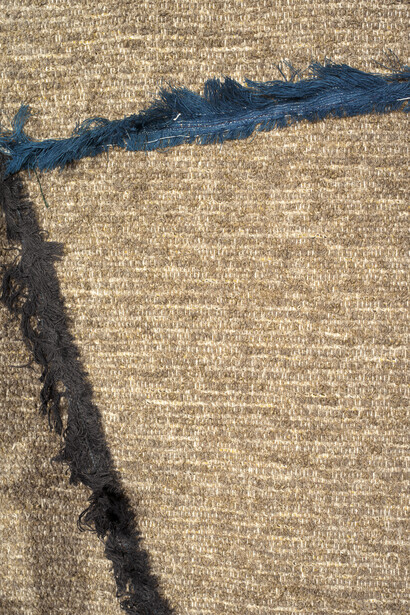
The exhibition brings together materials from Mediterranean artisanal and rural traditions, such as jarapas, esparto grass, wool, linen, felt, and rubber — some of which have been salvaged, reused, or are explicitly linked to trades in transition or at risk of disappearing. Navarro displaces these materials from their daily function into the sculptural realm, without erasing either their memory or their primary utilitarian dimension. Within this process, manual craftsmanship plays a central role: cutting, assembling, embroidering, tensioning, folding, and sewing are repetitive actions that introduce a temporality based on attentiveness and persistence, in sharp contrast to the accelerated logic of industrial production.
Mercedes Cerón, Exhibition Coordinator and Director of Galeria Nave: ‘Coordinating Sonia Navarro’s second exhibition in the Portuguese capital not only reaffirms the artist’s strong bond with the Lisbon public, but also holds a deeply special meaning for me. This is as much due to my immense admiration for the concept and power of her work, as it is to our cooperation with the Sociedade Nacional de Belas Artes, a key institution within the Lisbon art scene.’
Ultimately, Pão e fio offers a reflection on the value of that which has historically remained outside economic and cultural systems of recognition: knowledge transmitted across generations, the work of hands, repair, reuse, and the forms of care that sustain life. Navarro evokes these gestures, demonstrating that material culture is fundamental to understanding our social and emotional history.
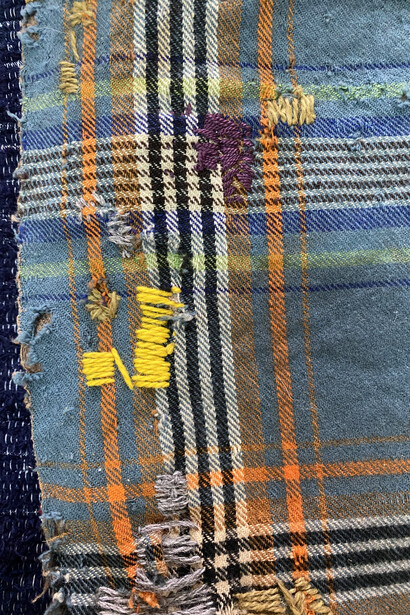
Restoring does not always mean erasing the mark of time or returning the piece to its original state; darning is a form of conservation that embraces the wound. To darn is to dialogue with what is broken, to respect the wear and tear of those who used that fabric, and to conserve out of affection. In the tradition of mending there is a living memory: it is not about hiding the tear, but about inhabiting the fold, of sustaining the material with the thread and understanding that conserving is, above all, an act of care and permanence.
(Sonia Navarro)