English
 Español
 Français
 Deutsch
 Italiano
 Português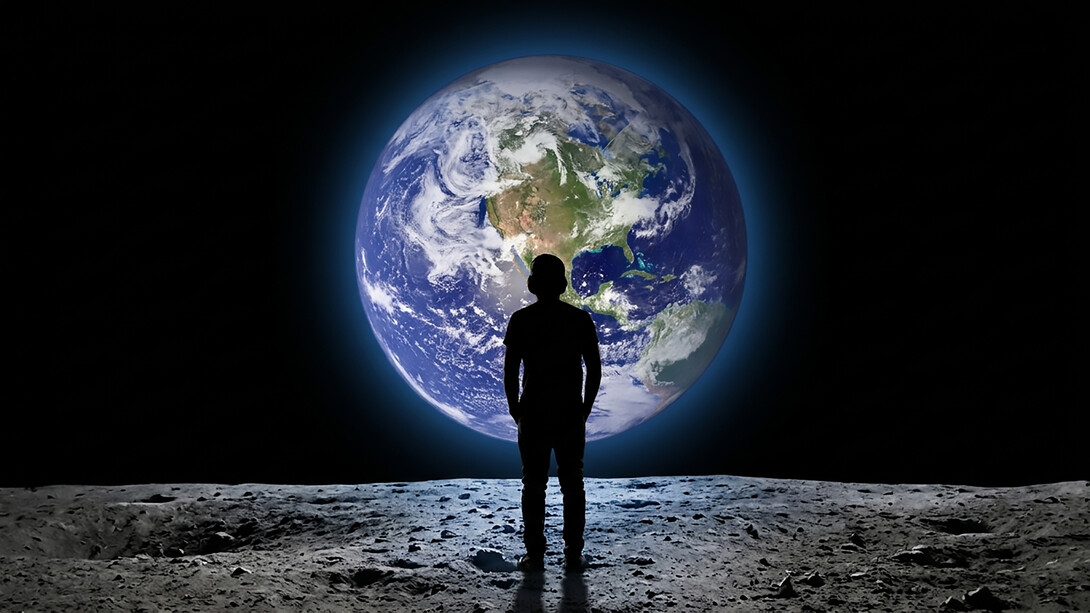
In 1950, during an informal meeting with colleagues at Los Alamos, the famous Italian physicist Enrico Fermi asked the following question: Where is everyone? Fermi was referring to the fact that, given the vastness of the universe and the high probability of extraterrestrial life, we have neither scientific evidence of its existence nor any contact to date. This simple question, asked during an informal gathering, quickly became known as the Fermi paradox and sparked a debate that continues to this day. Explanations have varied:
Technological limitations: advanced civilizations may be very far away or have means of communication that we do not understand.
The choice to remain silent: civilizations may have chosen to remain silent or to prevent any interference.
The Earth-like rarity hypothesis: the combination of factors that made life on Earth possible is extremely rare.
The short lifespan of civilizations: extraterrestrial civilizations may have such short lifespans that they destroy themselves before they can travel across the galaxies.
We haven’t looked hard enough: the search for other civilizations began only recently, and we may not have used the right methods or looked in the wrong places.
For a sociologist, the interest in Fermi’s question lies in the fact that it reveals the immense cosmic mystery and the profound loneliness that surrounds humanity and Earthly life in such a vast universe. This profound loneliness is the flip side of the preciousness of human and non-human life.
Let us remember that the paradigm shift I propose, based on the epistemologies of the South (most recently The End of the Cognitive Empire, Duke UP, 2018), aims precisely to safeguard human and non-human life under the best humanly possible conditions. I ask the same question that Fermi asked, but with a very different meaning. Where are all those we can count on to carry out the paradigmatic revolution?
The risks we face
The paradigmatic revolution is based on the assumption that humanity is facing, for the first time, existential risks created by humans. The risk that human life—or life in general—might be annihilated or profoundly curtailed by a natural event has always existed. For example, an asteroid impact. What is new—or dates back to the beginning of the Anthropocene—is the occurrence of existential risks resulting from human action. Here are a few of them: a war resulting in a nuclear holocaust; the misuse of nanotechnology causing a severe and irreversible environmental impact; the potentially destructive control of life by artificial intelligence; an uncontrolled process of genetic engineering.1
These risks are relatively new, but their causes are old. They lie in the global evolution of capitalism and colonialism from the 16th century to the present day. The most recent phase of this evolution exhibits characteristics that make these risks increasingly credible. Neoliberalism signifies the triumph of one of the three regulators of social life in the modern era: the market. The other two were the state and the community, but with neoliberalism, their relative autonomy from the markets has disappeared.2 The most obvious manifestations of this fact are the extreme concentration of wealth, the increase in the violent accumulation of human and natural resources (formerly referred to as “primitive accumulation”), and the shift of the abyssal line toward expanding the colonial zone (the form of sociability in which human beings are treated as subhuman) at the expense of the metropolitan zone (the form of sociability in which human beings are treated as fully human). We are in an unprecedented period of recolonization because, in addition to territories, it recolonizes bodies and minds. These are the causes of the new risks.
Unsurprisingly, the vast majority of scientists involved in these techno-scientific fields hold an optimistic view of how these risks can be overcome, given that, throughout its long history, our planet has demonstrated an enormous capacity to survive extreme catastrophes. They say nothing about the causes of these risks or conceive of them as if they were natural. This optimism is not shared by all scientists, much less by those outside the techno-scientific field.
Who among us will survive? As it is framed today, this question refers not only to human life but to all life on the planet, of which human life is a minuscule part—more precisely, just 0.01% of all living biomass on Earth (most of the planet’s life consists of plants, which account for about 82%). The super-rich of our time ask the same question, but they do so with themselves and their families in mind, viewing the risks as natural. During the COVID-19 pandemic, some super-rich individuals seriously contemplated the possibility of building cities in space to which they could migrate or taking refuge in bunkers. Although the construction of bunkers already existed, primarily for military purposes, the fears of billionaires have caused a new branch of the construction industry to grow exponentially: bunker construction. The most famous owner of a massive bunker where he can protect himself and his family from an existential threat is Mark Zuckerberg. His massive bunker is located on one of the Hawaiian islands.
As I mentioned above, among the existential risks we face, the most significant are: global warming as a slow-burning holocaust; global war and the thermonuclear holocaust it will certainly entail; and artificial intelligence capable of transforming and controlling human and non-human life—and of doing so without any ethical concern other than what serves the interests of those who control it. These three risks are real and affect life on the planet as a whole, not just human life. This fact raises two new questions for which there are only speculative answers: What is the difference between living and surviving? What is humanity’s responsibility toward non-human life?
Living or surviving?
Both living and surviving imply a conception of the past and a conception of the future. It is from the convergences and contradictions between them that the present is constructed. But while living is to live under the sign of the future, surviving is to live under the sign of the past. For those who survive, the future makes sense only as an immediate demand of the present. Surviving means exhausting one’s vital energies on the demands of daily life. Living, on the other hand, is the ability to invest in the present as the beginning of the future. Living is thinking, feeling, and acting before any catastrophe occurs and without one being highly likely on the horizon in the short term. Surviving is living after a catastrophe or with the catastrophe looming as highly probable on the short-term horizon. Living and surviving are thus a matter of experience and perception. In light of this, we can say that, today, part of humanity lives in “living mode,” while another part—the majority—lives in “survival mode.”
This division has several causes. None of the factors contributing to the imminence of catastrophe affects all of humanity equally. For example, it is evident today that one of these factors—global warming—primarily affects the most impoverished populations in tropical and subtropical countries, who are also the least equipped to defend themselves against it. Prolonged droughts and massive floods are rendering parts of the globe uninhabitable for humans, leading to increased internal and external migration (the problem of environmental refugees). The populations that suffer most from this aspect of the catastrophe are those whose voices are heard the least. They are also the least able to fight against the causes of the catastrophe because they are forced to expend their vital energy on coping with its day-to-day effects.
Herein lies the paradox of our time. The paradigm shift is a matter of survival for life on the planet, yet the humans who need it most urgently are the least able to mobilize for it. The paradigm shift demands vital energy invested in the future, but the survivors lack that energy, since they must focus it on ensuring their day-to-day survival. Conservative forces—all those who consider the paradigm shift unnecessary or even dangerous—do everything they can to ensure that more people live in “survival mode.” The perception of “survival mode” is today amplified by religious movements centered on the idea of the apocalypse.
The three dominant political strategies today—the politics of hate, the politics of fear, and the politics of exclusionary belonging—aim to have more people focus their vital energy on day-to-day survival in order to disarm those who could benefit most from the paradigm shift. The more evident the need for a paradigm shift becomes—to avert catastrophe or mitigate its damage—the more conservative forces work to ensure that as few people as possible are available to fight for that revolution. The antinomy between the necessity of the paradigm shift and its impossibility or extreme difficulty is the defining characteristic of our time. We are entering a period in which the revolution/counter-revolution dichotomy will take center stage in political action.
In the paradigm shift, those who are living in “living mode” bear an increased responsibility in the struggle against the factors leading to catastrophe. They must fight for themselves—whose way of life has not yet been drastically affected by these factors—and, in solidarity, help those who are already living in “survival mode." For the struggle to be effective, awareness of the likelihood of catastrophe must increase without falling into the escape traps that the far right always sets: fatalism, cynicism, or the specter of the apocalypse.
In other words, those living in living mode must feel ever more intensely that they—or their children—will be forced into survival mode if the paradigmatic struggle does not begin immediately. Education regarding the need for paradigmatic transformation plays a very important role here. Its role consists of what Paulo Freire referred to as “conscientization.” It involves raising public awareness of the imminent danger of a catastrophe that threatens the survival of life on the planet—both human and non-human life—and, consequently, of the need to transform individual habits and to fight against the social, economic, and political practices that deny or downplay this danger.
Life or human life? A Spinozist digression
Over the past thirty years, public awareness has grown enormously that human life was not the only life at risk; non-human life was also at risk. The loss of biodiversity, deforestation, chemical agriculture, and the destruction of ecosystems have increasingly revealed the risks faced by non-human life. These risks can lead to profound changes in non-human life and have such a profound impact on human life that it may even be threatened with extinction. In this context, a Spinozist digression is important.
For Spinoza, the separation between human life and non-human life—or nature—is just as inadequate as the separation between body and soul, as the separation between God and humans, and as the opposition between freedom and necessity. In terms that reflect an inadequate idea, all struggles henceforth waged to defend human life will necessarily be ecological struggles, since the “fate” of human life and the fate of non-human life are intimately linked. For Spinoza, this is an inadequate idea, born of the experience of the imminent ecological collapse we are currently experiencing. It is an outdated and inadequate way of thinking because it is based on the Cartesian duality between humanity and nature—a duality that must be replaced by the holistic vision underlying non-Eurocentric thought (particularly Chinese philosophy and indigenous philosophies) and which permeates Spinoza’s entire philosophy.
In Spinozist terms, the humanity/nature duality is an inadequate idea, a reflection of the equally inadequate idea of God as a being beyond the world or of the separation between body and soul. Inadequate ideas stem from images drawn from our sensory experience and our memory. We imagine that the Earth is stationary and that the Sun revolves around it, just as we imagine that the Sun is much smaller than the Earth. There is a great distance between images and ideas—the distance between the passivity of sensory experience and the activity of reason in search of essence and existence, of the causes or genesis of reality, and of the connections between its parts. The capacity to think allows us to construct ideas that grasp the essence and identify the causes or the origin of their objects. To this end, Spinoza devised the geometric (mathematical) method to move from inadequate ideas to adequate ones, magnificently expounded in Ethics. And, beyond the intellect, there is also intuitive access to the singularity of all that exists.
The ultimate concept is that of substance, “that which can be conceived in and of itself and without which nothing exists nor can be conceived.” As Marilena Chaui states, this substance is the absolute in which essence (being) is identified with potentia (action). This substance, which possesses attributes and modes—or modifications arising from the effects it creates—is what Spinoza designates as natura naturans, nature as nature-maker. The totality of the modes and attributes through which it presents itself to us is the natura naturata, nature as nature-made. The unity between the two is the absolute substance—God. Hence the famous expression “Deus sive natura,” “God, that is, nature.”3
In Spinoza’s view, the inadequate ideas—which capitalism, colonialism, and patriarchy have instilled in our sensory experience—have led us, since the 16th century, to imagine that human well-being could be built based on the suffering of the non-human, when in fact all evil inflicted in the reality we conceive as separate and distant from us—as symmetrically separate and distant from us as we conceive ourselves to be separate and distant from God—was a negative transformation (an affect, in Spinoza’s terms) within humans themselves. It was, in short, self-flagellation. Therefore, human life and non-human life are attributes of the same substance.
If what Spinoza says is now less scandalous and more credible, it is not merely because theologians today have less control over our lives than they did between the sixteenth and nineteenth centuries. Nor is it because we are now more intelligent or because there has been progress in knowledge. It is because sensory experience—driven by the ecological crisis and the activism of Indigenous movements in Latin America—has replaced one inadequate idea with another, still inadequate, idea: that nature does not belong to us, but rather that we belong to nature. The adequate idea is that we and what we designate as nature are attributes of the same substance; we belong to one another.
Although it is an inadequate idea, it is less dangerous than the opposite idea because it is merely an incorrect way of describing the adequate idea of actual reality. The adequate idea is that the relationship between us and nature is not a matter of “having.” It is a matter of “being.” We belong to one another.
What is at stake, therefore, is the defense of life and not specifically the defense of human life. Three questions arise. Who is opposed to this defense? Who can lead this defense? With what intellectual and practical means? The appropriate answer to these questions presupposes a rigorous analysis of the global society in which we live.
Colonialism and the abyssal line between humanity and sub-humanity
Colonialism is one of the fundamental conditions of the world in which we have lived since the 16th century. Over the course of five centuries, this condition has undergone various transformations, yet none have altered its fundamental nature: the need to create and maintain a chasm between society and nature and between humanity and sub-humanity. Colonialism existed before capitalism, but it was reconfigured to make use of capitalism and be placed at the service of capitalism. Throughout the 20th century, colonialism coexisted for decades with what appeared to be a radical alternative to capitalism—Soviet-style state socialism—even though, as early as 1920, at the Baku Congress, the Communist Party of the USSR had proclaimed its support for liberation struggles against historical European colonialism (involving territorial occupation). The Third (Communist) International maintained throughout its existence (1919–1943) that the anti-capitalist struggle took precedence over the anti-colonial struggle.
As I have argued, historical colonialism is merely one form of colonialism. As long as there is no paradigmatic revolution, colonialism can coexist just as easily with capitalism as with socialism or communism. As long as colonialism exists, it will not be possible for life to prevail and flourish. Colonialism is a constitutive part of capitalism and of any other form of production relations based on the abyssal line. The abyssal line operates a radical separation that is apparently twofold: between humanity and nature, and between human beings considered fully human and those considered subhuman. The separation is only twofold in appearance, because subhumans (women or so-called inferior races) are regarded as such precisely because they are closer to nature (or even merge with it: the terra nullius of the colonizers of the Americas). Aristotle, in his Politics, had already deduced from the hierarchy of reason that, by nature, “man is superior and the ruler, and woman is inferior and the ruled.”
Who is against the defense of life?
All those who have benefited most from the misguided idea that nature belongs to us—and that, therefore, the defense of human life is achieved by destroying non-human life and dominating the lives of subhumans—are against the defense of life. The defense of human life under these conditions has been highly selective from the very beginning. Beginning in the 16th century, with modern colonialism, the human life to be defended was that of the colonizers. All other lives were defended only to the extent that doing so was useful for defending the lives of the colonizers and their descendants. The indigenous populations of the colonized countries were considered, just like nature, objects of possession. Slavery is the ultimate expression of the colonial mechanism of selectivity regarding human life. I have termed this mechanism the “abyssal line”—the line that divides the community of human beings treated as fully human (metropolitan sociability) from the community of human beings treated as subhuman (colonial sociability). In Fanon’s words: the zone of being and the zone of non-being.
The abyssal line is constitutive of the modern era and has therefore persisted in various forms following the political independence of the European colonies. Its most extreme manifestation is the genocide of peoples or social groups cast into the colonial zone. Genocide is one of the forms of colonialism as a constitutive part of capitalism. Its presence is permanent and has reached this extreme manifestation in the case of some countries that began as European colonies and later became colonial powers in various forms. Countries such as the United States, Canada, and Australia were founded on the genocide of indigenous peoples and have prospered thanks to internal colonialism, neocolonialism, and imperialism. Israel is a colonialist state by its very origin and has behaved as such to this day.
In Eurocentric critical thought, especially in Marxism—in which I myself was educated—the relationship between colonialism and capitalism has been recognized. The appropriation/violence (colonial sociability) inflicted upon peoples and territories made possible the regulation/emancipation (metropolitan sociability) that came to characterize capitalism—that is, “the monotony of economic relations of exploitation among free and equal human beings,” as Marx called them. What Marx referred to as primitive or original accumulation in the early days of European capitalism is, in fact, a form of colonialism that, incidentally, took on a specific form in Andalusia after the so-called Reconquista at the end of the 15th century. This was colonialism within Europe designed to finance and enable extra-European colonialism. Marxist authors, from Rosa Luxemburg to David Harvey, have argued that this type of accumulation cannot be explained historically, but rather genetically. In other words, original accumulation is a constitutive feature of capitalism.
The epistemologies of the South: the concept of expanded exploitation
In light of the preceding analysis, one must ask: were Marxist-trained theorists (myself included) wrong for a long time in considering that colonialism served capitalism in its early stages? Wasn’t that error the result of the context in which Marxist theory developed—in the most advanced center of modern capitalism? Isn’t that the explanation for why real socialism, built in the name of Marxism, reproduced the same abyssal divide between humanity and nature and was therefore equally colonialist, even while advocating for the political independence of European colonies? If Marxism had been invented on the periphery of the world system, within the context of the practices of domination prevailing there and based on the knowledge of the peoples, classes, or groups resisting them, would it have given explanatory priority to colonialism or to capitalism?
Since colonialist overexploitation takes forms typical of what has come to be called primitive or original accumulation, it was easy to foster the perception that the anti-capitalist struggle was more advanced than the anti-colonial struggle. And since it was in the core capitalist countries that the anti-capitalist struggle most strongly asserted itself as such—we are familiar with Lenin’s concerns in this regard as he launched the Russian Revolution—those responsible for amplifying coverage of these struggles in the media contributed to obscuring the necessity and urgency of the anti-colonial struggle. Not only did they conceal it, but they also believed that the anti-colonial struggle weakened the anti-capitalist struggle. This transformed capitalism into the primary and permanent relationship of domination and colonialism into a primitive and temporary one.
This transformation—to which the dominant conception of linear time and its “arrow of progress” also contributed—legitimized the idea that colonialism was a form of domination belonging to the past, while capitalism was a form of domination belonging to the future. As a hegemonic idea, it was adopted by the labor movement in the core capitalist countries and corresponded to the way capitalism was conceived by Eurocentric Marxists. It became impossible to conceive of capitalism and colonialism as two sides of the same coin, even in the face of evidence that the same multinational corporations operated according to the logic of capitalism (regulation/emancipation) in their activities in the Global North and according to the logic of colonialism (appropriation/violence) in the Global South. Canadian mining companies provide a good example.
We know today that Marx was well aware of the metabolic rift that capitalism caused in nature by destroying or profoundly altering nature’s vital cycles of regeneration (what he termed “capitalist nature”), but he did not conclude from this that the development of the productive forces could not be potentially infinite. He merely theorized that, beyond a certain threshold, this development would require relations of production other than those of capitalist exploitation. Decolonizing Marxism consists of reconstructing it in such a way as to broaden the critique of the concept of capitalist exploitation to include not only the exploitation of fully human beings, but also that of human beings regarded as subhuman, as well as the exploitation of non-human beings. Although I cannot elaborate on this topic in this text, I believe that the challenges posed by artificial intelligence—especially as long as it remains a commercial good rather than a public good—will require the denunciation of this concept of expanded exploitation in the name of defending life.
Drawing on the epistemologies of the Global South, that is, drawing on the indigenous knowledge of the countries and social groups or classes that have suffered most and continue to suffer under modern capitalist and colonialist domination, the abyssal line separating humanity from nature is constitutive of both Eurocentric capitalism and Eurocentric socialism or communism—including that of countries governed by communist parties, such as China, North Korea, or Vietnam. Since they are built on the epistemology that sustains this abyssal line, neither capitalism nor socialism will allow for the liberation of life as a whole—the totality of human and non-human life.
Ultimately, the class struggle is between the colonizers of human and non-human life and the colonized—humans, subhumans, and non-humans. The fundamental class struggle is the one that confronts the abyssal line separating being from non-being. The post-capitalist/colonialist/patriarchal horizon is post-abyssal.
The urgency of the anti-colonialist struggle as a form of anti-capitalist struggle
In terms of importance, we must speak of the struggle against colonialist capitalism; in terms of urgency, we must speak of the struggle against capitalist colonialism. The overexploitation of human beings considered subhuman and of nature has today reached unprecedented proportions. To fail to consider this alongside the capitalist exploitation of fully human beings is to thwart the possibility of success in the struggle against either type of exploitation.
Contrary to what a superficial reading of decolonial theorists might lead one to believe, we are not living in an era of decolonization, but rather in an era of recolonization of unprecedented intensity. This is clearly visible in the rivalries and conflicts over control of fossil fuel sources and rare minerals, which Eurocentric thought considers “natural resources.” This is the continuation of energy colonialism. And it reproduces itself in the form of environmental colonialism when the so-called energy transition shifts the production of so-called clean energy to the periphery of the world system with the aim of exporting it. This shift is achieved by expelling indigenous peoples and peasants from the territories they have always occupied, just as occurred during the era of historical colonialism. Africa—and very particularly the Democratic Republic of the Congo—is today a battleground in the struggle to secure access to the energy of the future, a struggle that extends to a new gold rush, given the imminent end of the dollar as the world’s reserve currency.
But contemporary recolonization—or violent accumulation—goes far beyond that. It involves the way in which the labor force is devalued, and immigrants are exploited, abused, and deported. It involves the massive theft of personal data to feed big data and the algorithms used to develop new techniques of domination, notably artificial intelligence. This is digital colonialism that colonizes minds and bodies. The same mechanism of appropriation and violence is present, although both appropriation and violence occur in forms that disguise them as their opposites (empowerment, autonomy, democratization of information). Appropriation becomes invisible, and violence is symbolic or self-inflicted in the narcissistic guise of individual autonomy. It is also exercised through the control of tastes, affections, desires, loves, and hates.
The violent appropriation of bodies and minds also occurs through drugs and the condemnation of millions of individuals to addiction or medication. The policy of promoting drug trafficking (presented as an anti-drug policy), in addition to being a cover for the struggle to control natural resources and a pillar of financial capital through money-laundering operations, becomes a new factor in the abyssal divide: those who produce the drug (as raw material) are essentially inferior to those who consume it.
The invention of new subhuman beings is also evident in “labor analogous to slave labor”—to use a UN expression—which continued after the end of slavery and has been on the rise in recent times. Immigrants today represent one of the cruel facets of the subhumanity created by the abyssal line inherent in colonialism-capitalism, and new forms of neo-slavery are reproducing themselves incessantly and insidiously. If we analyze the extent of control over the entire lives of slaves on plantations in the 17th, 18th, and first half of the 19th centuries, we see that—through what Shoshana Zuboff has termed “surveillance capitalism”—the control exercised over citizens’ lives today exceeds that which existed over the lives of slaves. Today, it involves the surveillance of every aspect of the lives of workers and non-workers alike, down to the most intimate details of their private lives.
It should be emphasized that colonialism, no matter how much it reinvents itself, does not dispense with the most brutal forms of occupation and confiscation of sovereignty that characterized it in the beginning. One need only consider the genocide in Gaza and the occupation of the West Bank of the Jordan River by the colonial state of Israel in Palestine; the capture and kidnapping of the president of the Republic of Venezuela, the confiscation of its oil, and total control over the state budget; the occupation of Roatán Island in Honduras, where the Garifuna people have lived since ancient times and where Peter Thiel intends to create a community of billionaires and businesses operating entirely outside the national laws of Honduras;4 the theft of natural resources or the imposition of unequal treaties (unequal trade); the purchase of land to create agricultural reserves in foreign countries or to control aquifers that will be essential when, in thirty years, the majority of the world’s population will lack easy access to drinking water (land grabbing); the expulsion of peasants and indigenous peoples from their lands under various pretexts, ranging from development objectives to the promotion of tourism to the fight against drugs or terrorism; and perennial racism in new forms such as xenophobia, Islamophobia, or immigrantphobia.
Contemporary capitalist colonialism is more diverse today than ever before, but it always involves the abyssal line—the hyper-objectification of the other. The intensification of recolonization can be observed in the movement of the abyssal line. Completely silenced by the corporate media, the tectonic shift of the abyssal line and fracture continues inexorably toward ever further shrinking the zone of metropolitan sociability (where human beings are treated as fully human) and, consequently, toward expanding the zone of colonial sociability (where human beings are treated as subhuman, and nature as an object available for appropriation). More and more people are treated as subhuman; nature—and thus life as a whole—is being destroyed with ever-greater intensity.
The struggle against contemporary domination in the name of humanity’s liberation and the end of the abyssal line is, more than ever, an anti-colonial struggle. The anti-colonial struggle is today intertwined with the anti-capitalist struggle, but it once was—and may once again become—an anti-socialist struggle if, in the meantime, the epistemic revolution does not occur. From the epistemologies of the Global South, the question of who today stands against the defense of life leads to answers that destabilize dominant critical thought and the political forces that claim to represent it—the forces of the left. This is because a large part of these forces, shaped by the Eurocentric paradigm, continue to defend human life at the expense of non-human life. They are, in the sense of this text, suicidal. In a way, they make the anti-colonial struggle even more difficult.
The class struggle has always been broader than Marxism conceived it to be. In fact, in the modern era, the first struggles against the capitalism-colonialism complex were the anti-colonial struggles; however, because they took place on the periphery of the modern world system, they remained unknown and were violently crushed. In any case, they have remained undervalued by Eurocentric critical thought. Yet the link between the anti-capitalist struggle and the anti-colonial struggle has never been more important, given the most recent shifts in the abyssal line.
Conclusion
When the defense of life in its entirety is taken as the essence of humanity’s liberation, the liberation struggle defined as anti-colonialist is today just as important—and perhaps even more urgent—than the struggle defined as anti-capitalist. The anti-capitalist struggle is doomed to a dead end if it remains separate from the anti-colonialist struggle.
Colonialism has always been the most violent and problematic aspect because it explicitly violates the universal principles that the liberal bourgeoisie began to adopt starting in the 18th century. The Haitian Revolution of 1804 was the first outcry against this incongruity. From then on, it became clear that colonialism, to remain a constitutive part of capitalism, would have to change its form without significantly altering its substance. A century and a half of political independence followed, but, despite these gains, colonial appropriation and violence persisted in other forms: internal colonialism, neocolonialism, and imperialism.
The current crisis of capitalist accumulation has various manifestations, all of which converge toward a greater visibility of colonialism. Through different channels, the abyssal line is shifting toward expanding colonial sociability and shrinking metropolitan sociability.
In this context, it is important to turn once again to Spinoza and his concept of servitude. Spinoza views servitude as the contradiction between the expansion in the imaginary will and capacity to exist and act, and the actual contraction of that capacity. Herein lies alienation, which, according to Spinoza, consists not only in our failure to recognize the external power that dominates us, but also in desiring it and identifying with it. The self-enslavement disguised as autonomy among so-called self-employed (precarious) workers is a case of Spinozist servitude. The granting of autonomy goes hand in hand with the theft of the conditions that would actually make possible real autonomy. These conditions are those that the UN has synthesized in the contemporary concept of human security: a life free from fear and from want, ensuring economic security and human development.
The way in which the entertainment industry—and even some high culture—addresses the topic of slavery today aims to create a stark contrast between the way we live today and the way slaves lived. I do not deny that progress has been made, but isn’t this contrast largely an optical illusion? The contrast between the servitude of the past and the freedom of today may be exaggerated to promote a comforting interpretation of our own time.
References
1 Joseph Silk, The Next Giant Leap for Humanity. Princeton: Princeton University Press, 2022, p. 178.
2 Boaventura de Sousa Santos, Toward a New Common Sense. New York: Routledge, 1995.
3 Marilena Chaui, The Veins of the Real: Immanence and Freedom in Spinoza. São Paulo: Companhia das Letras, 1999.
4 La fantasía neocolonial de Peter Thiel en Honduras.