English
 Español
 Français
 Deutsch
 Italiano
 Português
Chile is a dagger pointing at the heart of Antarctica.
(Henry Kissinger to then-Foreign Minister Gabriel Valdés. Washington, June 1969.)
You should conquer Chile; that way you’d have both oceans.
(Donald Trump in conversation with Mauricio Macri. Buenos Aires, November 2018.)
The Strait of Magellan and Antarctica have become part of the geopolitical landscape at a time when international law is increasingly eroded by the breach of treaties and territorial violations by Russia, the United States, and Israel. Just as trade treaties between friendly and neighboring countries have been shattered, the United Nations Charter is also being violated, and there is no guarantee that border treaties will always be respected.
The Strait of Magellan was discovered by the Portuguese explorer Hernando de Magallanes in 1520, who sailed his ships from the Atlantic through the eastern entrance until he reached the Pacific Ocean. In 1843, the fledgling Republic of Chile took possession of the Strait of Magellan, establishing a small military outpost named Fort Bulnes, through which it safeguarded and secured its sovereignty. The consolidation of independence in Argentina and Chile, as well as in other South American countries, gave rise to negotiations and disputes over the establishment of territorial boundaries.
Chile fought the War of the Pacific (1879–1884) against Bolivia and Peru. In the midst of the conflict, Argentina pressured Chile to finalize the boundaries of a border stretching 5,308 kilometers along the Andes. This led to the 1881 Treaty of Limits between the two countries, which divided Patagonia, with 76% going to Argentina and 24% to Chile. On the island of Tierra del Fuego, Argentina retained 38.6% and Chile 61.4%. The treaty established Chile’s perpetual sovereignty over the Strait of Magellan and its complete demilitarization.
The 1881 treaty resolved a long-standing dispute between Argentina and Chile that had brought them to the brink of a confrontation at a time when Chile’s forces were engaged in the war in the north. Diplomacy prevailed, and conflict was averted. In addition, a supplementary protocol was established based on the bi-oceanic principle: Argentina on the Atlantic and Chile on the Pacific. However, interpretations of the treaty soon arose, and an arms race began between the two countries—primarily in the naval sphere—which was resolved by the so-called May Agreements of 1902. These agreements established a balance of power and stipulated that border disputes would be settled by the British Crown.
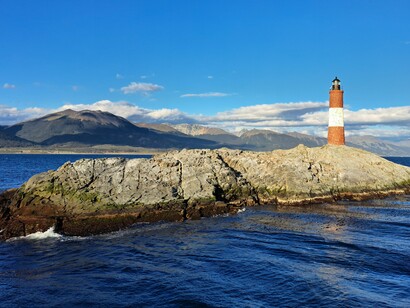
Other disputes and diplomatic skirmishes occurred in the 20th century, the most serious of which brought both countries to the brink of war in 1978, when Argentina refused to recognize the British Crown’s 1977 ruling regarding three islands located in the Beagle Channel—Picton, Nueva, and Lennox—which open onto the Atlantic Ocean and were assigned to Chile.
Ultimately, the dispute was resolved through the mediation of the Vatican and Pope John Paul II, leading to the signing of the 1984 Treaty of Peace and Friendship, which ratified Chile’s ownership of the three islands as well as its sovereignty over the Strait of Magellan.
Today, the waters have been stirred once again by statements from high-ranking Argentine officials seeking to challenge sovereignty over the Strait of Magellan, which—along with Antarctica—is in the crosshairs of the major powers amid the global geopolitical dispute. This only fuels the nationalist and militarist factions in both countries. At a now-distant meeting in Washington in 1969 between Secretary of State Henry Kissinger and his Chilean counterpart, Gabriel Valdés, Kissinger remarked—from a geopolitical perspective—that Chile “stretches like a dagger toward Antarctica,” a statement that has lent itself to various interpretations.
During his first term, President Donald Trump, meeting with his counterpart Mauricio Macri in Buenos Aires—as recounted by the latter—is said to have asked about that western strip while looking at a map of Argentina; Macri replied that it was Chile. Then he said to him, “You should conquer Chile…” It is possible that in Trump’s view—based on power and force, just as he wishes to occupy Greenland, Canada, Panama, or the Strait of Hormuz—he might see Argentina as a large country and an unwavering ally in current President Javier Milei, who would give him greater confidence in his geopolitical objectives of controlling not only the Strait but also the Sea of Hoces—named in honor of the first Spanish navigator to cross it, or Drake Passage as the English christened it—which connects the two oceans.
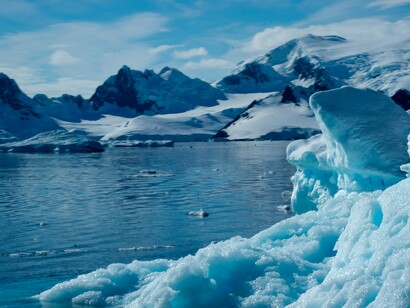
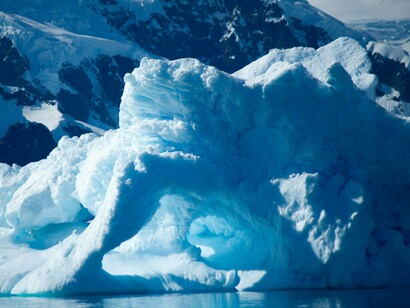
The long-term focus is on Antarctica, a continent spanning 14 million square kilometers, untouched by resource exploitation and governed by the Antarctic Treaty since 1961, which keeps territorial claims on hold. Argentina was the first country to establish a permanent base in Antarctica, in 1904—Las Orcadas—and Chile did so in 1947. Today, both countries maintain permanent scientific bases, as do 30 other nations. Argentina and Chile claim sovereignty, as do the United Kingdom, France, New Zealand, Norway, and Australia. Argentina’s claims cover 1.4 million km², Chile’s 1.2 million km², and the United Kingdom’s 1.7 million km².
The claims of Argentina, Chile, and the United Kingdom overlap, which complicates matters. London claims the entirety of the area claimed by Argentina and more than half of the area claimed by Chile. Buenos Aires and Santiago’s claims overlap, with the former claiming 52% of the area claimed by Chile. Both countries have been engaged in a race to make presidential visits to the Antarctic continent, as acts of sovereignty they hope to use should they one day assert their rights before a court. No British head of government has visited Antarctica, and they have designated the entire claimed area as the British Antarctic Territory and a smaller portion as Queen Elizabeth II Land.
At the time the Antarctic Treaty was signed, the United States and Russia made reservations regarding their sovereignty claims, while China acceded to the treaty in 1983 and established its first base in 1985. The current Antarctic Treaty has served as a model of multilateralism and respect for international law, prohibiting both the militarization of the continent and the exploitation of its natural resources. Will it remain this way? A review of the treaty is scheduled for the year 2048, and today it is very difficult to predict what the discussion on sovereignty claims will look like on a continent that contains 70% of the world’s freshwater reserves and all the most coveted minerals, along with others yet to be discovered.
Countries such as Argentina and Chile should bridge their differences if they wish to have any chance of asserting rights in Antarctic territory. The creation of a joint scientific base on the frozen continent would be a powerful gesture of friendship that would honor a history of cooperation dating back to their struggles for independence. Two countries with the world’s third-longest border—and which, since their founding as republics more than 200 years ago, have never, ever gone to war—represent a heritage that should be safeguarded and that should shut the door on chauvinist and militarist factions in both nations. Wars, in addition to death and destruction, leave wounds and scars on future generations.
President Trump’s remarks about “conquering Chile” have surely fired the imagination of nationalist factions and come on top of the U.S. government’s demands to triple military spending in a region where the last war took place in 1982, between Argentina and the United Kingdom over the Falkland Islands. The renewal of military equipment is a government obligation aimed at maintaining deterrence and national security. But to go from there to starting an arms race—as we have seen in the past—would be absurd and out of touch with the realities of two countries that must focus their efforts on integration and cooperation, where there is a broad range of shared interests.
The dispute over the southern tip of the continent demonstrates that we are no longer in a geostrategic shadow as in the years Kissinger referred to. Today, the interests of the major powers are focused on control of the Strait of Magellan, the Sea of Hoces, and Antarctica. President Trump’s doctrine echoes the maxim attributed to Napoleon that treaties are respected as long as they do not affect my interests. We are only at the beginning of this dispute, which should have nothing to do with countries like Chile and Argentina, which must join forces to safeguard their national interests and maintain their sovereignty, independence, and dignity.