English
 Español
 Français
 Deutsch
 Italiano
 Português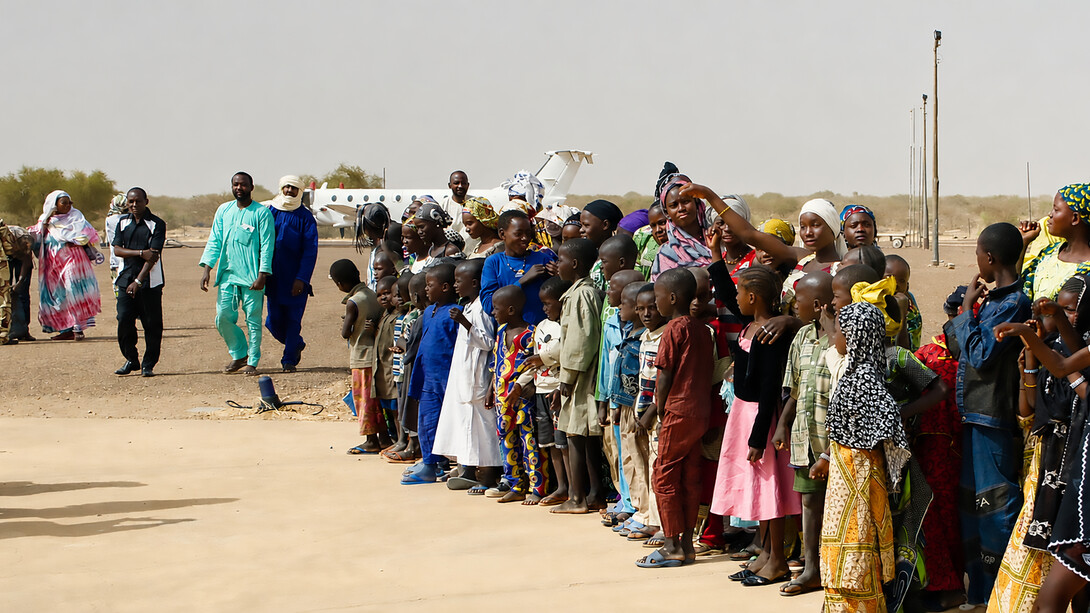
While humans are capable of amazing acts of goodness and progress, history shows that we are a species that is possessed of a capacity for cruelty and inhumanity towards our fellow humans.
We are all born free and equal in dignity and rights. Maybe we are all born knowing we have rights, and we just have to be reminded. Each person has human rights, and each person has responsibilities to respect the human rights of others. Human rights are universal, indivisible, inalienable, and interdependent. They are universal because everyone is born with and possesses the same rights. Human rights can be defined as those basic standards without which people cannot live in dignity as human beings. Human rights are the foundation of freedom, justice and peace. Human rights cannot be bought, earned, or inherited.
They belong to people simply because they are human. Human rights are the same for all human beings regardless of race, sex, religion, political or other opinion, or natural or social origin. No one has the right to deprive another person of them for any reason. Categories of rights: Civil and political rights, economic and social rights, and environmental, cultural and development rights. Human rights are a universal concern that requires an intricate balance of local action and global governance. Strengthening the framework of international cooperation and law and ensuring their fair application are crucial for advancing human rights in an increasingly interconnected world.
So, by working collectively, the global community can move closer to a world where dignity, freedom, and justice are genuinely universal. In a world with conflict, inequality, and systemic injustice, the protection and promotion of human rights remain paramount. Global governance plays a crucial role in human rights, acting as a framework for international cooperation and legal standards that uphold human dignity and freedom. Key players in the framework include the UN, ICC, and regional bodies like the European Court of Human Rights (ECHR) and the African Union.
The UN should be the most important world organisation in global efforts to promote human rights. The Universal Declaration of Human Rights (UNDHR), adopted in 1948, and various UN human agencies, such as the UN Human Rights Council and the Office of the High Commissioner for Human Rights (OHCHR), should work to monitor and address human rights abuses.
International Criminal Court- Its role is to ensure that no one, irrespective of status, is immune from legal accountability. The ICC should investigate and try individuals charged with grave offences against human dignity, including genocide and war crimes against humanity.
And regional bodies like the European Council for Human Rights and the Inter-American Court of Human Rights should provide a mechanism for individuals to seek redress against states violating their rights. Despite the establishment of robust frameworks, these institutions are not effective in global governance of human rights. Inconsistency and selectivity plague international institutions. Some countries are scrutinised heavily, while others may evade scrutiny due to political alliances.
A significant lack of resources limits the ability of international human rights institutions to effectively monitor and enforce human rights globally. To overcome these challenges, several strategies could be adopted:
Greater cooperation among international institutions and civil society.
Supporting local human rights defenders and organisations.
Promoting universal jurisdiction can allow national courts to prosecute serious human rights abuses committed in other countries.
The connection between human rights and global governance highlights how state behaviour affects the realisation of human rights and underscores the importance of protecting these key values. The rules and conventions governing state behaviour on the international stage are shaped by various mechanisms, including international organisations, treaties, conventions, and diplomatic exchanges. Nations are the main parties to international human rights treaties and conventions they sign and carry out. 'Global governance' refers to the collective management of transnational issues by states, international organisations, and civil society. Global human rights aim to bridge the gap between universal moral standards and state sovereignty, operating through international laws, courts, and enforcement mechanisms.
Global governance and human rights paradox: human rights theoretically rely on nation-states for protection, and these same states are often the primary perpetrators of abuses. Good governance requires transparent, accountable, and participatory institutions. And the true measure is the degree to which it actively secures civil, cultural, economic and political rights. Effective protection requires the combined efforts of transnational institutions, local advocacy, networks, and international cooperation. Global South nations define human rights through dignity, development, and opportunities, seeing China as a role model. Today's erosion of human rights may not become the accepted price of politics. Why do human rights violations occur around the world? Power concentration, strong executive control, a weak legislature, a politicised judiciary, and unaccountable security forces create opportunities for abuse.
Peace and human rights—'Peace' is a Latin word, ‘Pax’, which means a pact, an agreement, or a control to end war or any dispute and conflict between two people, two nations, or two antagonistic groups of people. Albert Einstein: ‘Peace is not merely the absence of war but the presence of justice, of law, of order, of government.' Building more peaceful, just, and overall prosperous, sustainable societies starts with education. Education plays a key role in shaping a peaceful future.
Human rights include the right to life, liberty, freedom from slavery and torture, freedom of opinion and expression, the right to work and education, the right to healthcare, and many more. Everyone is entitled to these rights, without discrimination. According to the Universal Declaration of Human Rights, a central prerequisite for peace is recognition of human rights, recognition of the inherent dignity, and of equal and inalienable rights of all members of the human family, which is the foundation of freedom, justice, and peace in the world. According to American military history, they fight wars to win peace. But peace cannot be kept by force; it can only be achieved by understanding. The use of military force to protect human rights also risks violating basic human rights.
Human rights violations can be both the result of violent conflicts and their catalyst. With the ultimate goal of well-being, peace is dedicated to the reduction of violence, militarism, armaments and war through non-violence, disarmament and the peaceful settlement of disputes. Human rights violations are occurring globally, with severe crises concentrated in conflict zones and authoritarian states. Prominent regions facing severe systemic abuses today: Occupied Palestinian territories, Sudan, Iran, Lebanon, Syria, D.R.C., Afghanistan, Eritrea, Rwanda, El Salvador and many others.
Core categories of violations:
Genocide: the word ‘genocide’ didn’t exist before WW2. Genocide was first recognised as a crime under international law in 1946 by the United Nations General Assembly. Genocide is defined as specific acts committed with the intent to destroy, in whole or in part, a national, ethnic, racial or religious group. This includes killing, causing serious harm, deliberately inflicting destructive living conditions, preventing births, and forcibly transferring children.
Crime of aggression: the unlawful use of armed forces by a state against the sovereignty or territorial integrity of another state, such as invasion, annexation, or military occupation. Recognised as the ‘supreme international crime’, it is unique in international criminal law because it applies exclusively to political or military leaders who direct state aggression. Grave breaches as specified under the Geneva Conventions of 1949, serious violations of humanitarian law, are war crimes if they endanger protected persons (children, women, civilians, the wounded and sick) or civilian objects or infrastructure, or if they breach important values. War crimes involve death, injury, destruction, targeting civilians, torturing prisoners of war, unlawful taking of property, or recruiting children under 15 years of age into the armed forces.
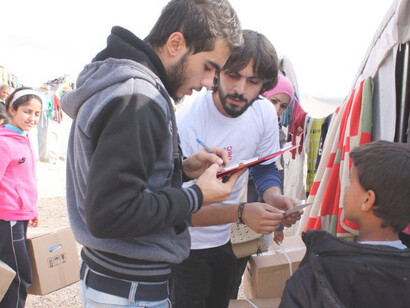
Children’s human rights: there are 2.3 billion children in the world. Globally, children’s human rights are violated every day. Children's rights violations need to stop. Violations of children’s rights are pervasive globally, with millions affected by forced labour, armed conflicts, killing, sexual violence, recruitment of child soldiers, abductions, denial of humanitarian access, child marriage, and forced marriage. Millions of children globally have not had their births registered, so they have no legal identity or proof of existence, which means they may not be able to go to school, receive healthcare, or get a job when they are older. Children struggle to access their rights to education.
Millions live in extreme poverty – and this situation puts children at greater risk of domestic violence, child labour, sexual exploitation, and teenage pregnancy. Children as young as six are judged as adults in criminal courts. Palestinian children are denied their rights and face discrimination daily. The Israeli army regularly arrests children, often during raids. The UN Convention on the Rights of the Child (UNCRC): 196 out of 197 UN member states ratified the human rights treaty – and only the United States hasn’t ratified it.
Between 2014 and 2017, the armed group Islamic State (IS) committed war crimes and devastating genocide against the Yazidi (Kurdish-speaking ethno-religious minority) community in Iraq. Thousands of civilians were summarily executed and dumped into mass graves for refusing to convert to Islam. Yazidi women and girls were abducted, subjected to human trafficking, and endured horrific sexual violence. Thousands of children were killed. Today, the Yazidi people continue to seek justice.
Amnesty International called for a draft survivor’s law to be expanded to include children as beneficiaries of any reparation scheme. And in March 2021, Iraq’s parliament passed the Yazidi Female Survivors Law. The Boko Haram terrorist group in Nigeria has abducted thousands of girls and boys and subjected them to further atrocities in captivity. The group has also wreaked havoc on communities, pillaging villages, and attacking civilians and schools. Amnesty International has shown how the Nigerian government has failed to ensure that displaced children have access to an adequate education. Numerous peace organisations do nothing to help the Palestinian people and all peoples whose human rights are threatened. Israel continued to commit the crimes of genocide and apartheid.
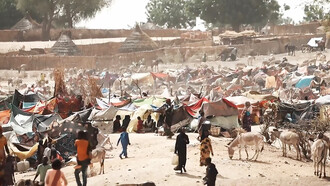
Amnesty International Report – The population in Gaza was subjected to mass starvation, killings and displacement, alongside the destruction of homes and other civilian infrastructure. In the West Bank, escalating attacks and killings by settlers and Israeli armed forces, alongside other human rights violations, caused the forcible transfer of the civilian population. Human rights violations are occurring in Sudan and the D.R.C. Ongoing violent conflicts and atrocities have caused mass displacement and civilian casualties. In Afghanistan, human rights violations and civilian deaths continued; girls are deprived of education.
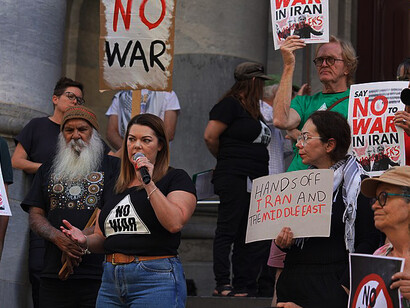
The Rohingya genocide refers to the systematic and ongoing persecution and killings of the Muslim Rohingya minority by Myanmar’s armed forces. The crisis escalated into mass atrocities in 2017, forcing over 1 million refugees into camps in Bangladesh. The Guantanamo U.S. Naval Station and detention camp for ‘forever prisoners’ (suspected terrorists captured during the War on Terror in Afghanistan and Iraq) detainees who have never been formally charged. Imprisoned and tortured without any human rights. Aggression against Iran is a clear violation of the Charter of the United Nations and international law.
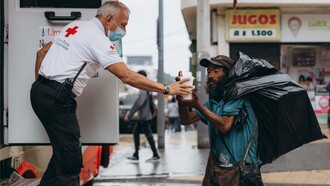
Migration and human rights – Migration is a human right. All individuals, regardless of their legal or administrative status, are entitled to basic human rights. Driven by conflicts, persecution, poverty, and climate change, global displacement and mobility necessitate migration governance firmly grounded in international law and human dignity. An estimated 281 million people currently live outside their country of origin. Migrants in an irregular situation are disproportionately vulnerable to discrimination, exploitation, and marginalisation, often living in the shadows, afraid to complain.
Migrants and asylum seekers should not be criminalised simply for their mode of entry or lack of documentation. International law forbids the detention of migrants, especially children. Outsourcing migration responsibilities puts migrants' human rights at risk, warned an expert at the Human Rights Council at its 62nd session in Geneva.
Environmental rights as human rights signify that a clean, healthy, and sustainable environment is a fundamental prerequisite for the enjoyment of all other human rights, including life, health, and an adequate standard of living. Globally, 2.7 billion people lack access to safe drinking water.
Arms and human rights – Civilians suffer the consequences of the production, accumulation, illicit transfer and use of arms. All states have an obligation under international human rights law to prevent conflicts and the use of arms for serious violations of human rights. The world has to raise alarm over systematic human rights violations and condemn widespread impunity and the global habit of excusing mass suffering and disrespecting international law. We need to reinforce the links between human rights, peace, development and humanitarian action across the UN system. By educating and empowering young people, we push towards humanity.