 English
 Español
 Français
 Deutsch
 Italiano
 Português
Every technological revolution arrives with a prediction that human creativity is about to become obsolete. The sewing machine was once seen as a threat to traditional tailoring. Computer-aided design was expected to remove the artistry from fashion illustration. More recently, social media transformed the way brands communicate, replacing magazine covers with digital campaigns and influencers. Today, artificial intelligence has become the latest innovation to divide the fashion world. Headlines warn that AI will replace designers, automate creativity, and reshape the industry beyond recognition. The conversation is often framed as a competition between humans and machines. Yet, inside fashion studios, design houses, and independent brands, a different reality is quietly emerging. Artificial intelligence is not replacing fashion designers. Instead, it is becoming one of the most valuable creative assistants the industry has ever known.
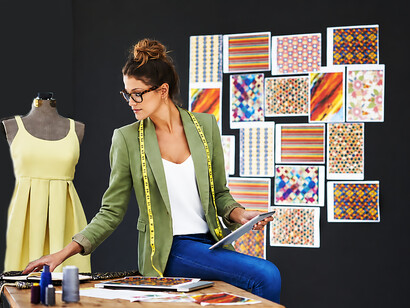
Fashion has always been driven by imagination. Every garment begins long before the first stitch is sewn. It starts with an observation, an emotion, a memory, or an unexpected moment of inspiration. A designer may find ideas while walking through a city, visiting an art gallery, reading a book, travelling to another country, or simply watching people on the street. Creativity cannot be reduced to an algorithm because it is shaped by human experiences. AI cannot experience nostalgia, excitement, love, or curiosity in the same way people do. It cannot understand the emotional significance of a grandmother's embroidered sari, the confidence someone feels wearing a perfectly tailored suit, or the cultural symbolism behind traditional craftsmanship. Those emotions remain uniquely human, and they continue to define great fashion.
What AI can do exceptionally well is assist with everything that surrounds creativity. Instead of replacing designers, it is helping them spend less time on repetitive work and more time developing meaningful ideas. This distinction is important because the daily life of a fashion designer is often misunderstood. The public imagines endless sketching sessions, fabric draping, and glamorous fashion shows. The reality is far more technical. Designers spend countless hours preparing presentations, organising references, writing product descriptions, resizing campaign images, editing technical drawings, updating colour palettes, creating specification sheets, responding to production feedback, and preparing documents for manufacturers. These tasks are essential to bringing a collection to life, but they are rarely the moments where creativity flourishes.
Artificial intelligence excels at precisely these repetitive processes. A designer can now generate several mood board concepts within minutes, compare multiple colour combinations instantly, organise visual references, create presentation layouts, or prepare marketing copy far more efficiently than before. What once required an entire day can now be completed in a fraction of the time. That extra time can then be invested where it matters most: experimenting with silhouettes, exploring textile innovation, refining garment construction, or developing a stronger creative narrative. Rather than reducing the designer's role, AI expands the time available for genuine design thinking.
History shows that fashion has never resisted technology for long. Every major innovation initially generated fear before eventually becoming indispensable. The sewing machine transformed garment production during the Industrial Revolution, allowing clothing to become more accessible while also creating entirely new professions. Later, digital illustration software such as Adobe Illustrator and Photoshop changed the way collections were developed. Designers who once relied entirely on hand-drawn technical sketches gradually embraced digital tools because they increased precision and improved communication between design teams and manufacturers. More recently, three-dimensional software such as Clo3D and Browzwear has allowed brands to visualise garments digitally before producing physical samples, reducing costs and material waste. None of these technologies replaced designers. Instead, they allowed designers to work smarter. Artificial intelligence represents the next logical step in that evolution.
One of AI's greatest contributions is accelerating research. Trend forecasting has always been a significant part of fashion development. Before beginning a new collection, designers often spend weeks analysing runway shows, colour forecasts, consumer behaviour, street style photography, historical references, and emerging cultural movements. AI-powered tools can now organise enormous amounts of information in seconds. They can identify recurring colour stories, summarise seasonal trends, compare silhouettes across multiple collections, and highlight visual similarities that might otherwise take weeks to discover manually. However, this does not eliminate the need for human interpretation. Data may reveal that oversized tailoring or butter-yellow colour palettes are gaining popularity, but only a designer can decide whether those trends fit a brand's identity or deserve to be challenged altogether.
The rise of AI has been particularly transformative for independent designers and small fashion businesses. Unlike major luxury houses, emerging brands rarely have access to large creative teams. A single founder often becomes the designer, photographer, social media manager, website administrator, copywriter, customer service representative, and marketing strategist simultaneously. Balancing these responsibilities leaves little time for actual design. Artificial intelligence has become an equaliser. Small brands can now generate campaign concepts, edit product photography, improve website content, write newsletters, organise online catalogues, and create social media strategies without employing large departments. Instead of replacing jobs, AI is making entrepreneurship more accessible by lowering barriers that once favoured only companies with substantial financial resources.
This democratisation of technology is particularly meaningful in today's digital economy. Platforms such as Etsy, Shopify, and Instagram have enabled independent designers to sell globally without opening physical stores. AI complements these platforms by helping entrepreneurs optimise product listings, improve search engine visibility, analyse customer behaviour, and create stronger visual branding. A young designer launching a label from a small apartment now has access to tools that, only a decade ago, were available almost exclusively to multinational fashion companies. In many ways, AI is making creativity more accessible rather than less valuable.
Artificial intelligence is also influencing one of fashion's greatest challenges: sustainability. The industry has long been criticised for overproduction, excessive sampling, and textile waste. Developing a collection often requires multiple prototypes before arriving at a final garment. Every sample consumes fabric, labour, transportation, and energy. AI-supported digital design allows many of these decisions to be made virtually before physical production begins. Designers can visualise garments, test colour variations, experiment with proportions, and simulate fabric movement digitally. Although physical samples remain essential, fewer unnecessary prototypes translate into less waste and more efficient production. For an industry under increasing environmental pressure, this represents a meaningful step forward.
Marketing has perhaps witnessed the most visible impact of AI. Fashion brands increasingly use artificial intelligence to personalise customer experiences, analyse shopping behaviour, and optimise advertising campaigns. AI can identify which products perform best, recommend complementary items, predict inventory demand, and help brands communicate more effectively with their audiences. Yet even here, human creativity remains central. Consumers rarely connect emotionally with perfect algorithms. They connect with authentic storytelling, compelling campaigns, memorable photography, and brands that communicate genuine values. AI may improve efficiency, but it cannot replace the intuition required to understand what inspires people to fall in love with a collection.
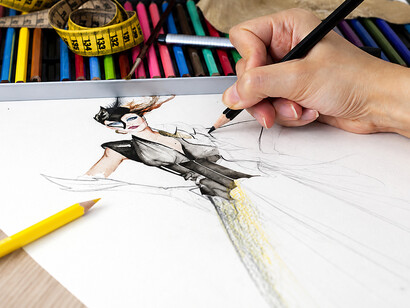
Perhaps the greatest misconception surrounding artificial intelligence is the belief that creativity can be generated simply by producing more images. AI image generators can create countless fashion illustrations within minutes, but quantity is not creativity. Creativity involves judgement. It requires knowing which idea deserves further exploration and which should be discarded. It demands understanding proportion, construction, craftsmanship, heritage, customer psychology, and cultural context. A machine may produce hundreds of garment concepts, but it cannot explain why one silhouette perfectly captures the spirit of a changing generation while another feels emotionally empty. Those decisions remain deeply human.
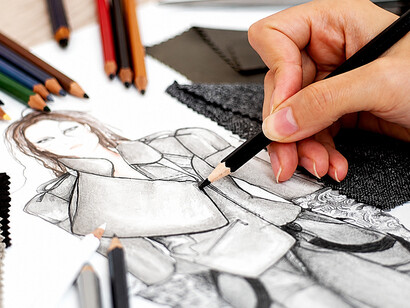
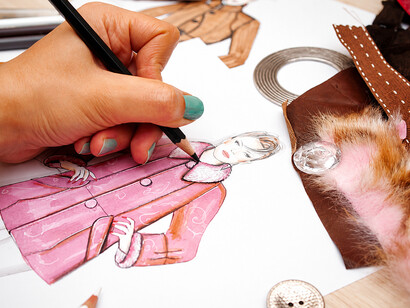
This distinction becomes even more important when discussing craftsmanship. Fashion is not only about appearance; it is also about making. A beautifully embroidered couture gown represents hundreds of hours of skilled labour. A handwoven textile carries the traditions of generations of artisans. Pattern making, draping, tailoring, embroidery, and textile development involve tactile knowledge that cannot simply be downloaded into software. Artificial intelligence can support these crafts by improving communication and reducing repetitive tasks, but it cannot replace the human hands, experience, and sensitivity that transform raw materials into meaningful garments.
Artificial intelligence is undoubtedly changing the fashion industry, but perhaps not in the way many people feared. It is not taking creativity away from designers; it is giving them the freedom to focus on what truly matters. By reducing repetitive tasks, accelerating research, improving communication, and supporting sustainable practices, AI is becoming another instrument in the designer's creative process rather than a replacement for it.
Throughout history, fashion has evolved alongside innovation. From the invention of the sewing machine to digital pattern-making and virtual runways, every technological advancement has reshaped the industry while leaving room for human imagination to flourish. Artificial intelligence is simply the latest chapter in that ongoing evolution. Like every tool before it, its value depends entirely on the hands that use it.
The future of fashion will not belong to machines creating collections independently, nor to designers who refuse to embrace technological change. Instead, it will belong to those who understand how to combine craftsmanship with innovation, intuition with data, and emotion with efficiency. The most successful designers of tomorrow will not be the ones competing against artificial intelligence but the ones learning how to collaborate with it while preserving the authenticity, cultural understanding, and emotional depth that no algorithm can replicate.
Fashion has never been only about clothes. It is about identity, storytelling, culture, and the human desire to express individuality. A computer can analyse millions of images, generate endless colour palettes, and predict future trends, but it cannot experience the excitement of discovering a forgotten textile in a local market, the satisfaction of perfecting a garment after countless fittings, or the emotional connection someone feels when wearing a piece that truly reflects who they are.
In an age increasingly defined by automation, perhaps the greatest luxury is not faster production or smarter technology, but the continued presence of human creativity. Artificial intelligence may become one of the fashion industry's most powerful tools, but the heart of fashion will always remain where it has always been in the imagination of the people bold enough to create something the world has never seen before.