English
 Español
 Français
 Deutsch
 Italiano
 Português
The morning always begins with intention. Light filters through the window, soft and forgiving. The city is still quiet, the kind of quiet that exists only before responsibility takes over. I make coffee, listen to the first sounds of the day, and stand in front of the mirror while the cup warms my hands. The mirror is honest at this hour. There is no performance yet.
I reach for the outfit I laid out the night before, trusting it without question. In the morning, we rarely doubt our clothes. We believe they will carry us through the day, that they will somehow cooperate with our plans. The fabric feels light, almost weightless, resting easily on the body. Everything sits where it should. Nothing resists.
At this moment, getting dressed feels like control.
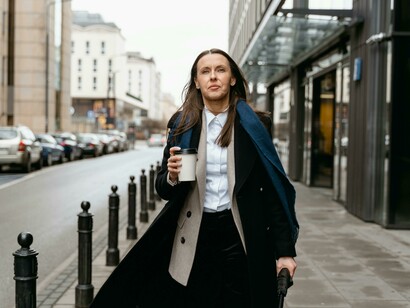
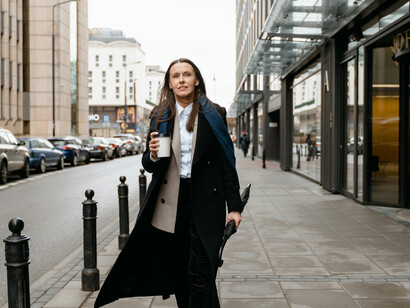
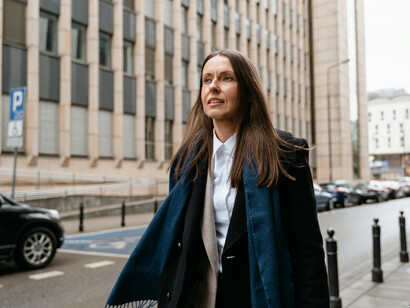
Stepping outside, the air is cooler. On the way to the office, the wind catches my scarf, lifting it slightly as I walk. For a moment, I become aware of how the outfit moves with me, how it reacts to the world. The scarf brushes against my neck, the coat closes around me, and the clothes feel alert, responsive, and awake.
In the morning, clothes feel optimistic.
As the day begins, the outfit enters motion. Streets, public transport, familiar routes. The fabric adapts to movement. I walk faster, slow down, stop, and turn. I become aware of posture, of how I carry myself, of the subtle confidence that comes from feeling supported by what I am wearing. The outfit feels like an extension of my energy.
By mid-morning, the clothes become part of the performance. Meetings begin. Conversations overlap. Time accelerates. I sit, stand, cross my legs, gesture, and listen. The outfit is no longer private. It is visible. It participates in how I am perceived and how I perceive myself.
At this stage, clothing feels functional. It holds structure. It allows focus. I no longer notice the fabric against my skin. The outfit fades into the background, doing its work quietly.
Then the day stretches.
By early afternoon, something subtle shifts. Light changes. Energy softens. The body settles into itself. I stop for brunch, barely thinking about the outfit as I eat. Later, I notice the faint smell of coffee and food lingering on my T-shirt, absorbed without permission. The clothes are no longer untouched. They have started collecting the day.
The same outfit that felt crisp in the morning now feels lived in. Shoes feel heavier. Fabric holds warmth. The clothes carry movement, effort, and presence. Nothing looks wrong, but everything feels different.
This is when clothes begin to absorb experience. A long conversation. A moment of tension. A quiet success. A thought that lingers longer than expected. The outfit becomes a container, holding these moments without judgment.
Psychologically, this shift is natural. We experience clothing through context and internal state. As energy changes, perception changes. The outfit does not feel the same because we do not feel the same.
In the afternoon, clothes feel more human. Less styled. More real.
As evening approaches, the pace shifts again. The city grows louder or softer, depending on where the day has taken us. The outfit, once structured, now feels softer and more forgiving. Precision gives way to comfort. The clothes no longer ask for attention. They simply stay with us.
By this point, the outfit has weight.
Not only physical weight, but emotional weight. The fabric rests heavier on the shoulders. Shoes press more firmly into the ground. The clothes carry everything the day has required of us. They have witnessed focus, exposure, fatigue, and presence.
In the evening, clothing becomes emotional support.
This is often when something becomes clear. We did not choose this outfit only with logic. We chose it instinctively, according to how we felt that morning, even if we didn’t realize it. Some days, the brain has little say. The body reaches first.
Sometimes, clothes choose us.
They meet us where we are emotionally. They offer structure when we need strength, softness when we need care, and distance when we need protection. The choice happens quietly, without explanation.
By the time we return home, the outfit has completed its journey. Buttons loosen. Shoes come off. Fabric falls away from the body. There is relief in undressing, not because the clothes were wrong, but because they have done their work.
They are heavier now. Marked by the day. Changed.
Tomorrow, the same outfit would feel different again. Not because it changed, but because we would.
This is what makes clothing quietly powerful. It lives with us through time. It adapts to our energy. It absorbs our movement, our mood, and our effort. Clothes are not static. They are responsive.
Perhaps this is why getting dressed in the morning feels hopeful, and getting undressed at night feels honest. Between these two moments, clothes witness our lives in motion.
The outfit hasn’t changed. We have.
And maybe that is the beauty of it. Clothes are not meant to stay perfect. They are meant to soften with us, carry us, and hold the weight of being human.