English
 Español
 Français
 Deutsch
 Italiano
 Português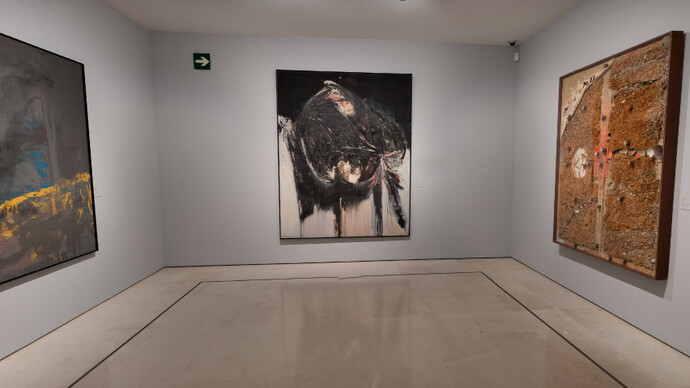
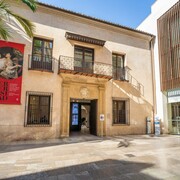
Over the course of its many revolutions, contemporary art demonstrated that what matters is not so much seeing as how we look. In keeping with this maxim, our exhibition invites viewers to ‘read’ a story of the Suñol Soler Collection in images through a selection of its most outstanding works, linked by elective visual affinities, to explain a specific period in twentieth-century Spanish art and its living memory preserved by businessman, lawyer and philanthropist Josep Suñol Soler (1927–2019).
Along the lines of Aby Warburg's Mnemosyne Atlas (1924-1929) or André Malraux's Musée Imaginaire (1947) [usually translated as ‘museum without walls’ or ‘imaginary museum’] – two key methods of thinking with images in the history of art and museums’ exhibition practice – the Archipelago we have charted here presents the Suñol Soler Collection as a visual map of Spanish artistic creation between 1960 and 1980. It focuses on the collecting interests of its owner – who was particularly sensitive to Catalan art of those years.
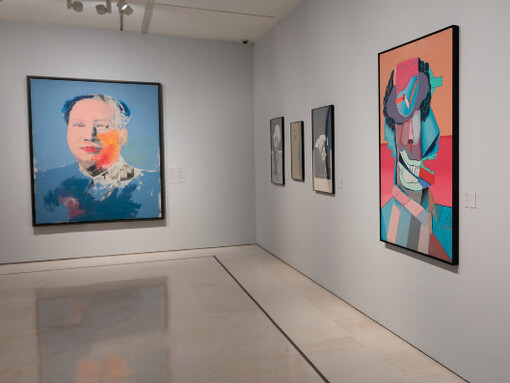
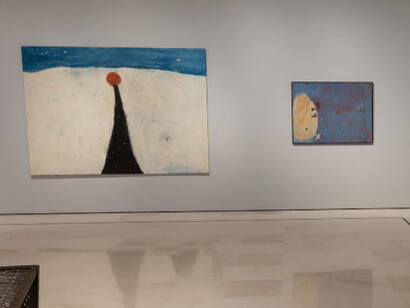
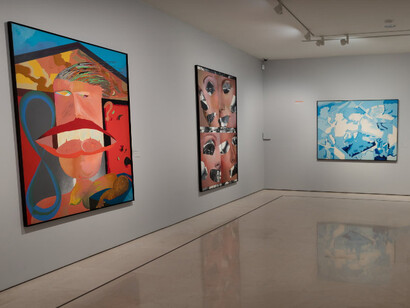
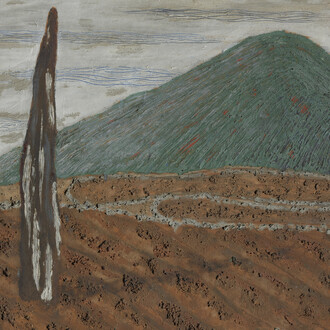
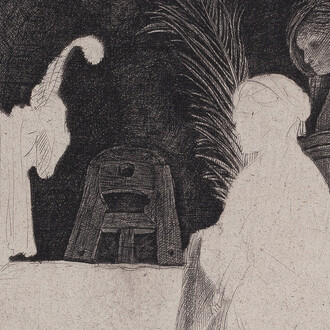
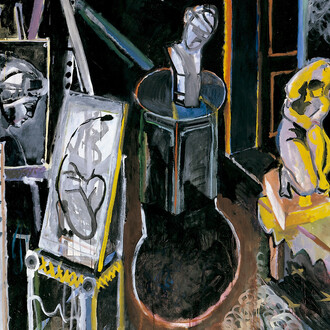
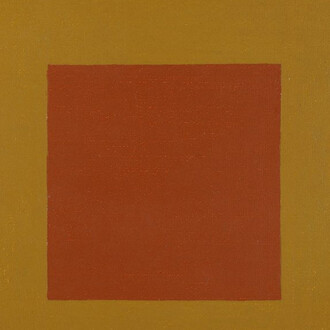
The collage of images taken from the eclectic ‘Suñol archipelago’ conjures up the notion of collection that underpins the works (with its preferences and absences). In it, different languages are interwoven and contrasted; international trends permeate Spanish ones; other periods (from the 1920s to the 1990s) are mixed together; the mainstream (the leading names in international and Spanish modern art of the twentieth century) coexists alongside more adventurous or less commercial approaches; and contemporary art is explored through five concepts that recurringly appear in its many artistic expressions.
These are the islands of the archipelago, which are also vectors of the collection itself: individuals and their identity crisis, nature as an inexhaustible source of creation, the distilled essences of visible forms, signs as signals of a new visual language of communication, and the primaeval matter from which everything originates. Each of them is autonomous, an exhibition in itself within the general map. But it is when they are brought together that they take on their full meaning, as a scaled-down version of Josep Suñol's collecting universe and as a map of modern Spanish art between the end of the dictatorship and the beginning of democracy, between the analogies and divergences of various approaches – abstract, figurative, experimental, conceptual, expressionist, minimalist, flat, matter based, organic, constructive...