English
 Español
 Français
 Deutsch
 Italiano
 Português
As of 1 July 2026, a new European framework on the Right to Repair is being rolled out across multiple product categories. It begins with consumer electronics, goods, and household appliances, followed by children’s toys in February, and will gradually extend to additional sectors, including textiles and fashion, expected next year. While fashion is not yet directly regulated, it is clearly part of the long-term trajectory of this legislation, which aims to fundamentally change how products are designed, maintained, and extended in use across industries.
Sweden hosted the Stockholm chapter of this broader conversation: the first Care & Repair conference, held at Moderna Museet in June 2026. The event gathered more than 250 participants in total, including around 120 online. Organized by Swedish trend agency Trendsstefan in collaboration with the company Act Of Caring, it positioned repair not as a technical afterthought but as a structural shift in how value is created across industries and raised the ultimate sales model question: How can we create a profitable business from repair?
It also made one thing clear early on: repair is still dramatically underused.
In Sweden, consumers spend on average only around 6 euros per year on repair services. In a country often seen as sustainability-forward, it exposes a gap between intention and practice and between policy ambition and everyday behavior. Although 41% of consumers report having used a repair service, annual spending remains extremely low. According to the 2025 Consumer Report, women are more likely to buy second-hand, while men are more likely to repair, suggesting that circular behaviors differ significantly by gender.
From cost center to business model
One of the strongest threads throughout the conference was the repositioning of repair itself. What was previously treated as a cost center inside companies is increasingly becoming a commercial and relational tool.
Across sectors, companies such as Samsung, Electrolux, and Clas Ohlson presented repair initiatives that extend product lifecycles while deepening customer relationships. Spare parts, maintenance services, and refurbishment are no longer peripheral activities but integrated parts of product ecosystems. Fashion and textiles will probably benefit from their neighbors who are already ahead in the exploration to build new solutions and thinking on the subject.
At the same time, speakers noted a tension: while repair is becoming a business opportunity, it is still not easy to scale. Regulation is evolving faster than infrastructure, and many consumers still perceive repair as expensive, inconvenient, or difficult to access. Yet research suggests consumers are generally willing to pay around 30% of the original purchase price for a repair, indicating that the challenge may be less about willingness than about access, trust, and availability.
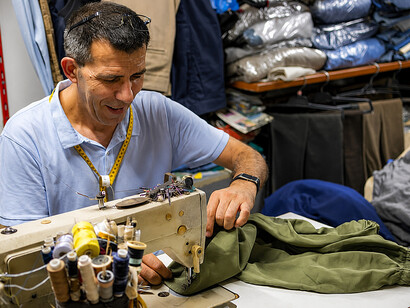
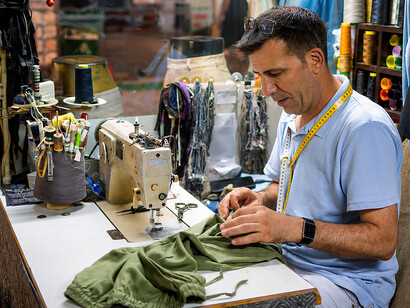
Sweden, for example, has completed a one-year investigation into how the new EU framework for repair should be implemented nationally. Key questions remain unresolved, particularly around incentives. Should VAT on repairs be reduced, or should tax systems such as RUT be expanded to include repair work at the shoemaker or local seamstress? Countries like France and Austria already provide financial incentives, making repair more economically attractive for consumers when going to local textile and shoe-repairing stores.
Unlike several EU neighbors, Sweden has also chosen not to publish an official list of authorized repair providers, raising concerns about accessibility and transparency at the consumer level about who to turn to that is reliable if I get a hole in my stuff! Let’s see how other European countries will lead to develop and roll out this new sustainable fashion initiative. Awareness also remains surprisingly low: only 19% of consumers know about the new EU Right to Repair legislation, despite its potential to reshape product ownership across Europe.
Fashion: the sector where repair becomes cultural
If electronics revealed the regulatory side of repair, fashion exposed its cultural and emotional complexity.
Some speakers highlighted a key data point: extending a garment’s life by three times can reduce its environmental impact by 50 to 70 percent. The implication is straightforward. In many cases, durability and use-phase extension matter more than material innovation alone.
Jodi Everding, a circularity advisor who had worked across all fashion industries from luxury to fast fashion, also noted a shift in language and perception. In luxury houses only a few years ago, “repair” was still considered a negative or low-status term. Today, it is increasingly reframed around craftsmanship, longevity, and value preservation.
A speaker from EY Nordic framed the transformation around three strategic shifts for companies:
Redefining value,
Rethinking resources,
Building new partnerships.
The underlying message was less about tools and more about mindset: repair forces a reorganization of how fashion systems are structured.
A recurring issue, however, remains behavioral. Consumers still associate repair with inconvenience, and brands struggle to build models that are both scalable and desirable. Paradoxically, while only a small proportion of consumers are aware of the new legislation, 99% of businesses surveyed expressed interest in offering repair services, showing that industry may be ready to move faster than public awareness.
When repair becomes experience
Some of the most concrete experiments presented came from brands trying to turn repair into a cultural and emotional experience rather than a service.
Uniqlo’s Lifewear philosophy, developed with its seventy Repair Studio network (including a studio in Sweden in Gothenburg), was presented as an example of “emotional durability." Repair is not only about fixing garments but also about involving customers in co-creation processes, where visible repair and personalization become part of the garment’s identity.
Similarly, the platform Sojo has evolved from a B2C textile alteration service into a B2B infrastructure partner for fashion brands. Its work highlights an often overlooked aspect of fashion waste: unsold or slightly defective pre-consumer stock. Minor faults can prevent garments from entering retail channels, creating hidden loss before products even reach consumers. For example, a little hole in a shoulder makes the garment classified as defective and removed from the sales shelf.
Repair in this context becomes both a sustainability strategy and a revenue recovery mechanism.
Brands are increasingly exploring a combination of replace, refund, and repair policies as part of broader customer retention strategies.
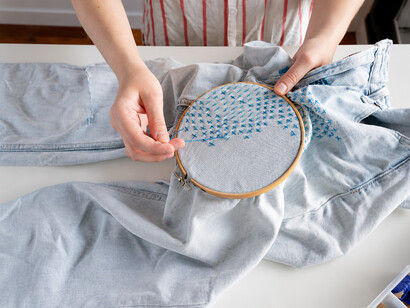
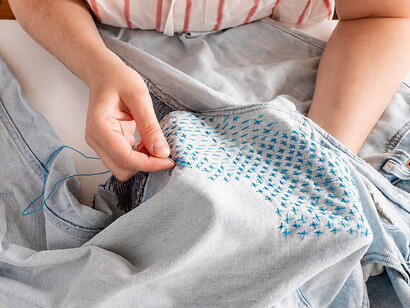
At the more radical end of the spectrum, British brand Toast has built repair directly into its identity. Rather than treating it as a paid service, it integrates repair into community-building activities: workshops in sashiko embroidery, visible mending sessions, and “slow Sundays” designed to bring local communities together.
Notably, a significant share of customers now request visible repairs, preferring garments that show their history rather than hide it.
The sneaker problem
One of the most striking case studies came from Veja, a renowned sneaker brand.
Daniel Schmitt, head of the sneakers repair operation, described a structural issue: while sneakers account for a dominant share of global footwear consumption, repair capacity remains extremely limited. A single pair can contain around 40 different materials, making repair technically complex. At the same time, training pipelines for shoemakers are shrinking, with only a small number of new craftsmen entering the field each year.
At the same time, most traditional shoe repairers trained for leather and older models of shoes do not work on sneakers at all.
Veja responded by opening repair workshops that accept all brands, not just its own, and by creating a training initiative in Roubaix, France, aimed at rebuilding craft skills in footwear repair and all types of textile areas. The brand also introduced a conceptual distinction between “care” and “repair”: the goal is to extend product life through maintenance practices long before structural damage occurs.
Repair, in this framing, is not the endpoint but part of a longer continuum of product care.
Design, responsibility, and regulation
Beyond fashion brands, policy and design researchers emphasized that repair cannot be separated from product design itself.
Anna-Karin Sundelius, textile policy advisor for the Swedish Society for Nature Conservation and ex-H&M, stressed that ecodesign regulations increasingly require products to be durable, repairable, and recyclable from the outset. Recycling alone, she argued, is resource-intensive and cannot be the primary solution.
Extended Producer Responsibility (EPR) systems are also expected to shift financial responsibility towards brands, who may need to contribute to infrastructure for collection, sorting, and end-of-life treatment.
In lifestyle, furniture, and industrial design, similar shifts are already visible. Brands such as Vestre offer long-term guarantees on materials and components, while companies like Swedese integrate repair strategies into product lifecycles. Platforms such as Repamera and emerging apps like Tingit in Lithuania are building digital infrastructures for repair services across textiles and furniture.
A fragile but expanding ecosystem
Researchers from the Swedish art school Konstfack added a more critical layer, questioning who actually performs repair work and under what conditions. Repair remains largely invisible labor, often underpaid and outsourced. Without standards, it risks replicating the same global inequalities seen in production.
At the same time, designers are increasingly asked to rethink their role entirely: not as producers of new objects, but as facilitators of longevity. Maybe in the future being a designer will mean being a repair, recycle, and upcycle specialist actually!
Beyond sustainability language
What emerged from Care & Repair is not a single model but a fragmented ecosystem in formation.
Repair sits at the intersection of regulation, design, economics, and culture. It is at once a policy tool, a business opportunity, a craft practice, and a behavioral challenge. According to McKinsey's 2022 Circularity Report, repair could represent a €50–70 billion market by 2030, illustrating that its future is not only environmental but also economic.
Fashion, in particular, may be one of the sectors where its impact becomes most visible. Not because clothing is the most technical category, but because it is the most emotionally loaded.
If circularity was the dominant narrative of the past decade, repair may become the practical infrastructure that determines whether any of it actually works.
The conference also ended with an open question: Which European city will host the next “Care & Repair next chapter”? After Stockholm, discussions are already underway about where the format could travel next within Europe.