English
 Español
 Français
 Deutsch
 Italiano
 Português

We live in an era where the pursuit of comfort has become a defining characteristic of modern life. The cushion economy, a labyrinthine system of convenience and indulgence, has woven itself into the very fabric of our existence. It's an empire built on the principles of instant gratification, where the fleeting high of a purchase is prioritised over the long-term benefits of meaningful engagement. The consequences of this trajectory are far-reaching, and the human cost is steep.
At the heart of the cushion economy lies the attention economy, a field that has captured the imagination of marketers and entrepreneurs alike. Its primary objective is to secure visibility, followed by engagement, and ultimately, sales. The attention economy has become a masterful puppeteer, expertly manipulating our desires and interests to fuel the never-ending machinery of consumption. But it's not the only cog in the cushion economy's vast machine.
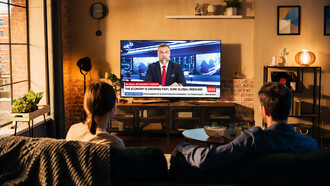
The distraction economy, a cousin of sorts, operates on a similar principle but with a more insidious approach. By creating global events and spectacles, it redirects our focus away from meaningful engagement and toward a collective, mindless spectacle. The sports industry, cinema, and even the news media are complicit in this endeavour, churning out an endless stream of content designed to captivate and distract rather than inform or inspire.
Together, the attention and distraction economies serve as the primary engines driving the cushion economy. Their symbiotic relationship is built on the promise of comfort, convenience, and luxury, but at what cost? The cushion economy has become a master of manipulating our desires, creating a sense of urgency through clever marketing tactics like "24 hours before deal expires" or "shop now, offer lasts for x amount". These tactics prey on our vulnerabilities, eroding our capacity for critical thinking and reflection.
The cumulative effect of this onslaught is a populace that has lost the art of contemplation. We've become a society of reactors rather than thinkers, our decision-making processes reduced to mere impulse. Our memories are shorter, our attention spans are dwindling as we succumb to the constant stream of information and stimuli. The cushion economy has engineered a world where we're more likely to remember the latest advertisement than the last meaningful conversation we had with a loved one.
But there's a price to be paid for this comfort-driven existence. The cushion economy has created a culture of forgetfulness, where the methods for deep engagement and meaningful action are being erased from our collective memory. We're losing the ability to apply critical thinking, to question the status quo, and to strive for something greater. The cushion economy has become a self-sustaining machine, feeding on our distractedness and reinforcing the very habits that are slowly suffocating our humanity.
So, what's the remedy? How do we break free from this suffocating cycle and create a more harmonious, more meaningful existence? The answer lies in the creation of a bridge – a bridge that connects the world of commerce with the world of human flourishing. This bridge would give birth to an alternative mega-economy, one that we'll call the Harmony Economy.
The Harmony Economy would operate on a different set of principles, one that values depth over breadth, quality over quantity, and meaning over mere convenience. It would prioritise a slower pace, one that allows us to consume less, to add more depth and meaning to our lives, and to engage with the world around us with greater consciousness.
Imagine a world where businesses are built not solely on profit but on improving the quality of life for societal members. A world where entrepreneurs are driven by a desire to create positive change, to foster meaningful connections, and to cultivate a sense of community and belonging. This is the vision of the Harmony Economy.
Take, for example, the rise of coworking spaces. These shared offices have become hubs for creative collaboration, fostering a sense of community and connection among entrepreneurs and freelancers. They've created a platform for people to come together, share ideas, and work toward a common goal. These spaces are not just physical offices but also incubators for meaningful relationships and collaborations.
Or consider the emergence of experiential retail. Gone are the days of mindless consumption; instead, we're witnessing a shift toward experiences that create lasting memories and foster deeper connections with others. From immersive art installations to workshops and classes, experiential retail is redefining the way we engage with products and services.
These examples illustrate the potential of the Harmony Economy. They show us that it's possible to create businesses that not only generate profit but also contribute to the well-being of society. By prioritising depth over breadth, quality over quantity, and meaning over convenience, we can create a more harmonious, more meaningful world.
But the Harmony Economy is not just a utopian dream; it's a call to action. It's a reminder that we have the power to choose, to shape the world we want to live in. We can choose to reject the soft seduction of the cushion economy, to resist its siren song of instant gratification and mindless consumption. We can choose to create a world that values human flourishing over profit, a world that prioritises depth over breadth and quality over quantity.
The question is, will we take the bridge that leads us to the Harmony Economy? Will we choose to create a world that's more harmonious, more meaningful, and more just? The answer lies within us, in the choices we make every day, in the values we prioritise, and in the world we strive to create. The choice is ours; the time for action is now.