English
 Español
 Français
 Deutsch
 Italiano
 Português
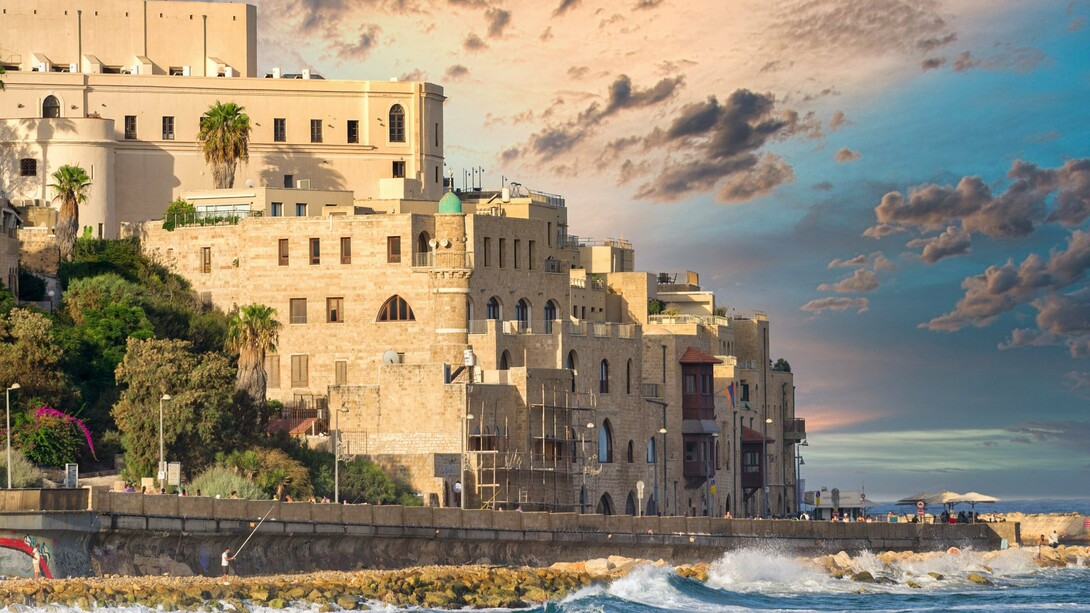
On 27 October, elections were held in Israel. The ruling coalition, led by the incumbent Prime Minister, Benjamin Netanyahu, won 53 seats. The opposition, led by former general Gadi Eisenkot, won 48 seats, while the bloc of Arab parties, which are Palestinian, led by Mansour Abbas, won 19 seats. The remaining 5.2%, representing several minor parties, won none. A majority of 61 out of 120 seats is required to form a government, so the country entered a phase of negotiations, alliances and accusations. If no agreement is reached, new elections must be called.
What appears to be a global trend is the refusal to recognise election results or the accusation of foreign interference when the results do not favour a particular group. This is what is happening in Israel, where Netanyahu and his Likud party have accused the election of being 'stolen' — without presenting any evidence to date — and have denounced Qatar for intervening in favour of the Arabs. This is due to the strong support received by the Palestinian bloc, which, with its 19 seats, holds the key to determining the parliamentary majority needed to form the next government. Total voter turnout reached 77.7%, and among Arabs it hovered around 80% — a historic figure, exceeding the percentage of Jewish voter turnout.
Much has changed in Israel over the past few decades. Two dates have shaped the political destiny of Israel and Palestine: the assassination of former Prime Minister Yitzhak Rabin on 4 November 1995 and the Hamas terrorist attack on 7 October 2023, which left nearly 1,200 people dead, and 250 hostages taken. The Netanyahu government responded on 7 October itself with airstrikes on Gaza, which escalated into a war aimed at annihilating Hamas’s military capabilities within a few days. To date, this has resulted in what is considered 'collateral damage' — more than 70,000 Palestinian casualties, including children, women, and innocent civilians — along with the destruction of cities and the occupation of new territories in the West Bank.
These events have set back the hope of a Palestinian state capable of coexisting with Israel, which was once a possibility in the Middle East and for the world. This seemed possible with the Oslo I and II Accords, signed in 1994 and 1995, respectively. Thanks to the political will of Israeli leaders Yitzhak Rabin and Shimon Peres, as well as Yasser Arafat and US President Bill Clinton, these accords paved a viable path through diplomatic negotiations that respected the interests of both sides. However, the Likud Party, led by Netanyahu at the time, opposed the agreements. Nevertheless, Rabin, Peres and Arafat were awarded the Nobel Peace Prize in 1994, a decision that was rejected by Hamas. However, Rabin's assassination and Netanyahu's subsequent rise to power — he has governed for a total of 19 years to date — dismantled that possibility.
The war waged against Hamas and the Palestinian people has led the International Criminal Court (ICC) to issue arrest warrants for Benjamin Netanyahu, his former defence minister Yoav Gallant and Hamas leader Mohammed Deif. For this reason, former US President Donald Trump pressured his allies to withdraw from the ICC. Meanwhile, the South African government filed a genocide case against Israel with the International Court of Justice in 2023. History teaches us that allegations of genocide take time to be proven.
Under international law, the crime was not recognised until the end of World War II, following the Nazi Holocaust against the Jewish people. The first recorded instance of this crime in the 20th century was committed by Germany in Namibia amid the colonial scramble for Africa between 1904 and 1907, when more than 50,000 indigenous people from the Herero and Nama ethnic groups were killed. It was not until 2019 that Germany recognised this as genocide and compensated the victims' descendants with almost 1.2 billion dollars. To this day, Turkey refuses to recognise the genocide of 1.5 million Armenians that occurred under the Ottoman Empire in 1915. They blame it on World War I, even though more than 30 countries have now recognised it, with Uruguay being the first in 1965.
Geopolitics also plays a role in what is happening in Israel. Its physical characteristics, such as land area, depend on whether occupied territories, such as the Golan Heights or East Jerusalem, are included. However, it is approximately 22,000 km², which is similar in size to Slovenia. It has a population of almost 11 million, 21% of whom are Arab — a figure which does not include Palestinians in Gaza or the West Bank.
According to the International Monetary Fund, Israel's GDP reached $610.8 billion in 2025, with a growth rate of 2.9%, and its purchasing power parity (PPP)-adjusted per capita income was around $55,000. Israel's main trading partners are the United States, the European Union (EU), and the People's Republic of China. Israel’s foreign trade is highly significant, with exports totalling $168,320 million last year. This strength lies in the country's exports of highly complex technological services, thanks to an investment rate in science and technology reaching 6.3% of GDP — double the EU average. However, Israel's joint war with the United States against Iran, its aggression against Lebanon and the destruction of Gaza have raised defence spending to 8.8% of GDP.
The country’s official borders are with Egypt, Jordan, Syria, and Lebanon. It also borders the West Bank and the Gaza Strip and has coastlines along the Mediterranean Sea and the Red Sea in the far south. Politically, its historically close alliance with the United States and the EU — strengthened under Donald Trump's presidency — has helped it improve relations with several Arab countries. Thus, the so-called Abraham Accords of 2020 enabled Israel to normalise diplomatic relations with several members of the 22-state Arab League, which has a combined population of around 500 million. These countries were Bahrain, the United Arab Emirates, Sudan, and Morocco, as well as Egypt in 1979 — one year after the Camp David Accords — and Jordan in 1994, following the signing of a peace treaty.
However, despite its military and political successes, Israel's society is not at peace. Its people live constantly on the defensive, fearful of terrorist attacks and new wars, and its young people prepare for military service. This, coupled with political and religious contradictions, has also prevented the country from charting a path forward in a region where it competes with regional powers such as Iran, Saudi Arabia, and Turkey.
Today, the country appears to be deeply divided, as evidenced by the results of the recent election. Zionism forms part of the national identity and is affirmed by most of the population. Radical groups believe that the expansion of territory and sovereignty — which they claim must extend from the Jordan River to the Mediterranean — is a biblical or divine right, effectively denying the right to existence of a Palestinian state. This forms the basis of the Likud party’s principles, which were adopted in 1977 and effectively deny Palestinians' rights in the West Bank — an area considered fundamental from an Orthodox religious perspective. This explains why settlers are given free rein to advance the occupation of the territory and helps to explain why religious parties strongly support Likud.
The corruption allegations against Netanyahu, as well as the army's disproportionate response and the documented atrocities it committed in Gaza, as demonstrated by filmmakers Yuval Abraham and Rachel Szor in the documentary NAZA, which features soldiers' testimonies, have had a profound impact in Israel and around the world. The war against Iran, in which Washington participated, failed to achieve its stated objectives, except for the elimination of the ruling leadership and the resulting chaos in the markets due to rising oil prices. Prominent members of the Jewish intellectual community, such as the philosopher and historian Yuval Harari, have expressed well-founded concerns about Netanyahu’s actions.
According to Harari, these actions have deepened the country’s division under the illusion of total victory — the destruction of the Iranian regime and the Palestinians. For the first time, Israel’s staunch European allies have begun to question the Israeli government due to public pressure in their own countries and images of the famine and devastation suffered by Palestinians. Israel's isolation will grow in the future, and the limitations of military power are already evident. With Palestinians making up 21% of its population, Israel must sooner rather than later begin a new cycle of rapprochement, negotiations, and diplomacy.
In doing so, it must keep in mind its own security, as well as the strong will of the Arab world and the international community regarding the Palestinian people’s right to establish a state in accordance with international law. The government that emerges from the recent elections will not bring about radical change to the current situation, but it could halt targeted bombings resulting in 'collateral damage', cease attempts to forcefully change the Iranian regime, and end the occupation of southern Lebanon. The only viable path for Israel would be to open the doors to dialogue and accept the international community's overwhelming demand for the creation of a Palestinian state.