English
 Español
 Français
 Deutsch
 Italiano
 Português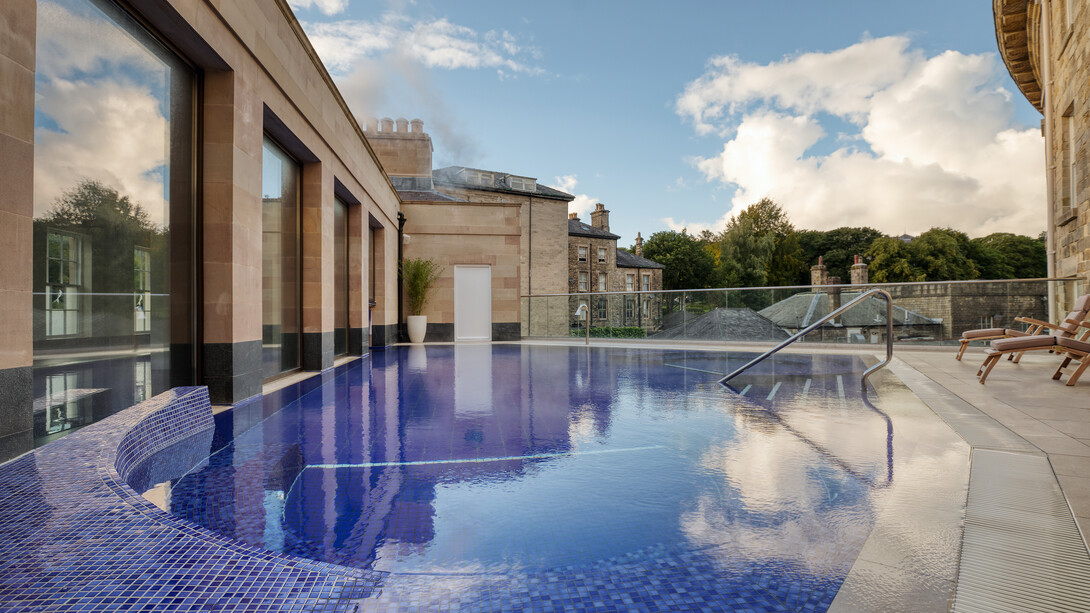
It was one of those grey mornings when packing a bag felt like an act of optimism bordering on delusion. Yet the train was booked, the overnight bag was by the door, and the words thermal waters had been lodged in my brain for weeks like a half-remembered song. So I found myself at London Euston just after nine, coffee in hand, boarding an Avanti West Coast service heading north, wondering why I hadn't done this years earlier. That journey deserves a mention of its own, a smooth, unhurried service from Euston to Macclesfield in under two hours, with proper seats, genuine legroom, and the kind of quiet that descends once the city finally disappears behind you. A short, magical ride from Macclesfield brings you to Buxton. No motorway, no parking, no arrival with your jaw clenched. By the time I stepped off the train, I'd read half a book and felt, unexpectedly, like a human being again. There's something to be said for letting the journey do some of the work before the rest even begins.
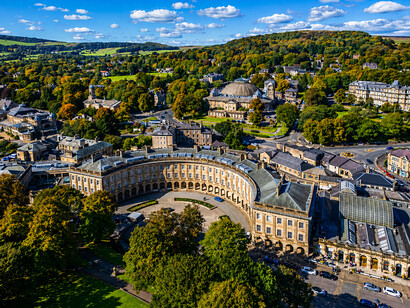
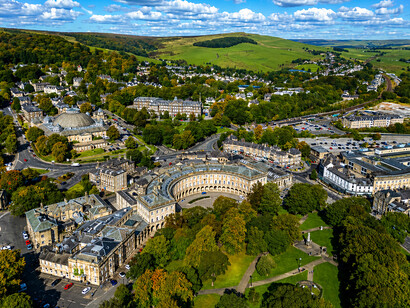
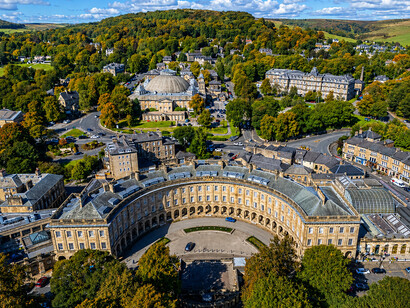
Buxton itself sits at around a thousand feet above sea level, England's highest market town, perched at the southern edge of the Peak District with the composed, unhurried air of somewhere that has welcomed visitors for centuries and sees no particular need to make a fuss about it. Which is, of course, precisely its charm. The town's thermal waters have drawn people for over two thousand years: first the Romans, who built a settlement around the spring; then the Georgians, who turned the whole place into a social occasion. Now, in 2026, Champneys has added a rather beautiful third chapter to that story, and it fits seamlessly. At the heart of it all stands Buxton Crescent, a sweeping Georgian masterpiece commissioned in the 1780s by the Fifth Duke of Devonshire. Its honey-coloured façade curves in a great, confident arc above The Slopes, a terraced hillside softened by mature trees and the particular stillness of a place where people have always come to slow down. I stood outside, admiring it for some time, taking in its beauty.
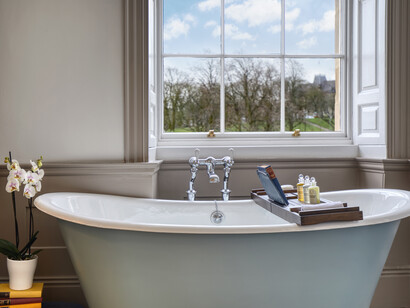
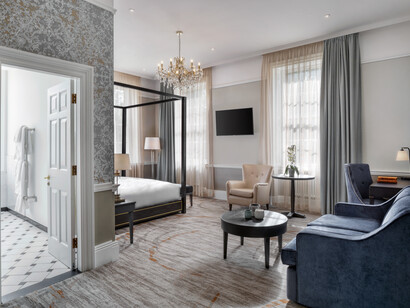
Inside, the hotel manages something genuinely difficult: it feels historic without feeling stiff. The 81 rooms range from snug attic spaces tucked under the eaves to full suites with four-poster beds, roll-top baths, and sash windows that frame the Georgian streetscape like a painting. I stayed in one of the more generous suites, and the bed was simply one of the best I have slept in: deep, properly dressed, with pillows that suggest someone gave them real thought rather than ticking a box. I did not want to leave it in the morning. I negotiated with myself for a full twenty minutes before the smell of breakfast eventually settled the matter.
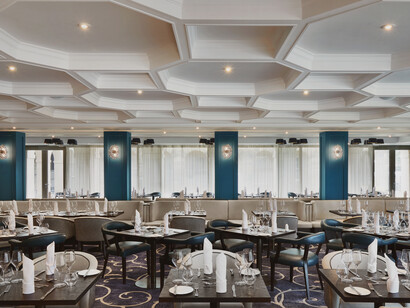
And breakfast is worth getting up for. The dining room has the calm, unhurried quality that good hotel breakfasts should have, but so rarely do: fresh fruit, warm pastries, perfectly cooked eggs, and coffee that arrives hot and stays that way. Dinner, though, is where the kitchen distinguishes itself. The cooking is seasonal and considered, rooted in British produce, with a contemporary sensibility that never tips into showiness. This is where British cuisine is beautifully elevated.
Head Chef James Redmond uses locally sourced ingredients that nourish the body without compromising flavour, offering restorative, hearty dishes such as pan-roasted trout, heritage vegetable tart, and slow-cooked lamb shoulder, all reflecting the region’s agricultural richness. The Spa Café complements this with light, wholesome bites, including wellness bowls of fresh salad ingredients and whole foods, as well as fresh fruit platters and smoothies.
My main meal was the fish dish, cooked with the kind of perfect precision that is harder to achieve than it looks, followed by a dessert that was richly layered and deeply satisfying. I have thought about it more than once since coming home. Even an after-dinner glass of wine in the bar, watching the curve of the Crescent through the window as the street lamps caught the stone, felt like part of the ritual.
But the spa is the reason you come, and the thermal pool is the reason the spa exists. Champneys Buxton is a wellness sanctuary with treatments inspired by Buxton’s historic thermal waters. Signature treatments include the CO₂ mineral bath, the Therapeutic Thermal Mud Pack (featuring mineral-rich mud from Lake Hévíz in Hungary), and the Wave Balance on the Water Couch, a cocooning massage on a warm waterbed that uses therapeutic rhythms to improve flexibility in the muscles and joints.
The water rises from a mile below ground, untreated, mineral-rich and ancient, at a constant 27.5°C, arriving beneath a stained-glass canopy, surrounded by original 1920s tiles. Floating in it produces a particular stillness that is very difficult to achieve in any other way. The facilities are exceptional: a bio-thermal sauna, a Finnish sauna, an infrared sauna, steam rooms, a salt cave, and an indoor-to-outdoor rooftop pool that works in any weather, which in Derbyshire is less a luxury and more a practical necessity. I also had a massage that addressed the shoulder tension I had been carrying for months. I left feeling not just relaxed, but structurally reassembled, as though something had been gently put back in its right place.
And, of course, there is far more to discover. The Victorian Buxton Opera House, which hosts up to 450 performances a year, is a true cultural gem, while the Pavilion Gardens lend the town a softer, greener rhythm. Beyond the Peak District lie limestone dales, open moorland, and walking trails that genuinely lead somewhere.
Nearby, the sweeping parkland of Chatsworth House stretches along the River Derwent beneath ancient oaks, while the dramatic chambers of Poole's Cavern immerse you in cool air and mineral-rich stillness. Last but not least, Buxton Pottery Painting, tucked inside the historic Cavendish Arcade, offers a calming, creative escape where you can paint your own ceramics.
For more than two thousand years, people have come to Buxton in search of restoration. The Romans first discovered its thermal spring; the Georgians transformed it into a grand spa destination centred on health, elegance, and leisure. Today, Champneys Buxton Spa continues that tradition with effortless calm and modern comfort. Thanks to Avanti West Coast, you can leave London in the morning and still arrive in time for lunch.
It was the weekend I didn’t realise I needed, and before I’d even left, I was planning my return.
Notes
Champneys. (n.d.). Buxton Crescent.