English
 Español
 Français
 Deutsch
 Italiano
 Português
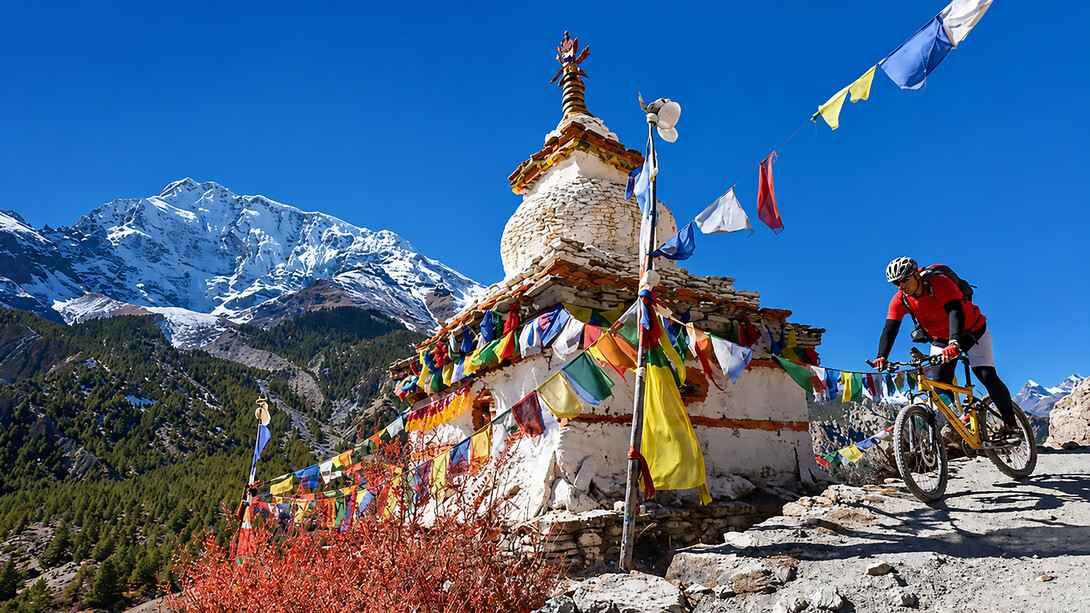
The morning air in Kathmandu feels different when you’re about to ride. It carries a quiet anticipation—of climbs that will test your lungs, descents that will test your courage, and moments in between that will quietly change the way you see the world. I tighten my helmet, check the brakes once more, and begin. Not just a ride, but a journey. Not just across land, but through an idea that keeps growing stronger with every kilometre: Nepal’s Mountain Bike Vision.
The first pedal: leaving the noise behind
The city wakes up slowly behind me. The hum of engines, the rhythm of daily life, and the familiar chaos all begin to fade as the trail climbs toward the hills surrounding Kathmandu. Soon, the road narrows. The concrete disappears. The trail becomes rough, honest, and real.
I enter the forests of Shivapuri National Park, where the air cools and the scent of pine replaces the smell of smoke and dust. Here, the only sound is the crunch of tyres on dirt and the steady rhythm of breath.
This is where the first thought comes. What if more people could experience Nepal like this? Not through the glass windows of vehicles, but through effort, sweat, and connection.
Climbing higher: where effort meets perspective
The trail climbs relentlessly. My legs burn, my breath shortens, and yet there’s a strange satisfaction in the struggle. Every uphill climb demands something from you, and in return, it gives you perspective.
As I reach a ridge, the valley below unfolds—terraced fields stretching like green staircases, small houses clinging to hillsides, and people already at work. A farmer pauses, looks up, and smiles. No words, just acknowledgement. That moment stays longer than any photograph.
Mountain biking in Nepal is not just about terrain; it is about human connection. Suddenly, another thought takes shape. This is tourism that touches lives. Not in crowds. Not in noise. But in quiet, meaningful exchanges.
The descent begins. Fast, flowing, and unpredictable. The trail twists through forests, then opens into small villages. Children run alongside for a few seconds, laughing. A dog barks, then loses interest. A woman carrying a basket of vegetables steps aside and nods.
I stop at a small tea shop, nothing more than a wooden structure with a tin roof. The tea is simple, hot, and perfect. We don’t share a common language, but we share a moment. This is where mountain biking becomes more than a sport. It becomes a bridge.
Beyond the valley: the call of the open landscape
Days later, my journey takes me west toward Pokhara. If Kathmandu is energy, Pokhara is calm. The lake reflects the mountains like a mirror, and the trails around the valley feel almost poetic—flowing ridges, forest paths, and open views of the Annapurna range.
Riding here feels effortless, but the thoughts continue to deepen. Why isn’t Nepal already a global mountain biking destination? The trails are here. The beauty is unmatched. The culture is alive. What’s missing is not potential; it is structure, vision, and storytelling.
Into the wild: where Nepal reveals its true power
The journey doesn’t stop in Pokhara. It pushes further north toward the raw, untouched landscapes of Mustang.
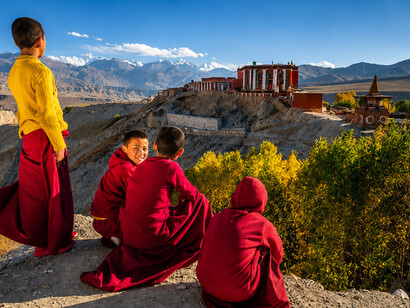
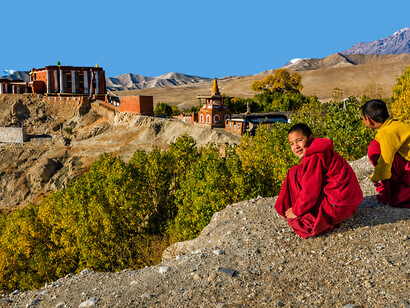
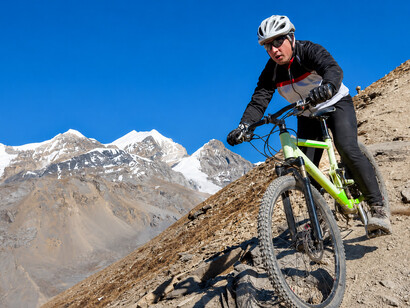
Here, everything changes. The green fades into shades of brown and gold. The air becomes thinner. The terrain becomes harsher, more demanding, and more honest. This is not a place for comfort. This is a place for discovery.
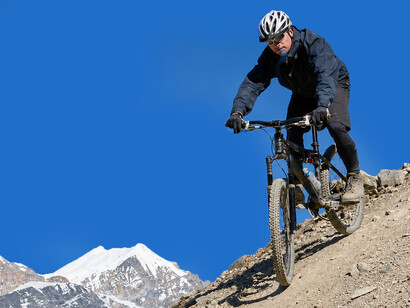
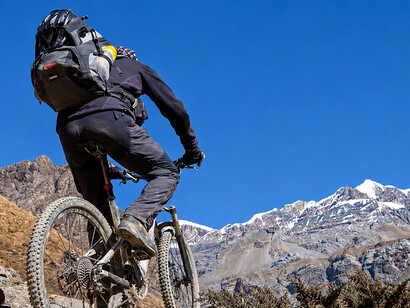
The trails in Mustang are ancient, once used by traders, pilgrims, and travellers long before modern tourism existed. As I ride through narrow paths carved into cliffs, surrounded by vast emptiness, I feel something rare: insignificance and connection at the same time. In that moment, the vision becomes clearer than ever.
The vision takes shape
Nepal is not just a place for mountain biking. It is a place where mountain biking can redefine tourism. A vision begins to form, not as a plan on paper, but as a feeling shaped by experience. It is a vision of trails that connect regions rather than isolate them, tourism that supports communities rather than overwhelms them, and travel that respects nature rather than exploits it.
This is what mountain biking can offer. This is what Nepal needs.
The green thought: sustainability on two wheels
As I ride, one thing becomes undeniable—this is one of the most sustainable ways to travel. No fuel. No pollution. No noise. Just human energy moving through nature.
In a world increasingly concerned about climate change, Nepal holds a quiet advantage. Mountain biking is not just adventure; it is green mobility. Imagine reduced vehicle traffic in sensitive areas, trails that promote conservation, and tourism that leaves minimal impact. Nepal can lead, not follow, in sustainable tourism.
The people along the way
What makes this journey unforgettable is not just the landscape; it is the people. A young boy asking about the bike. A shopkeeper offering water without expecting payment. A local guide sharing stories of the trail.
These are not services. These are connections. Within these connections lies opportunity. If nurtured properly, mountain biking can create jobs for youth, income for rural families, and valuable skills for local communities. This is development that grows from the ground up.
Reality check: the gaps in the trail
But every journey reveals not just beauty, but also gaps. There are moments when trails are unclear, signage is missing, and basic facilities are unavailable. At times, safety feels uncertain. These moments bring an important realisation: Nepal’s Mountain Bike Vision is powerful but incomplete.
To reach its full potential, it needs infrastructure, planning, and coordination. The raw beauty is already here. Now, it needs direction.
The role of experience: beyond just riding
As someone deeply connected to hospitality, I cannot ignore another layer of this journey: food. After a long ride, a simple meal becomes extraordinary. Local dishes, fresh ingredients, and authentic flavours tell stories of their own.
Mountain biking in Nepal can evolve into something more—a complete experience. Riders can travel through villages, enjoy local food, stay in homestays, and learn about the culture. This is not just tourism. This is immersion.
The future riders
At one stop, I meet a group of young locals trying out mountain bikes. Their excitement is contagious. They don’t see limitations; they see possibilities.
Suddenly, the vision expands again. Mountain biking is not just for tourists. It is for Nepal itself. It can inspire healthier lifestyles, foster an adventure culture, and create new career paths. The future of this vision lies with them.
The final stretch: a thought that stays
As my journey begins to slow and the ride returns toward familiar roads, one thought refuses to leave.
Nepal is standing at a moment of choice. It can continue to rely on traditional tourism, or it can embrace something new, something sustainable, inclusive, and forward-thinking. Mountain biking is not the only answer, but it is a powerful one.
Conclusion: a vision written in motion
As I remove my helmet and look back at the trails I’ve ridden—from the forests of Shivapuri National Park to the open landscapes of Mustang—I realise something simple yet profound: this journey is not over.
Nepal’s Mountain Bike Vision is not just about trails. It is about how we travel, how we connect, and how we grow. It is about choosing a path that respects nature, empowers people, and creates experiences that matter.
Perhaps the most beautiful part of this vision is this: it doesn’t require engines. It doesn’t require noise. It only requires a rider, a trail, and the willingness to move forward, one pedal at a time.