English
 Español
 Français
 Deutsch
 Italiano
 Português
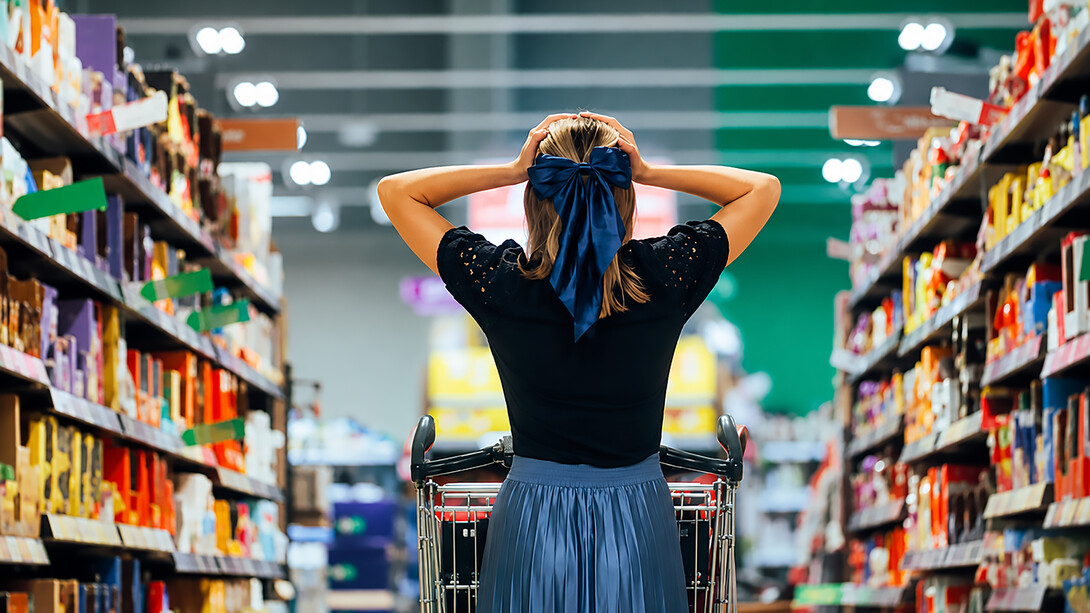
Maria works two jobs. She leaves her apartment in East Los Angeles before six in the morning and gets home after nine at night. On the way back, she stops at the grocery store nearest to her bus stop, not the one with the better produce, not the one that carries the organic brands her coworker talks about, but the one that is open and that she can afford. She loads her basket with what she knows, what stretches, and what her kids will eat without complaint. She does not check ingredient labels. She does not compare sustainability certifications. She checks the price, and she makes it work.
Maria is not an edge case. She is the majority. And the food and beverage industry, for all its talk of innovation, premiumisation, and health-conscious consumers, is increasingly organised around a version of the customer that does not look like her.
This article is about what happens when food gets more expensive faster than people's ability to pay for it. It is about who the industry is actually serving, who it is leaving behind, and what the widening gap between those two groups means for the future of the global F&B market.
The numbers behind the discomfort
Let us start with a fact that should not be comfortable to read. According to McKinsey's State of Food and Beverage report, food prices in the United States were approximately 31 per cent higher on average through the third quarter of 2025 than they were in 2019. Over the same period, overall consumer price index growth was around 26 per cent. Food, in other words, got more expensive faster than almost everything else. And this was not a uniquely American phenomenon. France, Germany, and the United Kingdom all saw food price growth outpace general inflation over the same window.
Now layer on the inequality dimension. American consumers, on average, spent around 10 per cent of their pre-tax income on food in 2024. That average conceals a brutal reality. The lowest-income households spend roughly a third of their after-tax income on food. The highest-income quintile spends about 8 per cent. The gap between those two numbers is not just a statistical curiosity. It is the difference between eating and not eating. Between nutritional adequacy and chronic deficiency. Between stability and precarity.
A separate survey reported that 54 per cent of respondents had reduced the amount of food they were buying in response to price increases, and 20 per cent had started skipping meals entirely to reduce their grocery bills. These are not small numbers in the context of a wealthy, developed economy. They point to a food system that is generating wealth and innovation at one end while quietly failing people at the other.
How the industry responded: the private label pivot
The food and beverage industry did not ignore the affordability crisis. It responded, though not always in the ways one might expect. The most significant structural response came from retailers rather than manufacturers, and it arrived in the form of private label products.
Private label, also called store brand, is not a new concept. Supermarkets have sold their own branded versions of staple products for decades, typically positioning them as budget alternatives to national brands. What changed in 2024 and 2025 was the sophistication and ambition of the private label offer. Retailers stopped thinking of their own brands purely as cheap substitutes and started building them as genuine alternatives across multiple price tiers.
Walmart's Bettergoods line, launched in 2024, is the clearest example of this shift. Rather than positioning the line purely at budget-conscious shoppers, Walmart designed it as a premium private label offering, competing directly with established national brands on quality and ingredient transparency while maintaining a price advantage. In the year following its launch, Bettergoods approached 500 million dollars in sales, making it one of the fastest-growing private label launches in American retail history. Alongside it sat the existing Great Value line, serving the more cost-sensitive end of the market.
In Germany, the retailer Edeka went further, building a portfolio that spans genuine budget, premium, dietary-restriction-specific, and plant-based tiers under different sub-brands. Aldi, meanwhile, demonstrated that a private-label-first model could be transplanted across international markets with significantly lower private label penetration and still succeed.
The industry data supports the trend. The Private Label Manufacturers Association reported that private label sales grew by 2.5 per cent in 2024 while national brands declined by 0.8 per cent. That crossover has meaningful implications for brand equity, marketing spend, and the long-term power dynamics between retailers and manufacturers.
The trade-down behaviour and what it reveals
When economists talk about trade-down behaviour, they mean the moment when a consumer switches from a preferred, more expensive option to a cheaper alternative. It might be switching from branded cereal to store brand cereal. It might be choosing chicken instead of beef or cooking from scratch instead of buying prepared meals. It can also mean cutting a meal entirely.
Trade-down behaviour is a rational response to financial pressure. But it is worth understanding what it reveals about the food system beyond the transaction itself. When 43 per cent of consumers, as one survey found, are deliberately cooking dishes with less meat to reduce grocery costs, that tells you something about the nutritional choices being forced by economic circumstance. Meat, particularly quality protein sources, remains one of the more expensive components of a diet. The people reducing it are not always doing so by choice in any meaningful sense. They are managing a budget.
Similarly, when loyalty programme adoption in the food service sector increased by 45 per cent in a single year, as data from Expert Market's 2024 industry report found, that reflects operators scrambling to retain customers who are actively reconsidering where and whether they spend money on food outside the home. The US Census Bureau noted at least a 5 per cent decline in footfall at food service locations in 2024. Restaurants responded with limited-time offers, special promotions, and digital loyalty incentives, essentially competing harder for a shrinking pool of discretionary spending.
This is the industry adapting, which is what industries do. But adaptation to a crisis is not the same as addressing its causes.
Premiumisation and the two-speed market
While one part of the market was trading down, another was moving emphatically in the opposite direction. Premium and ultra-premium food and beverage products continued to find buyers throughout the same period of inflation and economic pressure. Artisanal goods, functional beverages with health claims, ethically sourced single-origin products, and limited-run seasonal offerings all maintained or grew their audiences among higher-income consumers.
This created what analysts began calling a two-speed market. At one end, intense price competition, private label growth, and consumer austerity. At the other end, premiumisation, experience-driven purchasing, and consumers for whom price is a secondary consideration to values, provenance, and wellness.
The challenge for food and beverage companies is that these two markets require fundamentally different strategies. A brand built around premium positioning and ethical sourcing cannot simply release a budget line without risking the credibility of its core identity. Conversely, a value brand that attempts to premiumise often finds that consumers do not trust the upgrade.
This bifurcation is not unique to food. It mirrors broader patterns of economic polarisation visible across retail, housing, travel, and healthcare. But food carries a specific urgency because it is not optional. You can choose not to buy a premium car or a luxury holiday. You cannot choose not to eat.
The geography of food inequality
Food inequality is not distributed evenly. It clusters geographically in ways that reinforce and amplify existing socioeconomic disparities. In the United States, food deserts, defined as low-income areas where a significant proportion of residents live far from a supermarket offering fresh, affordable produce, are well documented. The intersection of low income, poor public transport, and limited retail infrastructure creates environments where healthy, affordable food is genuinely hard to access regardless of individual choices or preferences.
The ghost kitchen phenomenon discussed in the first article of this series offers one partial and imperfect response to this geography. Delivery infrastructure, when it reaches underserved areas, can theoretically bring food options that bricks-and-mortar retail cannot economically sustain. But delivery services typically add costs, through delivery fees, service charges, and minimum order requirements, that make them less accessible to the very consumers they might theoretically serve. The maths rarely works for someone managing on a very tight budget.
Urban farming initiatives represent a different kind of response, more structural and more ambitious. Kenya's government-supported urban farming programme, scaled in 2024, increased food supply in major cities by bringing production closer to consumption. Similar initiatives in various forms exist across cities in Asia, Africa, and Latin America. They are not a complete solution, but they address the geography of food access in ways that retail and technology alone cannot.
What investors and brands are getting wrong
There is a pattern in how the food and beverage industry, and the investors who fund it, have been discussing the affordability crisis. It tends to be framed as a temporary condition, a cyclical response to extraordinary inflationary pressure that will self-correct as supply chains normalise and commodity prices stabilise. The consumer will return to their previous behaviour, and the premium products will resume their growth trajectory.
This framing is probably wrong. The inflationary pressure accelerated existing trends rather than creating new ones. Income inequality in most developed economies has been widening for decades. The share of household income spent on food by lower-income groups has been a persistent and structural problem, not a pandemic-era aberration. The 20 percent of survey respondents skipping meals in 2024 were not all people who were financially comfortable in 2019.
Brands that treat the value segment as a temporary detour from their premium trajectory may find themselves miscalibrated for a market where a substantial and growing proportion of the population cannot afford their aspirational positioning. Conversely, brands that invest genuinely in affordable, nutritious, and accessible products without sacrificing quality or integrity have an opportunity that is both commercially significant and socially meaningful.
The distinction between serving the value market well and simply making cheaper products matters enormously. A cheaper product that is less nutritious, less transparent about its ingredients, or less honest about its provenance is not a solution to food inequality. It is an acceleration of it.
A different conversation
What would it look like for the food and beverage industry to take the affordability crisis seriously as a structural issue rather than a market segment to optimise? It would probably involve manufacturers working with retailers to genuinely reduce costs in the supply chain rather than simply passing them to consumers. It would involve public policy conversations about food pricing, agricultural subsidies, and the minimum income required to maintain a nutritionally adequate diet. It would involve brands being honest about the trade-offs embedded in their products and their pricing.
It would also involve listening to Maria in the story at the beginning of this article. Not as a data point in a market segmentation exercise, but as a person whose relationship with food is shaped by constraints that no algorithm and no loyalty programme are currently designed to address.
The food and beverage industry is extraordinarily creative when it wants to be. The past five years have seen remarkable innovation in plant-based proteins, functional beverages, sustainable packaging, and AI-driven personalisation. All of that creativity is real and often genuinely useful. The question is whether any of it is directed at the people who need it most.
References
Expert Market. (2024). Food and beverage industry 2024: Trends, challenges, predictions.
McKinsey & Company. (2026). State of food and beverage: The choices CPG leaders can make to renew growth.
Private Label Manufacturers Association. (2024). Private label sales data 2024.
Trinity Logistics. (2025). Trends in the food and beverage industry.
US Census Bureau. (2024). Advance monthly sales for retail and food services.