English
 Español
 Français
 Deutsch
 Italiano
 Português
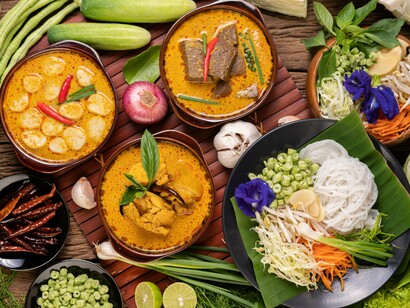
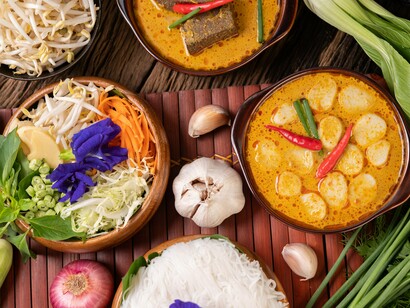
There is no doubt in my mind that a country’s food and its cultural history behind it is one of the greatest weapons that a country can utilize to advance its own self-image around the world. One of the most successful examples of this has been Thailand's gastrodiplomacy. Starting in 2002, Thailand's government launched its “Global Thai” program with the goal of spreading Thai cuisine around the world by offering visas and other incentives to Thai chefs to start restaurants. The Thai government deliberately set out to market Thai food as healthy and wellness-oriented to outsiders who had little preconceived notion. The campaign was a resounding success, with Thai restaurants quadrupling over a 20-year time period.
Not only did it introduce millions to a new cuisine, but it also greatly strengthened Thailand’s international reputation and cultural footprint by making it one of the most recognizable Asian cuisines in the world. It was through this soft diplomacy that it helped increase Thailand’s tourism sector, with receipts quadrupling over a 10-year period from 2009 to 2019. And, by spreading Thai food around the world, Thailand was able to export its food products at significantly higher numbers, growing by 6% this year alone, benefiting its food industry and Thai farmers. In fact, Thailand’s global campaign was so successful that it led to the creation of the term ‘gastrodiplomacy.’ This is just a short list of the many benefits that Thailand was able to incur from its gastrodiplomacy campaign in a relatively small time span.
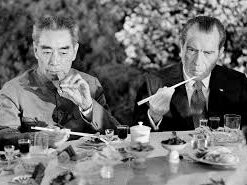
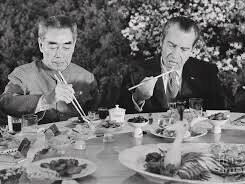
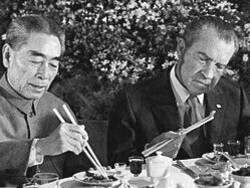
What this translates to is greater international clout and soft power for countries that utilize this secret weapon. Thailand is not the only example that has successfully utilized its culinary talent as a tool for diplomacy and greater recognition abroad. Korea’s Korean Cuisine to the World campaign was another gastrodiplomacy campaign embarked on to spread Korean food and restaurants all across the world with similar levels of success to the Thai case. Or even all the way back in 1972, when Richard Nixon visited China for the first time, using chopsticks became a symbol of bridge-building between the two nations. While this instance was not a government-designed culinary campaign, as the other two examples were, what this does demonstrate is the power of food to bring two cultures together.
Now, I could go on and on about the many times food has been used by countries to expand their cultural and diplomatic influence on the world stage. But regardless, what these examples show is that the use of food can be one of the most successful tools for building cultural bridges.
My own travel experiences have shown me why this strategy can be so effective and what happens when countries don’t employ the same gastrodiplomacy–at least not at the same scale. For example, when I was traveling abroad, I made it a goal of mine to try every country’s national dish. Yet when traveling to countries such as the Czech Republic, Hungary, and Portugal, I realized how little I knew about those countries’ cuisines. Why should I have anyway? With the exception of a few dishes, such as goulash or pastel de nata, these countries do not possess any global culinary campaign and thus lack the recognition that Thailand and others were able to achieve through strategic promotion.
When I traveled with friends, some were not too keen on trying these relatively unknown cuisines at first and only did so after I convinced them to. Granted, did we like everything we tried? No, but this only reinforces the importance of effective marketing and responsible culinary innovation while maintaining authenticity to appeal to wider audiences, such as the Thai case.
This experience highlights how perception and proper marketing can play a key role in our impression and taste in food. By increasing the availability of a cuisine, it can increase its familiarity and create positive associations with that culture and country. In addition, the increased prevalence of restaurants can lead to greater culinary innovation, which can adapt to the palettes of many first-timers. Food, after all, is usually the first step into understanding a country’s culture. And, I genuinely believe that had my friends and I known more about Hungarian and Czech cuisines prior to visiting them, we would have come with more enthusiasm to try more authentic dishes, even if we did not end up liking everything that we tried.
However, the point of this article is not to advocate for a Hungarian or Czech food campaign but rather to highlight the potential that food can play to enhance a country’s global recognition and cultural soft power. Marketing a country’s food and putting it at the forefront of a national tourism strategy can attract a whole new market of tourists. Many countries can learn from the Thai and Korean examples by utilizing this seemingly inconspicuous tool to their advantage. A rather simple idea, such as food, can be a powerful tool for international goodwill.