English
 Español
 Français
 Deutsch
 Italiano
 Português
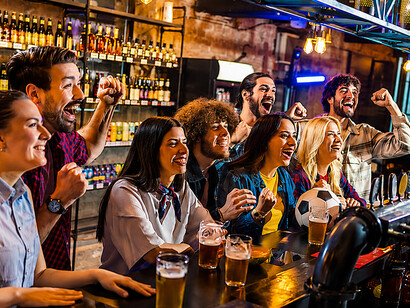
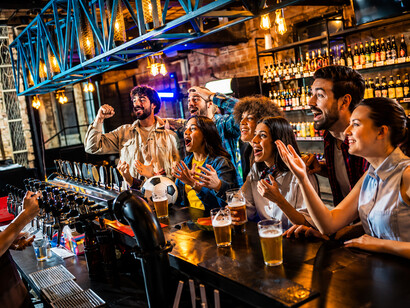
Sport has a way of doing something almost nothing else can. It makes strangers feel like family. It fills pubs and living rooms with people who would never otherwise share a meal and, for a few hours, gives them something to care about together. State of Origin night and the AFL Grand Final in Australia are practically national institutions. The UEFA European Championship turns entire continents into one collective audience. The Super Bowl stops the United States. The FIFA World Cup and the Olympic Games belong to the whole planet.
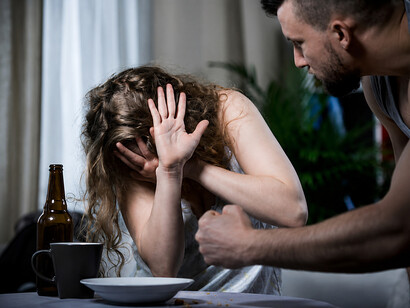
But research from Australia, the United Kingdom, the United States, and beyond has consistently shown something that is hard to ignore. When the biggest games happen, domestic violence rises. Not by a small margin, by significant, documented amounts. For many women and children, game night is not a celebration; it is one of the most dangerous nights of the year. The evidence has been building for decades. It is time for more people to know and talk about it.
What the data shows
These findings did not come from one study in one country. They have been documented across different sports, different cultures, and different results on the scoreboard. Researchers have looked at this from multiple angles and reached the same conclusion every time. And perhaps the hardest thing to sit with is this: it does not matter whether the team wins or loses. The violence rises either way.
In Australia, research spanning six years found that domestic violence assaults increased by more than 40% on State of Origin game nights compared to ordinary evenings. On AFL Grand Final day, police routinely prepare for a 20% increase in family violence calls. In the United Kingdom, studies covering three FIFA World Cups found a rise of 26% in domestic abuse reports when the national team won or drew and 38% when they lost. The day after a match saw an 11% increase regardless of the result. Separate research found that alcohol-related domestic abuse rose by almost 50% on days the national team won at a major tournament. In the United States, research has found that unexpected NFL losses are linked to a 10% increase in domestic violence by men against their partners, with the effect strongest during high-stakes games like the Super Bowl.
The sport is different. The country is different. The result on the scoreboard is different. But the pattern is always the same.
Behind closed doors
It is important to be clear about what this research is actually saying, because the most common misreading of it is also the most damaging one.
Sport does not cause domestic violence. Perpetrators do.
These events do not turn ordinary people into abusers. What they do is create conditions in which people who already hold dangerous attitudes toward the women in their lives are more likely to act and more likely to act severely. Alcohol is the most consistently identified factor. It is involved in up to half of all domestic violence reports in Australia, and its connection to major sporting events is not accidental. Beer companies have spent decades embedding themselves into sporting culture because it is commercially effective. The result is that in many countries, watching a major game and drinking heavily have become inseparable. Gambling compounds the problem. Research has found that the frequency and severity of violence correlate directly with financial losses from betting. In Australia, gambling advertising during sport has become so saturated that researchers have called it out as a public health concern in its own right.
But alcohol and gambling are accelerants, not root causes. Researchers are consistent on this point. The deeper drivers are inequality, the need for power and control, and attitudes that do not respect women as equals. Major sporting events, with their intensity, tribalism, and hours of drinking, create an environment where those attitudes are more likely to spill into violence. For women living with someone who already holds those views, a game night is not unpredictable. They know the signs. They know when the mood shifts, and they know what a bad result or a lost bet might mean before the night is over. That is not something they are watching for out of excitement. It is something they are watching for out of necessity.
The game ends, the responsibility does not
Sporting organisations, broadcasters, and sponsors are not responsible for what happens in private homes. But they are not separate from the culture that makes it more likely either. The saturation of alcohol and gambling advertising in sport is a choice that has consequences. Policies tailored specifically to game-day periods, proactive outreach to known perpetrators before major matches, and awareness campaigns that reach fans where they are watching have all been identified by researchers as practical steps that can reduce harm.
Sport, at its best, is one of the most genuinely unifying things human beings have created. But it operates within societies that have not yet resolved their relationship with gender, power, and violence. Pretending these events exist in a bubble, separate from those problems, is a choice. And it is one that costs people their safety.
If you or someone you know needs support, please reach out to a domestic violence service in your country. Trained counsellors are available around the clock in every part of the world. You do not have to wait for the game to end.
Sources
Domestic violence surge: state of origin game leaves women and children battered and bruised.
Our Watch highlights increased rates of gender-based violence during football finals.
World Cup football is a risk factor for domestic violence.
Domestic abuse rises almost 50 per cent after England win at World Cup.
Major sports events and domestic violence: A systematic review.
Family violence and football: the effect of unexpected emotional cues on violent behavior.