English
 Español
 Français
 Deutsch
 Italiano
 Português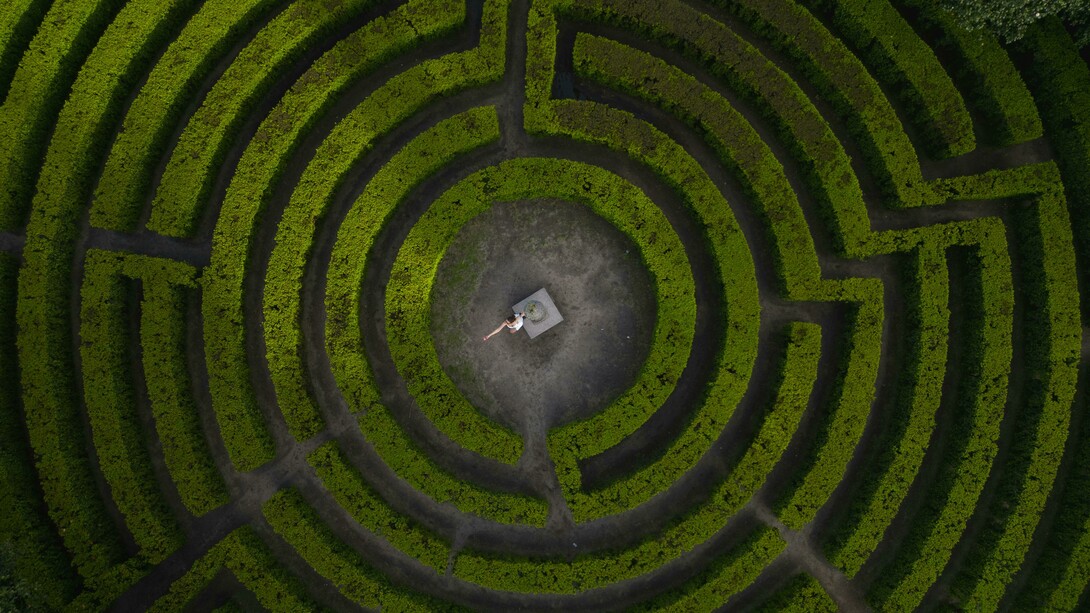
There’s a certain kind of arrogance that creeps in once we start doing the deep inner work. The kind that digs into our past, dredges up the shadows, and gives us the feeling that we’ve finally resolved something. Found an emotional wound, cleaned it out, labeled and understood it… and with that understanding, we somehow imagined that it's now all done.
But the more I learn, the more humble I get around the topic.
And surprisingly enough, it was my recent immersion into the study of Judaism that showed me just how misguided that belief is.
The unconscious mind is not a room you clean once and move on. It’s more of a labyrinth. There is a reason why it is archetypally compared to the ocean—endless and dark. And we tend to revisit it again and again, but from different points of view as we grow, change, and restructure the self.
Jung said it decades ago: the Self is not a static endpoint. It’s a constant relationship between conscious awareness and the vast, unknowable unconscious. And just when you think you've mapped a territory within—surprise surprise—the terrain shifts. And things that you thought were behind you, that you’ve figured out with your therapist or coach, are now vivid and prominent again.
This isn't regression. It's not "going backwards." It’s an opportunity for a deeper transformation. What seems like circling back is actually circling inward, an invitation to find the center of the mandala again.
Revisiting an old wound
A few weeks ago, I found myself revisiting a personal story I thought I had laid to rest. One of those fundamental, defining narratives from early life—the kind that shaped my way of seeing the world and my place in it.
The thing is that I did the work years ago already. I found the source, named it, and processed it. I understood the “why” behind the behaviors and thought this was a done deal for me.
And yet, having visited my homeland on vacation, the story emerged again. And through bringing it up with my own coach, I realized that the story has received a new relevance—one that resonated with the person I am today in a different way than it did with the person I was 5 years ago.
What I had done before was on point—for that time. The conclusions made then were honest, valid, and necessary. But I have since evolved. My inner landscape has changed.
And so the same story arrived at my doorstep; I had to learn again. Not because I was wrong, but because I am different now.
Judaism and the wisdom of humility
In Judaism, there is no concept of "arrival." The Kdoshim—holiest people—are not those who claim to have reached enlightenment, but those who stay in constant dialogue with the divine.
Rabbi Moshe Ben Maimon says in his final notes (“Igeret Haramban”) that one must always be humble when in the presence of God. And well, one is always in the presence of God.
My recent studies have reminded me that the holiest posture is not one of certainty but of humility. Of acknowledging that no matter how much wisdom you gain, you will never know it all, and everything you already learned can be proved false.
The understanding that any narrative—especially our own—is relative to the current zeitgeist of our lives and presents an opportunity to follow the bread crumbs left for us by the divine.
Just like God guided the Israelites in the desert by bestowing sweet bread from the sky upon them with the request of “Looking to the sky.”
The myth of the "final answer"
The modern zeitgeist around self-development often lures us into believing that healing is linear. That we move from Point A to Point B and then graduate and never look back, as if once we uncover a memory and reframe it, we can simply move on.
The psyche does not work like a filing cabinet, though. It works like a forest—which is a living being, a dynamic entity. The mandala always spins and mirrors itself; old symbols take on new meanings.
Thinking that you’re “done” with a certain narrative is not only naive but also somewhat arrogant, I’d say. The narratives that shaped our world view and that constantly reverberate in our minds are here to stay for the most part. And if you’re wise, you will revisit them.
Not because you failed the first time. But because the self you are now is capable of understanding what the old you could not even perceive.
This is why old narratives, old traumas, and even old dreams come back. Not to haunt you. But to meet you again and give you another opportunity at growth…
Relearning, not repeating
To return to an old story and do the same things is indeed stagnation. But to return to it with new awareness is like picking a new fruit from an old tree. It tastes similar, but you appreciate it in a different way.
The humility and growth I speak of is the opposite of knowing everything. It’s knowing that you don't—and treating each layer of truth as provisional, flexible, and alive.
There is no “done” when it comes to healing. There is only “deeper” or “different.”
And so we relearn the same lessons. But this time, we understand them differently. We see subtleties we missed before. We take different actions and make different conclusions that we simply couldn’t make before.
The story didn’t change. You did. And that changes everything.