English
 Español
 Français
 Deutsch
 Italiano
 Português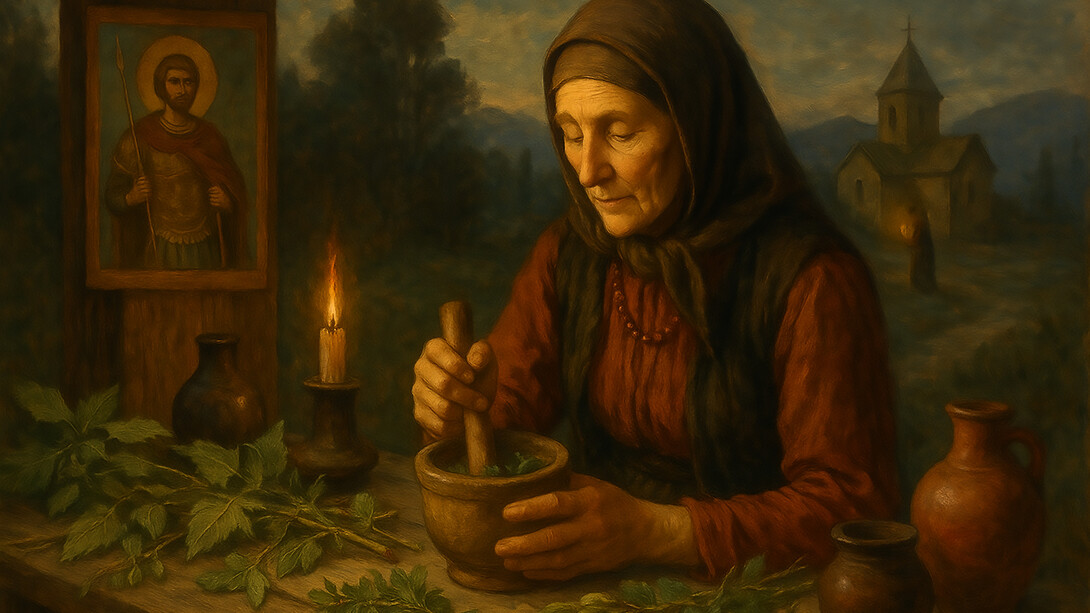
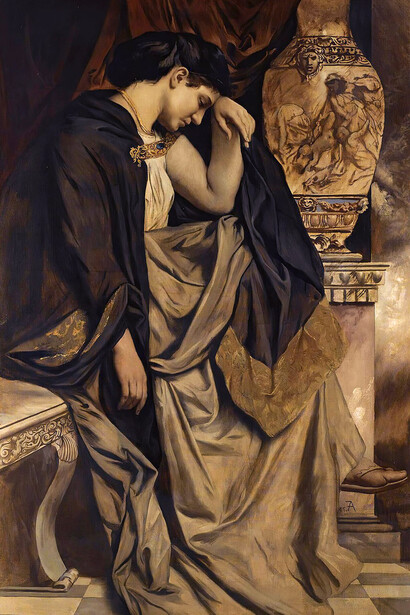
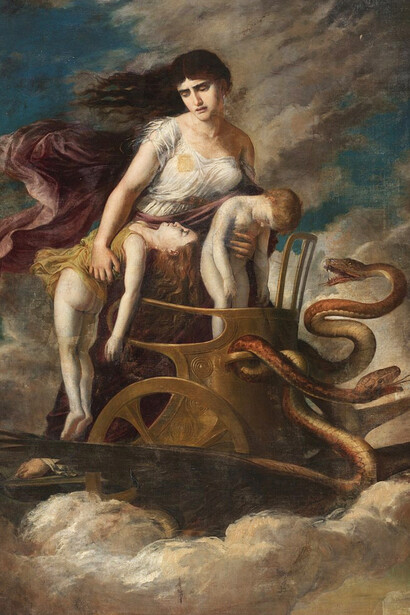
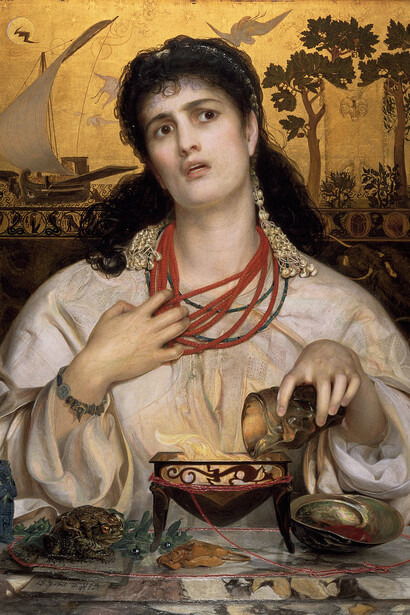
When the history of medicine in Georgia is told, it often begins with a legendary woman who belongs to two worlds: Medea of Colchis. In Greek mythology she is the sorceress who could enchant and destroy, remembered for her poisons and feared for her power. But in Georgian cultural memory, she is much more than that. For Georgians, Medea is not a foreign enchantress but a native daughter of the proto-Georgian kingdom of Colchis, remembered as the first great healer, the mother of medicine itself. She knew how to prepare soothing ointments, sedatives, and herbal drinks. Some tales even say she revived the sick with lamb’s blood, an image startlingly close to the modern idea of blood transfusion.
Medea’s story reflects the dual character that has always marked Georgian medicine: a combination of real botanical knowledge and ritual imagination, scientific observation and magical symbolism. Over centuries, this duality developed into a distinct medical worldview that absorbed influences from Christianity and neighboring cultures while preserving older traditions rooted in the Caucasus.
For people in Georgia’s villages and mountain valleys, illness was never seen as a purely physical problem. Disease might show itself in fever or pain, but its origins were often understood as spiritual. A child’s convulsions could be blamed on an evil wind, a wasting sickness on the evil eye, and sudden paralysis on the anger of a saint. Healing, therefore, needed to work on two levels at once: easing the symptoms of the body while also addressing the unseen forces at play. This explains why a patient might drink a nettle infusion for fever and at the same time wear a protective charm or call for a priest’s blessing.
Among the most powerful remedies were not plants or poultices but words. Healing prayers and incantations, known as shelocvebi, were carefully preserved through oral tradition. Writing them down was thought to strip them of their force; they worked only when spoken aloud, often by someone ritually pure and morally upright. Each sickness had its saintly patron: St. George was invoked against fevers and paralysis, St. Nino for women’s ailments, St. Barbara for sudden accidents, and Archangel Michael for madness or despair. In Kakheti, a healer might anoint a patient with oil from a church lamp and recite a prayer to St. George describing a bull devouring iron—an unforgettable image of illness being chewed up and destroyed. Such images carried psychological weight as well: they allowed sufferers to picture their pain being defeated by something stronger.
These incantations often blended Christian and pre-Christian elements. In one, a black rider appears, whip in hand, ready to torment the patient, until Archangels Michael and Gabriel arrive to drive him away. In another, the Virgin banishes the spirit of night terrors. Saints acted as spiritual physicians, echoing Byzantine traditions, yet the imagery—bulls, fiery riders, threatening winds—came from older layers of Caucasian myth. Church authorities frequently condemned such practices as remnants of paganism, but ordinary people held to them because they seemed to work.
Protection mattered as much as cure. Amulets were worn close to the body or hung in the home. These might be silver crosses bound with red thread, small pouches filled with herbs, or bead strings of amber and jet. In Kakheti, charms called sathvalgvintchilo were placed over cradles to guard newborns. A dogrose twig, with its sharp thorns, was commonly placed beneath a baby’s bed to block the passage of evil forces. Yet the same plant produced rose hips rich in vitamin C, strengthening immunity and protecting against illness. Here, symbolic power and real medicinal benefit overlapped.
Ordinary substances gained sacred force when blessed. Holy water was drunk to treat fevers or used to wash sore eyes. Oil from the lamp burning before an icon was rubbed into aching muscles or inflamed skin. Even earth from a saint’s grave could be mixed into poultices. These practices paralleled Byzantine relic cults and Islamic uses of blessed water and oils, but they also carried hidden practical benefits: boiled holy water was safer to drink, olive oil softened skin irritation, and earth could dry out wounds.
Healing was not only spoken or applied—it was performed through ritual. A sick child might be passed through the hollow trunk of a tree to leave illness behind. Epileptics were walked three times around a church. Illness could be symbolically transferred to a chicken or goat, which was then released. During epidemics, villagers in Kakheti would plow a furrow around the entire settlement, symbolically encircling it with a sacred boundary. In practice, this acted as a form of quarantine, limiting contact and slowing the spread of disease. Sacred numbers gave rituals additional weight: three for the Trinity, seven for completeness, and forty for purification.
Although priests were important in blessing holy water or oil, women were the everyday custodians of healing knowledge. Mothers and grandmothers remembered the prayers, prepared the herbal infusions, and passed down the incantations. They served as midwives, herbalists, and guardians of domestic health. One memorable ritual, called ghame gamosla—“expelling the darkness”—involved leading a sick child outdoors at midnight with a candle while the family circled the house, driving illness away. The ritual not only sought divine aid but also created solidarity, turning the home itself into a sacred space of protection.
Did these practices actually work? In many cases, yes. Herbal remedies had real pharmacological effects: nettle lowered fevers and added iron, plantain was antibacterial, rose hips boosted immunity, and burning elecampane produced antiseptic smoke. Sacred substances often carried hygienic value: holy water was boiled, lamp oil soothed rashes, and earth dried wounds. Rituals too had hidden logic: plowing circles around villages created boundaries that slowed contagion, while keeping babies indoors after sunset shielded them from damp, unhealthy night air. Even when the cure was symbolic, it often eased suffering by reducing fear and anxiety, giving patients hope, and strengthening family bonds.
Taken together, these traditions reveal Georgian medicine as a synthesis of many layers. Pre-Christian charms and rituals blended with Byzantine understandings of saints as healers, while contact with Persian and Islamic medicine introduced new herbs, protective scripts, and ways of combining prayer with cure. Out of these interactions emerged a medical worldview that was distinctly Georgian, yet also part of the broader Eurasian culture of healing.
From Medea of Colchis to the whispered incantations of village grandmothers, the Georgian approach to medicine has always been about more than curing the body. It sought to restore balance between the visible and the invisible, the individual and the community, and the home and the sacred. Herbs healed, holy water purified, nets and thorns protected, and quarantine boundaries saved lives. Belief gave these acts meaning, but lived experience proved their worth.
If a healer of centuries past were asked whether their practices belonged to religion or medicine, they would likely smile at the question. For them, the two were inseparable, woven together in a single fabric of faith and knowledge. That fabric—spun from mountain herbs, saintly blessings, and the wisdom of generations—remains one of Georgia’s most fascinating cultural legacies, reminding us that true healing often lies in the harmony of body, spirit, and belief.