English
 Español
 Français
 Deutsch
 Italiano
 Português
There is a curious paradox at the heart of contemporary environmental thought. We have become remarkably skilled at observing ecological destruction, yet surprisingly incapable of hearing it. Satellite imagery captures the retreat of glaciers with astonishing precision; aerial photography records the advance of clear-cutting almost in real time; graphs translate rising temperatures into elegant curves that compress decades into a single visual gesture. We have learned to see the Anthropocene with extraordinary clarity, as though the eye alone could bear witness to planetary transformation.
It is perhaps no coincidence that environmental discourse has inherited so much of the language of modern science, a language that privileges visibility above all else, trusting maps, photographs, measurements, and diagrams to reveal what is happening to the living world. Yet every ecosystem has always possessed another history, one that rarely appears in these representations because it unfolds through vibration rather than image, through resonance rather than form, through countless relationships that can never be fully grasped from above. A forest is not only something that occupies space. It is something that resonates. Before it can be measured, it must first be heard.
This distinction may appear almost poetic, yet it carries profound ecological consequences. Wind, after all, has no voice of its own. What we casually describe as the sound of the wind is nothing more than air encountering matter, an invisible movement translated into audible experience through leaves, trunks, grasses, branches, bark, moss, and every surface capable of responding to pressure. A gust crossing an ancient beech forest produces an acoustic texture that could never emerge from a plantation of young conifers, not because the atmosphere has changed but because the world through which it travels has become another world entirely. The same current of air acquires another vocabulary each time the landscape is altered. Once the trees disappear, the wind does not merely become quieter. It loses an entire language.
This is perhaps one of the least acknowledged consequences of deforestation. Public debate usually revolves around carbon sequestration, biodiversity loss, soil degradation, or rising temperatures, all of which deserve the urgency they receive, yet these narratives often overlook another form of disappearance, one that cannot easily be photographed because it concerns relationships rather than objects. Every forest is simultaneously an acoustic archive. Layers of vegetation absorb, reflect, and scatter vibration with astonishing complexity, allowing thousands of living organisms to occupy the same environment without collapsing into undifferentiated noise. Remove those layers and something more subtle than silence emerges. The acoustic architecture through which life has evolved over centuries begins to dissolve.
Bernie Krause spent decades recording ecosystems across continents, gradually discovering that healthy habitats organize themselves with a sophistication resembling orchestration rather than coincidence. Species rarely occupy identical acoustic niches for long. Birds, amphibians, insects, and mammals distribute themselves across frequencies and temporal intervals, making room for one another within a shared sonic environment whose apparent disorder conceals remarkable precision. What initially sounds like abundance gradually reveals itself as negotiation. Listening patiently transforms confusion into structure. Ecological richness becomes audible before it becomes visible.
The significance of Krause's observations extends well beyond bioacoustics because they challenge one of the oldest assumptions inherited from Western philosophy: that nature is fundamentally silent until interrupted by living beings. Such an idea has always depended upon an artificial distinction between organism and environment. Sound refuses that separation. Rain does not simply fall upon leaves; together they generate events that neither could produce independently. Rivers shape stones while stones shape rivers acoustically through turbulence and resonance. Even insects participate in altering how wind moves through vegetation simply by changing the density of leaves they consume. Every sound emerges from relationships rather than isolated objects.
Anthropology has repeatedly questioned the tendency to imagine landscapes as static backgrounds against which human activity unfolds. Tim Ingold, among others, argues that dwelling should never be understood as occupying a finished environment but as participating in continuous processes of formation where weather, materials, movement, and memory remain inseparable. Listening makes this argument almost impossible to ignore. A landscape is never experienced as a collection of visual forms alone. It surrounds those who inhabit it through rhythms, echoes, reverberations, and textures that constantly shift according to season, humidity, temperature, and biological activity. To remove sound from ecology is therefore to remove time itself, leaving behind an image that appears complete while concealing the dynamic relationships through which environments remain alive.
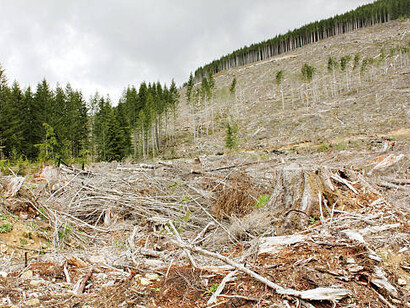
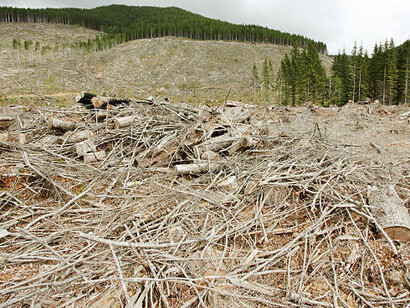
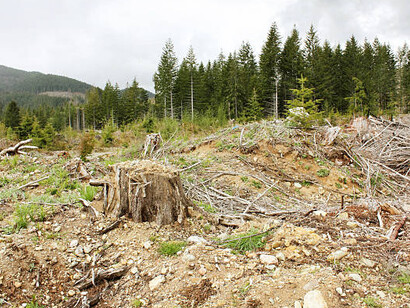
Perhaps nowhere is this more evident than in forests undergoing fragmentation. The disappearance of mature canopies alters humidity, exposure to sunlight, and soil composition, yet these transformations also reshape acoustics in ways that remain largely invisible. Birdsong travels differently across open ground than beneath dense foliage. Reverberation shortens.
High frequencies scatter less predictably. Wind accelerates through newly exposed clearings instead of dispersing gradually across multiple layers of vegetation. Rain striking bare earth produces another cadence entirely from rain filtered through branches suspended at different heights. Even before species disappear altogether, the conditions that once allowed them to communicate begin to erode.
This raises a question that extends beyond environmental science into philosophy itself. If every ecosystem possesses a characteristic way of sounding, should acoustic complexity not be considered part of biodiversity rather than a mere consequence of it? We have become accustomed to counting species, measuring biomass, and mapping habitats, yet the relationships that bind these elements together often reveal themselves more clearly through listening than through observation. Two forests may contain comparable numbers of trees while inhabiting radically different acoustic worlds. One resonates with overlapping rhythms that testify to ecological reciprocity; the other, simplified through extraction or monoculture, offers only intermittent traces of what once existed. The difference cannot always be captured by photographs. It must be encountered through duration, patience, and attention.
The ecological crisis therefore confronts us with another, quieter crisis that receives far less attention. It is not only habitats that disappear but also the capacity to recognize disappearance before it becomes irreversible. Vision frequently notices loss once alteration has become spectacular enough to command attention. Listening often detects transformation while it is still unfolding, when subtle shifts in resonance announce changes that have not yet acquired obvious visual form. The ear becomes sensitive to processes rather than events, to transitions rather than outcomes. This is perhaps why acoustic ecologists increasingly describe sound as an early indicator of environmental instability.
Such observations also challenge inherited notions of silence. Modern societies often celebrate silence as an escape from noise, imagining it as the acoustic equivalent of peace. Forests suggest another possibility altogether. A thriving woodland is almost never silent. It vibrates continuously through countless interactions unfolding across scales too small or too distant for immediate recognition. What many people describe as silence is frequently unfamiliar complexity whose internal organization has yet to become perceptible. Absolute silence, by contrast, can signify something far more unsettling: ecological simplification, biological absence, and relationships that have ceased to exist.
To speak of the ecology of sound is therefore not to propose another aesthetic appreciation of nature, nor to romanticize untouched wilderness. It is to recognize that every alteration imposed upon landscapes also transforms the conditions through which those landscapes become audible and that every change in resonance records a history of extraction, adaptation, survival, and loss that cannot be fully translated into visual evidence alone. Long before a forest disappears from a map, it begins disappearing from its own voice. The question is not whether we are capable of hearing that transformation. It is whether we have remembered that listening, too, can become a way of knowing.