English
 Español
 Français
 Deutsch
 Italiano
 Português
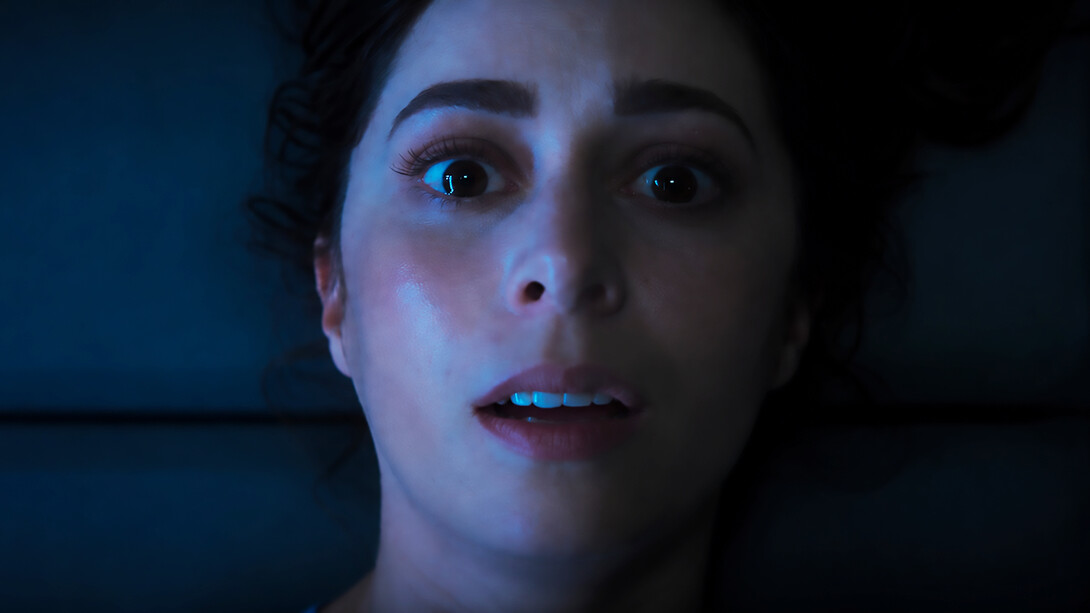
Black Mirror is a Netflix series created in 2011 that has each episode follow a different, twisted, new-agey storyline. After your first encounter with an episode of Black Mirror, you will probably turn off the television with a knot in your stomach and a mind swirling with questions.
Each plotline blurs the genres of horror, thriller, and science fiction, creating fever-dream-like realities that sit somewhere in the grey area between impossibility and plausibility. Much of the show’s appeal comes from its ability to present technologies that initially feel alien, exaggerated, or counter the laws of human nature. Social pressures accrue in a ratings-based society. Grief becomes a service that recreates the dead. Advertising infiltrates untouched spaces.
This tension between the futuristic and the familiar is what made Black Mirror so compelling in the first place and why it remains one of my favourite television shows of all time.
Especially as artificial intelligence expands at a pace that feels difficult to process, many of the show’s once far-fetched ideas now feel uncomfortably adjacent to reality. What once felt like a distant, dystopian fantasy now feels predictable.
At the height of the COVID-19 pandemic in 2020, creator Charlie Brooker admitted he was hesitant to continue writing new seasons because the world already felt bleak enough on its own. So much so that reality was beginning to generate its own dystopian narratives.1
Today, reality seems to “mirror” many of the scenarios the series once imagined. The question is no longer just how inventive these stories are but whether they have become too familiar. Has the show lost some of its shock value because we’re already living fragments of it, or is this only the beginning?
Here are three episodes that feel less like fiction and more like previews of the future. Notably, many of these episodes were written and produced before 2016, long before today’s AI boom and surveillance anxieties.
Season 1 Episode 3: “The Entire History of You” (2012)
Everyone has wished they could revisit a memory exactly as it happened. We repeatedly reminisce about a certain moment, only to realise that over time the scenery fades, details blur, and the emotions become harder to recall.
“The Entire History of You” imagines a world where people can replay past experiences perfectly through a tiny implant called a "Grain", inserted behind the ear. The device records everything a person sees and hears, allowing memories to be replayed on a small holographic projection in your line of sight or Bluetooth-ed to a screen for group viewing.
The protagonist obsessively rewatches memories from his own life, analysing a failed work meeting and interactions between his wife and a former fling. What begins as a curiosity spirals into paranoia and self-destruction, the constant access and fixation eroding trust and privacy.
Rewatching the episode immediately brought to mind modern smart glasses: ordinary-looking eyewear equipped with a discreet camera that records surroundings from a first-person perspective.
Google pioneered the idea with Google Glass in 2012, while other companies, such as Meta, have since refined the concept, now producing models to conceal the audio-visual recording function while integrating AI into the design. The original models of Google Glass have the camera quite visible, but Meta’s 2025 collaboration with designer brands like Ray Ban includes a camera that is nearly invisible and can pass as an element of the frame design.
Of course, similarly to the “Grain” in the episode, smart glasses are expensive. It hints at a world where surveillance is something we live with, and having the power to access it is a luxury.
This format has become especially popular among influencers and content creators who film from their own point of view. Yet the rise of wearable technology has raised privacy concerns and questions about consent and anonymity. Most creators often ask permission from those directly featured in videos, but passersby may not realise they are being filmed at all.
Perhaps the AI-smart glasses are a kind of “proto-Grain”: pre-designed for surveillance technology, right from our own point of view. Would total memory preservation improve human life or intensify obsession and increase surveillance?
Season 3, Episode 6: “Hated in the Nation” (2016)
Set in a near-future Britain where the effects of climate change have led to the extinction of pollinating bees, “Hated in the Nation” follows investigators tasked with uncovering the untimely death of a controversial journalist.
Because real bees have gone extinct in this timeline, millions of autonomous robotic bees now perform the action of pollination to preserve Earth’s biodiversity and agricultural output. However, the danger of relying too heavily on technology is quickly revealed.
Soon thereafter, a string of murders begins to unfold, all connected by intense online outrage directed toward the victims and eerily similar causes of death. But surely the robotic bees couldn’t be entangled in this internet-fuelled murder spree… right?
The story acts as a chilling example of how advanced technology can be exploited once it falls into the wrong hands. As artificial intelligence grows increasingly sophisticated, so do the methods people use to weaponise it for personal agendas.
The episode also critiques mob mentality, cancel culture, the illusion of anonymity, and how easily someone can find themselves at the centre of online chaos or even become the one orchestrating it entirely.
The victims were selected using a single trending hashtag repeatedly. The algorithm identified the most frequently targeted individual, and once chosen, nothing could stop the outcome.
Thousands participated, and those who believed they could spread hatred anonymously online were abruptly confronted with the reality that true invisibility on social media does not exist.
On platforms such as X and Reddit, outrage spreads like wildfire. It only takes one person to create a trend and a susceptibility to the groupthink mentality to be influenced.
What makes this episode so unsettling is how believable it feels. The technology may be fictional, but the culture and climate threat surrounding it already exists.
Season 4 Episode 3 “Hang the DJ” (2017)
“Hang the DJ” follows two first-time participants on a dating software designed to pair couples based on compatibility. Every relationship comes with an expiration date attached to it. Pairs meet without knowing anything about each other but must remain together until their time runs out. It could be 12 hours, or it could be 5 years.
However, the system promises that you will eventually find your perfect match and is reputable with its attached 99.8% success rate. The catch is that no one knows the number of relationships you must go through until you find your perfect match.
This episode captures the emotional exhaustion of modern dating culture, the short-lived cycle of flings, and the repetition of endlessly searching. Dating apps provide instant gratification through matches and validation, but the possibility of finding a legitimate “match” is reduced to the algorithmic probability that “the one” may pop up on your screen.
Dating apps, such as Hinge, are starting to incorporate compatibility metrics, prompts, and recommendation systems designed to predict romantic success. “Hang the DJ” questions if romance can be quantified. No algorithm can account for organic connection, chemistry, timing, or emotional unpredictability.
In the case of both the matchmaking system used in “Hang the DJ” and modern dating apps, sometimes technology can be useful to get a head start in meeting potential love interests, but it shows that dependence on technology simply dehumanises the process and beauty of cultivating human connection.
If you are hungry for more, all episodes are available on Netflix. Watch the trailer for the most recent season of Black Mirror, Season 7, released in 2025.
References
1 Frances Perraudin, “Expecting the Worst Helped Me Prepare for It, Says Charlie Brooker", The Guardian, May 4, 2020, The Guardian article.