English
 Español
 Français
 Deutsch
 Italiano
 Português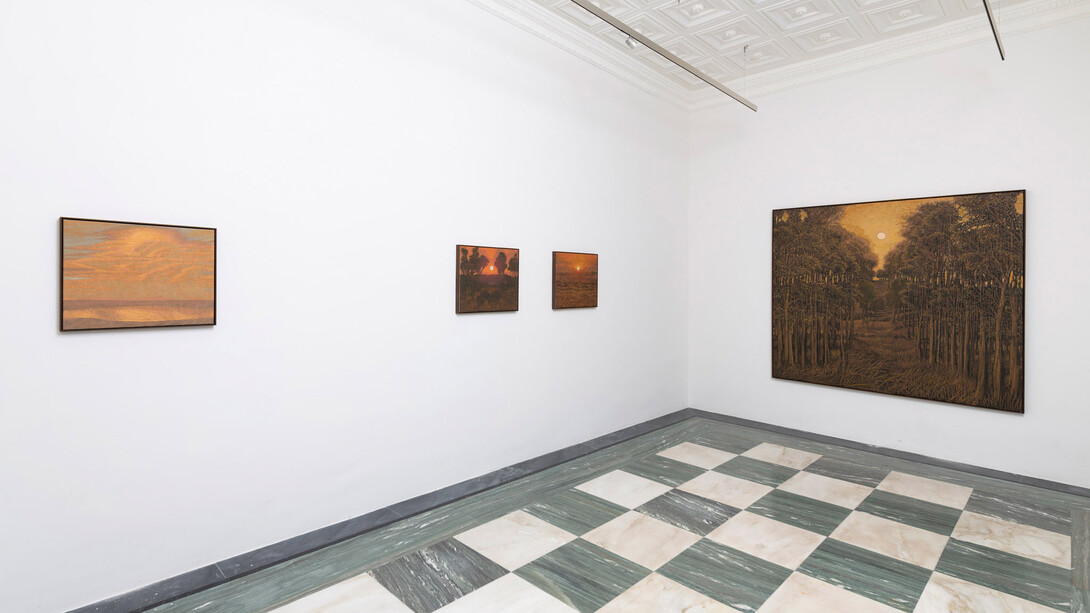
Year 274 AD: Emperor Aurelian commissions the construction, on the slopes of the Quirinal, of a temple dedicated to Sol invictus—the unconquered, undefeated sun—born from the union of the principal solar deities worshipped across the territories under Roman rule. A singular cult, whose highest expression took place at the conclusion of the Saturnalia (December 17–23), with the acclamation of the sun’s return following the winter solstice. Toward the end of the year, the sun itself became a symbol of hope and power, a metaphor for the triumph of light over darkness, celebrating a return that was by no means taken for granted.
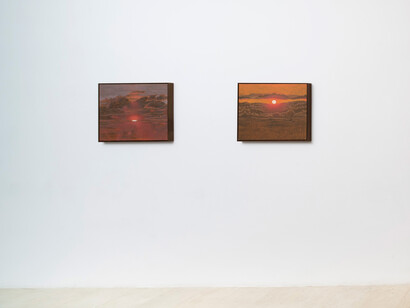
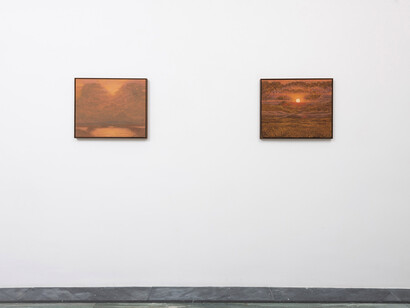
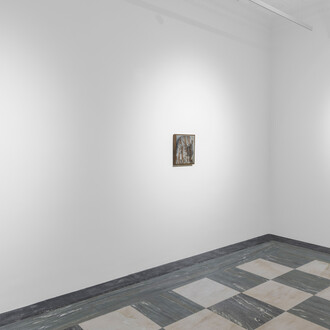
The exhibition Osteria del sole, a solo show by the artist Francesco Cima (Pietrasanta, 1990), draws from these ancient reflections, bringing back to Rome traces of that past alliance in the form of a direct and personal relationship with the star—never understood as itself alone, but as the sum of all its more and less divine attributes.
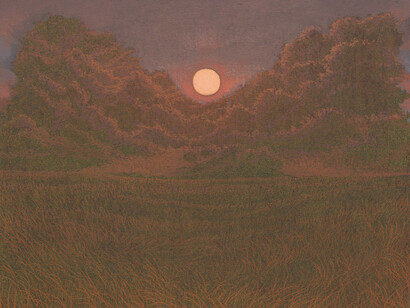
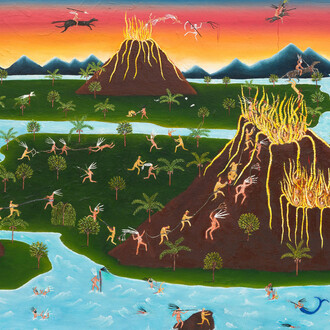
A series of suns dominates the horizon; there is no distinction between dawn and dusk, and even the flow of the seasons is suspended, crystallized in moments that belong simultaneously to past, present, and future. Cima’s poetics of nostalgia finds resolution by establishing a subject within the subject: to each landscape its own sun, transforming it—where not explicit—into a poignant golden light, in an attempt to answer an increasingly urgent need for warmth and security. As is customary, the circular composition of natural elements does not allow one to move beyond; yet, unlike earlier works—where the limits of possible movement were set by steep slopes, branches, trunks, mountains, and marshes—the boundary of vision is now placed by the sky itself, immeasurable and distant, elected as the primary interlocutor in the dialogue between painting and observer. This interaction, made imperative by the sun’s frontal and central position, sublimates Cima’s conceptual inquiry into a true painting of the limit, for which it becomes essential to be aware of one’s own physical and sensory boundaries before measuring oneself against the vastness of the visions proposed on the canvas.
From a strictly technical point of view, the use of the sun as a subject may be seen as an act of defiance. Although the sun’s form is now scientifically established—both in scale and in the detailed movements observed on its surface—for millennia artistic tradition confined it almost exclusively to mythologies carved in stone, leaving painting to develop primarily through its movement. In this sense, the sun has been indispensable to painting not for itself, but for its effects: light and shadow, brightness and darkness, constantly selected in relation to the fourth dimension. To portray it realistically, one must be able to observe it; here lies the true problem, transformed into a mission by many major figures in art history. Following, perhaps unwittingly, in the footsteps of J. M. W. Turner, Claude Monet, Vincent van Gogh, Camille Pissarro, Félix Vallotton and many others, Cima offers his own interpretation of the sun, treating it according to its perspectival truth: a small point of pure light, incandescent and fleeting. The instantaneity of the image is effectively simulated through the inclusion of flares and chromatic aberrations, used to underscore the inexorability of its cycle and the magnitude of its physical manifestations. These effects imbue the sun with warmth and bring it closer to the viewer, ultimately personifying it as a loving, fraternal presence.
On a technical level, the works often originate from small spontaneous stains or drips of color applied onto light backgrounds. From these, the representation begins to form autonomously, becoming a metaphor for the vibrant vegetal chaos that will later grow under the control of the brush. After sketching the initial forms—particularly the ground and the trees—Cima employs a sharp tool to define details, scratching into the paint to reveal the original layer beneath. Once these points of reference are established, the true painting phase begins, in which natural elements are brought into relation with one another and meticulously adjusted, modified, and rendered more or less luminous in order to achieve the desired balance. The final step consists of a dark dabbing, followed by the placement of the last highlights, reinforced at the end to enhance the painting’s brilliance. The title Osteria del sole was chosen by the artist to evoke a precise feeling of safety and familiarity—the same one a traveler might experience upon entering a tavern after a long, winding, and solitary journey. A sense of protection meets a fulfilled need for conviviality in a joyful, sunlit environment, where it finally becomes permissible to suspend one’s search in order to regenerate the most vulnerable part of oneself. This is the ultimate message of the paintings in the exhibition: conceived as outstretched hands, ready to accompany the viewer toward a dimension of pure peace.
(The invincible sun. Text by Beatrice Timillero)