English
 Español
 Français
 Deutsch
 Italiano
 Português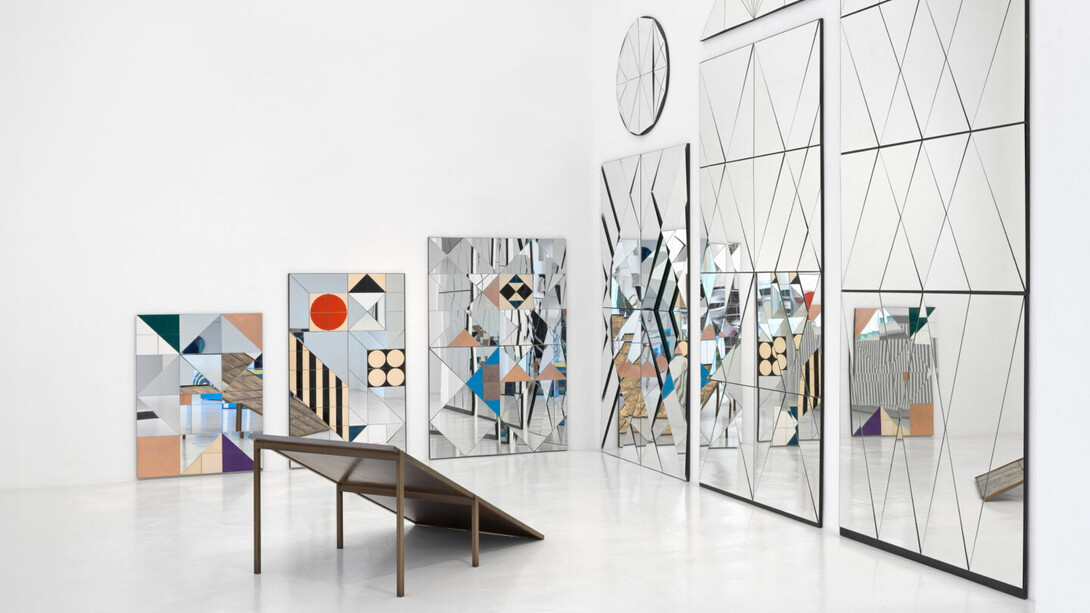
In To the lighthouse, Virginia Woolf describes spaces as vessels that continue to absorb human presence long after bodies have disappeared. Rooms retain atmospheres, objects become psychological carriers, and architecture itself begins to feel alive with memory. From stone to cloud unfolds through a similar sensitivity to space and perception, examining how materials, surfaces, and structures quietly accumulate emotional and historical residue over time.
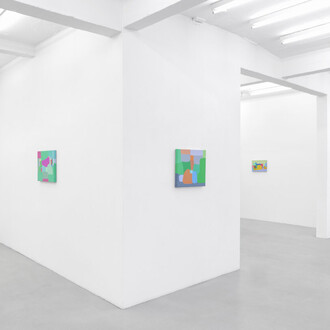
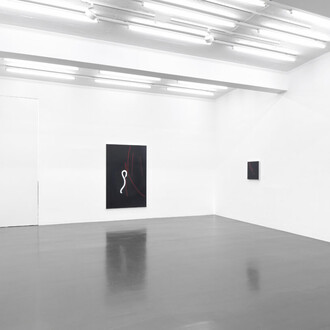
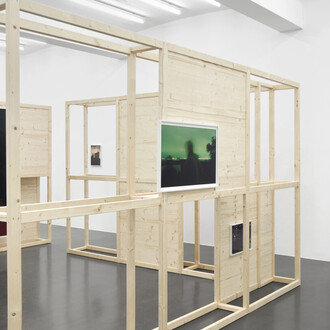
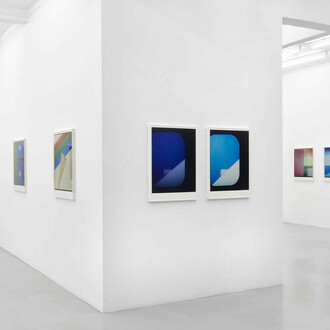
For her sixth exhibition at Sies + Höke, Claudia Wieser presents a new body of sculptural, wall-based, and textile works that move between architecture and abstraction, solidity and dissolution. Across mirrored steel, glazed ceramic, cast bronze, copper, and woven tapestry, the exhibition considers how built environments shape human psychology, and how materials themselves carry embedded histories long after their original function has disappeared.
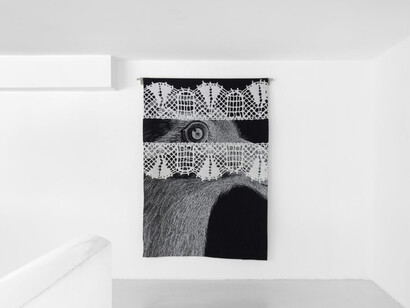
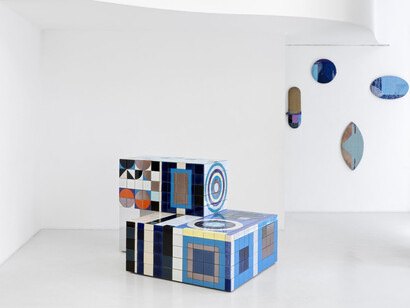
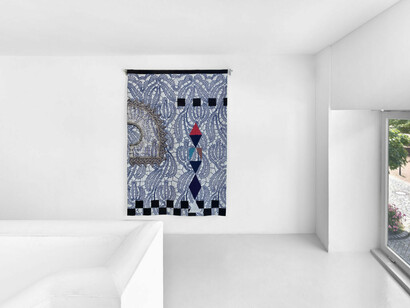
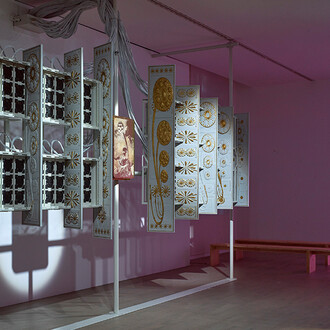
This relationship between structure and atmosphere extends into a series of eleven mirror works installed across three walls. Combining mirrored glass, glazed ceramic tiles, and copper elements, the works function almost like unstable portals: surfaces that simultaneously reveal and dissolve space. Some compositions evoke windows, façades, or column capitals, while others resemble fragments of speculative architectures. Reflection becomes both material and metaphor, opening space while destabilizing certainty. Installed on the gallery mezzanine, three woven tapestries introduce another temporal and material register into the exhibition. Their layered geometries echo recurring motifs found throughout the show – grids, thresholds, ornament, and spatial divisions – while introducing softness and tactility in contrast to the reflective hardness of steel and bronze. The juxtaposition of weaving, polishing, tiling, and casting reflects an ongoing interest in craft not simply as technique, but as a form of embodied memory. Each material carries with it a history of labor, ritual, and touch.
The exhibition’s title derives from Sylvia Plath’s 1961 poem Love letter, which concludes with the line: “From stone to cloud, so I ascended.” The phrase encapsulates a central movement within the exhibition: the transformation of weight into lightness, density into atmosphere, permanence into dissolution. Bronze, a material extracted from the earth and associated with gravity and endurance, exists in constant dialogue with mirrored surfaces that disperse light and visually dematerialize form. Solidity and ephemerality become inseparable conditions.
Underlying the exhibition is a broader reflection on the psychological afterlife of architecture and material culture. Referencing a recent study examining how ancient Roman territorial borders continue to shape contemporary German psychology and social behavior, Wieser considers the ways historical structures remain embedded within collective perception long after their physical disappearance. Space is never neutral; it silently conditions how we gather, observe, remember, and inhabit the world.
Throughout Wieser’s From stone to cloud, materials behave less like static objects than emotional agents. Mirrors fracture space, bronze absorbs and reflects light, ceramic surfaces oscillate between ornament and structure, while textiles soften and destabilize architectural rigidity. Together, the works create an environment suspended between the earthly and the immaterial, a poetic space where architecture becomes psychological, and matter itself appears capable of drifting toward atmosphere.
(Text by Claire Koron Elat)