English
 Español
 Français
 Deutsch
 Italiano
 Português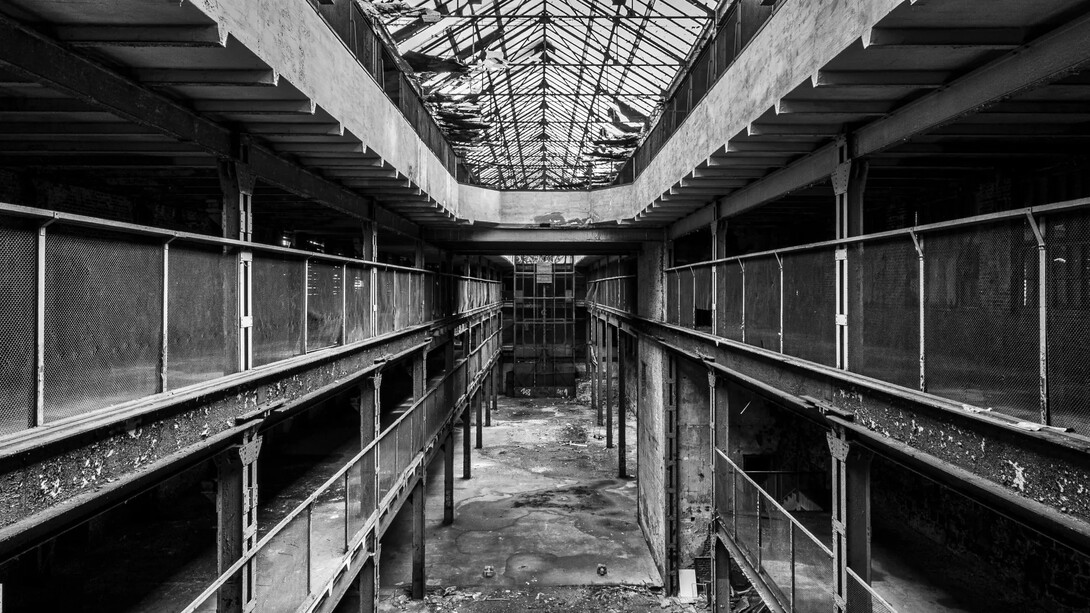
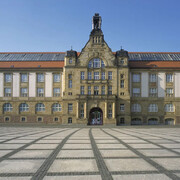
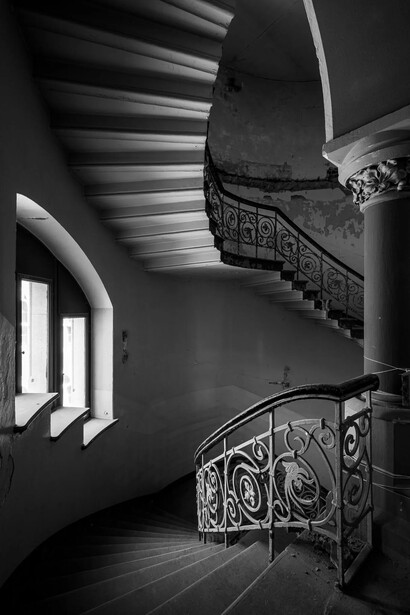
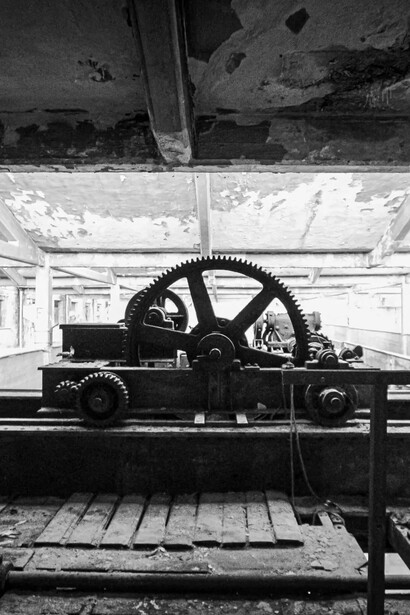
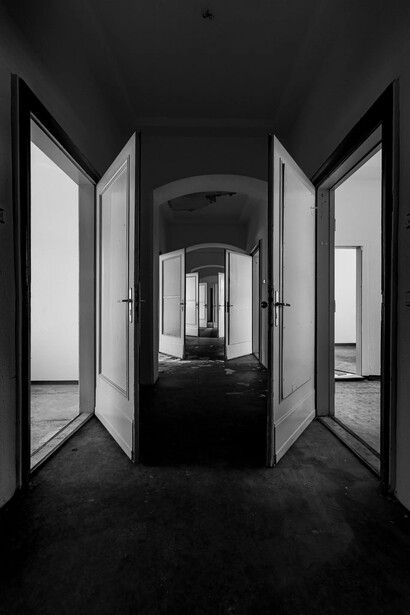
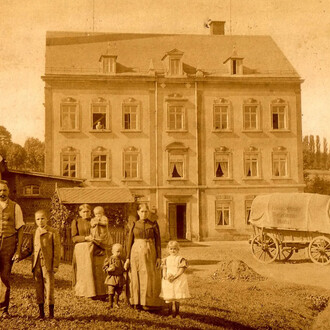
The Schloßbergmuseum presents sixty large-format black-and-white photographs by Christian Sünderwald as part of its Chemnitz Photographers series. The images capture what the city left behind in the course of transformation – buildings in Chemnitz and its surroundings that have since disappeared or been fundamentally altered.
Christian Sünderwald (b. 1968) came to Chemnitz from Munich immediately after German reunification and began documenting buildings and facilities that had fallen victim to the sweeping socio-political and economic upheavals of the era: places that had once been full of life and suddenly had no purpose – so-called »lost places«.
The photographic spectrum is broad. It ranges from vacated administrative buildings and hospitals to leisure and entertainment venues such as the Kulturpalast in Rabenstein, as well as remnants of the secret police and GDR justice system – among them the Stasi bunkers on Zschopauer Straße and the prison on the Kaßberg. Sünderwald also turns his lens on decommissioned production sites such as the Germania-Werke and the gasworks in Altchemnitz.
His aim is to document the process of »agony« – the slow decay that more often than not ended in demolition. The exhibition offers the chance to experience long-vanished structures such as the Forum in the city centre or the Marmorpalast in Altendorf. In contrast stand those buildings that, after years of neglect, have since been painstakingly restored and given a new lease of life – among them the Hartmann-Halle, the Aktienspinnerei, and the former Oberpostdirektion on Stephanplatz.
Exterior and interior views alternate throughout. High-contrast backlighting and deep shadows lend the photographs their striking intensity. What began as an artistic project has since become a significant document of Chemnitz’s architectural, artistic, and industrial history.