English
 Español
 Français
 Deutsch
 Italiano
 Português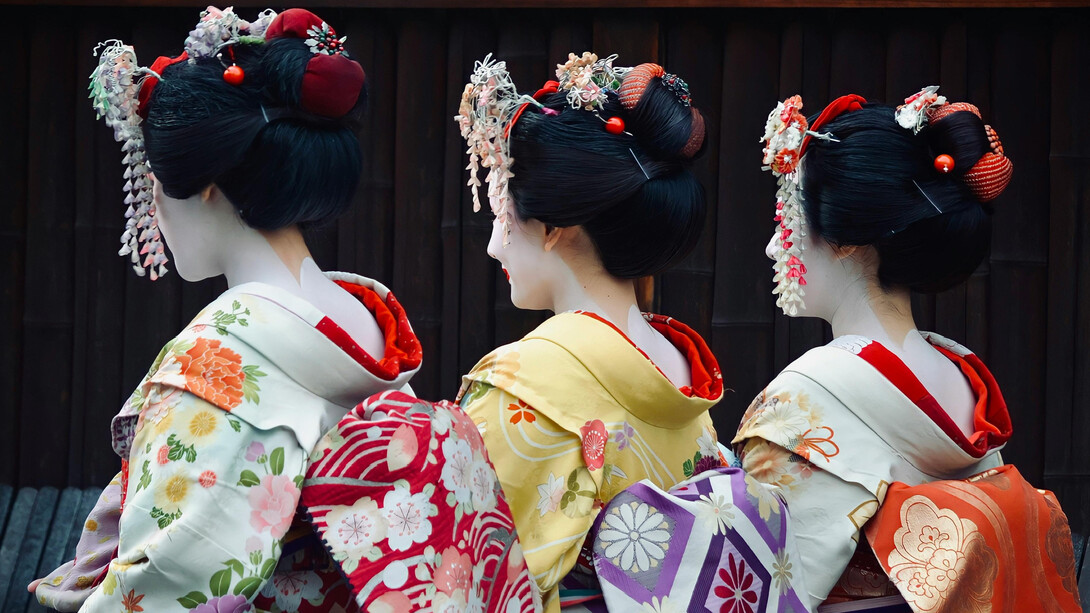
Traditional Japanese fashion is the result of a complex historical process shaped by cultural isolation, rigid social hierarchies, deep spirituality, and a unique relationship between the body and nature. Unlike the Western world, where fashion changes rapidly under the influence of markets and consumption, Japanese clothing evolved gradually, prioritizing function and symbolism. Each garment carries social, religious, and philosophical meanings that go far beyond aesthetics, revealing ways of life, values, and structures of power.
From its earliest periods, Japanese dress was directly connected to climate, available materials, and ritual practices. The use of natural fibers such as hemp and silk, along with a preference for straight lines and layered constructions, established a distinctive visual language. Over the centuries, this foundation was refined, regulated, and reinterpreted, culminating in highly codified systems of dress, particularly among the nobility and the warrior class.
During the Jōmon period, approximately between 14,000 and 300 BCE, the earliest records of clothing indicate rudimentary garments made from plant fibers and animal skins. These pieces served primarily utilitarian purposes, protecting the body from cold and harsh environments. Nevertheless, archaeological findings reveal ornaments and woven patterns that suggest an early aesthetic awareness and possible symbolic distinctions between individuals or groups.
With the Yayoi period, from around 300 BCE to 300 CE, significant advances in weaving emerged, driven by the introduction of rice agriculture and contact with China and the Korean Peninsula. More elaborate textiles began to be produced, and clothing started to play a clearer role in social differentiation. Long garments, tunics, and simple trousers point to the development of a more structured and hierarchical society.
During the Kofun period, from 300 to 538, the consolidation of a ruling elite was directly reflected in dress. Ceremonial garments, metal adornments, and the use of specific colors became markers of status and authority. At this stage, clothing became closely linked to funerary rituals and symbolic representations of imperial power, reinforcing the connection between dress, governance, and spirituality.
A major turning point in Japanese fashion occurred during the Asuka period and, more decisively, the Nara period, between the 7th and 8th centuries. Strong influence from Tang dynasty China introduced formal systems of dress, color codes, and more complex garment structures. The state began to regulate clothing, determining who could wear certain fabrics, colors, and silhouettes, effectively institutionalizing fashion.
During the Heian period, from 794 to 1185, fashion reached a high level of aesthetic sophistication, particularly within the imperial court. The jūnihitoe, a multi-layered ensemble worn by aristocratic women, emerged as a central expression of this era. Color combinations were chosen according to seasons, poetry, and symbolic associations, transforming clothing into a refined language of cultural expression.
Still in the Heian period, straight silhouettes and the absence of body-contouring became defining characteristics of Japanese dress. Unlike Western fashion, which often seeks to shape and emphasize the body, Japanese garments maintain a deliberate distance between fabric and anatomy. This approach reflects cultural values related to modesty, impermanence, and contemplation, which are central to Japanese aesthetics.
With the decline of the aristocracy and the rise of the warrior class, the Kamakura period began, lasting from 1185 to 1333. Fashion became more functional and restrained, mirroring the lifestyle of the samurai. Garments were adapted to allow greater mobility, and the decorative excess of the Heian court gave way to sobriety, durability, and practicality.
During the Muromachi period, from 1336 to 1573, a synthesis of elegance and functionality took shape. It was during this time that the kosode, the precursor to the modern kimono, became established. Initially worn as an undergarment, the kosode evolved into outerwear, gaining patterns, colors, and social significance. This transition represents a key moment in the history of Japanese fashion.
From the Momoyama period in the late 16th century onward, fashion once again embraced visual opulence, reflecting political instability and assertions of power. Luxurious fabrics, elaborate embroidery, and bold patterns were adopted by military leaders and the urban elite. Clothing returned to its role as a vehicle for symbolic and political display.
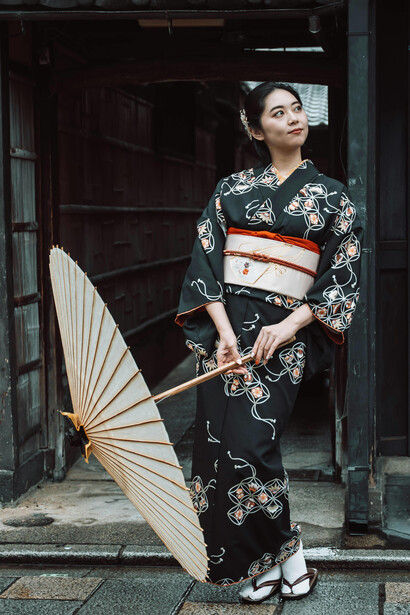
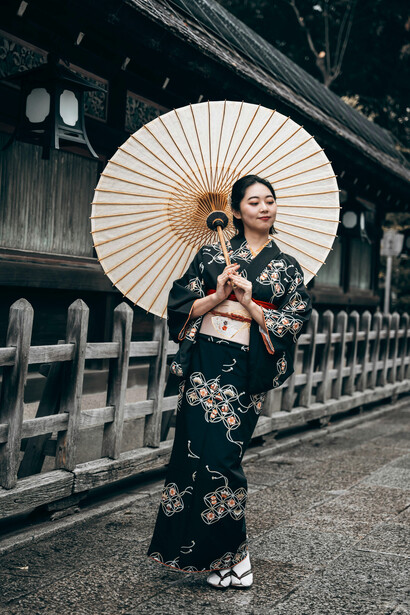
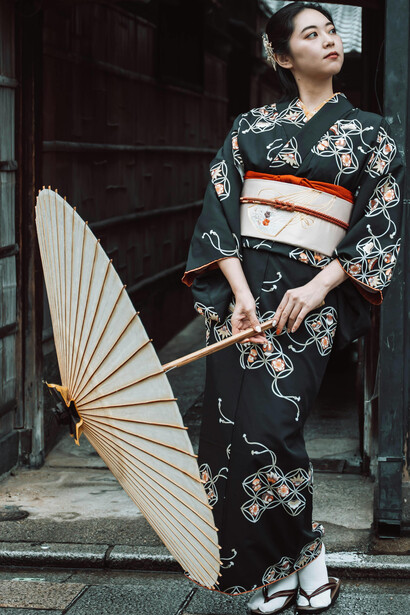
The Edo period, spanning from 1603 to 1868, was fundamental to the consolidation of traditional Japanese fashion. With the country largely closed to the West, a highly refined and autonomous visual culture developed. The kimono became the central garment of daily life, with variations determined by gender, age, season, and occasion. Every element was carefully codified.
During the Edo period, sumptuary laws regulated the use of colors and materials, particularly among the merchant class, which, despite its economic power, faced social restrictions. In response, an aesthetic of refined restraint known as iki emerged, where elegance was expressed through subtle details, inner linings, and hidden patterns. Fashion became a sophisticated visual dialogue between limitation and creativity.
Textile dyeing and patterning techniques reached exceptional technical levels during this era, including methods such as shibori, kasuri, and yuzen. These artisanal practices reinforced the connection between fashion, territory, and traditional knowledge. Each region developed distinct techniques and motifs, contributing to aesthetic diversity within a stable formal structure.
In the 19th century, with the Meiji Restoration, a profound rupture occurred in the history of Japanese dress. Japan opened to the West and underwent rapid modernization. Western clothing was officially adopted by the government and elites as a symbol of progress and civilization, while the kimono increasingly came to represent tradition.
During the Meiji period, clothing reflected a strong cultural duality. Men adopted Western suits and uniforms, while women largely continued to wear kimonos in daily life. This coexistence of distinct fashion systems created a hybrid landscape in which tradition and modernity interacted in both tension and complementarity.
In the early 20th century, particularly during the Taishō period and the beginning of the Shōwa era, Japanese fashion underwent further transformations. Western influences intensified, and new styles emerged that blended traditional elements with modern silhouettes. The kimono gradually receded from everyday urban life but remained central to ceremonial and cultural contexts.
Throughout this process, traditional Japanese fashion evolved from everyday dress into a powerful symbol of national identity. The kimono became a cultural icon, representing continuity, memory, and cultural resilience in the face of globalization. Its enduring presence demonstrates Japan’s ability to preserve its heritage while engaging with the modern world.
Thus, up to the 20th century, traditional Japanese fashion followed a singular trajectory marked by formal stability, symbolic depth, and technical refinement. Its transitions were not abrupt ruptures but gradual adaptations, reflecting a culture that values time, process, and meaning. More than clothing, it constitutes a complete aesthetic and cultural system whose influence extends far beyond Japan and continues to inspire contemporary fashion.