English
 Español
 Français
 Deutsch
 Italiano
 Português
For most of human history, secrecy depended on distance. A whispered message carried only as far as a voice could travel. A sealed letter could be intercepted but not silently copied. Distance and effort were part of security.
The digital age changed that. Information now moves instantly, invisibly, globally. But the ease of transmission brought a new vulnerability: every digital message can be copied perfectly without leaving a trace. Our solution has been encryption — mathematical locks so complex that breaking them would take longer than the age of the universe. At least, that is the assumption.
Quantum communication challenges the premise entirely. It does not merely make encryption stronger. It makes eavesdropping physically detectable. It shifts secrecy from mathematics into the laws of nature.
In classical communication, a message is encoded as bits — zeros and ones — that can be copied, stored, forwarded, or intercepted without altering the original. Encryption scrambles those bits so they are unreadable without a key. But if someone intercepts the encrypted message, the sender and receiver may never know. Security relies on computational difficulty, not physical impossibility.
Quantum communication uses a different substrate. Information is encoded in individual quantum states of photons. And quantum states behave strangely. Measure them, and they change. Copy them, and they collapse. Intercept them, and you leave fingerprints that cannot be hidden.
This is the core of quantum key distribution. Two parties exchange quantum particles to establish a shared encryption key. If a third party tries to listen in, the act of measurement disturbs the system. The intrusion becomes visible. Instead of hoping no one breaks your encryption, you know whether someone tried.
That difference sounds subtle. It is not. It replaces trust in algorithms with trust in physics.
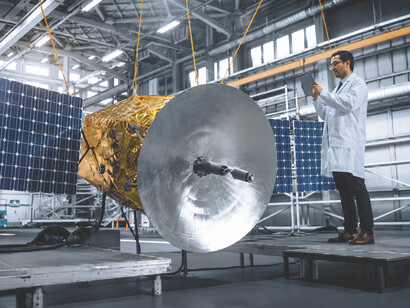
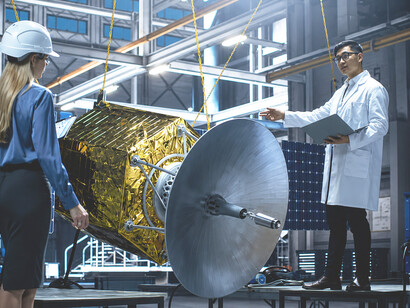
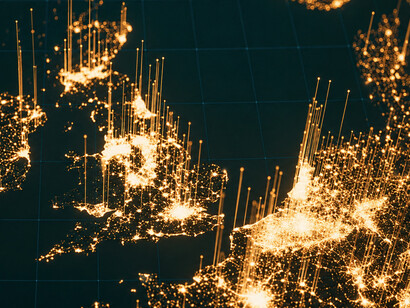
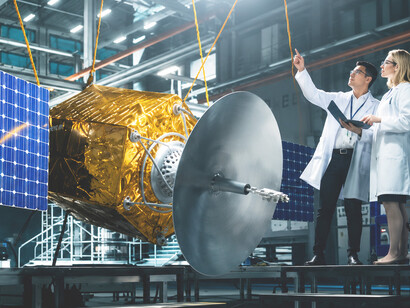
For many years, quantum communication was confined to laboratory benches and short-distance fibre experiments. But the last decade has moved it decisively into real infrastructure. In 2016, China launched the world’s first quantum communication satellite. It successfully demonstrated space-based quantum key distribution between ground stations thousands of kilometres apart. Europe has begun deploying continental quantum-secure fibre networks. The United States, Japan, and others are developing quantum repeaters to extend transmission range without signal collapse.
These are not prototypes in academic isolation. They are national infrastructure initiatives. Quietly, methodically, the backbone of a quantum-secure communications layer is being laid.
The first applications are unsurprising. Diplomatic communications. Military command-and-control links. Central bank transaction networks. Intelligence data channels. The domains where interception risk has existential consequences. For these users, cost is secondary to certainty. If a communication channel can guarantee tamper evidence by physics itself, adoption becomes inevitable.
But technology rarely stays confined to elite users. Once hardware miniaturises, costs fall, and networks scale, quantum-secure links will move into commercial data centres, financial clearing houses, energy grid control systems, and eventually corporate cloud backbones. Over time, quantum communication will become another layer of network infrastructure, just as fibre optics did before it.
The real significance is broader than security. Quantum communication introduces a new model of trust in the digital world. Today, trust resides in institutions: certificate authorities, cloud providers, encryption standards bodies, software updates, and governance frameworks. When trust is broken, confidence collapses.
In quantum-secure networks, trust resides in physical law. You do not need to trust that no one intercepted your message. You can test whether interception occurred. This is a profound shift. It changes how nations negotiate treaties, how financial markets validate transactions, how distributed systems coordinate state, and how critical infrastructure ensures integrity.
There is also a strategic dimension. Classical encryption will eventually be threatened by large-scale quantum computers capable of breaking today’s cryptographic algorithms. Whether that timeline is ten years or thirty remains uncertain. But quantum communication sidesteps the race entirely. If keys are generated and distributed with quantum guarantees, even a powerful quantum computer cannot retroactively decrypt past conversations.
This is why governments are moving now. Not out of hype, but out of long-term risk planning.
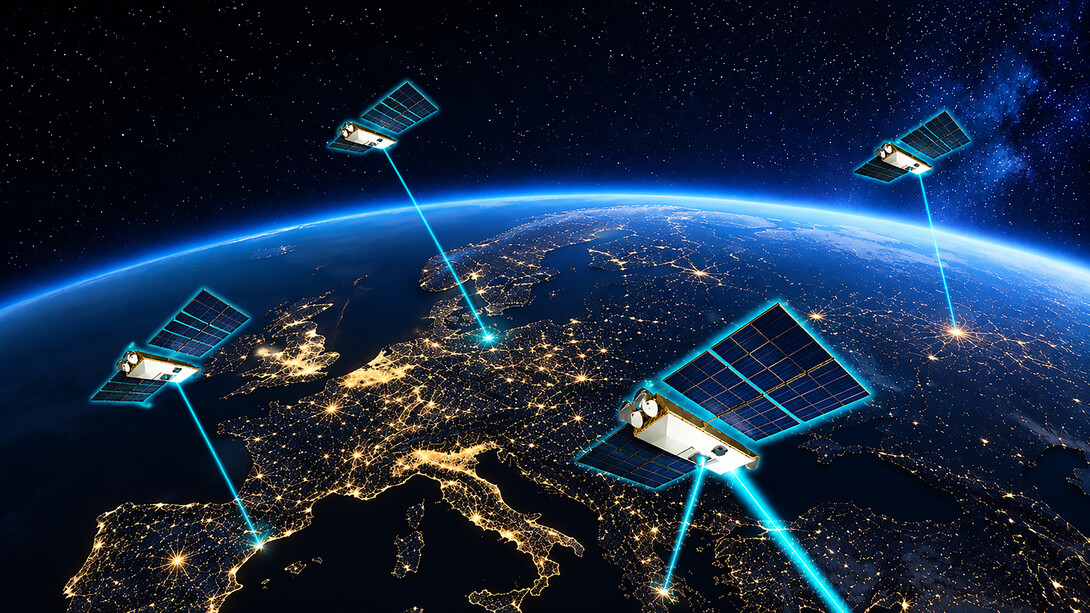
Quantum communication is also becoming a space infrastructure story. Satellite-based quantum links overcome the distance limitations of fibre-based quantum channels. Photons travelling through atmosphere or vacuum retain quantum coherence better than through long fibre runs. Space-based quantum relays therefore become the backbone of global quantum-secure networks. Once again, orbit becomes an enabler of terrestrial digital evolution.
Challenges remain. Quantum signals are fragile. Hardware requires precise alignment and environmental control. Quantum repeaters are still under development. Integration with existing internet protocols is complex. Standardization is ongoing. None of these are trivial. But they are engineering challenges, not conceptual dead ends.
And engineering challenges, once funded and prioritised, tend to yield.
The likely evolution is incremental. In the 2020s, national quantum-secure backbones. In the 2030s, space-based quantum relay constellations. In the 2040s, integration of quantum key distribution into mainstream network infrastructure. By mid-century, quantum-secure communication may be as unremarkable as HTTPS is today — invisible, expected, always on.
At that point, secrecy will no longer be something we guard with ever-more-complex mathematics. It will be something built into the behaviour of light itself.
The internet began by moving information faster than physical transport. Quantum communication now ensures that information can move without fear of invisible interception. When that transition completes, privacy stops being a policy debate or a software feature.
It becomes a property of nature.