English
 Español
 Français
 Deutsch
 Italiano
 Português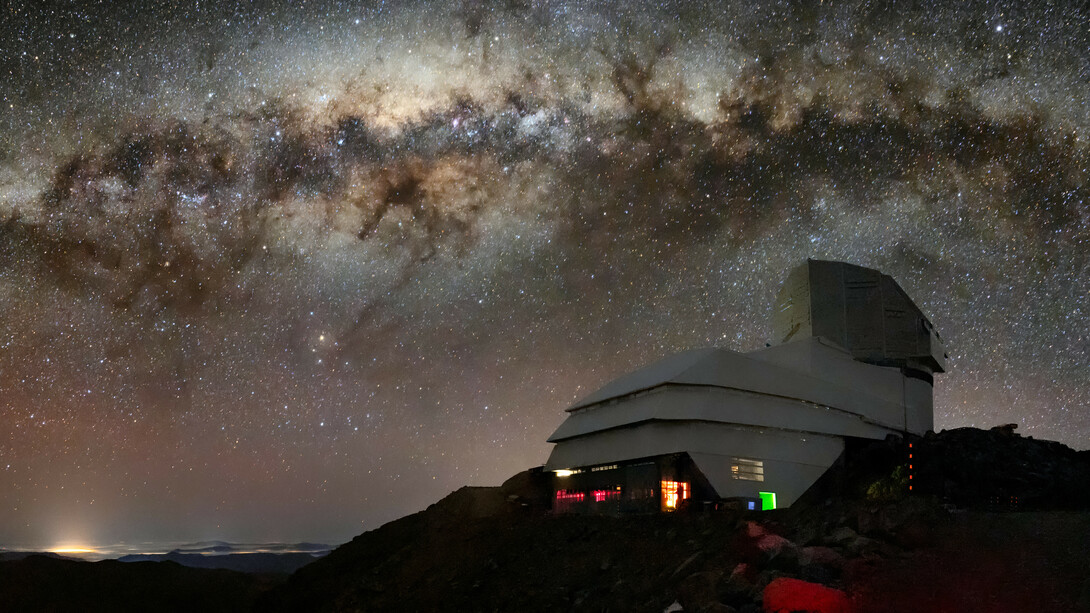
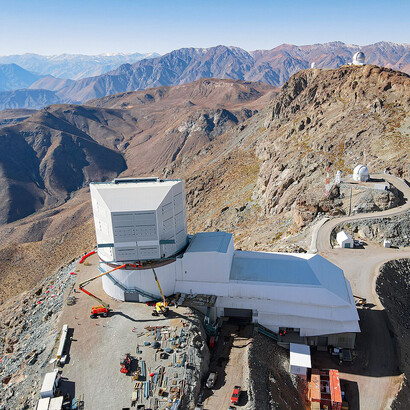
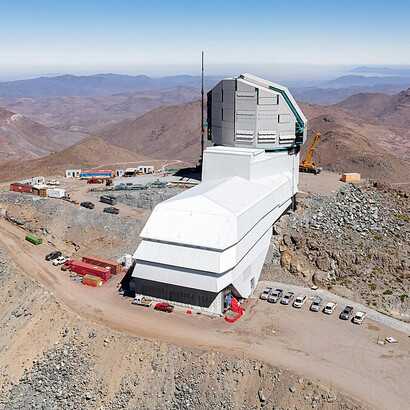
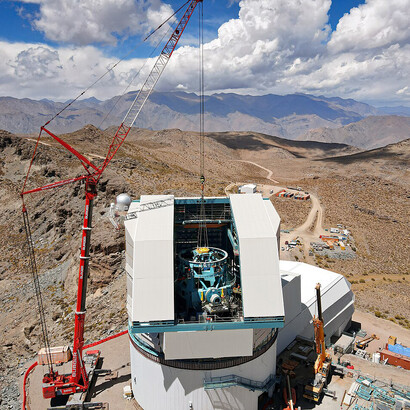
Perched atop a mountain in Chile, a revolutionary new telescope has begun capturing images that will transform our understanding of the universe. The Vera C. Rubin Observatory, equipped with the world's largest digital camera at 3.2 billion pixels, released its first stunning imagery on June 23, 2025, revealing 10 million galaxies in a single composite image—just 0.05% of the approximately 20 billion galaxies it will photograph over the next decade. This groundbreaking facility will generate approximately 20 terabytes of data every night, ultimately collecting up to 60 petabytes—roughly three times the amount currently stored by the US Library of Congress. The observatory represents a quantum leap in astronomical capability, promising to answer some of humanity's most profound questions about dark matter, dark energy, and the fundamental nature of reality itself.
The significance of this observatory extends far beyond its technical specifications, though those are impressive enough. By the end of its 10-year survey, the camera will have catalogued 20 billion galaxies, creating a time-lapse view of the sky that will reveal how the universe changes night by night. The facility is named for Vera Rubin, the pioneering American astronomer whose observations of galaxy rotation rates in the 1970s provided some of the most compelling evidence for dark matter's existence. Her work demonstrated that galaxies rotate so quickly they should fly apart unless held together by vast amounts of invisible matter—a discovery that fundamentally reshaped our understanding of the cosmos. Now, the observatory bearing her name will continue her legacy by probing the dark universe with unprecedented depth and precision.
The camera: an engineering marvel
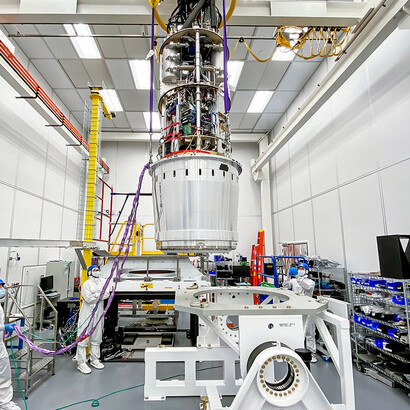
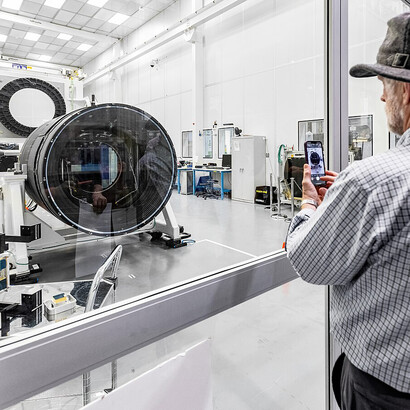
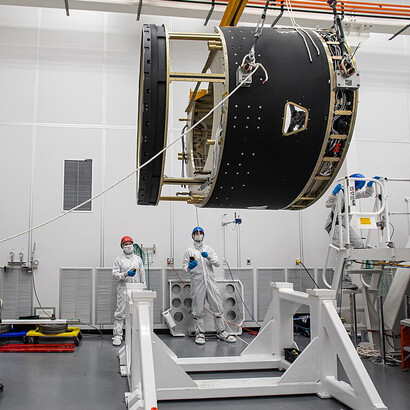
At the heart of the Vera C. Rubin Observatory sits the Legacy Survey of Space and Time (LSST) Camera, a technological masterpiece that took over 20 years to design and build. The camera boasts 3,200 megapixels—you'd need about 1,500 high-definition TV screens just to view one full image. To put this in perspective, a single image from this camera would require 400 regular televisions displayed side-by-side to appreciate each galaxy in proper detail. The camera itself is the size of a small car and weighs over 3 tons (approximately 6,600 pounds), making it a monument to precision engineering as much as an astronomical instrument.
The camera's focal plane consists of a mosaic of 189 individual charge-coupled device (CCD) sensors, each larger than professional-grade medium-format camera sensors. These CCDs were custom-designed and manufactured specifically for this project, requiring years of development to achieve the necessary sensitivity and reliability. The largest optical lens, measuring 1.57 meters (61 inches) across, sits within the camera system, gathering light from distant cosmic objects and focusing it onto the sensor array with extraordinary precision. Every component must work flawlessly because any failure could compromise the entire ten-year survey.
The camera was built at the Department of Energy's SLAC National Accelerator Laboratory in California, where engineers and scientists assembled it in an ultra-clean environment to prevent any contamination of the sensitive sensors. In May 2024, the completed camera arrived in Chile, having been carefully transported across two continents. The installation process took months of painstaking work, with the camera finally being mounted to the telescope in March 2025. By April 2025, the first photons resolved by the complete instrument were detected, appearing initially as rings before the instrument was adjusted to focus them as dots.
The engineering challenges of building such a massive, sensitive instrument were formidable. The camera must operate at precisely controlled temperatures to minimize electronic noise in the sensors. It includes its own refrigeration system that keeps the focal plane at minus 100 degrees Celsius (-148 degrees Fahrenheit), ensuring optimal performance. Six different color filters can be rotated into position in front of the sensor array, allowing the camera to capture images across different wavelengths of light—from ultraviolet to near-infrared—providing a complete view of the electromagnetic spectrum visible from ground-based telescopes.
First light: a glimpse of what's to come
The release of the Rubin Observatory's first images on June 23, 2025, marked a historic milestone in astronomy. Tony Tyson, whose decades-long work on CCD cameras culminated in this achievement, joined a presentation in Washington, D.C., to unveil an image almost 30 years in the making: 10 million galaxies poised on an inky black backdrop. The first images included stunning views of the Trifid and Lagoon nebulae as well as an extraordinary composite of the Virgo Cluster, a massive collection of thousands of galaxies located about 65 million light-years from Earth.
The Virgo Cluster image was assembled from over 1,100 individual exposures taken over seven nights in early May 2025, encompassing approximately three trillion pixels when fully processed. The image covers an area about 70 times larger than the full moon as seen from Earth, demonstrating the extraordinary field of view that sets this telescope apart from other astronomical instruments. Within this single image lie an immense variety of cosmic objects—elliptical galaxies, spiral galaxies, dwarf galaxies, and countless background objects stretching back to the early universe.
Even during these initial test observations, the observatory demonstrated its discovery potential. On June 23, the camera recorded 2,100+ previously unknown asteroids over just 10 hours, with seven of them being closer to Earth. While these nearby asteroids pose no immediate threat, this result showcases the camera's extraordinary ability to detect moving objects against the background of distant stars and galaxies. This capability will prove crucial for identifying potentially hazardous near-Earth objects that could someday pose collision risks to our planet.
The emotional impact of seeing these first images resonated even with the scientists who had spent decades working on the project. Tyson described taking his scientist hat off and looking at the images from a child's point of view: "Wow," with two exclamation points. The gorgeous colors and high dimensionality of the images blew people's minds, revealing the richness and promise for discovery unique to this unprecedented survey. The images demonstrated that twenty years of planning and another ten years of construction had indeed resulted in something extraordinary.
Watch parties for the image release were held across six continents, as people from 28 countries had been involved in the observatory's construction and commissioning. This global collaboration reflects the international nature of modern astronomy, where scientists from dozens of nations work together toward common goals. The excitement surrounding these first images generated renewed interest in astronomy and inspired a new generation of researchers who will use the observatory's data to make discoveries throughout the 2030s.
The legacy survey of space and time: a cosmic movie
Later in 2025, the Rubin Observatory will begin its primary mission: the Legacy Survey of Space and Time (LSST). Thanks to the speed of the telescope drive, the Vera C. Rubin Observatory will completely image the southern sky every three to four nights. This relentless pace means that over the course of ten years, the entire visible sky will be photographed about 800 times, creating what amounts to a decade-long movie of the cosmos. Every object will be revisited repeatedly, enabling scientists to detect anything that changes—from exploding stars to asteroids moving through the solar system.
The survey will operate like a cosmic surveillance system, continuously monitoring billions of objects for any sign of change. The observatory will generate around 20 terabytes of data per night and issue up to 10 million alerts within 60 seconds of detecting changes in the sky. This real-time alert system will notify astronomers worldwide whenever the telescope spots something new or changing—a supernova explosion, an asteroid on a new trajectory, or a previously unknown type of cosmic event. Other telescopes around the globe will then swing into action to study these discoveries in more detail.
The scale of data production is staggering. Over ten years, the survey will accumulate 500 petabytes of data—equivalent to streaming 4K video continuously for over 2,800 years. Processing this enormous data stream requires cutting-edge computing infrastructure. The data must be transported from the camera at the summit to the base facilities and then to the Rubin Observatory United States Data Facility (USDF) at SLAC via a $5 million dedicated encrypted network. Automated systems immediately analyze incoming images, detect events, and release information to the scientific community within minutes.
The scientific scope of the LSST encompasses virtually every area of astronomy. The survey will catalog millions of supernovae at various distances, providing unprecedented statistics on these stellar explosions that serve as cosmic distance markers. It will detect more than five million asteroids, including an estimated 100,000 near-Earth objects, creating the most complete inventory of solar system bodies ever compiled. The survey will image approximately 20 billion galaxies, 17 billion stars within our Milky Way, and six million small solar system bodies, creating a census of cosmic objects that dwarfs all previous astronomical surveys combined.
Perhaps most importantly, the survey will create a three-dimensional map of the universe spanning both space and time. By measuring distances to billions of galaxies using multiple techniques, astronomers will reconstruct how cosmic structure has evolved over the past ten billion years. This time machine will reveal how galaxies formed, how they've changed, and how the mysterious dark energy has driven the universe's accelerating expansion.
Unveiling the dark universe: matter and energy
The primary scientific mission of the Rubin Observatory centers on understanding the dark universe—the 95% of cosmic content that doesn't emit, absorb, or reflect light. Everything we know—galaxies, stars, planets, our families, friends, and even pets—makes up just 5% of the universe, with dark energy comprising 68% and dark matter 27%. These mysterious components shape cosmic evolution yet remain almost completely unknown, their properties inferred only through their gravitational effects on visible matter and light.
Dark matter's existence was first proposed by Fritz Zwicky in the 1930s when he noticed that galaxies in clusters moved too quickly to be held together by the gravity of visible matter alone. Vera Rubin's observations in the 1970s provided the smoking gun. She observed flat rotation curves showing that stars at galaxy edges move as quickly as those near centers, indicating galaxies must contain five to ten times more mass than visible matter. Her calculations demonstrated that without dark matter halos surrounding galaxies, the rapid rotation would cause galaxies to fly apart, scattering their stars into intergalactic space.
The Rubin Observatory will map dark matter distribution across the universe using gravitational lensing—the bending of light by massive objects predicted by Einstein's general relativity. With Rubin's wide field of view and high resolution, subtle distortions of galaxy shapes caused by dark matter will be detectable, allowing scientists to map dark matter distribution and explore its cosmic tug-of-war with dark energy. By measuring how background galaxies appear stretched or distorted by foreground dark matter, astronomers can create three-dimensional maps showing how dark matter clusters and filaments connect galaxies into the cosmic web.
Dark energy presents an even deeper mystery. Discovered in the late 1990s through observations of distant supernovae, dark energy appears to be accelerating the universe's expansion. The amount of energy required to continuously accelerate all the stuff in the universe—hundreds of billions of galaxies made of known and dark matter alike—is incomprehensible and exponentially greater than any known type of energy. It's as if you threw a ball into the air expecting it to slow down and fall back, but instead it accelerated faster and faster until shooting off into space.
The Rubin Observatory will probe dark energy's properties by measuring how the universe's expansion rate has changed over cosmic history. By cataloging billions of galaxies at different distances (and therefore different times in cosmic history), astronomers will trace how dark energy's influence has evolved. Does dark energy remain constant, or does it change with time? Is it truly a property of empty space itself, or does it represent some new field or force? These questions get at the fundamental nature of reality, and Rubin's unprecedented data set may finally provide answers.
Mapping the Milky Way: our galactic home
While the Rubin Observatory will peer billions of light-years into deep space, it will also revolutionize our understanding of our cosmic backyard—the Milky Way galaxy. The survey will create the most detailed three-dimensional map of our galaxy ever made, cataloging billions of individual stars and revealing the Milky Way's structure, history, and fate. By measuring precise positions, motions, colors, and brightness variations of these stars, astronomers will reconstruct how our galaxy formed and evolved over billions of years.
One particularly exciting application involves studying stellar streams—long ribbons of stars stretched across the sky by gravitational forces. These streams are the scattered remnants of smaller dwarf galaxies and star clusters that the Milky Way has consumed over cosmic time, like breadcrumbs marking the paths of galaxies that no longer exist as coherent structures. With images taken through six different color filters, Rubin Observatory's survey will reveal never-before-seen stellar streams around the Milky Way and the telltale effects of their interactions with dark matter.
The intricate structure of stellar streams provides a unique probe of dark matter distribution in our galaxy. As these streams orbit through the Milky Way, they encounter dark matter clumps that disrupt the streams, creating gaps and density variations. By mapping thousands of stellar streams in exquisite detail, astronomers can infer the sizes and locations of dark matter clumps, testing theories about dark matter's fundamental nature. Different dark matter models predict different stream disruption patterns, allowing observations to discriminate between competing theories.
The survey will also track the motions of hundreds of millions of stars over time, creating a dynamic picture of our galaxy's structure. By combining Rubin data with measurements from the Gaia space telescope and other observatories, astronomers will create a complete six-dimensional map showing not just where stars are located but also how they're moving through space. This data will reveal the Milky Way's hidden past, including ancient merger events when smaller galaxies collided with and were absorbed by our own galaxy billions of years ago.
Understanding the Milky Way's structure and history connects to broader questions about galaxy formation throughout the universe. Our galaxy serves as the one example we can study in extraordinary detail, providing a laboratory for testing theories about how galaxies form and evolve. The insights gained from studying our own galaxy will inform interpretation of observations of billions of other galaxies visible in Rubin's deep sky images.
Solar system inventory: asteroids and beyond
The Rubin Observatory's rapid-fire imaging capability makes it ideally suited for detecting moving objects within our solar system. Rubin Observatory will measure properties of several million moving objects—10 to 100 times more objects than are currently available—including orbital, color, and variability information. This comprehensive census will transform our understanding of the solar system's architecture and evolution, revealing how planets formed and how the solar system has changed over its 4.6-billion-year history.
Potentially hazardous asteroids represent one of the few natural disasters that are completely preventable given sufficient warning. Depending on the chosen survey strategy, Rubin Observatory could detect between 60% and 90% of all potentially hazardous asteroids larger than 140 meters in diameter. These are the objects large enough to cause regional devastation if they hit Earth but small enough to have eluded detection by previous surveys. By creating a comprehensive catalog of these objects and precisely tracking their orbits, the survey will allow scientists to predict which asteroids might pose future collision risks, providing decades or centuries of warning time for potential mitigation efforts.
The outer solar system remains largely unexplored, with vast regions beyond Neptune containing countless icy bodies in orbits ranging from decades to millennia. The Rubin Observatory will revolutionize the study of this distant realm, finding tens of thousands of new trans-Neptunian objects, including members of the Kuiper Belt—a disk of frozen bodies left over from the solar system's formation. Rubin's observations could help solve tantalizing mysteries, including whether another planet exists beyond Pluto. The hypothetical "Planet Nine" has been proposed to explain unusual clustering in the orbits of distant solar system objects, but direct detection has remained elusive.
The observatory will also discover countless comets—icy visitors from the outer solar system that develop spectacular tails when they venture close to the Sun. By cataloging comets' orbits and physical properties, astronomers will reconstruct the solar system's early history when these frozen time capsules were formed. Each comet represents a pristine sample of the material present when planets were forming, providing insights into the chemical composition and physical conditions in the infant solar system.
Small main-belt asteroids between Mars and Jupiter will be cataloged in unprecedented numbers, providing statistics on size distributions, compositions, and family groupings that reveal the asteroid belt's violent history. These objects bear the scars of billions of years of collisions, with their current properties encoding information about impact processes and planetary migration that shaped the solar system we see today.
Time domain astronomy: the dynamic universe
One of the Rubin Observatory's most revolutionary capabilities is its ability to reveal the changing universe. By imaging the entire night sky repeatedly, to great depth, and with excellent image quality, it will reveal new information about known kinds of variable stars and cosmic explosions, as well as discover entirely new classes of transient events. Time domain astronomy—studying how astronomical objects change—has historically been limited by the difficulty of monitoring vast numbers of objects simultaneously. The Rubin Observatory will finally overcome this limitation, monitoring billions of objects for any sign of change.
Supernovae—the explosive deaths of massive stars—serve as cosmic laboratories for extreme physics and as crucial tools for measuring cosmic distances. The survey will catalog millions of supernovae at distances ranging from our galactic neighborhood to the edge of the observable universe. By capturing detailed light curves showing how these explosions brighten and fade, astronomers will refine supernova models and improve their utility as standard candles for measuring the universe's expansion history. Rare supernova varieties will be found in statistically significant numbers for the first time, revealing new explosion mechanisms and stellar death pathways.
Variable stars—stars whose brightness changes due to pulsation, eclipses, or other phenomena—will be cataloged by the billions. These objects include Cepheid variables (crucial for measuring cosmic distances), eclipsing binaries (providing direct mass measurements), and exotic systems like cataclysmic variables, where white dwarfs accrete matter from companion stars. The survey will detect rare outbursts and identify unusual variability patterns that could signal new types of astrophysical phenomena never before observed.
Gravitational wave sources represent another exciting application of time-domain astronomy. When LIGO and other gravitational wave detectors observe merging black holes or neutron stars, the Rubin Observatory will rapidly scan the relevant sky area searching for electromagnetic counterparts—light signals associated with these violent cosmic collisions. Identifying optical counterparts to gravitational wave events enables multi-messenger astronomy, combining information from gravitational waves, electromagnetic radiation, and potentially neutrinos to provide complete pictures of cosmic cataclysms.
The observatory's ability to issue millions of real-time alerts will enable rapid follow-up observations with other telescopes. Within 60 seconds of detecting something new or changing, automated systems will notify astronomers worldwide, who can immediately point specialized telescopes at the target for detailed study. This coordinated approach combines Rubin's unparalleled survey capability with the focused power of other facilities, multiplying the scientific return.
Artificial intelligence: making sense of the data deluge
The sheer volume of data produced by the Rubin Observatory necessitates revolutionary approaches to data analysis. With its massive 3-billion-pixel camera, the Rubin Observatory will map the entire sky visible from the southern hemisphere every three days, and this onslaught of data must be met with AI models. There is absolutely no way that any human research team could actually look at the tens of billions of sources that Rubin will regularly monitor. Artificial intelligence and machine learning have evolved from optional tools to absolute necessities for processing astronomical data at this scale.
Northwestern University's SkAI Institute exemplifies the new generation of AI tools being developed specifically for Rubin Observatory data. Researchers there are developing foundation models designed to handle sparse, irregular time-series data—the type generated when monitoring billions of objects that might change unpredictably. One such model, called SELDON (Supernova Explosions Learned by Deep ODE Networks), is designed to forecast, classify, understand properties of, and detect the strangest transient phenomena. By learning to recognize patterns even when key pieces of data are missing, the model can help fill in the blanks, flag anomalies, and make reliable predictions.
AI systems will also optimize telescope operations, deciding where to point the telescope to maximize scientific return. At any given moment, there are thousands of different locations where the telescope could be observing, and determining the optimal location requires information about weather, atmosphere, and past observations. New AI models will rapidly synthesize all this information to execute the best possible observing strategy, adapting in real-time to changing conditions and emerging discoveries.
Classification of cosmic objects represents another crucial application. When the telescope detects something changing, is it a supernova, an asteroid, a variable star, or something entirely new? AI models trained on millions of examples from previous surveys will instantly classify objects, separating routine events from unusual phenomena worthy of detailed study. These models must achieve extremely high accuracy because misclassifications could cause scientists to overlook important discoveries or waste valuable follow-up resources on mundane events.
The democratization of AI tools through open-source software and shared computing resources means that even small research groups can contribute to analyzing Rubin data. Students and citizen scientists worldwide will have access to sophisticated AI models, enabling participation in cutting-edge astronomy regardless of institutional affiliation. This democratization could accelerate the pace of discovery while engaging public interest in astronomy and space science.
International collaboration: a global scientific endeavor
The Rubin Observatory represents one of astronomy's largest international collaborations, with scientists from more than 30 countries contributing to its construction, operations, and scientific programs. This global participation reflects both the universal appeal of fundamental questions about the cosmos and the practical necessity of pooling resources and expertise for projects of this scale. The observatory's $810 million construction cost was primarily funded by the US National Science Foundation and the US Department of Energy, with additional contributions from international partners.
The science collaborations organized around the LSST encompass thousands of researchers pursuing diverse scientific goals. The Dark Energy Science Collaboration alone includes over 1,300 scientists in more than 20 countries, coordinating efforts to extract maximum information about dark energy from the survey data. Similar collaborations focus on the Milky Way, solar system objects, transient phenomena, and strong gravitational lensing, each developing specialized analysis techniques optimized for their scientific objectives.
Data access policies balance the need to provide rapid public access with the reality that extracting scientific value from such complex data requires significant effort. While initial data access is restricted to scientists in the US and Chile who contribute to the observatory's operations, complete images will be released 80 hours after observation. Within two years, all LSST data will become fully public through cloud-based platforms, enabling researchers worldwide to access the full dataset regardless of institutional affiliation or nationality. This commitment to open science ensures that the observatory's discoveries benefit humanity as a whole.
The location of the observatory on Cerro Pachón in Chile reflects international agreements governing astronomical sites. Chile hosts numerous world-class observatories because its northern deserts provide some of Earth's best astronomical observing conditions—dry air, high altitude, and minimal light pollution combine to create transparent skies ideal for detecting faint cosmic light. The Chilean government has supported astronomical research for decades, recognizing both the scientific value and the educational and economic benefits that world-class observatories bring to the region.
Training the next generation of astronomers to work with Rubin Observatory data has become a priority for many universities. Special fellowship programs and workshops teach students how to handle massive astronomical datasets, develop machine learning algorithms, and extract science from time-domain observations. These programs ensure that when the full survey data becomes available, a workforce exists capable of mining it for discoveries that will shape 21st-century astronomy.
Legacy and future: beyond the ten-year survey
The Rubin Observatory's ten-year Legacy Survey of Space and Time represents just the beginning of its scientific impact. The massive dataset accumulated during the survey will provide material for astronomical research for decades beyond the survey's completion in 2035. Graduate students starting their PhDs when the survey begins will spend their entire careers analyzing Rubin data, making discoveries that aren't possible until complete datasets spanning the full decade become available. The observatory's true legacy will emerge gradually as astronomers combine Rubin data with observations from other facilities and theoretical models to answer questions that haven't even been formulated yet.
The observatory also serves as a pathfinder for future astronomical facilities. Lessons learned from building and operating the LSST Camera will inform the development of even larger cameras for future telescopes. The data processing pipelines and AI models developed for Rubin will be adapted for other surveys generating comparable data volumes. The infrastructure for distributing massive astronomical datasets to researchers worldwide establishes frameworks that will support open science for generations.
Follow-up observations with other telescopes will multiply the survey's scientific value. When Rubin discovers something interesting—a new type of transient event, an unusual galaxy, or a potentially hazardous asteroid—other facilities can conduct detailed studies. The James Webb Space Telescope, the Extremely Large Telescope under construction in Chile, and future space missions will all benefit from Rubin's discoveries, using their specialized capabilities to study objects that Rubin first detected. This synergy between survey telescopes and pointed observatories exemplifies modern astronomy's collaborative nature.
The cultural impact of the Rubin Observatory extends beyond professional astronomy. Public engagement programs will bring the observatory's spectacular images and discoveries to audiences worldwide, inspiring interest in science and technology. The stunning visual beauty of Rubin images—from colorful nebulae to vast galaxy clusters—makes astronomy accessible to non-specialists while demonstrating the power of scientific exploration. Educational programs will use Rubin data to teach students about the scientific method, data analysis, and the universe's fundamental nature.
Conclusion: a new window on reality
The Vera C. Rubin Observatory represents a watershed moment in humanity's quest to understand the cosmos. With the world's largest digital camera, revolutionary data processing systems, and an ambitious ten-year survey plan, this facility will transform virtually every area of astronomy. From the dark energy accelerating the universe's expansion to the asteroids orbiting in our cosmic backyard, from the violent deaths of massive stars to the subtle gravitational signatures of dark matter, the observatory will illuminate phenomena across scales spanning billions of light-years.
The observatory's namesake, Vera Rubin, dedicated her life to understanding the universe's hidden components. Her discovery that galaxies contain far more mass than meets the eye opened scientific inquiry that continues to this day. The observatory bearing her name will continue that quest with unprecedented power and precision, potentially solving mysteries that have puzzled astronomers for decades while undoubtedly uncovering new enigmas that will challenge future generations.
As we stand at the threshold of the LSST era, the excitement in the astronomical community is palpable. The first images released in June 2025 provided a tantalizing preview of discoveries to come, revealing ten million galaxies and thousands of new asteroids in just a few nights of observations. Over the next decade, this cosmic movie will reveal the universe in motion—changing, evolving, and surprising us with phenomena we've never imagined. The Vera C. Rubin Observatory is more than a telescope; it's a time machine, a census taker, and a discovery engine that will help answer humanity's oldest questions about our place in the cosmos while posing new questions that will drive science for decades to come.