English
 Español
 Français
 Deutsch
 Italiano
 Português
We admire the greats for the work that they’ve been able to do. The heights they have reached and mountains they have surpassed, so it’s a tale of inspiration. Of commendation, of being able to become an envisioned dream in spite of adversity. It is, however, not recognised that the reward for this gruelling path, the stories offer, is recognition. The simple assurance that the dream will be worth it is acceptable by the recognition that comes with acceptance. In today’s world, it's more like virality. The hope is that one day, a piece created by the artist in this context will get ten million views.
That there’s a light at the end of the tunnel, singularly defined as being known. That persistence wins over talent, that trial makes for better art and creativity. Said art becomes an amazing quality in whatever form, either in precision or reliability, whatever the factor that makes it worthy of recognition.
But this does a disservice to many people, including the teacher who taught me to love writing by simply saying my stories had merit. I believe he fostered that same passion in many. I barely remember his name; I'd wager he never went on to become a famous author. He probably never made a book; all he did was teach young people like me to chase the beauty of a story. To sit still enough to write page upon page. By this metric, can we say he was a great artist? In today’s world, absolutely not. Unless, of course, one of his students ends up being famous.
The arts have been set up with a reward system, a process that means the algorithm measures what we call “great,” because, whether I want to accept it or not, there is such a hive mentality that plagues us so. Opinions are slow to be formed until one hundred other people comment enough for us to choose a side. So art is slowly dying; nobody recognises the old man who makes those unique hand-painted charm bracelets as an artist, and the world keeps on spinning. Nothing changes.
So the end goal is recognition, which is an amazing by-product of art.
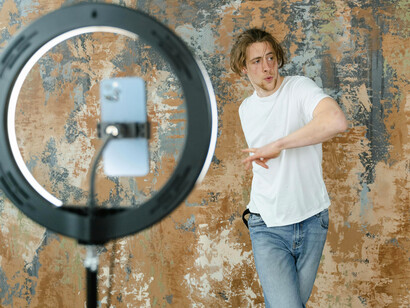
But is it the primary? To contemplate this, can art be considered great if it's not seen by thousands because the consensus is many have to agree for it to be great art? Many people have to look at it to consider the content and this is the basis upon which many people get into art. Not for the passion the backyard painter inspires, not for the fun of dancing that the dance teacher explores, but for the optimism that one day, said art will be the next big thing. I am self-aware enough that I know I am subject to this too; I derive joy from likes and comments. From the assurance in a share, because people only share what they like, do they not?
Which then redefines the creation process to a commodity that bends to the whims of certain people – or the algorithm – as opposed to art made with fire and soul designed to just exist in itself as beauty, and perchance it strikes a chord in someone's heart. In a painting made to cheer up thirty young kids and to encourage the desolate. To make and create simply for personal satisfaction, there are so many “how-to's” for art that are becoming redundant. And one that is underexplored: “How to make art that simply exists for enjoyment.”
For joy, for a smile. For a simple letter with all the artistic genius of a seven-year-old's finger painting. There’s a certain song trending that was made with AI. The first time I heard it, I didn't even realise it was made that way. The overall quality of the song is helping it make waves because art has become that way.
If a tree falls in a forest and no one hears it, does it still make a sound?
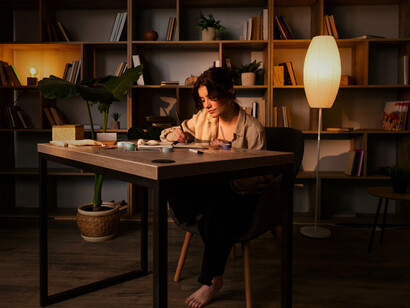
There’s a novelty in being hidden; I used to feel smug making art no one else saw. It felt easier, better, a rendition of soul, as opposed to creating and then trying to look through the eyes of perceived spectators to see what tweaks need to be made based on a buyer's lens. To be more acceptable and palatable. It was honest, although I have shifted paths; the advantage of being unknown keeps me on this path of making art that is a mix of honesty and delusion in the grand scheme of it.
Nothing I am saying or doing is revolution; this honesty will not change the world. It will have only made me a better writer. A better artist, not by the standards of the work of the next person falling short when placed side by side with mine. More of a chance to be more in tune with the creativity that flows through me. In choosing the ideas worthy of fleshing out based on desire. And what is art without desire in any form?
If a tree falls in a forest, is it still measured as a disaster because it causes no disruptions? Because it makes no waves, a tree falling in a forest is as commonplace as they come. Does it hold less power than a tree that falls when thousands are watching or is it the same as the unknown tree?
Then if the pipeline ends with one person, could it also be seen as great? Does art begin and end in creation and recognition? Is there a missing part that is easily ignored?
So far I have not made waves, and it is absolutely confusing because all I can use as a measure of being a better writer than when I began is that the words come easier to me and the fragile hope that it may one day be seen by people who resonate with said art.
The place of marketing in art, selling into distilled lines and psychology is all so complex.
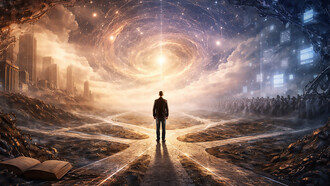
So would my passion still be a noble quest if no one sees it? The answer lies in the reason for my pursuit. I do not know. I only know of the longing to be seen.