English
 Español
 Français
 Deutsch
 Italiano
 Português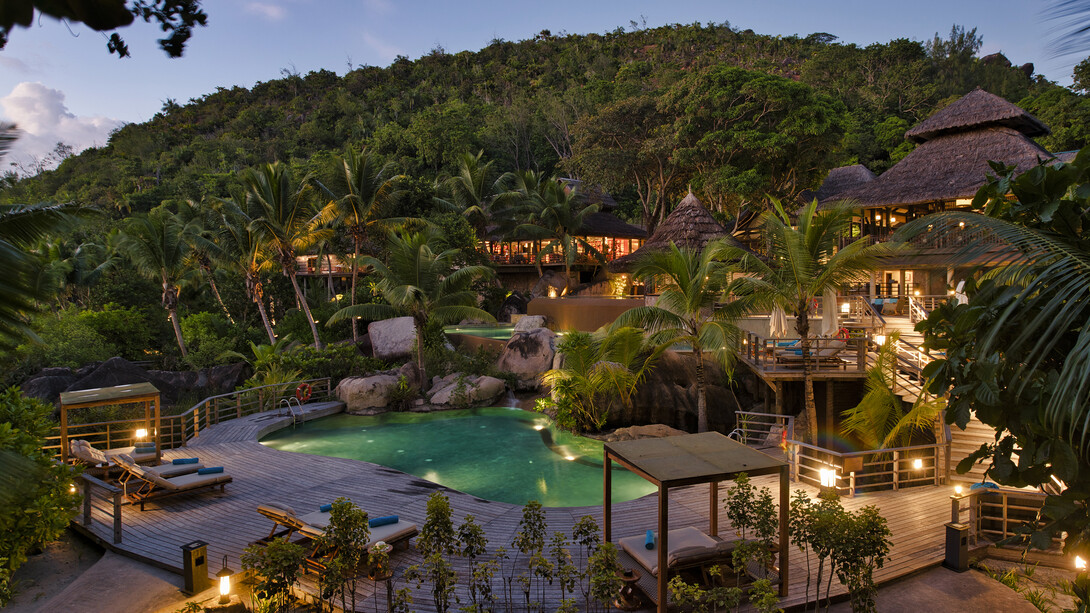
Praslin, the Seychelles’ second-largest island, moves at a different speed from Mahé.
Where Mahé is dramatic and vertical, Praslin unfolds more gently. Forested hills descend gradually towards the sea. Roads coil through dense greenery. Villages appear and disappear in minutes. The atmosphere feels quieter, more settled.
The Constance approach
Constance Hotels & Resorts remains a relatively boutique presence in the Indian Ocean, with properties across the Seychelles, Mauritius, the Maldives, and Madagascar. The group has built its reputation by pairing high-end comfort with architecture that respects the landscape, allowing nature to lead the experience rather than the hotel brand.
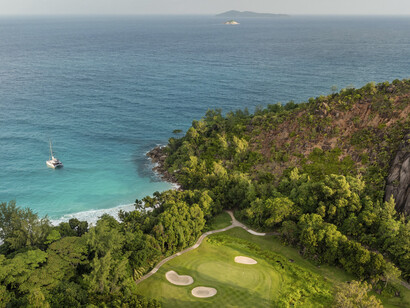
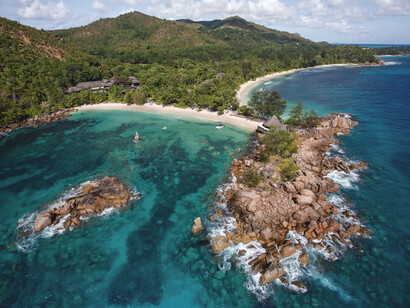
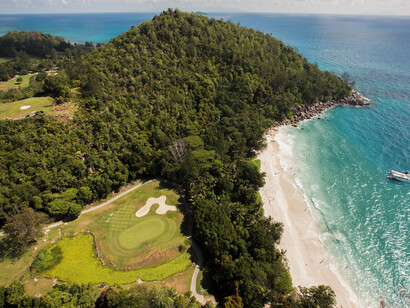
Constance Lemuria embodies that philosophy particularly well. The resort spreads quietly across the island’s northwestern coastline, its villas and suites tucked among palms and tropical vegetation so that the landscape remains the main spectacle.
The suites are arranged in twos and fours to a thatched building, discreetly positioned so that each feels almost standalone. There is a real sense of separation and privacy. Our suite opened onto a wide terrace facing the sea.
Inside, the design favors muted tones and natural materials: pale woods, stone, and soft textiles that absorb rather than compete with the light outside. The bathroom is luxurious without ostentation, generously proportioned with a deep soaking tub, twin basins, and a walk-in shower that feels almost architectural. It is the kind of space designed for lingering rather than rushing through.
What Lemuria does particularly well is distance. Paths wind through the grounds so that guests rarely feel on top of one another. Even when the resort is full, the atmosphere remains unhurried.
For the duration of our stay, we rented a convertible jeep from Kreol Services, run by Stephan Hattingh. Having a car on Praslin changes the experience of the island completely. With the roof down and the warm air moving through the car, we spent hours drifting along the island’s winding roads. Praslin is small enough that driving never feels like transit. It feels like wandering. The forest thickens suddenly on either side, a beach appears unexpectedly at the end of a bend, and a quiet harbor slips into view and disappears again.
The Palm Forest of the Vallée de Mai
At the heart of Praslin lies one of the most extraordinary forests on earth. The Vallée de Mai, a UNESCO World Heritage site, is often described as prehistoric, and the description feels entirely justified the moment you step beneath its canopy. Towering coco de mer palms rise thirty meters overhead, their enormous fronds filtering the sunlight into deep green shadow. The air cools noticeably. The forest floor is thick with fallen leaves. Walking through the valley feels less like visiting a park and more like stepping into an earlier chapter of the planet’s history.
The Coco de Mer
The coco de mer palm produces the largest seed in the plant kingdom, a double coconut that can weigh over twenty kilograms and whose unmistakable shape has fascinated travelers for centuries. For generations, sailors believed the seeds came from forests growing beneath the ocean because they washed ashore across the Indian Ocean long before anyone knew where they grew. In reality, they grow only here on Praslin. Standing beneath these immense palms, watching the huge seeds suspended high above the ground, the island suddenly feels botanically unique.
A day on the water
One of the most memorable excursions of our stay came courtesy of Jimmy at the hotel’s Boat Shed, who arranged a private boat for us with the charter company Amical.
Our captain, Adrian, ran the boat with easy confidence. What made the day especially charming was that both his son and daughter were working alongside him as crew, turning the outing into a quietly delightful family affair. There was something wonderfully fitting about exploring these islands with a family who clearly knew the waters as part of their daily lives.
From the boat, the Seychelles reveal a different personality. Granite islands rise abruptly from luminous water, beaches appear unreachable except by sea, and the colors shift constantly between turquoise, cobalt, and deep sapphire. Moving across this scattered geography gives a sense of how the islands relate to one another in a way that road travel alone never quite captures.
A day trip to Curieuse
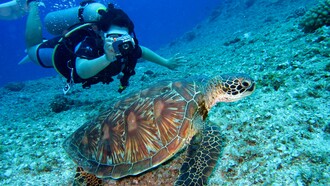
One morning, we took a boat across the short stretch of water to Curieuse Island. The atmosphere changes immediately. Curieuse feels wilder, more elemental, its red earth paths threading through mangrove and coastal forest. Along the beach roam Aldabra giant tortoises, some over a century old, moving slowly across the sand with prehistoric calm. Visitors are free to approach them and even gently touch the cool ridges of their immense shells. Watching these creatures move at their own ancient pace brings a certain perspective. Life here operates on a scale far removed from itineraries or return boats.
A day on La Digue
Another day, we took a boat from Praslin to La Digue.
I first came here twenty-five years ago. No proper roads. Just sandy tracks and oxcarts swaying past in the heat. The island felt slower, almost secret.
Today, visiting with Henryk, it is e-bikes, golf buggies, and a steady stream of people arriving for their Instagram moment. The world has found it.
And yet.
Stand still, and the rocks do not care.
Those vast sculpted boulders rising from the sea like ancient creatures at rest remain magnificently indifferent to hashtags and footfall. They frame the water in impossible shapes. The sea is still impossibly clear. The sand is still pale and soft.
Yes, it is busier. Yes, it has changed.
But the inherent beauty here is bigger than the crowds. It dwarfs the noise.
The rocks in the water are older than our nostalgia.
And far more patient than our cameras.
Dining above the Indian Ocean
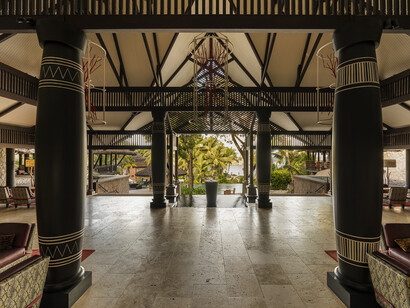
Our favorite restaurant was The Nest, perched directly on rocks at the far edge of the resort. Reaching it requires a short walk along the beach and across a wooden walkway that feels almost ceremonial, the sea opening wider with each step.
The setting alone would justify dinner: waves moving below the terrace, warm wind drifting through the timber structure. Fortunately, the food matches the location. The menu leans towards fresh seafood handled with admirable restraint: grilled fish, bright salads, citrus, herbs, and just enough Creole influence to give the dishes character without heaviness. In the tropics, this kind of light, confident cooking feels exactly right—unfussy, precise, and deeply satisfying.
Diva
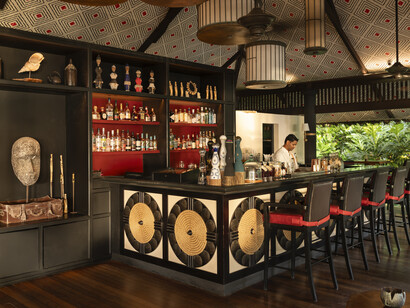
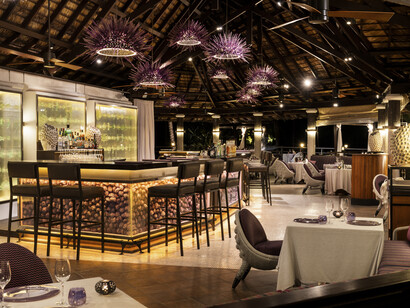
Diva, Lemuria’s fine dining restaurant, approaches the evening from a very different angle. The ambition is clear: polished service, elaborate plating, and a tasting menu that nods towards Michelin-star standards.
For our taste, it felt slightly too self-conscious for the setting. In tropical heat, one instinctively gravitates towards freshness and simplicity, whereas Diva leans towards theatrical gastronomy. At one point, the explanation of a dish lasted longer than it took to eat it.
That said, considerable credit is due to the chef and team. Delivering this level of culinary precision and service on a small Indian Ocean island is no small feat. The technical execution is impressive, even if we ultimately preferred the relaxed confidence of The Nest.
The spa
The spa at Lemuria avoids the over-designed theatricality that often accompanies resort wellness spaces. Treatment rooms sit quietly within lush vegetation, open to birdsong and the distant rhythm of the sea.
What distinguished the experience was the therapist’s skill. This was not choreography masquerading as massage but genuine expertise. Pressure was intuitive, anatomical, and corrective where needed. After long swims and island walks, the treatment felt less like indulgence and more like intelligent repair. The mark of a truly good spa is not how elaborate the ritual appears but how much better your body feels afterwards.
You leave feeling lighter, quieter, and recalibrated.
Much like the island itself.