English
 Español
 Français
 Deutsch
 Italiano
 Português
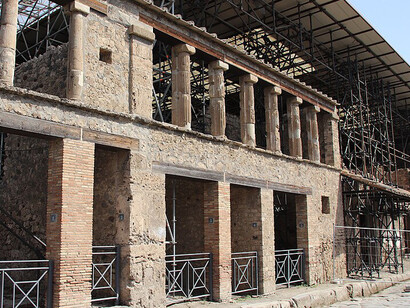
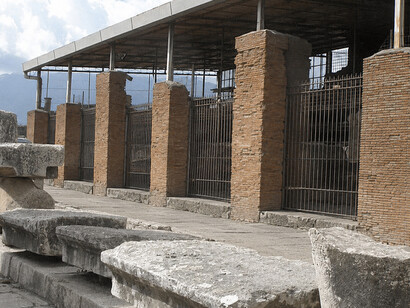
The ancient Roman city of Pompeii has long stood as one of the most significant archaeological sites in the world, offering an unparalleled glimpse into daily life in the first century CE. Buried under volcanic ash following the catastrophic eruption of Mount Vesuvius in 79 CE, Pompeii remained preserved in remarkable detail for nearly two millennia. Since its rediscovery in the eighteenth century, ongoing excavations have continually reshaped scholarly understanding of Roman society. Recent discoveries, however, have provided particularly striking insights into the cultural and religious complexity of the city.
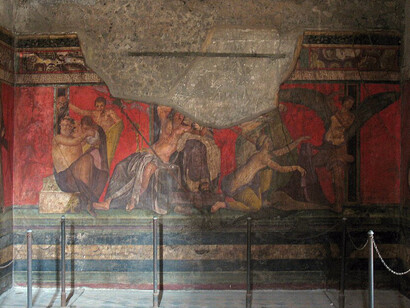
Among these are the unearthing of a fresco depicting the initiation rites of the Dionysian mysteries, an esoteric cult once restricted by Roman authorities, and the discovery of a lavishly decorated banquet hall featuring mythological frescoes and intricate mosaic flooring. Together, these findings illuminate the intersection of private belief, public identity, and artistic expression in Pompeii. They reveal a society in which elite households served not only as centres of social display but also as spaces where religious experimentation and cultural storytelling coexisted.
Pompeii and Roman domestic life
Pompeii was a thriving urban centre before its destruction, characterised by a mix of commercial, political, and residential spaces. Elite homes, or domus, played a central role in the social structure of the city. These residences were not merely private dwellings; they functioned as arenas for public interaction, where patrons received clients, hosted banquets, and demonstrated wealth and cultural refinement. Decoration within these homes was therefore highly significant. Frescoes, mosaics, and sculptures were carefully chosen to reflect the owner’s status, education, and values.
Roman wall painting, particularly in Pompeii, followed distinct stylistic phases and often incorporated mythological themes, landscapes, and architectural illusions. These artistic choices were not random. Instead, they communicated messages about identity and aspiration. Similarly, mosaic floors, constructed from small pieces of stone or glass, served both practical and symbolic purposes, often depicting scenes that reinforced the themes presented on the walls. Within this context, the newly discovered banquet hall and the Dionysian fresco must be understood not simply as artistic works but as deliberate cultural statements embedded within domestic space.
Religion in ancient Rome
Religion in ancient Rome was multifaceted, encompassing both public rituals sanctioned by the state and private practices that varied widely among individuals and communities. Official religion emphasised the worship of traditional gods such as Jupiter, Juno, and Mars and was closely tied to civic identity and political authority. Public rituals were conducted to maintain the favour of the gods and ensure the stability of the state.
Alongside this official framework existed a variety of mystery cults, which offered more personal and emotionally engaging religious experiences. These cults often involved secret initiation rites and promised spiritual benefits such as salvation, transformation, or a closer connection to the divine. One of the most prominent of these was the cult of Dionysus, the Greek god of wine, ecstasy, and transformation, known to the Romans as Bacchus.
The Dionysian mysteries were particularly controversial in Rome. In 186 BCE, the Roman Senate issued a decree severely restricting Bacchanalian practices, citing concerns about social disorder and moral corruption. Despite these restrictions, evidence suggests that the cult persisted in various forms, especially in more private settings. The recent discovery of a fresco depicting Dionysian initiation rites provides compelling new evidence of the continued presence of these practices in Pompeii.
The Dionysian mysteries fresco
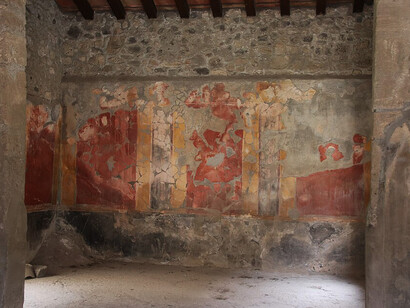
The fresco, discovered in a large room believed to have functioned as a banquet or ceremonial space, is remarkable for both its scale and subject matter. Covering multiple walls, the painting presents a vivid procession associated with the cult of Dionysus. Figures include maenads, female followers of the god, depicted in dynamic, ecstatic poses, as well as satyrs and other mythological beings linked to Dionysian mythology. At the centre of the composition appears to be a female initiate, engaged in a ritual that likely represents a stage in the initiation process.
The imagery suggests themes of transformation and transcendence. Dionysian rituals were often associated with altered states of consciousness, achieved through music, dance, and the consumption of wine. These experiences were believed to allow participants to transcend ordinary reality and connect with the divine. The presence of such imagery in a domestic setting indicates that the inhabitants of the house may have been participants in, or at least sympathetic to, these practices.
This discovery is particularly significant because visual representations of mystery cult rituals are rare. The most famous parallel is found in the Villa of the Mysteries, also in Pompeii, where a series of frescoes has long been interpreted as depicting Dionysian initiation rites. The newly discovered fresco adds to this limited body of evidence and suggests that such imagery may have been more widespread than previously thought.
Furthermore, the fresco raises important questions about the relationship between private belief and public authority. Despite official restrictions, the apparent presence of Dionysian imagery in an elite household suggests that individuals were able to engage in alternative religious practices with a degree of autonomy. This highlights the complexity of religious life in Pompeii and challenges the notion of a strictly controlled or uniform religious environment.
The banquet hall with mythological frescoes
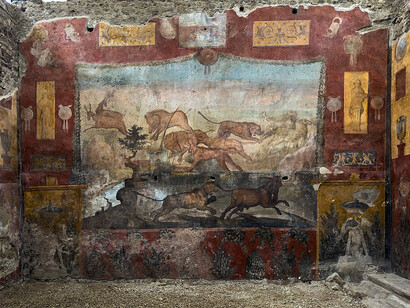
The second major discovery, a richly decorated banquet hall, provides a complementary perspective on Pompeian culture. This room features elaborate frescoes depicting scenes from Greek mythology, including figures such as Helen of Troy, Paris, Apollo, and Cassandra. These stories, drawn from epic and tragic traditions, would have been familiar to educated Romans and served as markers of cultural sophistication.
The inclusion of Helen of Troy, whose abduction sparked the Trojan War, reflects themes of beauty, desire, and the consequences of human actions. Similarly, the figure of Cassandra, cursed to utter true prophecies that would never be believed, embodies themes of tragedy and the limits of knowledge. Apollo, as a god associated with prophecy and the arts, further reinforces these intellectual and cultural associations.
The mosaic floor of the banquet hall adds another layer of meaning. Mosaics often complemented the themes of wall paintings, creating a cohesive visual environment. The craftsmanship involved in producing such a floor would have required significant resources, underscoring the wealth and status of the homeowner.
Banquet halls in Roman houses were central to social life. Dining was not merely a matter of sustenance; it was a performative activity in which hosts demonstrated their generosity and refinement. Guests reclining on couches would have been surrounded by these images, engaging in conversation that may have drawn upon the myths depicted around them. In this way, the art within the room functioned as both decoration and intellectual stimulus.
Religion and myth in domestic space
When considered together, the Dionysian fresco and the mythological banquet hall reveal important contrasts and connections. Both are located within elite domestic settings, and both involve spaces associated with dining and social interaction. However, they represent different dimensions of cultural expression.
The Dionysian fresco is closely tied to religious practice, specifically a form of worship that was at times viewed with suspicion by Roman authorities. Its imagery suggests participation in a transformative, possibly secret ritual. In contrast, the mythological frescoes of the banquet hall represent a more socially accepted form of cultural engagement. Greek myths were widely embraced in Roman art and literature, and their depiction in domestic spaces signalled education and refinement.
Despite these differences, both discoveries highlight the role of the home as a space where identity was constructed and displayed. The presence of Dionysian imagery suggests a willingness to explore alternative forms of belief, while the mythological scenes reflect a connection to the broader cultural traditions of the Mediterranean world. Together, they illustrate the diversity of experiences and values within Pompeian society.
Broader implications of the discoveries
These findings have broader implications for the study of Roman culture. They challenge simplistic distinctions between public and private life, showing that domestic spaces could accommodate a wide range of activities and expressions. They also underscore the importance of art as a medium through which individuals communicate their beliefs and aspirations.
Moreover, the discoveries contribute to ongoing debates about the nature of religious practice in the Roman world. The apparent persistence of Dionysian imagery suggests that official restrictions were not entirely effective in suppressing alternative forms of worship. This aligns with other evidence indicating that Roman religion was more flexible and diverse than previously assumed.
Finally, these discoveries highlight the continuing importance of archaeological research in Pompeii. Each new excavation has the potential to reshape understanding of the past, revealing aspects of life that have remained hidden for centuries. As techniques and methodologies continue to improve, it is likely that further discoveries will provide even deeper insights into the complexity of ancient Roman society.
The recent discoveries of the Dionysian mysteries fresco and the elaborately decorated banquet hall offer valuable new perspectives on life in Pompeii. Together, they reveal a society in which art, religion, and social practice were deeply intertwined. The Dionysian fresco provides rare evidence of private religious experience and the persistence of practices that existed outside official norms. The banquet hall, with its mythological imagery and intricate design, reflects the importance of cultural display and intellectual engagement within elite households.
These findings demonstrate that Pompeii was not a static or uniform society, but one characterised by diversity and complexity. They show how individuals navigated the boundaries between public expectation and private belief, using the spaces of their homes to express identity in multiple ways. As archaeological work continues, Pompeii remains a dynamic source of knowledge, offering new insights into the human experience in the ancient world.
Bibliography
Beard, Mary. Pompeii: The Life of a Roman Town. London: Profile Books, 2008.
Clarke, John R. Art in the Lives of Ordinary Romans: Visual Representation and Non-Elite Viewers in Italy, 100 B.C.–A.D. 315. Berkeley: University of California Press, 2003.
Cooley, Alison E. Pompeii and Herculaneum: A Sourcebook. 2nd ed. London: Routledge, 2013.
Dunbabin, Katherine M. D. Mosaics of the Greek and Roman World. Cambridge: Cambridge University Press, 1999.
Elsner, Jas. Roman Art. Oxford: Oxford University Press, 1998.
Zanker, Paul. Pompeii: Public and Private Life. Cambridge, MA: Harvard University Press, 1998.
Wallace-Hadrill, Andrew. Houses and Society in Pompeii and Herculaneum. Princeton: Princeton University Press, 1994.
Recent archaeological reports from the Pompeii Archaeological Park (2024–2025 press releases).