English
 Español
 Français
 Deutsch
 Italiano
 Português
He who has a why to live can bear with almost any how.
(Nietzsche)
Viktor Frankl’s father, mother, brother and wife died in camps; only his sister survived. The will to live is about helping a prisoner make sense of his apparently senseless suffering. To live is to suffer, but to survive is to find meaning in that suffering.
In the camps, prisoners were expected to work, and those who could not would be sent to bigger camps, which were fitted with gas chambers and crematoriums. This concentrated the minds of prisoners seeking to stay alive for family and friends waiting back home. When working, they thought of their loved ones and hoped they were better off than they were. Frankl proclaimed that love was the highest goal a man could aspire to. This love goes beyond the physical person to the inner self. One prisoner asked that if his fellow prisoner should see his wife, he tell her he talked of her daily, hourly. That he loved her more than anyone and being married to her outweighed everything, even the suffering in the camp.
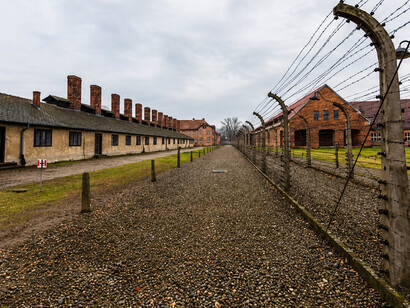
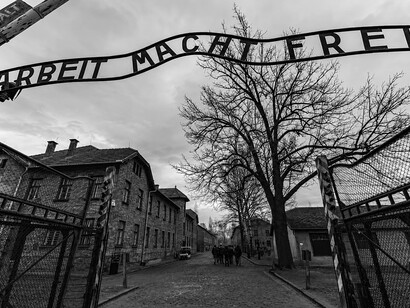
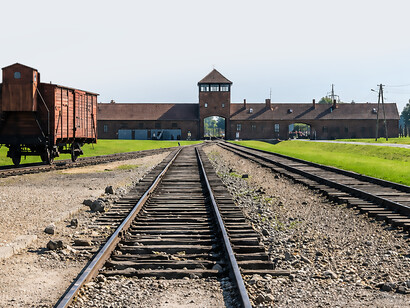
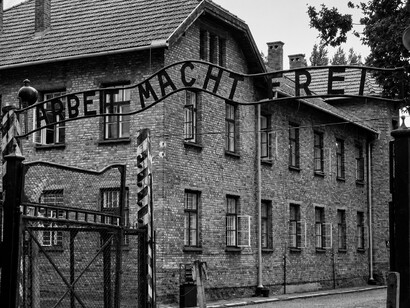
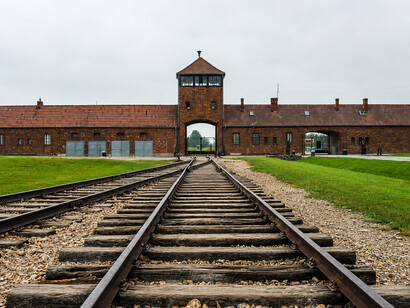
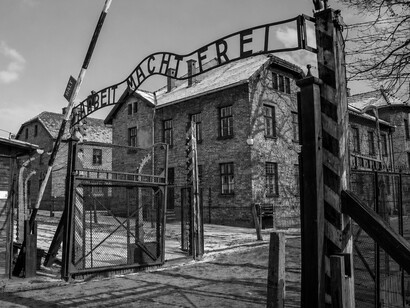
When prisoners first enter the camp, their reaction is one of shock. They expected the train to go to a munitions factory where they would be employed as forced labour. The welcoming committee were specially chosen for their healthy appearance. The accommodation housed fifteen hundred captives crammed into sheds built for two hundred. Prisoners were required to give up all possessions, including watches, medals, and wedding rings. When taken to the baths, their hair was removed; they then possessed nothing but their naked existence. Everyone entertained thoughts of suicide due to the hopeless situation, and the idea of death loomed over them daily. Prisoners in Auschwitz did not fear death, but to stay alive, you needed to look fit for work. Those who look miserable, down and out and emaciated could not manage hard labour and would be sent to the gas chambers.
The second phase prisoners experienced was a relative apathy, which is a kind of emotional death. After coping with the longing for home and family, there was the disgust at the ugliness which surrounded them. Initially, prisoners looked away when an inmate was being punished, but within weeks, they did not avert their eyes as their feelings were blunted and they now watched unmoved. While serving as a doctor in the medical hut, Frankl saw prisoners on the death of a patient approach the body and exchange the corpse's wooden shoes for their own if they were an improvement. Equally, the dead man’s coat may be exchanged. The bodies were removed by dragging them across the floor towards the door and dropping them down the steps.
This is because prisoners were too weak to walk up the steps, which were six inches high and could not be climbed without leaning on the rail and pulling themselves up. The blunting of emotions and the feeling that no one could care anymore made prisoners insensitive to daily and hourly beatings. They became surrounded by a protective shell. It is not the physical pain which hurts but the mental agony caused by the injustice and the unreasonableness of it all. As a doctor in his home country, he was accused of profiting from the sick, to which he replied that most of his work was done in free clinics. At which point the prisoner assaulted him.
The lack of food dominated life in the camp, as it concentrated the mind on survival. Politics was talked about all the time, fuelled by rumours. Rumours about the military situation were usually contradictory. Religious belief often surprised and moved new arrivals with improvised prayers and services in the corner of a hut. Humour was another weapon in the fight for self-preservation, enabling prisoners to rise above the situation.
When the world no longer recognises the value of human life and dignity, it robs a man of his will and his value. If the prisoners did not struggle against this ill treatment, they lost the feeling of being an individual with a mind, inner freedom and personal value. The camp showed that man does have a choice between action, apathy and the suppression of irritability. It is one of the last human freedoms: to choose one’s attitude. The type of person the prisoner became was the result of an inner decision, not just the camp’s influence.
The way they bore their suffering was a genuine inner achievement. Frankl argued that an active life gave man the ability to find value in creative work and a passive life the enjoyment of beauty, art and nature, but when neither is possible, man develops a higher moral behaviour in his attitude to his existence. If there is meaning in life, Frankl argues, there must be meaning in suffering. A prisoner’s reaction may be brave, dignified and unselfish in the fight for self-preservation, or he may forget human dignity and become no more than an animal.
A man who could not see the end of his provisional existence ceased living for the future. It is a characteristic of humans that they can only live by looking to the future. This is one of the most depressing problems for the prisoners; they did not know how long their imprisonment would be. A prisoner who lost faith in the future was doomed. Thus, Frankl saw life as a question, and it was our responsibility to find the right answers to problems and fulfil the tasks set for individuals. If a man finds his destiny is to suffer, then he needs to accept it as his unique task, as no one can suffer in his place. His unique opportunity is the way in which he bears those burdens. A man who is conscious of the responsibility to another human being who waits for them will not throw their life away.