English
 Español
 Français
 Deutsch
 Italiano
 Português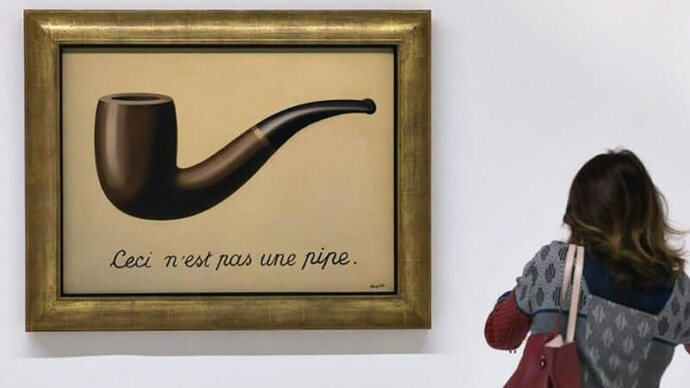
In The Misery and Splendour of Translation (1937), José Ortega y Gasset relays his response to a conference attendee who remarked on the “impossibility of translating certain German philosophers.” Rather than dismissing this claim, Ortega leaned into it. He suggested that translation, as a practice, is in some sense utopian – that is, that it aims toward an ideal outcome (perfect equivalence between languages) that can never actually be achieved. In other words, there is no single correct translation, only approximations shaped by context.
Language, in this sense, operates on two levels at once. On the one hand, it depends on a kind of collective agreement: a shared system of rules, meaning, and conventions that allows communication to function. Without this, words would have no stable meaning.
On the other hand, language is also deeply personal and individual. Every word and sentence is shaped by a person’s past experiences with it. For instance, I learned the word ‘appeasement’ while first studying the World Wars, and it is this specific context that comes to mind whenever I encounter the word today. But this association is entirely my own; it would be unreasonable to assume that others carry the same set of meanings or emotional resonances. And yet, in everyday communication, we constantly behave as if they do.
So why do we assume universality in any part of language? Ortega’s answer, implicitly, is that we simply must – language would collapse without this assumption. But it does not change the fact that universality cannot be guaranteed, even if it is constantly presumed. And this presumption, especially when combined with strong or forceful expression from the speaker, creates conditions ripe for tension and partial misunderstanding. This problem serves as the basis for the following close reading of Ortega’s text alongside the work of contemporary text-based artists such as the Guerrilla Girls and Barbara Kruger.
These examples point towards three interrelated issues: the role of context in shaping meaning, the idea of a false utopianism (the belief that we are successfully conveying what we intend to say), and the broader impossibility of translation in a world where even our first language cannot be fully universalised.
The first of these inquiries begins with the work that inspired the title of this article: “The Treachery of Images” (1929) by the Belgian artist René Magritte. The work depicts an image of a pipe accompanied by the text “ceci n’est pas une pipe” (“this is not a pipe”). The piece famously depicts the disparity between the life one lives (represented by the pipe) and the language one uses to live that life. The image is not the thing itself, and the word is not the object. As an introduction, this shows how language is never capable of fully representing lived experience in the way we often assume it does.
While similar dynamics operate in what we could call ‘private language’ (the voice in your head, or the internal dialogue one has with themselves), the more immediate concern is interpersonal communication. Misunderstandings arise when a speaker assumes that the listener is using language in the same way they are. Ortega offers one clear example of a speaker working in a second language; he argues that in these cases, the speaker is often expressing thoughts originally formed in their first language, just translated into another. He writes that the dissonance in meaning “is so great that not only are they exceedingly incongruous, but almost all their resonances, both emotive and intellectual, are equally so” (96).
He was speaking specifically to the example of words meaning “forest” in Spanish and German, which have vastly different applications. The conflict in this situation comes about when the Spanish speaker uses the German word for “forest” in the same context they would use the Spanish word. The German and Spaniard in this hypothetical conversation would have different images of forests in their mind, influenced by their own national contexts.
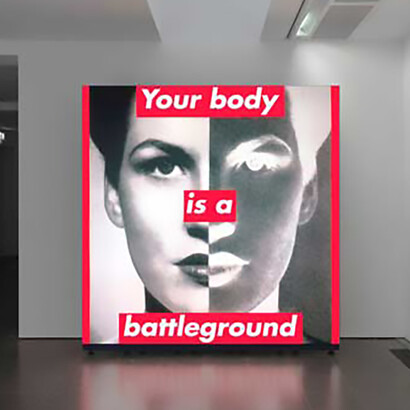
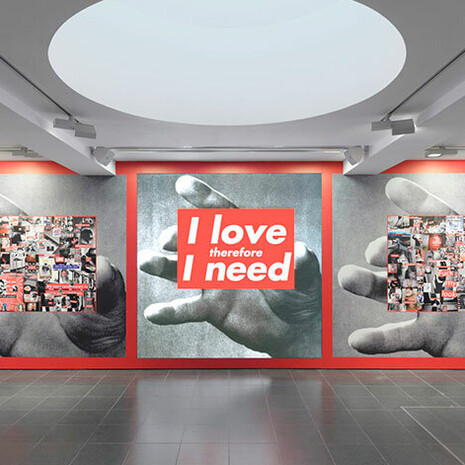
This disparity can also be seen in figurative language that has changed throughout history, notably language that describes the world and our environment as alive or autonomous: the sun “rising” or “setting,” wind “blowing,” or, as Barbara Kruger represents, one “killing” time. In her work, this kind of language is repurposed. Her text-based pieces do not explicitly analyse language itself but use it as a tool to critique power structures, masculinity, and identity. But in this case, when language is treated as a means to an end, the assumption of its universality can be even more damaging. The message depends on being understood in a particular way which, as we have seen, cannot be guaranteed.
Kruger’s work can therefore be read in two ways at once: as a form of social and political critique, and as an unintended commentary on the instability of language itself. In attempting to communicate something direct and forceful, it reveals the very slippage it depends on. At the same time, however, it does succeed in creating a kind of shared alignment among viewers – not being they understand the language in the same way, but because they are oriented toward a common goal.
Our second investigation turns to what Ortega calls a “false utopianism” – a belief that emerges when a speaker assumes they are, in fact, saying exactly what they intend to say, and that what they intend is entirely possible to communicate.
Ortega is particularly forceful on this point. He writes: “There is a false utopianism that is the exact inverse of the one I am now describing, a utopianism consistent in its belief that what man desires, projects, and proposes is, obviously, possible. Nothing is more repugnant to me, for I see this false utopianism as the major cause of all the misfortunes taking place now on this planet” (98). What he identifies here is not optimism, but overconfidence: the assumption that intention translates cleanly into expression, and expression into understanding. If the first form of utopianism imagines a perfect translation that can never exist, this second form assumes that no such gap exists at all.
This disconnect is not difficult to locate. It can be seen in many contemporary political conflicts, particularly in the increasingly entrenched divide between the opposing sides of the political spectrum in countries like the United States and Canada. Tensions are heightened, in part, by growing confidence that each is on what they believe to be ‘the right side’ of history. By this, people generally mean that their position will ultimately be vindicated by future moral or historical judgment. However, the issue here is not just linguistic misunderstanding, but what follows from that confidence: a reduced willingness to engage. When one side believes strongly in their beliefs and believes that they are accurately and compellingly presenting them to the other, opposing views are interpreted as simply having not understood. This leads to them being rejected and, worse, treated as not worth engaging with at all.
The problem, then, is less that language fails (though it does) and more that this failure is ignored. When one side withdraws from meaningful engagement, the other is effectively confirmed in doing the same. What results is mutual disengagement reinforced by certainty. Language still plays a role in that it cannot fully carry meaning across these divides, but it is the assumption that it already has that proves more consequential. In this sense, conflict is sustained by the belief that everything necessary has already been said and understood.
This tension is captured, perhaps unintentionally, in the work of the Guerrilla Girls, particularly in “Guerrilla Girls Pop Quiz” (1990). The piece asks: “If February is Black History Month and March is Women’s History Month, what happens the rest of the year?” The answer: “Discrimination.”
The message appears direct on the surface, yet it is precisely the kind of statement that can be read in multiple opposing ways. For some, it affirms the presence of systemic inequality – that designated months do little to dismantle deeper structures of power. For others, it echoes a critique of affirmative action as a form of ‘reverse discrimination.’ The same text, operating under the assumption of clarity, therefore produces divergent interpretations.
Ortega accounts for this when he writes: “Language doesn’t offer that much. It says, a little more or less, a portion of what we think, while it sets an insurmountable obstacle in place, blocking a transmission of the rest” (101). In other words, language always falls short. It communicates something, but never everything. This becomes particularly significant when a group develops a highly internal, shared vocabulary, when beliefs are so closely aligned that they produce a kind of communal shorthand. Within that group, communication may feel precise and efficient, but outside of it, the same language can fail entirely. It does not translate across contexts because it was never designed to. Ortega pushes this further by observing: “Not only do we speak, but we also think in a specific language, and intellectually slide along preestablished rails prescribed by our verbal destiny” (107).
Here, language is understood as a structure that shapes thought itself. If this is the case (and I personally agree that it is), disagreement is not just a matter of differing opinions but of differing trajectories. Those who appear on ‘the wrong side’ of history are operating along entirely different conceptual tracks.
These ideas suggest a different approach to both education and conversation, and towards first truly understanding the opposite side before pursuing dialogue in a specific way to ‘switch tracks’ and align with the opposing side.
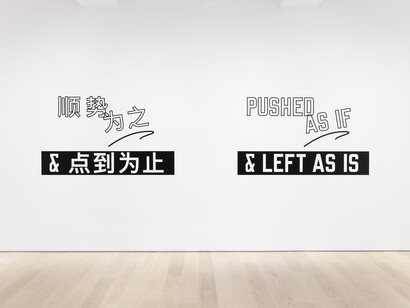
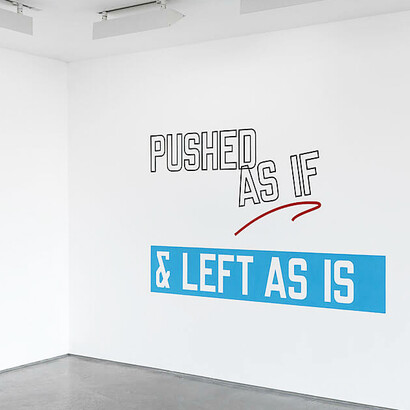
Finally, we come to the impossibility of translation in this context: translation of a language which, to begin with, none of us are capable of using effectively. In translation, not only is one attempting to translate words from one language to another, but they are also attempting to translate entire thoughts, feelings, and ideas, which, as we have just learned, cannot be effectively conveyed even in one’s first language. Ortega captures this paradox when he writes “one tries to say in a language precisely what that language tends to silence” (104). And yet, he points to something more productive in the process: that translation can reveal “the mutual secrets that peoples and epochs keep to themselves and which contribute so much to separation and hostility” (104). By this, Ortega critiques the literality of language and its inadequacy for accurately describing indescribable feelings and experiences.
This tension is reflected in Barbara Kruger’s “Savoir c’est pouvoir” (1989). The phrase is commonly translated as “knowledge is power", though a more literal rendering would be “to know is to be able". The phrase carries different emphases depending on how it is read and yet remains confined.
A similar dynamic could be observed in an interactive installation from the “Art souterrain” exhibition in Montreal years ago, where visitors were invited to rearrange magnetic words on a wall to form sentences. The native French speakers were enthusiastically moving the words around, laughing at the ideas they created, and even making ridiculous short stories, but, as a native English speaker, I had a completely different experience of the piece. They saw the words as charged with every other experience they’d had with that word, allowing for playful experimentation. For a non-native speaker, however, the same words appeared flattened and reduced to their dictionary definitions. What appeared as abundance to one group felt like limitation to another.
Ultimately, we are left with the necessity of acknowledging what might be called the treachery of language. Not in the sense that language is deceptive by intent, but that it cannot fulfill the role we assign to it. Ortega’s The Misery and Splendour of Translation exposes the instability of something treated as universally intelligible, while the works of the Guerrilla Girls and Barbara Kruger demonstrate how this instability operates in practice.
What follows from this is a reconsideration of how we use language. If nothing else, we might begin by attending more closely to the miscommunications that structure our everyday interactions: by questioning the assumption of clarity, resisting the appeal of utopian certainty, and approaching translation, in all its forms, with a degree of skepticism.
References
Ortega y Gasset, José. “The Misery and the Splendour of Translation.” Theories of Translation: An Anthology from Dryden to Derrida. Ed. Rainer Schulte and John Biguenet. Chicago: University of Chicago Press, 1992, pp. 93 – 112.