English
 Español
 Français
 Deutsch
 Italiano
 Português
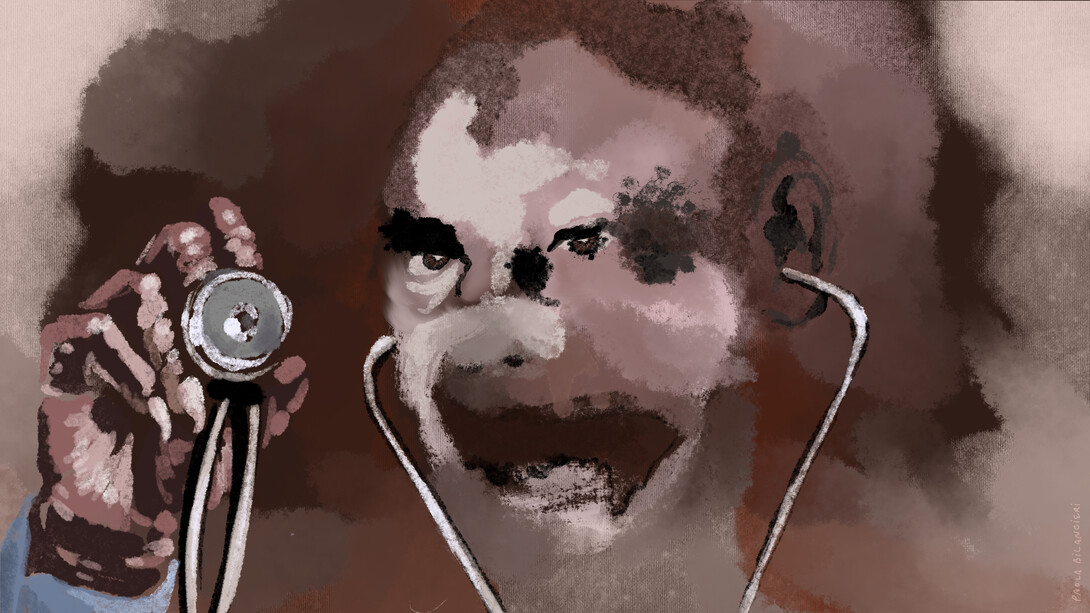
There are few betrayals more profound than the betrayal committed by a doctor. Societies can survive corrupt judges, violent police, or cynical politicians. But when physicians—the people entrusted with our bodies, our pain, our most vulnerable moments—become agents of torture, something deeper collapses. The moral architecture of a society fractures. The very idea of healing is contaminated.
Argentina’s 1970s military dictatorship understood this with chilling clarity. It did not rely solely on interrogators and soldiers; it relied on doctors. Physicians were enlisted to monitor torture sessions, revive prisoners so the torment could continue, falsify medical records, and certify detainees as “fit for interrogation.” When a doctor stands beside a torturer, the victim confronts not only the state’s violence but the collapse of the very profession meant to protect life.
This phenomenon is not unique to Argentina. History is littered with examples of medical complicity in state violence. Nazi physicians conducted experiments on prisoners in concentration camps. Doctors in Chile and Brazil monitored torture during military regimes. Physicians in the United States participated in “enhanced interrogation” programs after 9/11, advising interrogators on how far they could push the human body without causing death. In China, medical personnel have been implicated in forced organ harvesting and coerced psychiatric confinement. The pattern is global, persistent, and deeply unsettling.
Why do doctors torture? The answer is rarely ideological. More often, it is institutional. Authoritarian systems create environments where professional ethics are subordinated to political loyalty. The doctor becomes a bureaucrat of suffering, a technician of pain. The Hippocratic oath is replaced by the logic of obedience. And once obedience becomes the governing principle, the slide from healer to accomplice is frighteningly easy.
Torture requires paperwork, signatures, medical evaluations, and the silent cooperation of professionals who know better. It is sustained not only by those who inflict pain, but by those who enable it—the doctor who signs the form, the nurse who looks away, the administrator who files the report. Violence becomes a system, and the system becomes a culture.
The ethical implications are enormous. Medical associations worldwide insist that physicians must never participate in torture, yet codes of ethics are powerless without political protection. A doctor’s moral courage is meaningful only if the surrounding institutions allow it to exist. In authoritarian contexts, refusing to participate can mean dismissal, imprisonment, or death. The question is not simply whether doctors should resist, but whether societies create conditions in which resistance is possible.
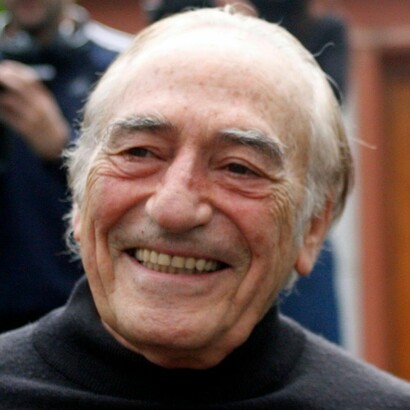
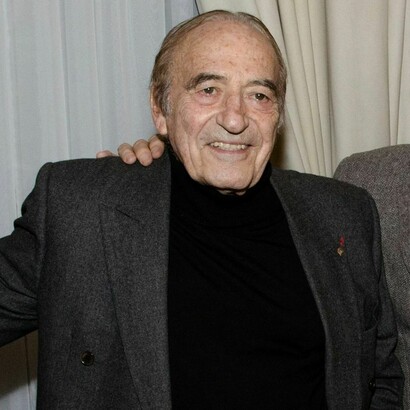
For several years, I have followed the conduct of physicians collaborating in the torture of political prisoners. One of the victims whose fate touched me closely was Miguel Ángel Estrella, a friend since my youth, who died in France in 2022.
Estrella had been abducted by the Uruguayan military in 1978 and kept in a prison ludicrously named Libertad (Liberty). A professional pianist, he was subjected to a most unusual and cruel punishment. He was beaten repeatedly on his hands and threatened with amputation, which would have meant his spiritual—if not his physical—death. For over two years, Estrella endured this inhumane treatment.
In a book of interviews with the French journalist Jean Lacouture, and also in personal conversations with me, he said: “They [the torturers] concentrated on my hands like sadists. They applied electricity under my nails, without stopping, and later they hanged me from my arms. After two days of torture, I hurt all over and didn’t have any sensibility left in my hands. I touched things and didn’t feel anything. The last time I was tortured they threatened to chop off my hands with an electric saw, saying, ‘We are going to chop your hands off, finger by finger, and then we are going to kill you, as we killed Víctor Jara’”—the famous Chilean folk singer and guitar player who was murdered after being tortured, his hands smashed before his death.
The torture of Estrella was carefully planned and systematically carried out. Its aim was to break down his defenses, erode his sense of self-esteem, and extinguish his hope. This orchestrated program of abuse was designed by health-related professionals—such as psychologists—who collaborated closely with the military.
Estrella, however, was one of the few fortunate victims. Thanks to an unprecedented international campaign of support, he was liberated in 1981. He went to France, where he continued his remarkable artistic career, became Argentina’s Ambassador to UNESCO, and founded Música Esperanza, an organization devoted to promoting human rights through musical activities in vulnerable communities. He also founded an ensemble of Arab and Israeli musicians who performed in several countries.
Following his release, Estrella testified in several international forums against Dolcey Britos, a psychologist who reportedly masterminded the psychological torture of prisoners at Libertad Prison. When questioned by Dr. Maxwell Gregg Bloche, an American lawyer and physician who investigated the role of medical personnel in Uruguayan prisons, Britos claimed that his involvement had been limited to serving as a “diagnostic consultant” to the prison psychiatrists.
What compels doctors to participate in such brutal practices? It is possible that their participation is the end result of a profound moral dilemma. Fear of reprisals, or of losing economic security and status, may lead physicians to breach their own ethical and moral standards. In other cases, they justify their actions because they believe they are confronting an inhuman and equally ruthless enemy. Whatever the explanation—whether fear, a spurious sense of power, weakness, or ideological belief—nothing erases the inhumanity of the act itself.
Doctors who torture represent the darkest inversion of the medical vocation. They remind us that professional identity is not a guarantee of ethical behavior. They warn us that institutions can be corrupted, that oaths can be broken, that healing can be weaponized. And they challenge us to defend the integrity of medicine not only in hospitals and clinics, but in the political structures that surround them.
The lesson is stark: when doctors become instruments of cruelty, society loses more than its healers. It loses its moral compass. And recovering that compass requires not only accountability for past crimes, but vigilance against the conditions that make such crimes possible.
This, ultimately, is a lesson for our times.