English
 Español
 Français
 Deutsch
 Italiano
 Português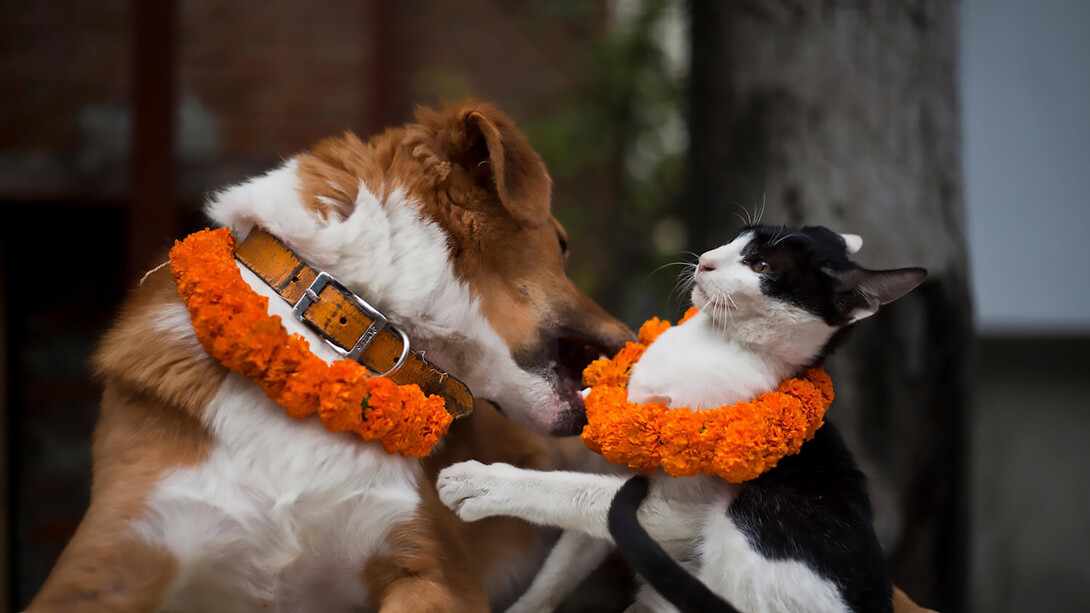
Ever since the dawn of humankind, human beings have been interacting with nature for their own survival. Human beings have also needed to maintain relationships with their fellow kind. As we are well aware, our planet consists of living and nonliving beings, and both are in a relationship with one another, interacting under the prescribed laws of nature. Humans are part of the living beings, and therefore have always been involved in various forms of relationships.
One such relationship humans have developed with living beings is with dogs. Dogs have repeatedly been called man’s best friend due to the services they have provided to humans for thousands of years. These canine animals offer various kinds of assistance, such as guarding, companionship, herding, hunting, and even providing mental therapy in modern times. The relationship between dogs and humans is unique—no other animal has replaced dogs in this regard.
In Kashmir, dogs have mostly been used for herding, especially among the Chopan community. In towns, dogs have also been involved in scavenging. However, dogs have rarely been kept as pets in Kashmiri households for guarding or companionship. As the population in the Kashmir region largely follows Islam, there is a common misconception about whether keeping dogs as pets is permitted in Islam. It is widely considered haram to keep dogs as pets altogether, but what is actually prohibited in Islam is keeping a dog without a specific purpose.
According to hadith (teachings of Prophet Muhammad), Abu Hurayrah (may Allah be pleased with him) narrated that the Prophet (peace and blessings of Allah be upon him) said, “Whoever keeps a dog, except a dog for herding, hunting, or farming, one qirat will be deducted from his reward each day.” Thus, Islam actually encourages engaging dogs in specific forms of work, such as herding or guarding.
It is also scientifically proven that if a dog is confined to one place, tied up, and not involved in any activity, it leads to anxiety and overall mental instability. Therefore, what Islam discourages is animal cruelty, not animal hatred. Unfortunately, a large segment of the Muslim population has self-imposed stricter interpretations of certain rulings. For example, consuming pork is forbidden in Islam, but some Muslims go further in their zeal and begin to hate pigs, even discouraging looking at them.
In Muslim societies, there is also a belief that dogs are najis (impure), but according to Shaykh al-Islam Ibn Taymiyyah, there are three scholarly opinions. He said:
That dogs are tahir (pure), even their saliva. This is the view of Imam Malik.
That dogs are najis (impure), even their hair. This is the view of Imam al-Shafi‘i.
That their hair is tahir (pure), but their saliva is najis. This is the view of Imam Abu Hanifah.
Regarding Imam Malik’s view, which considers dogs pure—even their saliva—its supporters cite a verse in the 5th chapter of the Qur’an:
“They ask you, [O Muhammad], what has been made lawful for them. Say, ‘Lawful for you are [all] good foods and [game caught by] what you have trained of hunting animals, which you train as Allah has taught you. So eat of what they catch for you, and mention the name of Allah upon it, and fear Allah.’ Indeed, Allah is swift in account.”
Since dogs are among the hunting animals, the Maliki school does not consider them impure.
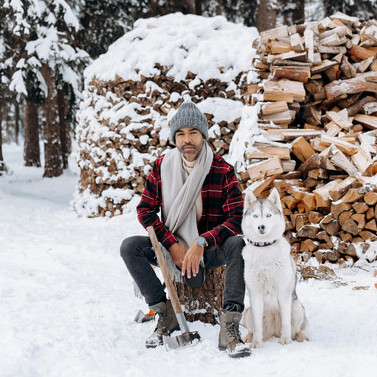
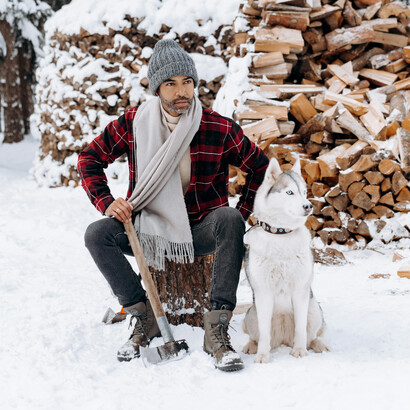
The youngsters of the valley are now challenging these long-held traditions regarding animals. Their exposure to social media has dispelled the perception that keeping a dog as a pet is wrong. People are now buying and keeping exotic dog breeds as pets. The most popular breeds among Kashmiris are the German Shepherd and the Husky. Wealthier families in the valley have kept such pets long before this trend, but what makes the current shift unique is that it has been influenced by the internet, with middle-class families now joining in.
Modernity has increased the overall wealth of Kashmiri families but has also caused a shift from traditional joint families to nuclear ones. Fewer family members mean more empty homes, and these houses need protection—this is where dogs have taken on the role of guardians. Dogs are now the preferred choice for security due to their low maintenance and higher trustworthiness compared to human guards.
This new trend has created demand for new services, such as pet shops selling animal food, toys, clothes, and other accessories. In addition, there are now several options providing healthcare services for these pets. Previously, veterinary services were primarily focused on farm animals.
There have also been two pet shows in Kashmir, considered the first of their kind. German Shepherds and Huskies are the most popular breeds, followed by Golden Retrievers.
Along with dogs, cats have also become popular, though they have always been common in Muslim communities—unlike dogs. Nowadays, people in Kashmir are willing to spend more on exotic breeds, and their love for dogs continues to grow. It remains to be seen where this trend will lead.