English
 Español
 Français
 Deutsch
 Italiano
 Português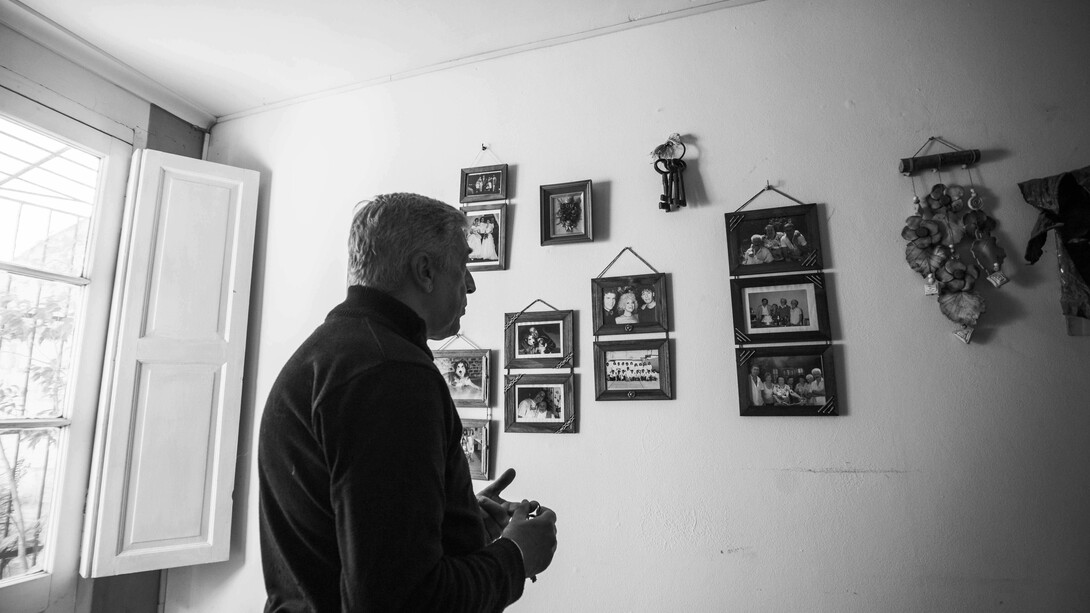
We label. Constantly, relentlessly. Labels rescue us and imprison us at the same time: they give structure to the world while narrowing our vision. At every moment of our lives, we label foods, people, situations, histories—and we label ourselves. Labeling is an evolutionary remnant, a practical survival mechanism: our brains function through categories; otherwise every decision would become a paralyzing, endless reconsideration.
Yet labeling is not merely a cognitive shortcut; it is also a tool for shaping reality. Especially in contexts where the present is interpreted through a historical wound: in wars, occupations, and personal or collective trauma. In the Middle East, this mechanism becomes particularly visible. Political narratives on both sides construct their worlds out of labels: “terrorist,” “occupier,” “victim,” “resistance,” “self-defense.” These words are not mere descriptions but moral positions: they declare who the hero is, who deserves mourning, and whose suffering is not meant to count.
Labels, however, are not neutral; they build walls. Walls around our own pain and walls around the human experience of the other. Political labeling dictates which emotional reactions are “allowed”: where fear is permitted, where grief is justified, and where indifference must be maintained. The label thus becomes a mechanism of denying suffering: as long as the other side is represented by a single homogenous term, we are unable to see the individuals, the families, and the lives that exist within it.
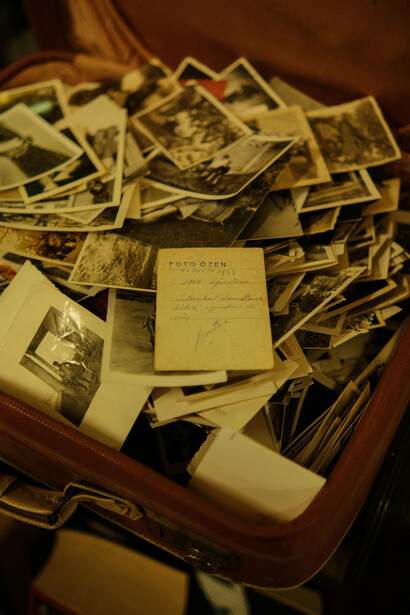
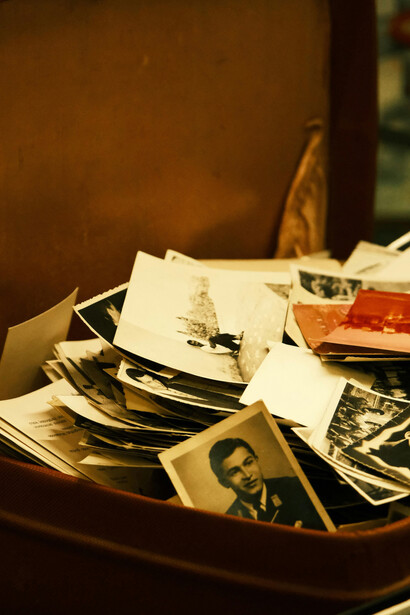
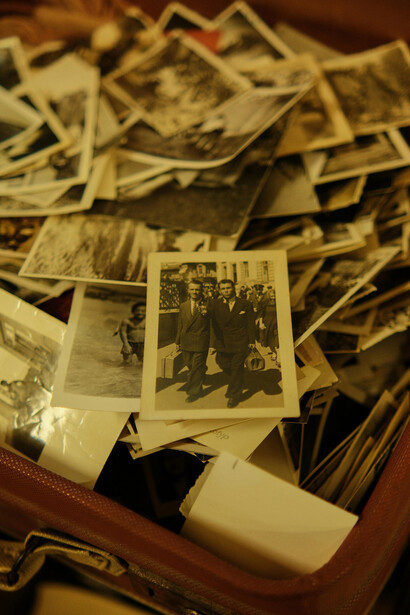
The persistence of the past is not maintained solely by politics but also by intimate, everyday gestures. The photographs of deceased relatives hanging on the wall, for instance, both preserve and reshape time. Such images do more than remind—they expand time vertically, a notion that filmmaker Elia Suleiman (director of The Time That Remains, 2009) evokes in his portrayal of how personal and historical memory intertwine. These images flow from the past into the present and—while marking absence—strengthen our steps toward the future. They do not merely represent loss; they become guiding markers. They offer direction, help us endure grief, and remind us that life is never just in the “now,” but layered across multiple temporal strata.
Labeling functions in much the same way in ordinary life creates order out of experience. Howard Becker and Edwin Lemert’s classical theory describes labels as conventions: they summarize, condense, and make conclusions possible. The danger begins when the label does not merely describe the phenomenon but begins to define the person using it. “Primary deviance”—the initial transgression—does not yet shape identity; but “secondary deviance” begins when someone adopts the label society assigns them and starts living according to it. The label thus becomes a self-fulfilling prophecy.
For this reason, it becomes unavoidable to re-evaluate our mental schemas from time to time. We must inventory the labels that live in our minds, especially when they have grown worn, outdated, or too restrictive. This is not shameful but one of the most noble forms of thought. It does not require sterile laboratory conditions or elaborate hypotheses. A conversation is enough: listening to another person’s story, allowing ourselves for a moment to see the world through their window. What resonates, we keep; what does not, we set aside. The essential task is to open new windows—because if we refuse, the air runs out.
Framing—how we structure reality—goes even deeper. Erving Goffman showed that frames are cognitive-cultural schemas that define what we perceive as a problem, a norm, a disruption, or a deviance. Frames operate invisibly: they feel natural, even though they are socially constructed. And most importantly: they are not fixed. Any situation—or any person—can appear entirely different under a different frame.
Paul Watzlawick and the Palo Alto group emphasized this through the concept of reframing: the same phenomenon gains new meaning when placed in a new context. George Lakoff pushes this further, arguing that a frame does not determine what we think but what we are capable of thinking at all. A frame delineates—and restricts—the boundaries of thought.
This is why reorganizing our frames becomes essential when the world no longer fits inside the old ones. When the picture falls off the wall. This moment is not the end of the world but the beginning of thought: sweeping up the shards, finding a new frame, choosing a new place on the wall, and continuing on with the recognition that reality is never final—it is always subject to re-creation.
Thus the question is not whether we label. We do, and we always will. The question is whether we notice when our labels no longer work. Whether we are willing to choose a new frame. And whether we can recognize that the world we inhabit consists of multiple layers of time—that the present becomes comprehensible only if we allow the past to enter the room.
Labeling is necessary, but never final. Framing is unavoidable, but never complete. And when the picture falls from the wall, it is not only an accident—it is an opportunity to reinterpret reality and to find a new place for ourselves within it.
In the Middle Eastern conflict, politics does not take shape solely through weapons or negotiation tables; it unfolds just as powerfully at the level of language. The labels used by both sides—“terrorist,” “occupier,” “victim,” “resistance,” “self-defense”—create cultural and ideological frames that determine what can be thought about the other side and whose suffering is considered legitimate. Labeling is therefore not merely a descriptive act: it assigns a moral position and defines who counts as human and who does not.
On both sides of the conflict, the same moral script is at work. The hero is always “my community,” the victim is “my own people, especially the civilians,” and the villain is inevitably “the other.” The role of “justified action” is equally stable: whatever one’s own side does is always legitimate, necessary, or unavoidable. This frame, as framing theory shows, shuts down critical thinking; it does not allow us to consider complexity or to take into account the human experiences of the other. Labeling thus erects a protective wall around one’s own suffering while denying or devaluing the pain of the other.
Palestinian narratives frame the conflict as “occupation,” emphasizing power asymmetry, vulnerability, and dispossession. Israeli state discourse, by contrast, employs the frame of “national security,” in which every military action appears as an act of “self-defense.” The internal logic of both frames is complete: they protect their own actors, mourn their own victims, and legitimize their own actions. And precisely because of this completeness, they become blinding: for those living within these frames, the destruction, pain, fear, and loss occurring on the other side simply do not appear as meaningful—or even visible—experiences. They are not part of the emotional world to which one can connect.
Yet the essence of the conflict does not lie in political terminology, but in the delicate fabric of human experience. The world of lived life—fear, identity, grief, loss of home, humor, survival, and resistance—follows the same fragile structure on both sides. Labeling destroys precisely this shared human space and replaces it with a binary moral order imposed on entire societies.
This is where the true stake of reframing becomes clear. Reframing is not merely a rhetorical tool but an ethical possibility: the chance to perceive the grief of the other side while still acknowledging the legitimate grievances and real losses of one’s own. Reframing means perceiving the world not through the labels imposed by politics but through the common denominators of human experience. It is the ability to look beyond our own pain and see that of the other—not to relativize suffering, but to restore empathy.
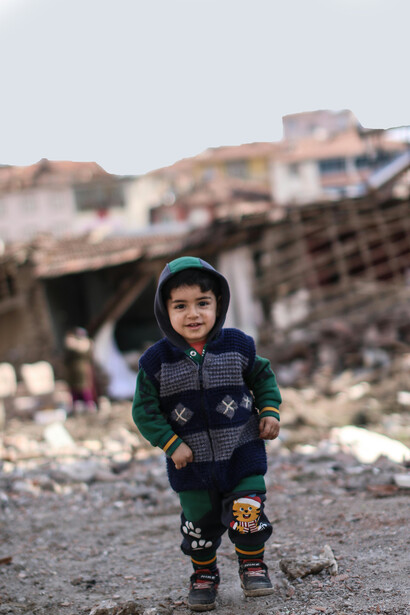
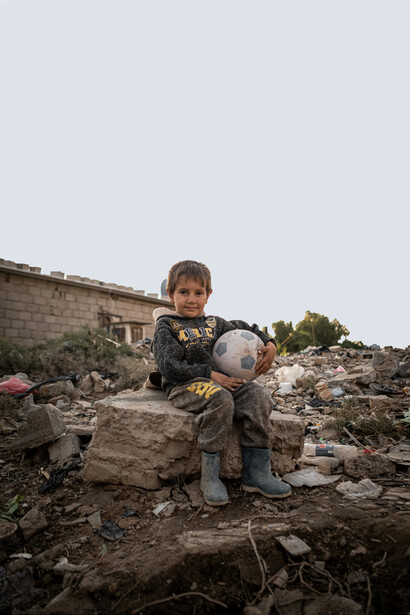
War becomes real not in the world of political decision-makers but in the micro-world of ordinary people. Politics uses human beings and human emotions—grief, anger, fear. When a loved one is killed, when a home lies in ruins, when a child wakes in terror to the sound of bombs, grief transforms into revenge. Politics depends on this: it builds on the deepest points of human loss to create the emotional soil in which killing becomes “justified.”
This is how war is sustained: by using human lives to fuel the destruction of more human lives. The militarization of grief, the mobilization of emotions—all of it serves a single goal: the pursuit of political interests, which in most cases are tied to territory, power, and control.
Labeling therefore, does not merely distort; it is a necessary instrument for sustaining war. Reframing, however, offers the possibility of stepping out of one-sided narratives and into a shared human space. Only within this shared space does it become visible that on both sides, the same loss, the same fear, and the same hope reside. And only from this recognition can there emerge any chance—however faint—that the destructive logic cemented by political interests may one day be broken.
Bibliography
Becker, H. S. (1963). Outsiders: Studies in the Sociology of Deviance. Free Press.
Goffman, E. (1974 Frame Analysis: An Essay on the Organization of Experience. Harvard University Press.
Lakoff, G. (1987). Women, Fire, and Dangerous Things: What Categories Reveal About the Mind. University of Chicago Press.
Lakoff, G. (2004). Don't Think of an Elephant!: Know Your Values and Frame the Debate. Chelsea Green.
Lakoff, G., & Johnson, M. (1980). Metaphors We Live By. University of Chicago Press.
Lemert, E. M. (1951). Social Pathology: A Systematic Approach to the Theory of Sociopathic Behavior. McGraw-H.
Watzlawick, P., Weakland, J. H., & Fisch, R. (1974). Change: Principles of Problem Formation and Problem Resolution. W. W. Norton.