English
 Español
 Français
 Deutsch
 Italiano
 Português
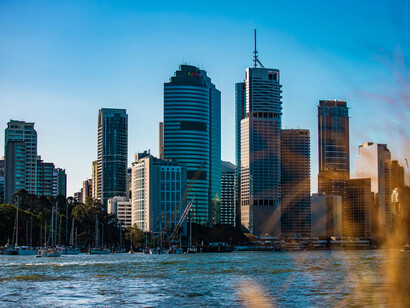
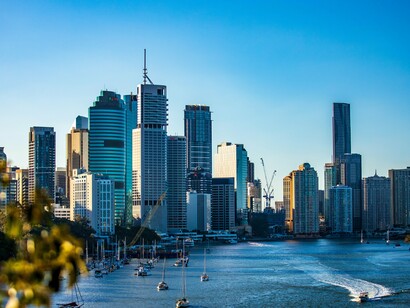
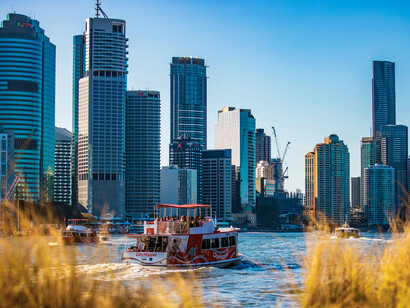
Among Australia’s capital cities, Brisbane is the one that has always held my affection, the one I return to whenever I can. The capital of the Sunshine State, Queensland, carries a modest, almost tender nickname: the City by the River. The Brisbane River makes a wide, unhurried loop through the CBD, slipping past Kangaroo Point, South Bank, the Botanic Gardens, etc., before drifting outward toward the suburbs and the sea. Modern pedestrian bridges and narrow riverside paths shaded by flame trees give the impression that the city has been stitched together by the river’s own patient hand.
I love Brisbane because of that river. During each visit, usually in the late afternoon, I walk along its banks as though time has paused. The water drifts by as if it, too, were remembering someone. A few yachts sit motionless in midstream, like forgotten toys left out in the sun. Ferries move back and forth, slicing the surface and leaving white wakes that slowly dissolve. The water is thick with silt, empty of floating plants. In the shallows, mudflats appear, where mangroves stand shoulder to shoulder, and fish occasionally leap for insects. The last light of day lays a thin veil of gold across the water. The scene is peaceful and quietly beautiful, soothing in a way that is hard to name, yet enough to make the heart loosen.
And yet, every time I stand before that river, another river rises in my memory from a different place, more than half a lifetime away, so distant it feels like something that survives only in dreams. It carries with it a vague, unnameable ache, as if my youth had been wrapped in the smell of mud, wind, and sunlight.
During the late seventies, when the boat-people phenomenon surged, there were days when life felt unbearable. I would watch the boats and silently wish that one day I might have a place on one of them, adrift on the sea, going anywhere at all, willing to live or die without complaint. The dream of a young man: simple, desperate, and strangely pure. Looking back, I realise it was not an escape I longed for, but the possibility of a different fate.
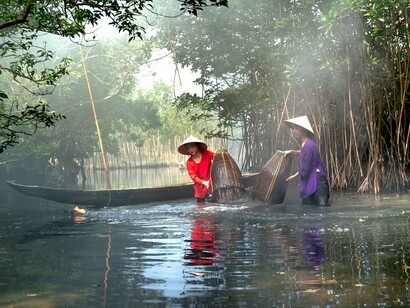
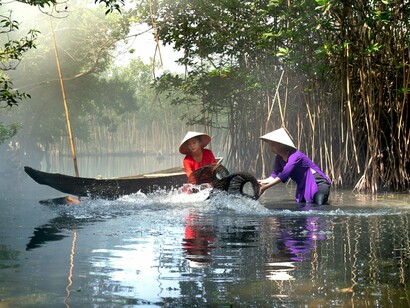
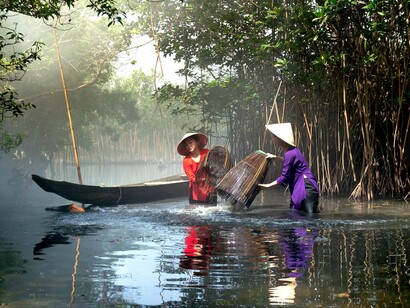
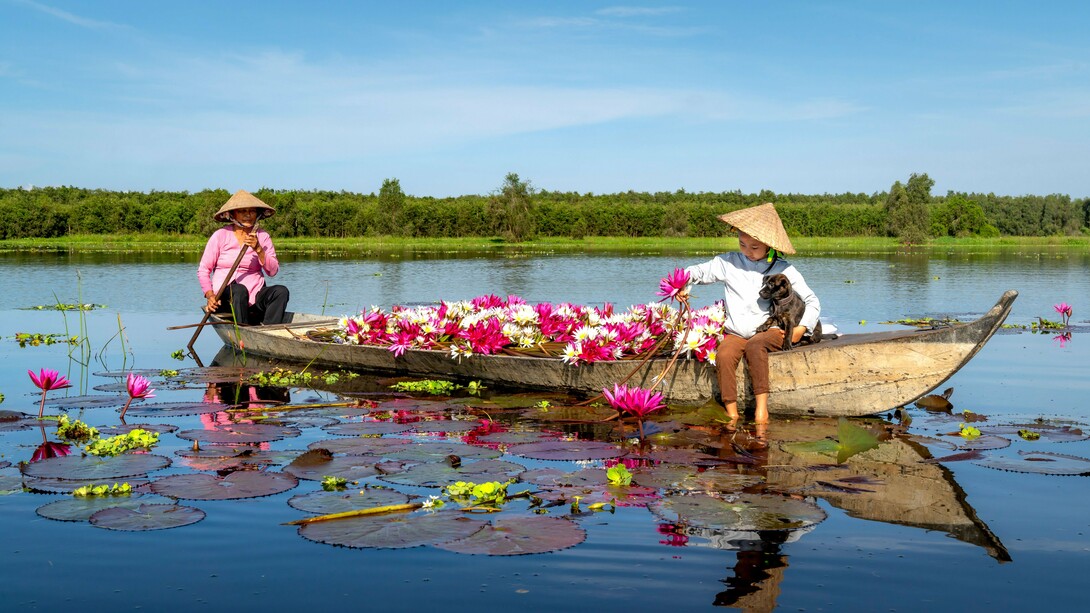
I was born and grew up in Gò Công Province, sixty-five kilometres east of Saigon. Unlike the flat, river-laced provinces of the Mekong Delta, Gò Công is a raised mound of land where peacocks once perched, hence its name. The river I remember runs past Cầu Tàu Hamlet, where a close school friend lived. His father had been an intelligence officer in the former army. People said the river was a branch of the vast Vàm Cỏ, though its true name has long slipped from my memory. What remains is the image of slow-moving, murky water heavy with silt; drifting hyacinths; and motorboats loaded with local produce travelling up and down all day. History records that decades ago, this hamlet was a busy navigation hub, but as roads improved, the river lost its importance, as so many things do.
My friend’s house sat in a narrow alley leading to the riverbank. A small wooden dinghy rested at the back. In earlier years, paddling it across the river had been a simple joy. Later, it became something else, like an outlet, a way to breathe. We would carry it down to the water, then paddle across to a forest tangled with mangrove and cork trees. Crabs and mudskippers lay sunning themselves on the mud; at the slightest sound, they vanished as quickly as our youth slipping into memory.
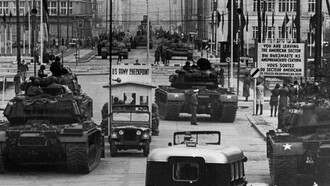
Before 30 April 1975, this stretch of river often had two navy patrol boats anchored there, side by side. Heavy machine guns on each side, long belts of brass cartridges. They looked frightening, like the two guardian statues of Good and Evil standing before a temple. Sometimes the boats brought back unclaimed corpses from operations elsewhere and buried them in the forest. The bodies wore nothing but tattered shorts, hair matted with mud, and eye sockets hollowed by fish. A soldier, lazily fishing off the side of the boat, once told us they were communist sappers killed while trying to blow up a bridge. For me, the cruelty of the war existed in those images, not in the radio broadcasts or newspapers.
We left our thongs in the dinghy and waded through the mud to shore. We never dared go deep into the forest; we only lingered around its edges, talking about life. Not because we feared getting lost, but because we feared things we could not name. I asked him:
“Do you remember those corpses? From your house across the river, have you ever seen ghosts at night?”
“How could I not?” he said. “On moonless nights, I used my father’s infrared binoculars to look across. I saw floating sparks of light and white figures moving back and forth, their feet not touching the ground.”
I laughed:
“You sound like a well-scripted ghost story. I remember those bodies almost naked. Where would they get white clothes to wear as ghosts?”
His face flushed. He scratched his head, looking for an acceptable explanation. Then he said:
“Who knows? My mother says ghosts have to wear white. Funny thing is, under the new regime, I never saw them again. Maybe the ghosts were scared of their once comrades and ran off somewhere.”
He smiled, a gentle, unguarded smile. Then he climbed the cork tree and picked a few fruits, sharp and sour. We were very poor then, but having them to eat for free felt like a small blessing. He handed me one still green. I asked:
“Do you know when your father will be released from the re-education camp?”
“No idea. My mother says he’s been sent to the North, and for someone with a military background like that, there won’t be a return date.”
I nodded, my eyes stinging. Some questions simply have no answers. A person’s fate is like a pair of thongs. Each has its own number, and no one can wear another’s.
I tossed the half-eaten fruit into the river. I couldn’t swallow another bite. The ripples spread out, then the surface smoothed over again, as if nothing had ever happened. As if youth, war, fear, and sorrow were only small disturbances that eventually fade into the long, unbroken flow of time.