English
 Español
 Français
 Deutsch
 Italiano
 Português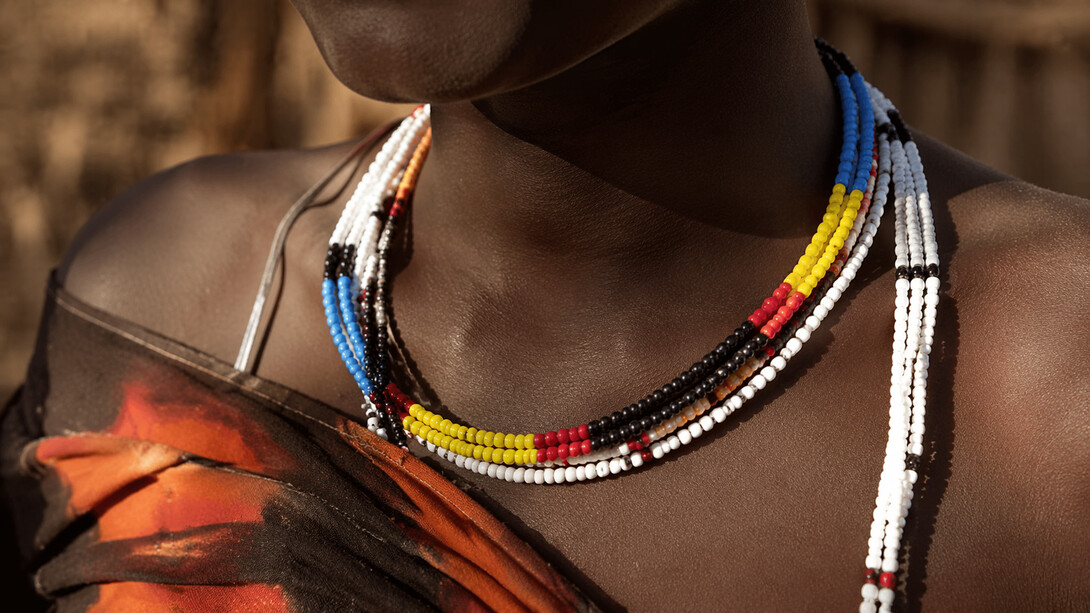
In the vast, sun-drenched landscapes of South Sudan, fashion is not merely a seasonal whim or a commercial trend. It is a profound, wearable archive of history, social hierarchy, and ancestral spirituality. While the global fashion industry often looks toward Milan or Paris for inspiration, one of the world’s most sophisticated sartorial languages has been thriving for centuries along the banks of the White Nile. Here, beads are the primary medium of expression—a vibrant mosaic that defines the identity of the nation’s diverse ethnic groups.
From the towering Dinka and Nuer populations to the artistic Azande, Mundari, and Toposa, beading is the thread that weaves the fabric of South Sudanese society together. To wear beads in South Sudan is to tell a story of where you come from, who you love, and the wealth you command. This tradition represents an intersection of art and anthropology, where every seed bead and every shard of ostrich shell carries the weight of a civilization that has survived through displacement, triumph, and change.
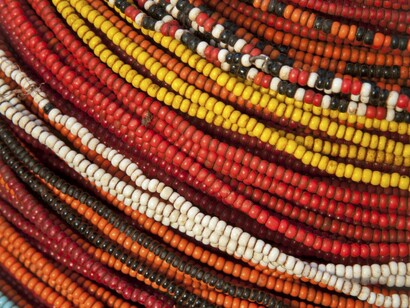
South Sudan is home to over sixty different ethnic groups, and for many of them, colour theory is a cultural mandate rather than an aesthetic choice. The selection of bead colours is a geographic and genealogical marker that identifies a person's roots at a single glance.
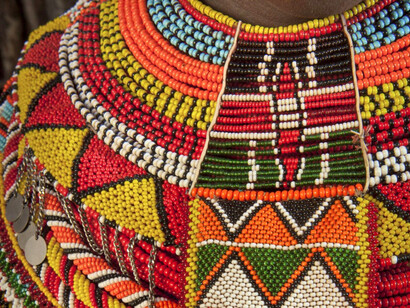
The Dinka, or Jieng, are perhaps the most famous for their elaborate, structural corsets known as the malual. These garments are not simply slipped on; they are built around the body, often sewn directly into place by master craftsmen. The colour coding within these corsets is strict and reflects the age-set system that governs Dinka social life.
Younger men between the ages of fifteen and twenty-five might be seen in vibrant reds and blacks, colours that represent the fire, blood, and vitality of youth. As a man matures into a senior warrior or a family head, his corset transitions into more muted or singular tones of white and blue, symbolizing the clarity, peace, and spiritual wisdom of a life well-lived.
In contrast, the Nuer, or Naath, utilize a palette of whites, greens, and blues that reflect their deep connection to the riverine environment and the lush pastures required for their cattle. The green represents the grass that feeds their life-sustaining herds, while the white mirrors the sacredness of the milk and the purity of their intentions toward the spirits.
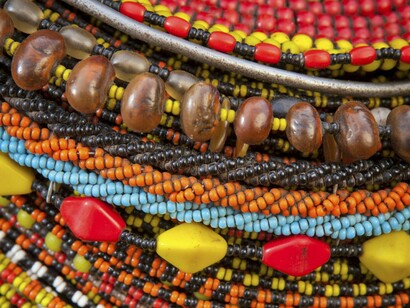
Meanwhile, the Toposa people of the Eastern Equatoria state embrace the most radiant spectrum, utilizing bright yellows and oranges that mimic the harsh, beautiful glow of the semi-arid landscape. For a Toposa woman, her beads are her pride, layered in heavy, tiered necklaces that signify her family's resilience in the face of the elements.
The creation of these garments represents a level of hard work, patience, and meticulous craftsmanship that only a few women and men have been able to achieve throughout history. This is not a hobby but a high art form that demands years of apprenticeship and a steady hand. The labour begins long before a needle is threaded or a loom is set.
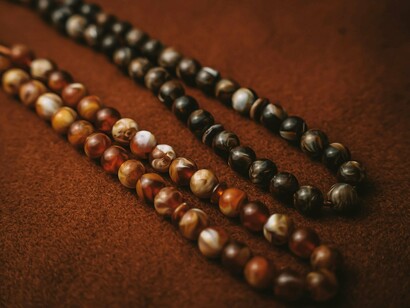
For the Dinka and other pastoralist communities, the most prestigious beads are often the abek, which are fashioned from ostrich eggshells. The process is gruelling and requires an intimate knowledge of the natural world. It begins with the hazardous task of harvesting wild eggshells in the savannah, followed by the delicate work of breaking the shell into small, rough squares. The artisan then bores a tiny hole through the center of each shard using a hand-operated drill. These rough squares are strung together on a stick and rubbed tirelessly against a wet grinding stone until they are perfectly uniform, circular, and smooth to the touch.
This level of dedication means that only a small circle of individuals possesses the technical skill and the ancestral knowledge required to produce pieces of high cultural value. When one looks at a finished beaded collar or corset, they are looking at thousands of hours of human labour and a mastery of geometry and tension that prevents the heavy structures from collapsing under their own weight. The precision required to maintain a pattern over a curved surface like the human torso is a feat of engineering that rivals modern high-fashion construction.
In South Sudan, life’s milestones are dressed in these beads, and each major cultural activity demands a specific visual vocabulary. From the moment a child is born, they are introduced to the world of beads through child-naming ceremonies. Here, simple strings of beads are placed around the infant's waist or neck, often intended as protective amulets to ward off illness or the "evil eye." As the child grows, the complexity of their adornment grows with them.
One of the most significant transitions in a young person's life is the "becoming of age" ceremony. For young women, this transition involves the shedding of "childhood" beads—which are usually loose, lightweight, and multi-coloured—for more complex, structured pieces that signal a shift in social responsibility. These new adornments signal to the community that she is now a bearer of tradition and a prospective mother.
For the men, this transition is often marked by the first time they are permitted to wear the heavy beaded corsets or specific feathered and beaded headgear that denote their status as adult warriors. This is a moment of immense pride, as the weight of the beads on their shoulders serves as a physical reminder of the weight of their duty to protect the community and its cattle.
Wrestling, the national sport and a cornerstone of communal life, is another arena where beads take centre stage. It is a display of masculine prowess where the arena becomes a stage for beaded storytelling. When a wrestler enters the sand, he is a vessel for his village, adorned in heavy beadwork around his waist and neck that serves to intimidate opponents and thrill spectators. These pieces are often gifted by female relatives—mothers, sisters, and aunts—who spend months crafting them. In this context, the beads are infused with the collective strength and prayers of the women in the wrestler's life.
Similarly, a South Sudanese wedding is a masterclass in bead couture. The negotiation of a marriage is often a long process involving the exchange of cattle, and the bride's attire reflects the gravity of this union. For the bride, beads act as a form of protection and a bridge between her natal family and her new home. The weight of her headpieces and chest plates ensures that she is the literal and metaphorical centrepiece of the celebration. The craftsmanship involved in a bridal set is so intense that it is often a multi-generational effort, with beads being passed down, restrung, and added to over decades.
These adornments also serve as a sophisticated social ledger, defining marital status and rank within the community with absolute clarity. In a traditional setting, the distinction between a single and married woman is immediately apparent through her attire.
Single women often wear lighter, more colourful, and dangling beads designed to catch the light and create movement, signifying youth, agility, and the readiness for courtship. These "dancing beads" are meant to be heard as much as seen, creating a rhythmic clinking that accompanies the young women's movements. Once married, the beadwork becomes more fixed and structured.
Married women often transition into wearing wide, stiff beaded belts or specific high-reaching collars that denote her stability and the family lineage she now represents. This visual language extends to the realm of economy, where beads like the guenjang and abek function as a legitimate asset class. Because they are so difficult to produce and carry such immense cultural prestige, these beads hold a "bovine value" in Dinka and Nuer cultures.
A particularly rare or historic piece of Abek beadwork can be traded for cows—the ultimate form of wealth in South Sudanese society. To wear these beads is to display the prosperity of one's lineage, effectively wearing a bank account that reflects the hard-earned status of the wearer. The value is not just in the material but in the history of the piece; a set of beads that has been used in three generations of successful marriages is considered priceless.
Beyond the Dinka and Nuer, the Mundari people utilize beads to emphasize their unique relationship with their cattle. Mundari beadwork often mimics the patterns found on the hides of their beloved Ankole-Watusi cows. The use of white ash and beads creates a striking aesthetic that is as much about spiritual devotion as it is about fashion.
In the Equatoria regions, the Azande people have historically used beads in their royal courts, where intricate patterns reflected the power of the kingdoms. Each of these styles requires a specific type of knotting and threading technique that is carefully guarded by the master artisans of each tribe. The patience required to sit for twelve hours a day, hand-stitching thousands of tiny glass beads onto a leather backing, is a testament to the cultural resilience of the South Sudanese people. It is an act of meditation and a rejection of the "fast fashion" mentality that dominates the Western world.
As South Sudan moves toward the future and Juba becomes a burgeoning hub for East African fashion, its designers are beginning to take these ancient techniques to the global stage. We are seeing a fusion of traditional beadwork with modern silhouettes—beaded bodices paired with silk skirts or abek necklaces worn over sharp, modern blazers.
Designers are now grappling with how to preserve the sacred meanings of these patterns while making them accessible to a global audience. This movement is proving that the language of glass and bone is a living, breathing art form, not a museum relic. Whether it is the rhythmic clinking of ostrich shells during a traditional dance or the flash of a champion wrestler’s collar in the dusty arena, the beadwork of South Sudan remains one of the most powerful expressions of human identity.
It is a reminder that fashion, at its most authentic, is a dialogue between the past and the present, crafted by the skilled hands of the few to tell the story of the many. Each bead is a word, each string a sentence, and each garment a chapter in the unfolding epic of a nation that refuses to let its beauty be forgotten. For the people of South Sudan, to be well-dressed is to be well-storied, and as long as the ostrich nests and the artisans remain, the story will continue to grow in brilliance and complexity.