English
 Español
 Français
 Deutsch
 Italiano
 Português
As Ludwig Wittgenstein wrote, “the limits of my language are the limits of my world”.1 Words give meaning to life; through them we construct our identity and a way of inhabiting the world.
They reflect who we are, what we want and how we feel. They are never neutral: they carry ways of seeing, of ordering the world and of positioning ourselves within it.
In politics, words frame conflicts, mark positions, define who is held responsible and what actions are considered justifiable. They make domination appear as order, and others, resistance.
What happens when these words are spoken in the name of the “people”? In the case of Venezuela, both the discourse of Donald Trump and that of Nicolás Maduro mobilized grammars inherited from colonialism that legitimize, from opposite positions, forms of domination.
What makes a military intervention that undermines the sovereignty of a country sound like justice? What makes a regime that oppresses its own people sound like resistance?
Two men. Two speeches. The same word at the center of both: sovereignty
On January 3, 2026, Donald Trump announced, in a press conference, that U.S. forces had invaded Venezuela and captured then president Nicolás Maduro.
Trump’s opening words at Mar-a-Lago repeated a specific vocabulary: justice, peace, oil, drugs. During the speech, he used a language that evoked the recovery of something of one’s own: “we built it,” “they stole it,” “reimbursement.” A language of hemispheric dominance: “American dominance in the Western Hemisphere will never again be questioned.” And the language of administration: “we are going to run the country,” he repeated four times.
When he refers to the hemisphere as “our own hemisphere,” he does not describe a shared space among sovereign states, but a space of strategic possession by the United States.
Trump also said: “We want to surround ourselves with energy. We have tremendous energy in that country. It is very important that we protect it. We need it for ourselves.” These words reflect a logic of extractivism: what belongs to Venezuela—its oil—is discursively reframed as something the United States needs.
The rest of the speech refers to the military intervention as the liberation of a suffering people, the removal of a dictator and terrorist, and the restoration of order. “The dictator and terrorist Maduro is finally gone from Venezuela. The people are free, free again.” But are they really free? The Venezuelan people appear in the discourse as the recipient of an order restored from outside.
On security matters, Venezuela, Trump claims, “was increasingly harboring foreign adversaries in our region and acquiring threatening offensive weapons that could endanger the interests and lives of the U.S.” But the truth is that there is no historical precedent of Venezuelan military aggression against the United States.
The threat is constructed in preventive and potential terms—impossible to empirically refute, sufficient to justify anticipatory action—. Security, mobilized in this way, once again becomes a tool of hemispheric control.
And those foreign adversaries refer to Russia, but mainly to China, turning Latin America into a terrain of dispute between Beijing and Washington. But in this article, I will not delve into this dispute, this is more than enough material for another.
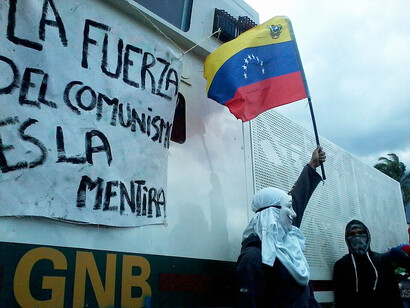
In the case of Maduro, returning to the grammar, “sovereignty” and “anti-imperialism” were often used as a weapon to silence internal dissent, transforming a colonial legacy of resistance into a tool for internal authoritarianism.
Five months before U.S. forces entered Venezuela, on August 22, Nicolás Maduro delivered a speech in the Elliptical Hall of the Federal Legislative Palace in Caracas in which he spoke in defense of “the sovereignty and peace of Venezuela, Latin America and the Caribbean.” Venezuela must be “free from any imperialist power… International law prohibits the threat or use of force against sovereign states.”
Maduro’s speech was based on a rhetoric consolidated throughout the Chavista cycle. He referred to Venezuela as the epicenter of a popular rebellion when the country said “no” to the IMF package and to the neoliberal model imposed in the region.
Anti-Imperialism as a language of power
“It is not a moment for political differences or colors,” he said. Maduro is here making a call for national unity in the face of an external threat, and this is how anti-imperialism becomes a tool to repress internal dissent: any political opposition is reframed as betrayal.
Anti-imperialism, in this grammar, then questions the legitimacy of U.S. power from the outside and represses political opposition from within.
Sovereignty plays a double function in Maduro’s discourse. It is presented as a legal defense, based on international law against external threat, and as a historical narrative, anchored in Bolívar, in the 1992 rebellion and in the long anti-imperialist tradition of Latin American thought.
Internal contestation is presented as complicity with the imperial enemy. Throughout the speech, the Venezuelan people are invoked as the reason for which power is exercised—without being the ones who exercise it—.
Both discourses, Trump's and Maduro's, read together, reveal something more complex than an aggressor and a victim. They reveal a field in which the same concepts — sovereignty, democracy, security — are mobilized from opposite positions toward deeply entangled ends.
Trump uses them to justify intervention. Maduro uses them to justify a regime that, for years, had deployed the same anti-imperialist rhetoric to silence internal dissent and hold onto power while Venezuela collapsed around it.
As we say in Latin America — ¿quién termina pagando los platos? “Who ends up paying for the dishes? “: The people.
When the people are not at the center
If both sides claim to speak in the name of the Venezuelan people, what space is left for the people to speak in their own name?
Gayatri Spivak asked in 1988, in her foundational essay Can the Subaltern Speak?2, and theorized about whether a voice of one’s own is possible outside power structures. Her answer was a warning about imposed silence: the subaltern cannot speak because, when they try, their message is captured and translated by dominant power structures until it becomes unrecognizable.
In this case, the “people” are not a subject that speaks, but an object spoken about; both Trump’s discourse and Maduro’s claim to act in the name of the Venezuelan people, but in that competition for representation, both strip them of autonomy. Neither grants them a voice in the process.
This difficulty of a voice of one’s own is the result of a process of historical erosion. The frameworks of representation—who speaks, on behalf of whom, with what authority—are defined from positions of power that have mutated, but that retain the same exclusionary root.
To understand how this representational gap became possible, it is necessary to trace the historical formation of authority in Venezuela, where colonial hierarchies of race, class and knowledge structured the conditions of political voice.
Venezuelan colonial society was organized around racial and cultural hierarchies in which peninsular whites occupied the highest political positions, followed by creole elites, while pardos, enslaved populations and indigenous peoples formed the demographic majority.
That structure produced what historians describe as a deeply vertical logic of authority: those above and those below. "Los de arriba y los de abajo” .A logic that translated into governmental and military forms across successive regimes 3 (Cavallini, 2022).
In 1902, when German, British and Italian forces blockaded Venezuelan ports to pressure for debt repayment, President Cipriano Castro responded with a phrase that became foundational in Venezuelan political memory: “The insolent foot of the Foreigner has profaned the sacred soil of the Homeland!” That phrase resonated in Venezuelan political discourse from that moment on.
When the blockade occurred, the conditions were created for the United States to reactivate its doctrine of dominance in the region. The consequences were structural. This widened an already existing gap: leaders in Washington and Western Europe came to understand each other better over time. Latin America remained on the other side.
Roosevelt did not describe a shared space among sovereign states. He described a space of strategic administration by the United States and proposed to manage it unilaterally.
Walter Mignolo, in Habitar la frontera,4 traces precisely to that moment a strong rearticulation of the ideology of the Western Hemisphere in the twentieth century.
In 1926, under the dictatorship of Juan Vicente Gómez, crude oil exports had already surpassed those of coffee. Oil revenues economically strengthened the state and reinforced authoritarian governance and military control that had already become structural features of Venezuelan political culture.
In The Open Veins of Latin America (1971),6 the Uruguayan Eduardo Galeano explains how Venezuelan oil became the basis of external fortunes rather than Venezuela’s, and how the language of foreign “investment” and “development” concealed a structure of extraction.
When Trump says “we built Venezuela’s oil industry with American talent, drive and skill, and the socialist regime stole it from us,” he speaks from within that same structure described by Galeano. The natural resources of Latin America belong to Latin American territory. To begin with, they were never a possession of the United States.
Coloniality from within
When we analyze the invasion of Venezuela, we discover that coloniality has operated persistently both externally and internally, shaping social, racial and political hierarchies that run not only through the Venezuelan state, but Latin American nation-states since their formation
Walter Mignolo explains it like this: colonialism refers to specific and datable moments—the Spanish conquest of the Americas, the British administration of India, the French occupation of Algeria. You name it. Coloniality is something structurally different. It is the logic of control that connects all those cases from the sixteenth century to today.
Colonialism ends. Coloniality persists: in thought, in culture, in knowledge, in words themselves. The mask that covers it is the concept of modernity (Mignolo, The Darker Side of Western Modernity).
Aníbal Quijano 7 deepened this with the concept of the “coloniality of power.” For Quijano, the colonial classification of the world’s population around the idea of race is not a historical residue. It is the organizing principle of the modern world system, structuring not only economic relations, but also forms of knowledge, authority and subjectivity.
In Venezuela, the racialized hierarchies that organized colonial society did not dissolve with independence. They were reproduced within the national state, determining which sovereignty counted and which population could be invoked as justification of power without being granted agency over it.
The colonies are no longer there, but coloniality remains in all structures of political, economic, social and interpersonal life.
The Colombian author Arturo Escobar has also theorized how development itself operates as a form of coloniality: organizing knowledge, bodies, territories and aspirations around a single model of modernity that marginalizes alternative ways of inhabiting the world.
The oil economy in Venezuela is an example of this: a resource that could have sustained plural and territorially diverse communities instead financed a centralized state apparatus that reproduced the vertical logic of colonial hierarchy within the national project.
Our hemisphere
Postcolonial theory helps read and understand how these discourses operate in Latin America.
Reading Trump’s January 3 speech through this lens makes visible the continuity between the Roosevelt Corollary, the Monroe Doctrine, the 1902 blockade and the 2026 invasion. “Our hemisphere” is a geopolitical imaginary with a long history of construction.
Trump’s words are read here as “legitimizing vocabularies”: categories that construct the conditions under which power appears as obligation and domination can present itself as liberation (Grovogui, 2016).5
It is important to distinguish that the term postcolonial is not used in a strictly temporal sense, as what happens “after” colonialism, but as an active critique of the structures, discourses and colonial epistemologies that continue to operate in the present. Its objective is to expose the scope of these logics and, at the same time, open the way to new forms of knowledge and representation
Another central axis of postcolonial theory is the concept of subalternity, understood as a condition produced by historical relations of colonial domination. According to Rufer (2012), subalternity refers to the existence of a colonial difference marked by processes of racialization, linguistic subordination and overlapping inequalities, particularly in relation to gender.
It is not only economic or political marginalization, but a deeper exclusion from the representational system that defines which voices are legitimate and which remain silenced. In this case, the Venezuelan people were trapped between two competing vocabularies that claimed to speak in their name
Words that carry history and power
All these words are not new in Latin America, as we have seen. In 1823, the United States declared that the Western Hemisphere was no longer open to European intervention. It was called the Monroe Doctrine. On paper it was a defense, but in 1904 it was reconfigured in the words of Theodore Roosevelt under the premise: “America for the Americans.”
Over time, it was used to justify U.S. intervention throughout the region, transforming Latin America into a space of strategic control rather than a community of sovereign nations.
What began as a warning to Europe became a claim over the continent to act as an “international police power.” Not America for the Americans, but more America for the United States.
These words that refer to freedom have preceded military force before, in Cuba in 1898, in Nicaragua, in Guatemala in 1954, in Panama in 1989, in Haiti, El Salvador and, among others, the Dominican Republic: different countries, different moments and the same grammar.
Operation Condor is one of the best examples of this; it was a campaign of political repression and state terror backed by the United States during the 1970s and 1980s in Argentina, Chile, Uruguay, Paraguay, Bolivia and Brazil. Its objective was to eliminate leftist movements, activists and intellectuals through surveillance, kidnappings, torture and killings, with coordination and support from the CIA and the School of the Americas. It follows the logic under which either you are with them, or you will have to be "corrected” at some point.
As Grovogui writes, “liberal and neoliberal institutionalist discourses often present themselves as rationalizations of hegemony disguised as universal humanism,” and terms such as “development,” “emerging” or “democratic” continue to express a moral and epistemic hierarchy that places the West as a universal model and others as apprentices or cases that must be ¨corrected¨.
The head of the regime changed. The body of the state did not
After Trump announced that Venezuela would be administered by the United States in the name of democracy, democratic elections were not held.
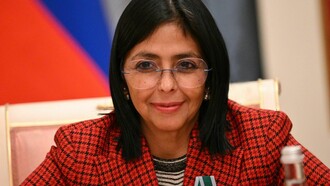
The central institutional figures of the regime remained rooted in the architecture of power; Delcy Rodríguez, Maduro’s vice president, took office. Although Maduro was removed, the state apparatus that sustained him was preserved, now operating within a different external alignment.
Democracy is an external standard that is imposed, not a process that is supported. These categories function as instruments through which certain powers claim the authority to define the political and economic legitimacy of other states (Grovogui, 2016).
So the question is: if Maduro left and the structure that sustained him remains, who exactly was liberated, and from what?
Both the colonial imaginary and the national independence imaginary were constructed with their backs to the Indigenous presence. As Mignolo argues, the political philosophy and economy of Latin American nation-states were built that way. Indigenous and Afro-descendant populations in Venezuela were not part of the sovereignty that Maduro claimed to defend.
They were invisibilized in a Venezuelan discourse that served primarily to consolidate the control of an urban military-political elite.
The Venezuelan people deserved better than Maduro's government, which presided over a collapse that expelled more than 8 million Venezuelans from the country, one of the largest displacement crises in the world.
Venezuelan people also deserved a process of change that was theirs — built from within, through their own political agency, in their own voice. What the 2024 elections expressed, according to opposition, when Edmundo González obtained a documented majority against Maduro, was exactly that: a population exercising its own political will.
That result was disputed and never officially recognized. The voice expressed at the polls was overruled first by a regime that refused to recognize it, and now by a foreign power that refused to wait for one.
Beyond right and left
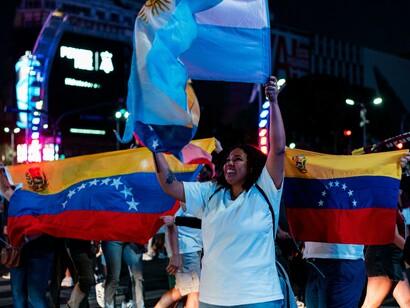
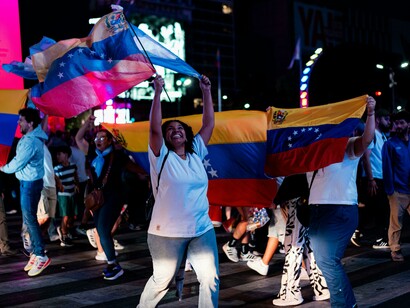
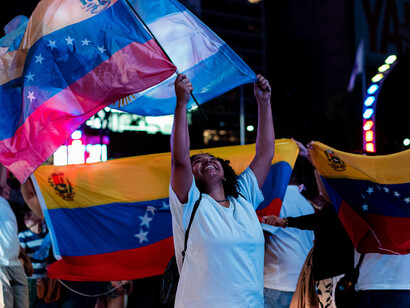
Many Venezuelans, both inside and outside the country, felt relief when Maduro fell. That relief is real and deserves to be named. After years of hyperinflation, collapsed public services, medicine that never arrived, millions of families separated, the question stops being which path is politically "correct." It becomes what puts an end to a suffering that is no longer tolerable. Often,that relief is far from an ideological alignment with Trump or with the United States.
In Exit, Voice, and Loyalty (1970), Albert Hirschman described three responses available to members of a deteriorating state: leaving, raising one's voice from within, or staying in silence. Eight million Venezuelans exercised the first because they could; many others wanted to but could not.
This represents one of the largest exits in modern political history, functioning as a massive political response rather than just a humanitarian crisis. Hirschman noted that when exit becomes dominant, the voice inside the country erodes.
When both exit and voice are exhausted, the fantasy often emerges that an outsider will exercise the voice those inside can no longer carry. Intervention then performs a psychic function. It restores, at least imaginarily, the idea that something can place a limit on the chaos.
History shows that such salvations rarely arrive without a devastating cost, and they always arrive on the terms of the intervenor.
Where the public sphere is captured, everyday becomes political
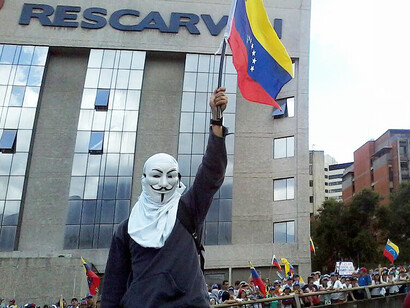
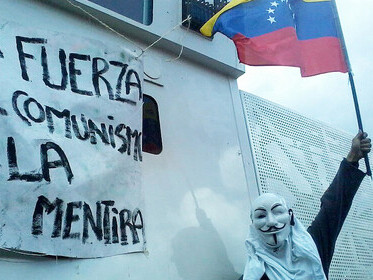
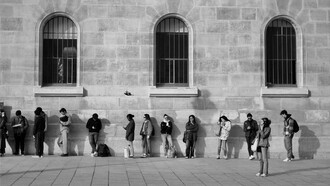
The absence of open rebellion in Venezuela was never an absence of resistance. Venezuelans resisted in the spaces the regime could not fully reach: in homes, in queues, in chats, in churches, and in jokes shared via voice memo—in the daily struggle to feed a family on a salary that vanished overnight.
The fundamental question is not how to give voice to the Venezuelan people from outside, but how to recognize the voices that were already speaking under conditions of silencing, facing prison, persecution or death.
Martin Seligman9 called it “learned helplessness”, a condition in which the perception of having no control paralyzes more than the absence of real control.
The perception itself is the trap, and it can be undone once it is recognized as perception. Paulo Freire 8—whose work was born from an exile shaped by this same hemispheric architecture—called this awakening “conscientization.”
The moment oppression is understood as a social construction and not as a natural law, the oppressor’s gaze ceases to be internalized as an absolute truth.
Freire wrote that no one liberates anyone, nor does anyone liberate themselves alone. Liberation occurs in Community. With others. Neither the regime that claimed to represent the people, nor the intervention that claimed to liberate them, allowed this encounter.
The structure persists, but so does the power to change it. That power resides in the social fabric that both the regime and the intervention attempt to dissolve.
Recent empirical research on nonviolent resistance suggests that, even under very restrictive conditions, collective action remains a potential source of political transformation. However, its effectiveness depends on the ability to sustain shared meaning and organization over time..
Political scientist Erica Chenoweth10 has shown that no government has resisted the sustained mobilization of 3.5% of its population. Although the effectiveness of protest has mutated since 2010, in the face of new authoritarianisms, the key remains the same: to rebuild what has been lost—ties, organizations and shared horizons built from below.
Today it is Trump; tomorrow it will be another name. The logic and the structures persist, but so do the people who inherit the words and who, when circumstances allow, still know how to reject them.
The alternative is not the waiting for an external savior, but in the difficult, and often invisible, labor of rebuilding the social fabric. If something persists alongside structures of domination, it is this: the capacity to act, to organize and to imagine a different future.
Community is not an abstract idea; it is the condition of possibility for any real change.
References
1 Wittgenstein, Ludwig (1922). Tractatus Logico-Philosophicus. London: Routledge & Kegan Paul.
2 Spivak, Gayatri Chakravorty (1988). “Can the Subaltern Speak?” In Marxism and the Interpretation of Culture. Urbana: University of Illinois Press.
3 Cavallini (2022). Colonial authority structures in Venezuela.
4 Mignolo, Walter D. (2011). Habitar la frontera. Durham: Duke University Press.
5 Siba N. Grovogui (2016) Postcolonialism, in: Tim Dunne, Milja Kurki und Steve Smith (Hrsg.) International Relations Theories (4. Aufl.), Oxford: Oxford University Press, 219-235.
6 Galeano, Eduardo (1971). Las venas abiertas de América Latina. Montevideo: Siglo XXI Editores.
7 Quijano, Aníbal (2000). “Coloniality of Power, Eurocentrism, and Latin America.” Nepantla: Views from South, 1(3), 533–580.
8 Freire, Paulo (1970). Pedagogy of the Oppressed. New York: Continuum.
9 Seligman, Martin E. P. (1975). Helplessness: On Depression, Development, and Death. San Francisco: W.H. Freeman.
10 Chenoweth, Erica (2011). Why Civil Resistance Works: The Strategic Logic of Nonviolent Conflict (with Maria J. Stephan). New York: Columbia University Press.