English
 Español
 Français
 Deutsch
 Italiano
 Português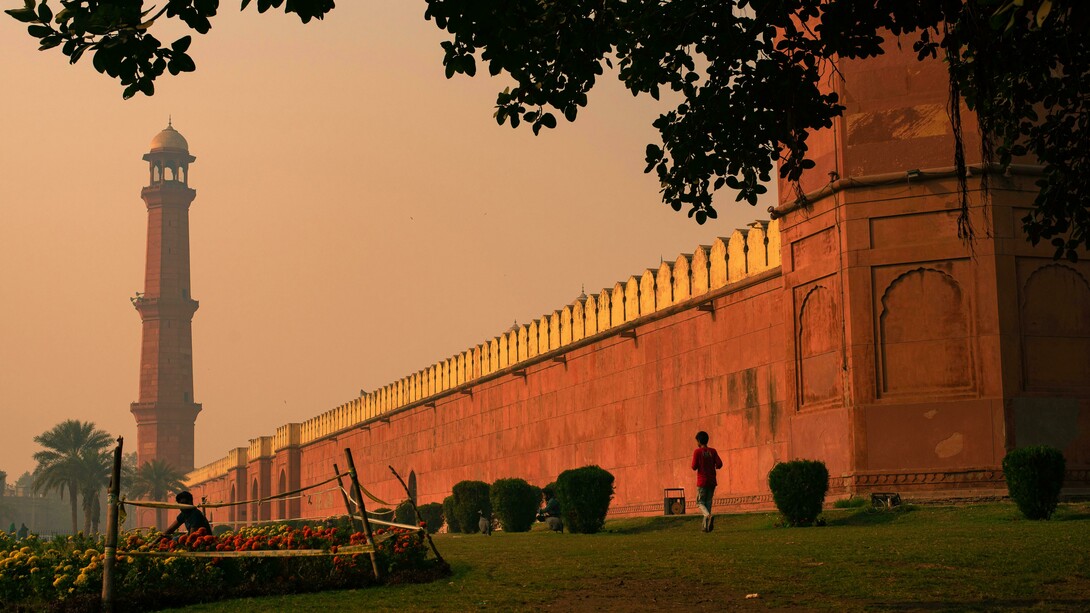
Punjab is one of the most prominent regions in South Asia. During the partition of Ind-Pak, it was divided into two parts, where 67% of the region was given to Pakistan, while the other 33% was given to India. The region was home to 28.9 million people in 1941. A large number of people were defined as belonging to a specific language. Even a person like me, when thinking about Punjab, a typical stereotyped image appears: an agricultural land and a rural man.
But do Punjabis actually seem like that? Is it the land of the stereotypical man? The last one and the most important one: Is Punjab just a land for Punjabis?
Is Punjab really rural land?
Considerably, yeah, it is an agricultural land where West Punjab (Pakistani Punjab) contributed 60–70% of Pakistan's total food intake, while East Punjab (Indian Punjab) contributed 35–40% of India's food requirement. As a whole, Punjab provides food for 300 million people. While the other form of the requirement was fulfilled with requirements as well.
In terms of stereotypical things, they are one of the regions with typical masculine features, but when we witnessed a Punjabi urban, it was quite difficult. Let me make it clear: not all Punjabis have big mustaches. There are a lot of people who don't have a mustache. Secondly, Punjab is a land of agriculture, but it does not mean it is a rural land. Punjab holds some of the biggest cities of the subcontinent, including Lahore, Chandigarh, Ludhiana, Amritsar, Jalandhar, Faisalabad, Rawalpindi, Multan, and Gujranwala. These cities are heavily industrialized, so we cannot say that Punjab is rural anymore.
Is it the land of the stereotypical man?
Many times, it was claimed that the people of Punjab are cruel. Especially when it is about women, they just forget that they are human anymore. In some cases, things are pretty clear. Pakistani Punjab is facing a rapid rise in crime rate, but it is just because of the improved reporting system. While Indian Punjab is not one of the most criminalized states. There are issues in Punjab. According to a report, there were 32,617 GBV cases reported nationwide, while Punjab contributed 26,753.
Somewhere, numbers justify stereotypical masculinity in Punjab. While Indian Punjab had a better condition, where they had just 5,572 FIRs against women's violence, which was slightly lower than what it was in 2021. For sure, here the population is caught, as the difference in population is huge, as Indian Punjab had a population of 32 million, whereas Pakistan had 130 million. So for sure, the difference will be huge. But the numbers still support the idea of stereotypical male culture.
Now, to the main question: Does Punjab belong to Punjabis?
The question sounds kind of ridiculous. For sure, as the name denotes, Punjab is a land for Punjabis. But let me tell you this, it is not as simple as you feel it looks. Let me take you back to the time of partition, when East Punjab (Indian Punjab) was totally different from what it is now. There was no state like Haryana. It was partitioned into two in 1966 based on language, where the Hindi-speaking area was added to a new state called Haryana, while a few areas were added to Himachal Pradesh. They resolved the issue when it peaked in India.
But in Pakistan, it was never even believed that kind of issue existed. Pakistani Punjab has been facing similar issues since the moment we gained independence from the British. Pakistani Punjab is also home to people with a strong, independent culture and identity. They are called the Saraiki people, or usually people of Southern Punjab. They have their own language, which is quite different from Punjabi, and a culture that is totally different from Punjab. The Saraiki people have a vital number, where 40 million speakers occupy 40% of what we know as Punjab. People of the area live mostly in rural areas, so the rate of population in this region is completely opposite to Central Punjab or other regions.
From the early 1970s, the people of Southern Punjab have wanted their province despite having so many big names like Yousaf Raza Gillani, former Prime Minister of Pakistan; Shah Mehmood Qureshi, a senior politician and former Foreign Minister; Baligh ur Rehman, Governor of Punjab; and Sardar Awais Leghari, a politician from Dera Ghazi Khan. The saddest part for the Saraiki region is that they failed to get a province despite so many strong politicians. Even in modern days, they still deny issues like people not having basic facilities in the province.
The claim made by the Saraiki people is that their people never get any chance to grow unless the province is split into two different regions. Many people want it to be just a claim for the regional power thrust, but if we go through the Southern region, they have the most agricultural land, but still, the region faces a high unemployment rate. While the region has a bigger neglect in terms of industrial shift as compared to Lahore and Rawalpindi. A similar thing was that separating a region like India had it before.
Southern Punjab is one of the most underdeveloped regions of Pakistan despite being rich in culture, land, and resources. It faces long-standing issues in education, health, infrastructure, employment, and poverty. The division is not a demand from anyone; it is the solution for the welfare of the Saraiki people.