English
 Español
 Français
 Deutsch
 Italiano
 Português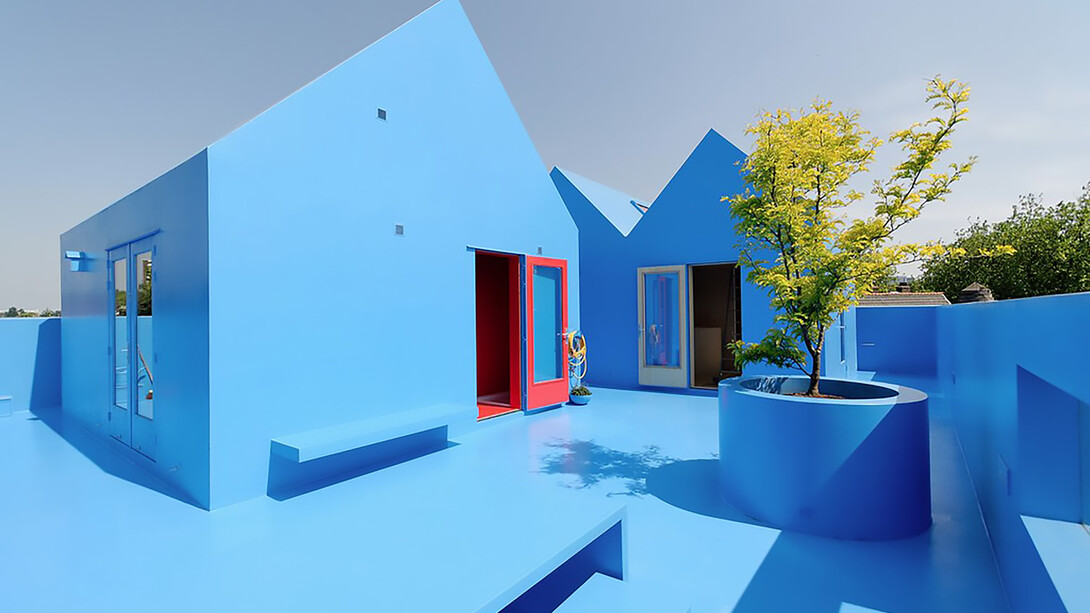
MVRDV's Didden Village project in Rotterdam is a challenging proposal for modern urban architecture with the addition of a new scale of habitation onto a pre-existing structure. Completed in 2006, the little "village" redevelops the rooftop of a typical family home into what could be described as a surreal domestic landscape—one where spatial boundaries, privacy, and community are renegotiated in new and novel ways.
It is both a playful and radical intervention that responds to the scarcity of space in urban centers. By introducing vertical expansion in an expressive architectural language, the project offers a new model for future city living. Rather than expanding outwards, it builds upward, crafting an imaginative yet functional response to the pressures of urban growth.
The birth of an architectural concept
Located in Beatrijsstraat, the project involves the construction of a 45 m² rooftop extension on a 19th-century brick house and studio. Furthermore, a 120 m² terrace was projected as a communal outdoor area. MVRDV conceived this project as a prototype for inner-city densification, proposing rooftops as active, lived-in urban surfaces.
This design challenges traditional notions of spatial use, inviting architects and city planners to reconsider the often-unused rooftops that cover large portions of cityscapes.
The "Rooftop Village" configuration
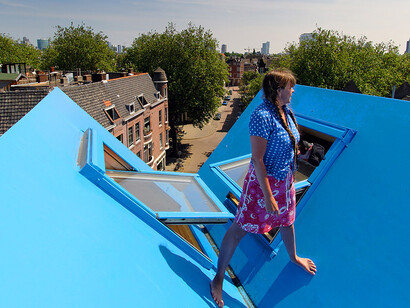
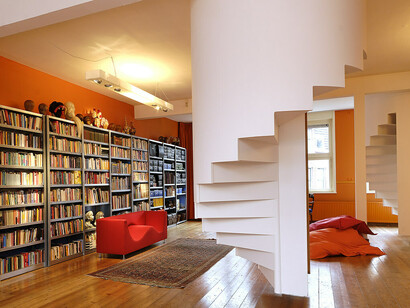
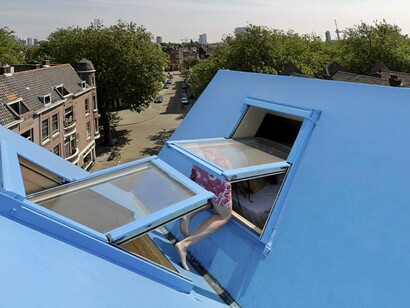
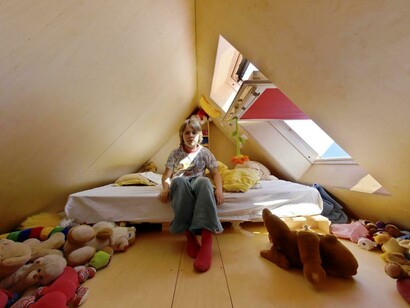
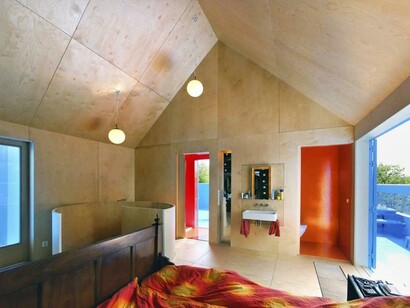
Three small house-like forms were added to the roof: a master bedroom and two separate children's bedrooms. Each bedroom is an independent, pure form, accessed by its own private spiral stairway. The stairs create a symbolic "double helix" effect and add to the separateness of each unit.
This arrangement not only affords privacy but also engenders a sense of spatial disconnection between family members. The roof is no longer a mere extension—it is now a micro-neighborhood, wherein each family member has a separate unit within a shared outdoor domain.
This spatial strategy reflects broader shifts in how modern families live—increasingly valuing individual space while maintaining collective life.
Vertical structure and outdoor living
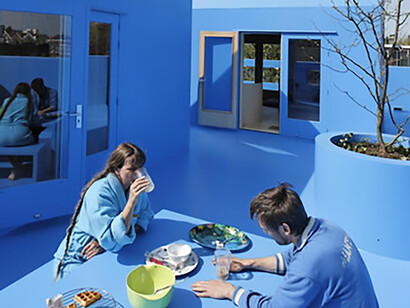
The space between the volumes is conceived as an outdoor urban space, with small streets, plazas, seating areas, and even a small outdoor shower. Here, everyday life spills out into an open terrace, a semi-public shared space in the home. The roof is surrounded on all sides by tall parapet walls, which both frame glimpses of the city and provide a sense of openness tempered with privacy.
The interplay between enclosure and openness creates a rooftop environment that is both intimate and expansive, offering new rhythms of daily life.
Material, color, and visual identity
Most striking, perhaps, is Didden Village's monochromatic blue color scheme. The roof structures are entirely clad in polyurethane, producing a consistent and surreal appearance that visually delineates the new addition from the current red-brick structure. The contrast makes the intervention stand out as distinct and independent.
MVRDV chose the color blue not just for its aesthetics but for its symbolism. The architects describe the project as a way of "creating a new sky" or "adding a crown" to the building—suggesting that the extension isn't a part of the earth, but a fragment of the sky held in position.
This chromatic decision gives the project a dreamlike, theatrical presence, turning architecture into narrative and symbol.
Structural approach
The new volumes are constructed in thin timber panels with a steel subskeleton, carefully set over the existing building. The spiral staircases are cast as suspended sculptural elements, repeating the sense of vertical separation and spatial hierarchy.
This structural approach minimizes impact on the historical building and maximizes the temporal distinction between old and new. Contrast is intentional: the past is not being imitated, but rather confronted and reinterpreted through modern design.
This duality between conservation and innovation is central to MVRDV’s vision of progressive urbanism.
Urban densification strategy
MVRDV emphasizes that Didden Village is not a building extension but a strategic urban gesture. The architecture proposes rooftops as a new frontier for urban expansion, a sustainable and efficient option for horizontal growth. In dense cities like Rotterdam, the approach not only resolves space shortages but also introduces a layered form of urban life.
The project defies the presumption that architectural density must occur on the ground plane. It suggests instead that we can "build up" and reimagine the ways that space is activated above the city's existing infrastructure.
It repositions rooftops as social, spatial, and environmental assets—not just passive covers, but dynamic architectural canvases.
Social and symbolic layers
Didden Village brings together the concepts of privacy and collectivity in a new way. The members of the family each have their own separate, enclosed bedrooms, yet the shared terrace encourages interaction and sociability. The roof serves as a stage for everyday rituals—from dining to sleeping—in a space that is both domestic and public.
The use of color and mass transforms the addition into a symbolic one, rather than a functional one. The blue forms bring to mind myth, fantasy, and even otherworldliness—elevating the building from structure to story. It’s not just a place to live but a constructed metaphor—a vision of possibility perched atop the everyday.
A habitable manifesto
Lastly, Didden Village is not just a rooftop addition—it's an inhabitable architectural manifesto. With its questioning of standard housing typologies and experimentation in color, form, and structure, the project offers a new vision for urban living.
Through its small size, Didden Village achieves a grand idea: it redefines home, breaks with paradigms, and transforms waste space into precious environments. Not only an architectural gesture but also a provocative statement on how we live, interact, and inhabit space in the contemporary city. As cities continue to face challenges related to population growth, sustainability, and affordability, projects like this offer bold, poetic alternatives—compact in scale, yet vast in imagination.