English
 Español
 Français
 Deutsch
 Italiano
 Português
Alzheimer’s disease is the most common cause of dementia, a condition characterized by the loss of memory and cognitive abilities. While it may manifest later in life, typically after age 65, it is not a normal part of aging. What’s more troubling is that there have been instances of people under 65 who have been diagnosed with Alzheimer’s, making it a condition more common than previously thought.
Current research into the disease has found several factors that contribute to the development of Alzheimer’s, but no therapy is available to alleviate symptoms. But thanks to researchers at Hunan University of Chinese Medicine, several epigenetically regulated genes affected by environmental factors have been identified as potential treatment targets. With this new insight, therapies can be developed to address genes contributing to Alzheimer’s and alleviate, or even prevent, symptoms.
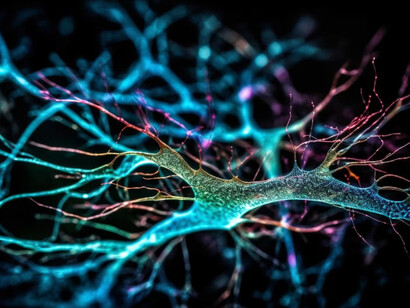
While people recognize Alzheimer’s from the behavioral impacts it has on people living with the disease, medical professionals look at the cellular and molecular level to determine diagnosis and severity. In the medical field, Alzheimer’s is characterized by loss of neurons and an abundance of protein plaques in the brain. The plaques are formed from clusters of a protein called amyloid-beta, which normally exists as free-floating fragments used for healthy brain function. Along with these plaques, another protein called tau, which is part of a neuron’s skeleton, becomes tangled within affected neurons and prevents normal functioning. What’s worse is that defective proteins that form these plaques and tangles can spread and convert normal versions into defective variants that worsen the disease.
In recent years, Alzheimer's research has looked at the genetic source of amyloid-beta and tau for insights into disease progression and prognosis. The genes for amyloid-beta and tau have been identified, but no specific mutations have been identified for Alzheimer's. In more recent years, epigenetic regulation of genes has been found to contribute to the development of Alzheimer's.
Epigenetics is an emerging field of genetics in which environmental and behavioral factors influence which genes are activated. We are taught about the helix structure of DNA, but that is just the introductory lesson to reality. After the helix, DNA is structured in a “coiled coil” arrangement where the helix is twisted around itself and knotted using proteins called histones to create a “beads on a string” arrangement. When the DNA is wrapped tightly around the histones, the genes that are wrapped can’t be used. But unlike genetic mutations that can permanently alter the genetic sequence, DNA can be wrapped and unwrapped around histones at any time, allowing specific genes to be active when needed, and turned off when not. And in recent years, epigenetics has been found to influence neurodegenerative diseases like Alzheimer’s.
One category of proteins involved in epigenetics, called HDACs, has become the latest subject of Alzheimer's research. In addition to controlling gene activation through epigenetic changes, HDACs also play roles in cell survival, specialization, cell death, cell metabolism, inflammation, and neuron protection. In the case of Alzheimer’s, a study from the New York State Institute for Basic Research in Developmental Disabilities found that HDACs regulate the development of amyloid-beta plaques, neuronal death, and the inflammation seen in Alzheimer’s. A follow-up study from Shanxi Medical University in China confirmed that HDACs regulate the epigenetic activation of amyloid-beta genes and thus contribute to the buildup of amyloid-beta plaques.
After the connection between HDACs and Alzheimer’s was made, studies used inhibitors that target HDACs to determine their effects on disease progression. One inhibitor, called TSA, was used in an Alzheimer’s study using mice at Shanxi Medical University. From their results, they found that TSA significantly improved cognitive function, promoted neuron regeneration, reduced brain inflammation, and reduced the levels of amyloid-beta and tau proteins. Other studies found that HDAC inhibitors, not just TSA, lead to the release of restorative factors within the brain, promoting brain health, adaptiveness, and cognition. However, while the advantages of TSA and other HDAC inhibitors are well-known, these studies only focused on a single aspect of Alzheimer’s.
The studies on HDAC inhibitors and TSA only looked at the amount of amyloid-beta or the specific histone the inhibitor targets. When epigenetics is involved, multiple genes are affected by the wrapping and unwrapping of DNA. So while amyloid-beta and tau genes are epigenetically activated, other genes may be activated as well, with their roles in Alzheimer’s unconfirmed as of now. This creates a molecular network within the cell with many moving parts, and researchers have only examined a small part of it using TSA. Because this genetic network is so vast, manual observation can no longer keep up. To assist in research on this network, researchers from Hunan University used machine learning.
Using Alzheimer’s genetic data and TSA biological interaction data, the Hunan team scoured vast amounts of information using a machine learning algorithm. After analyzing the data, the algorithm identified over 900 potential histones targeted by TSA. These identified histones overlapped with genes related to Alzheimer’s disease and with metabolic processes involved in neuronal health. The team also identified eight core genes with a unique activation pattern in Alzheimer’s disease: the protective ones are deactivated, while the pathological ones are active. The core genes are associated with neuron signaling, brain adaptation, tau protein removal, and immune-neuron communication, suggesting key roles during Alzheimer’s progression.
While the complexity of Alzheimer’s disease has been a devastating diagnosis with no clear solutions, this latest research suggests we are finally beginning to shed light on a potential treatment. With the shifting focus from simple mutations to the “on-off” mechanism of epigenetics, scientists are looking beyond genetic factors to improve our understanding of Alzheimer’s. The identification of eight core Alzheimer’s genes narrows down the vast molecular network, and identifying hundreds of potential histone targets of TSA serves as a starting point for further research. These discoveries bring us closer to a future where Alzheimer’s is not an inevitable decline, but a condition we can actively influence at the cellular level.
References
Ou C, Chen B, Deng J, Long H (2026) Deciphering the molecular network of Trichostatin A in regulating Alzheimer’s disease screening of core genes and mechanistic investigation based on multidimensional bioinformatics and molecular simulation. PLoS One 21(4): e0347532. DOI
Alzheimer's Association. (n.d.). What is Alzheimer's? Alzheimer's Association.
Soni U, Singh K, Jain D, Pujari R. Exploring Alzheimer’s disease treatment: Established therapies and novel strategies for future care. Eur J Pharmacol. 2025;998:177520. pmid:40097131
University of California, San Francisco. (2019, May 1). Alzheimer’s disease is a ‘double-prion disorder,’ study shows.
National Library of Medicine. (n.d.). What is the epigenome? MedlinePlus.
Zhang L-Y, Zhang S-Y, Wen R, Zhang T-N, Yang N. Role of histone deacetylases and their inhibitors in neurological diseases. Pharmacol Res. 2024;208:107410. pmid:39276955
Yang W, Chauhan A, Mehta S, Mehta P, Gu F, Chauhan V. Trichostatin A increases the levels of plasma gelsolin and amyloid beta-protein in a transgenic mouse model of Alzheimer’s disease. Life Sci. 2014;99(1–2):31–6. pmid:24486299
Su Q, Ren Y-H, Liu G-W, Gao Y-P, Zhang J-X, Zhang J-N, et al. Trichostatin A relieves anxiety-and depression-like symptoms in APP/PS1 mice. Front Pharmacol. 2024;15:1333235. pmid:38572429
Su Q, Li T, He P-F, Lu X-C, Yu Q, Gao Q-C, et al. Trichostatin A ameliorates Alzheimer’s disease-related pathology and cognitive deficits by increasing albumin expression and Aβ clearance in APP/PS1 mice. Alzheimer's Res Ther. 2021;13(1):7. pmid:33397436
Ganai SA, Ramadoss M, Mahadevan V. Histone Deacetylase (HDAC) Inhibitors - emerging roles in neuronal memory, learning, synaptic plasticity and neural regeneration. Curr Neuropharmacol. 2016;14(1):55–71. pmid:26487502