English
 Español
 Français
 Deutsch
 Italiano
 Português
The first image of space
At the age of seven, one of my first readings was the encyclopedia Mis Primeros Conocimientos. Among its volumes, there was one devoted to astronomy. It was one of those early readings that leaves a quiet orientation: an interest in the Moon, the solar system, the space race, and the human possibility of exploring the universe.
I imagine that something similar happened to many people of my generation. The space endeavor first entered the home as a collection of images, diagrams, stories, and questions, through books, magazines, documentaries, and television broadcasts. The Moon, the planets, the stars, and spacecraft formed part of a silent pedagogy. It was a way of understanding that humanity could extend its presence beyond the place where it was born.
Those images had a particular force. Rockets represented organized will. Astronauts were the visible expression of societies capable of turning knowledge into action. Planets appeared as possible destinations for a technical imagination that had begun to enter popular culture. For a child, all of that could seem natural. For a civilization, it represented something deeper: the internalization of a historical possibility.
From curiosity to continuity
Other milestones later expanded that view. The Voyager missions carried human exploration toward the outer limits of the solar system and left images that still form part of the scientific memory of our time. The Hubble Space Telescope opened an unprecedented window into galaxies, nebulae, and cosmic structures that transformed the way we look at the universe. Probes sent toward Jupiter, Saturn, and other bodies of the solar system turned regions once imagined into territories that could be observed, measured, and scientifically interpreted.
Each mission added another layer to that first curiosity: the certainty that space was distant, but also historical, technical, and cultural continuity. Robotic exploration, in particular, had a quiet virtue. It could send instruments, sustain communications, endure radiation, correct trajectories, transmit data, and return knowledge. Through that continuity, the solar system began to become an extension of the human scientific field.
Seeing a small helicopter fly on Mars was an undeniable technical achievement. Its importance was not in its size, but in what it meant: a machine designed on Earth, operating in a thin atmosphere, under conditions impossible for conventional aviation, performing a demonstration that decades earlier would have seemed like a scene from science fiction. That flight signaled that planetary exploration was entering a finer, more autonomous, more experimental phase, where each device could open a new family of operations.
The return of the lunar question
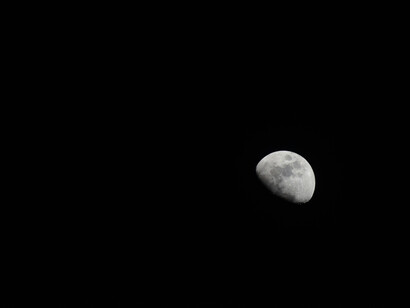
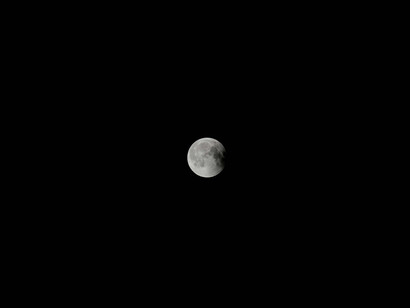
Today, that history is entering a new phase. The renewed effort to return to the Moon now belongs to a broader field of strategic competition. The United States is advancing through Artemis; China is sustaining its own lunar program; private companies are developing transportation, landing, communication, and logistics capabilities; and the Moon is again occupying a central place in the contest for technology, presence, prestige, and industrial capacity.
This is precisely one of the themes I develop in my book Asymmetric Technological Supremacy: The Power to Build Paradigms: technological supremacy is defined by the capacity to build complete regimes of operation, production, learning, and continuity. From that perspective, the Moon becomes a space where a nation’s ability to turn knowledge into sustained presence is tested.
The current competition has a different nature from that of the twentieth century. The first space race was marked by visible milestones: the first satellite, the first human being in orbit, the first spacewalk, the landing on the Moon. Each achievement was a signal of national capability. Sputnik mattered because it revealed that the Soviet Union possessed a chain of design, manufacturing, launch, control, and communication capable of producing an immediate strategic effect. Apollo mattered because it demonstrated that the United States could integrate science, industry, computation, materials, electronics, navigation, training, manufacturing, and political will into a single architecture of execution.
The Moon as a test of integration
In that context, the Moon was a stage of demonstration. The lunar surface offered a condition that could not be simulated. Reaching it required technological totality. Guidance systems, deep-space communications, space suits, computers, aerospace medicine, resistant materials, control centers, industrial chains, and an institutional structure capable of sustaining the effort for years were all necessary. The Moon forced the demonstration of integration.
The current race will be defined by the capacity to remain, operate, and repeat. Returning to the Moon demonstrates power. Sustaining operations on the Moon demonstrates regime.
The difference is decisive. A mission can be extraordinary and still remain an episode. A regime produces continuity. It allows experience to accumulate, uncertainty to decrease, failures to be corrected, procedures to stabilize, talent to be trained, suppliers to consolidate, systems to improve, and each operation to become the foundation of the next. In that sense, the Moon is an environment that forces the construction of a more demanding form of technology.
Operational autonomy beyond Earth
On Earth, technological systems operate within a dense field of support. Spare parts are available, technicians are nearby, logistics chains are deep, energy is continuous, infrastructure is redundant, communications are immediate, and intervention can be rapid. The terrestrial environment cushions error. The Moon imposes a different standard.
There, distance imposes latency. The lunar night demands long-duration energy solutions. Lunar dust degrades surfaces, penetrates mechanisms, and threatens mobility systems. Radiation punishes materials, sensors, and electronic components. Extreme temperatures subject every structure to cycles of expansion and contraction. The absence of an atmosphere removes many ordinary forms of thermal dissipation and natural protection. Each failure becomes more costly because response capacity must be embedded into the system itself.
Sustained lunar exploration is a test of operational autonomy. It forces answers to questions that are central to any technological power: how to produce energy under hostile conditions; how to operate autonomous systems with limited communication; how to use local resources; how to manufacture, repair, or adapt components without relying on an immediate terrestrial chain; how to verify the integrity of equipment when the margin of error is minimal; how to sustain a human presence as a repeatable condition rather than as an exceptional event.
From destination to system
The decisive point appears when the Moon is understood as a system. A destination is visited. A system is organized. A destination permits a feat. A system demands continuity. A destination can produce prestige. A system produces capability.
At that point, the Moon becomes a machine of strategic learning. Every landing attempt, every rover, every module, every communications experiment, every test of in-situ resource utilization, every partial failure, and every subsequent correction form part of an accumulation. The advantage lies in cadence: in the ability to repeat, learn, and return with a more robust version.
That cadence is one of the keys to contemporary technological supremacy. Advantage consolidates when an actor can turn each operation into input for the next. Disciplined repetition reduces uncertainty, strengthens suppliers, matures procedures, exposes failures that remain invisible in the laboratory, improves interfaces, trains teams, and transforms experience into technical doctrine. That accumulation is built through institutional continuity, stable funding, tolerance for experimentation, and the ability to sustain projects whose value matures over long horizons.
Symbolic presence and structural presence
Here, the difference appears between symbolic presence and structural presence. Planting a flag has historical value. Maintaining an operational architecture has strategic value. The first produces memory; the second produces power.
The United States is advancing through Artemis under an architecture that combines NASA, traditional contractors, commercial companies, and international integration. That combination expresses a new reality. The state now operates as the organizer of a constellation of capabilities. Transportation, landing systems, suits, communications, orbital stations, logistics, and scientific experiments are distributed among agencies, companies, and international partners. This geometry can produce flexibility, innovation, and speed, but it also requires a higher capacity for coordination, certification, and strategic direction.
China is advancing through a different logic. Its lunar program has given great importance to robotic missions, sample return, communications tests, the development of orbital capabilities, and the gradual preparation of human presence. Strategically, that sequence reveals a discipline of accumulation. Before sustaining human beings on the Moon, the objective is to turn the lunar environment into a space that is better known, better instrumented, and more operationally manageable.
Both strategies express different technological cultures, but they converge on the same point: the Moon as a space where the ability to turn knowledge into sustained operation is tested. The United States is betting on a complex architecture, commercially integrated and politically visible. China appears to be betting on a more state-driven, sequential, and controlled accumulation. In both cases, the final result will be shaped by the ability to close cycles.
Closing the lunar cycle
Closing cycles means establishing recurring transportation, reliable energy, permanent communications, precise navigation, environmental protection, maintenance systems, autonomous operation, local resource utilization, and rapid learning capacity. It means moving from the exceptional mission to repeatable presence. It means transforming exploration into infrastructure.
In-situ resource utilization will be one of the central thresholds. If lunar water can become an operational input, if regolith can be transformed into useful material, if energy can be stored through extreme cycles, if certain components can be manufactured, repaired, or adapted locally, then the Moon will enter a new operational condition. Even partial logistical independence would change the nature of exploration. It would reduce costs, expand margins, allow longer stays, and open the possibility of more complex operations.
The strategic value of that threshold is enormous. Whoever manages to operate with less logistical dependence will possess a qualitative advantage. That actor will have demonstrated a form of continuity beyond Earth. And that capacity can transfer to many other domains: defense, extreme mining, autonomous robotics, distributed energy, resilient materials, resilient communications, advanced manufacturing, and the operation of systems in hostile environments.
The regime laboratory
The Moon functions as a regime laboratory. It forces the resolution of integration problems that define deep technological power. How to sustain energy without a grid. How to operate without nearby maintenance. How to navigate without abundant infrastructure. How to verify systems far from the laboratory. How to make failure produce information rather than collapse. How to design machines that continue to function when the environment offers no forgiveness.
Viewed this way, the new lunar race belongs to the field of technological supremacy. The Moon forces the demonstration of integration. The power that can operate there with continuity will have proven something far greater than its ability to launch rockets: it will have proven that it can build a technological regime capable of functioning beyond the ordinary conditions of Earth.
The strategic weight of science
That is why the debate over NASA’s budget, scientific missions, the private space industry, and competition with China carries strategic weight. What is at stake is the continuity of an architecture of knowledge. Space exploration is sustained by basic science, patient engineering, robotic observation, accumulated talent, laboratories, suppliers, data, trials, errors, and institutional memory.
A deep cut to space science affects more than a list of missions. It can affect the ability to produce questions, instruments, measurements, and generations of specialists. It can weaken the network that turns scientific curiosity into strategic capability. Human exploration needs rockets, but it also needs astronomy, planetary geology, heliophysics, Earth science, astrophysics, robotics, materials, computation, communications, and a university base capable of forming talent. The visible mission and the scientific base that sustains it belong to the same architecture.
The paradox is evident. Just as the Moon is again becoming a major point of competition, weakening the scientific infrastructure that feeds that presence may reduce the depth of American leadership. The problem is whether the continuity of learning is preserved. A power can preserve launch capability and still lose strategic depth if it stops sustaining the scientific and institutional network that turns each mission into accumulated knowledge.
Public purpose and private capability
There is also a growing tension between public exploration and private capability. Commercial companies can accelerate cycles, reduce costs, test designs more frequently, and create services that once depended exclusively on the state. That participation is valuable. But the state must retain enough internal capacity for direction, evaluation, and scientific continuity. Exploration should remain a national enterprise supported by private capability, not a fragmented set of services tied to short-term operational needs.
The issue is to define what kind of regime is being built. A sustainable space regime needs strong companies, but it also needs a public agency with technical capacity, strategic authority, institutional memory, and a long-term scientific vision. With that architecture, commercial speed and public purpose can reinforce each other.
Competition with China makes this tension more visible. China connects state continuity, industrial planning, scientific exploration, and strategic ambition within a broader vision of national capability. Its space program can advance with less noise, less media spectacle, and rhythms less exposed to immediate political cycles. That continuity can become an advantage if it sustains iterations, accumulates evidence, and turns robotic presence into infrastructure prior to human presence.
The United States retains extraordinary advantages: a scientific ecosystem, universities, highly dynamic private companies, historical experience, innovation capacity, engineering culture, leadership in software, and a deep tradition of exploration. Those advantages require articulation. Technological history shows that even the most innovative countries can lose ground when they separate imagination, science, production, and operation too sharply.
The human meaning of the lunar frontier
The Moon returns, then, as a frontier of regime. It is the place where the space imagination of a generation meets a much harder requirement: to demonstrate that humanity can build continuity beyond Earth. And in that continuity, a significant part of the technological leadership of the twenty-first century will be decided.
The encyclopedia I read when I was seven presented space as an extension of human curiosity. That view remains valid. Without curiosity, there is no exploration. But today the question is more demanding. The Moon must be understood as the place where technological societies will test whether they can sustain presence, produce knowledge, organize industry, and learn under extreme conditions.
Yet the deepest meaning of this new lunar moment cannot be reduced to competition. Competition may accelerate the effort, organize resources, and force decisions. It may push nations to move faster than they otherwise would. But the reason the Moon continues to matter is older and wider than any strategic rivalry. It belongs to the human need to look beyond the immediate horizon and ask whether presence, intelligence, and responsibility can travel together.
To return to the Moon is to test machines, systems, materials, institutions, and nations. But it is also to test a human idea: that exploration is not an escape from Earth, but one of the ways humanity learns to understand itself. Every time we extend our reach, we also redefine the scale of our responsibility. The more capable we become beyond Earth, the more serious the question becomes about what kind of civilization we intend to be.
That is why the new lunar race should not be measured only by flags, budgets, launch cadence, or geopolitical advantage. Those elements matter. They will shape the architecture of the coming decades. But beneath them lies a deeper question: whether humanity can transform power into stewardship, competition into learning, and technological ambition into a disciplined form of continuity.
The space endeavor that entered many homes through books, magazines, and documentaries now returns in a more complex form. It is about remaining. It is about demonstrating continuity. It is about building the system that will make the next steps possible. But it is also about preserving the original force that made the journey meaningful in the first place: the capacity to wonder, to build, and to carry human presence responsibly into places where nothing has yet been prepared for us.
That will be the true meaning of the new lunar race: the construction of a new historical capability with a human purpose. The Moon will matter because it will force us to see who can turn distance into operation, operation into learning, and learning into regime. But it will matter even more if that regime becomes more than an architecture of power. If it becomes a way for humanity to expand its horizon without losing the meaning of why it began to look upward at all.