English
 Español
 Français
 Deutsch
 Italiano
 Português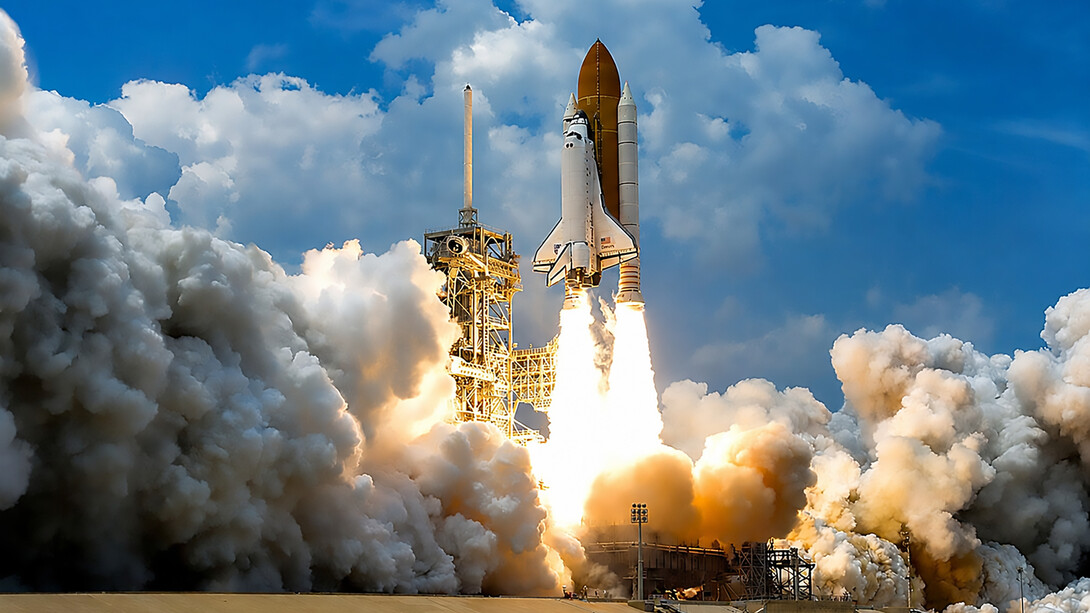
Every child who learns how rockets work eventually notices something strange. The spacecraft itself is tiny. The rest is fuel. Spaceflight is not about moving payloads; it is about lifting propellant. Every mission carries all the fuel it will ever need from Earth’s surface, fighting gravity at the most expensive stage of the journey.
This single constraint shapes everything. Rockets grow massive. Payload fractions shrink. Missions become rare and costly. Satellites die when their fuel runs out even if their electronics remain functional. Deep-space exploration becomes episodic rather than continuous. The tyranny of carrying all propellant from Earth has defined the space age so far.
There is a very old solution to this problem. Every transportation network in history eventually builds refuelling infrastructure.
Railways built coaling stations. Aviation built airports. Shipping built ports. Electric vehicles build charging networks. Space will build fuel depots.
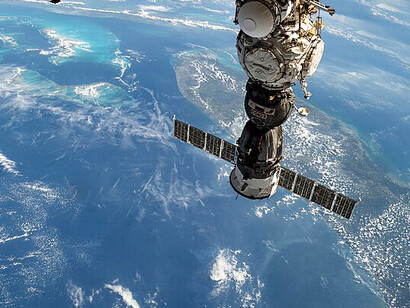
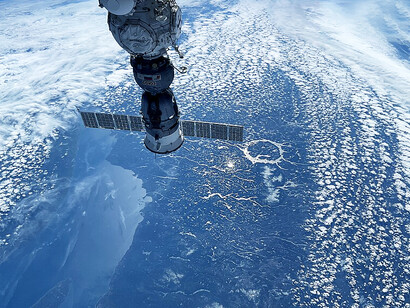
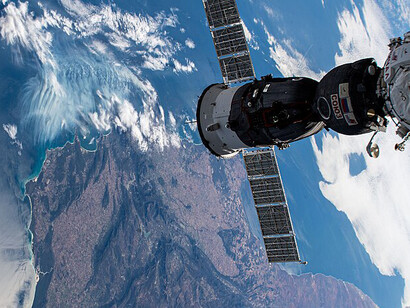
For decades, orbital propellant depots were discussed but postponed. Docking was risky. Cryogenic storage was primitive. Autonomous fluid transfer was untested. Today, each of those barriers has fallen. Autonomous rendezvous is routine. Cryogenic insulation has advanced dramatically. Sensors monitor tank integrity continuously. Robotic spacecraft have already docked, refuelled, and repaired satellites in orbit. The technical foundation exists.
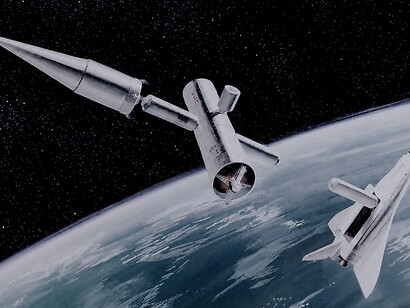
The first operational depot will be simple: a large tank placed in low Earth orbit. Tanker spacecraft deliver propellant from Earth. Client spacecraft dock, transfer fuel, and undock. Immediately, spacecraft design changes. Satellites no longer require oversized tanks. Servicing vehicles refuel instead of de-orbiting. Transfer stages launch lighter. Payload mass increases. Mission costs fall. Fleet lifetimes extend.
This is the first inflection.
The second arrives when depots appear beyond Earth orbit. A staging depot near the Moon becomes a transfer hub for lunar landers. Then comes the decisive shift: extracting ice from permanently shadowed lunar craters, splitting it into hydrogen and oxygen, storing it, and selling it. When lunar-sourced propellant enters orbital depots, Earth no longer monopolises the space fuel supply.
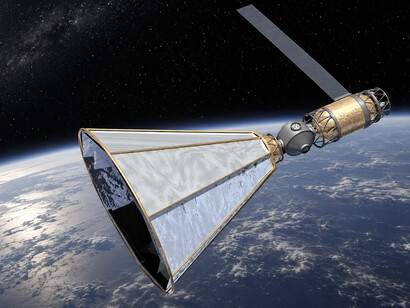
At that moment, spaceflight architecture transforms. Deep-space vehicles assemble and refuel in orbit. Reusable transfer craft shuttle between depots. Mars missions launch in modular segments instead of single colossal stacks. Supply chains become continuous rather than bespoke. Space becomes a network, not a sequence of isolated expeditions.
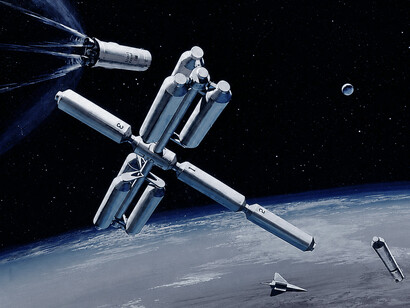
Operationally, depots resemble industrial logistics terminals. Cryogenic tanks. Docking ports. Safety zones. Maintenance cycles. Inventory management software. Pricing models. Traffic scheduling. Insurance policies. Regulatory oversight. In other words, unglamorous but decisive infrastructure.
Legal frameworks will evolve accordingly. Who owns lunar ice? Who licenses depot locations? Who is liable for transfer accidents? These questions are already being debated in international space law forums. But infrastructure often precedes legislation. Build the first depot, and law will adapt to accommodate it.
Risks remain. Cryogenic boil-off must be minimised. Docking collisions must be avoided. Orbital debris environments must be controlled. Demand must grow steadily to justify investment. Yet history shows that logistics networks generate their own demand. Once the first refuelling station opens, traffic increases. Once traffic increases, more stations follow. Positive feedback takes over.
Another consequence follows naturally: spacecraft stop being disposable machines and start becoming maintainable assets. Today, most satellites are abandoned once fuel reserves are exhausted. With orbital depots, servicing missions become economically rational. Refuelling extends operational lifetimes. Damaged components can be replaced. Expensive spacecraft evolve from temporary hardware into long-duration infrastructure. Entire industries may emerge around orbital maintenance, inspection, towing, repair, and fuel delivery.
This changes the economics of access to space itself. Smaller nations and private companies that cannot build enormous heavy-lift rockets may still participate in deep-space operations by using shared orbital fuelling infrastructure. Transportation becomes distributed rather than vertically monopolised. The decisive capability shifts from building the largest rocket to controlling the most reliable logistics network.
By the late 2030s, orbital refuelling is likely to be routine for commercial constellations and government fleets. By the 2040s, cislunar depots may anchor lunar industry. By mid-century, interplanetary transfer vehicles may plan around refuelling stops as naturally as aircraft plan around airports.
Public imagination associates space exploration with astronauts and flags. In reality, the expansion of civilisation into space will be decided by tanks, valves, docking rings, and scheduling algorithms.
Whoever builds and controls the fuel depots will control the highways of the solar system.
And once those highways exist, everything else — manufacturing, power generation, data centres, habitats — accelerates along them.
Every transportation era is defined by its refuelling network. Once orbital depots become operational, spacecraft design, mission planning, and space economics will reorganise around them permanently and globally. The infrastructure may look mundane — tanks, valves, docking ports — but its consequences will be transformative. The first operators to establish fuelling corridors will not merely service missions; they will set the price, pace, and accessibility of space itself. When propellant becomes a traded orbital commodity rather than a launch constraint, the age of continuous space operations truly begins.