English
 Español
 Français
 Deutsch
 Italiano
 Português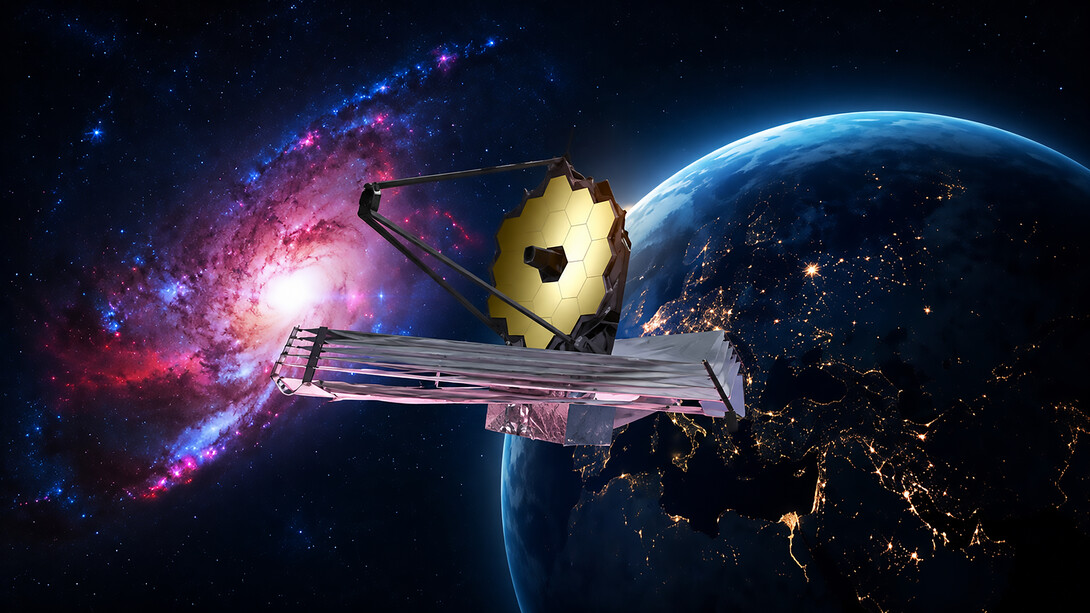
Before asking whether life exists elsewhere, we need to understand what life is. Although no consensus has been found on the definition of life, biology generally considers living organisms to be systems capable of metabolism, reproduction, and evolution through the natural selection process. The origin of life on Earth remains one of the greatest mysteries and provides a framework for searching for signs of life on other planets.
Such a definition is consistent with Charles Darwin’s theory of evolution. The famous British biologist of the 19th century revolutionized our understanding of the evolution of species, especially by observing the diversity of species on the Galápagos Islands (part of Ecuador). His work therefore describes life as a system able to adapt through natural selection. Life overall involves key processes such as metabolism, reproduction, and evolution.
For centuries, scientists have been postulating many ideas about the origin of life on Earth. One leading hypothesis suggests that it could have emerged in the shape of bacteria around 3.8 billion years ago, deep in the primordial oceans near hydrothermal vents, extremely hot sources found near volcanically active places.
Yet, the mystery remains: where do building blocks of life come from? Two alternative major theories are investigating this fundamental question: abiogenesis and panspermia.
On one hand, the abiogenesis hypothesis displays a chemical origin, where organic material is generated from inorganic matter through a series of physicochemical reactions and their merging into living organisms. Such an idea was examined by the Miller-Urey experiment of 1953, which was aimed at reproducing the primitive conditions of the Earth, comprising both its atmosphere and oceans. The two chemists successfully demonstrated that organic molecules could emerge in a simulated early-Earth environment. They synthesized amino acids by mixing inorganic molecules and gases, including ammonia, methane, water vapor, and hydrogen, while being exposed to electrical discharges to generate light.
On the other hand, the panspermia theory suggests a cosmic origin of life, where fundamental organic elements could have been brought by impacts of meteorites, asteroids, or comets, feeding the Earth chemically. It is a sort of a beneficial “extraterrestrial contamination” to some extent.
Current research, including major facilities like the James Webb Space Telescope, is intensively looking for hints of life within and outside our solar system.
The search for life in the Solar System
It may seem an unsolvable question for our planetary system, but it is quite relevant. Earth is currently the only cosmic location with known life. However, some planets may have harbored optimal conditions for hosting such life during the initial stages of the solar system.
Mars might have been one of these promising environments more than three billion years ago. All observations performed by space probes such as Mars Global Surveyor (1996-2006) and Mars Reconnaissance Orbiter (2005), as well as rovers like Opportunity, Spirit, Curiosity, and Perseverance, expanded our understanding of Mars. They all reveal geological features, indicating that the ancient Red Planet once possessed rivers, lakes, and perhaps oceans like our planet. Where did all this water go?
Astronomers suspect the impact of the solar wind, a mix of charged particles, including protons and electrons. Mars, being a planet half the size of the Earth and a relatively low-mass body, cannot hold a powerful magnetic field in the present day; this latter acts as a planetary shield. It could explain why the atmosphere of the red planet is extremely thin. Solar radiation is much more likely to have destroyed the initial magnetic field, leading to a significant process known as atmospheric escape.
However, Mars is not the only body of interest in the quest for a hypothetical past life. Some moons located in the outer part of the solar system exhibit intriguing characteristics. This is the case for Titan, Enceladus, and Europa, natural satellites of Saturn and Jupiter, respectively. Galileo spacecraft orbited the Jovian planet between 1995 and 2003 and provided measurements of the magnetic field as well as observations of surface features. Results suggest that Europa may harbor a water ocean under a thick icy crust. The Cassini-Huygens space mission, which operated around Saturn from 2004 to 2017, also points out the potential presence of a large subsurface water volume underneath a layer of ice, alongside free energy sources and bioessential elements.
Exoplanets: promising worlds
Exoplanets, planets located outside the Solar System and orbiting stars different from the Sun, have become cosmic objects of deep interest. More than 6,000 confirmed extrasolar worlds have been discovered since the first detection in October 1995 by astrophysicists Michel Mayor and Didier Queloz.
A striking diversity manifests itself in each planet’s discovery. It ranges from worlds with extremely small sizes and masses, like terrestrial planets (almost like Mercury, Venus, Earth, and Mars), to giant planetary bodies like scorching hot Jupiters. Such planets exhibit harsh conditions like high doses of stellar radiation, including UV and X-rays, as well as strong gravitational tides generated by the host star due to the close orbital distance. Hot Jupiters typically orbit their stars in a few hours or days and are located much closer than Mercury with respect to the Sun, around 50 million kilometers.
Scientists can detect exoplanets through numerous methods, including transit observations, radial velocities, gravitational microlensing, or direct imaging.
Transits arise when a planet passes in front of a host star, hiding a given fraction of the star’s surface and inducing a slight drop in the stellar luminosity. Such events happen if the observer, the star, and the orbiting exoplanet are aligned.
The radial velocity method accounts for variations in the stellar motions with respect to the Earth by moving toward or away from the Blue Planet.
Gravitational microlensing occurs when the gravity of a foreground object deflects and magnifies the light from a distant background star, making the background star appear temporarily brighter. Any orbiting exoplanet produces a very small additional change in the brightening, unveiling its presence.
Direct imaging is simply taking high-resolution images of an exoplanet, but only a few have been detected through this method because of the far distances and the atmospheric turbulence impacting the signal received by ground-based telescopes. Most exoplanets are gas giants like Jupiter or Saturn and are thus detected via transit observations and radial velocity methods. They are not sensitive to direct imaging or microlensing detections.
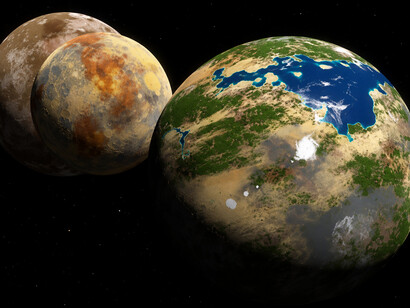
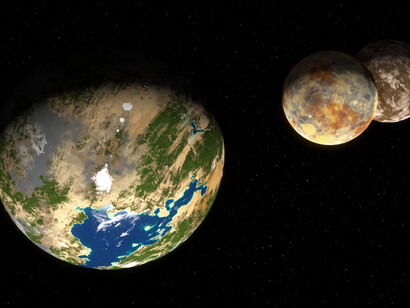
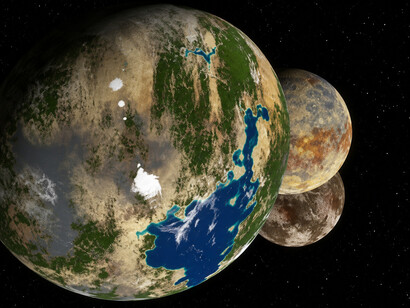
However, the most interesting exoplanetary population to account for in the search for biosignatures is super-Earths. Those are more massive and bigger than the Earth, although showing some interesting features. Super-Earths could indeed be similar environments to the Blue Planet from a geological point of view. It may have plate tectonics, a process that shapes the planet’s surface and recycles materials between the interior and the surface. This geological phenomenon is critical in maintaining a stable climate over long periods.
In addition, their atmosphere might contain clues for searching for signs of life. This was the case of K2-18b, an exoplanet located 124 light-years away, detected in 2018 by Nikku Madhusudhan, astrophysics researcher and professor at the Astronomy Institute of the University of Cambridge. In 2025, thanks to observations of the James Webb Space Telescope (JWST), his team revealed tentative evidence of dimethyl sulfur, a molecule primarily produced by phytoplankton in Earth’s oceans. Astronomers, nevertheless, emphasized such a discovery must not be considered as evidence of life, as both the detection and the origin of the molecule remain highly debated.
Another key parameter to look for habitable planets is the location of these far worlds in the so-called habitable zone. This region is defined as the range of distances where liquid water can exist on a planetary surface. Enough radiation emitted by the host star is a key requirement to account for optimized atmospheric pressure and regulated greenhouse warming for any exoplanet. These parameters are essential criteria for generating suitable temperatures between 0 and 100 Celsius degrees so that liquid water can form.
Exoplanets, therefore, improve our understanding of planetary systems and their formation as well as expand the existential quest for revealing extraterrestrial life.
What can future instruments unveil?
It is estimated that 70 % of stars found in the Milky Way are red dwarfs (also known as M dwarfs). These are smaller than the Sun, therefore emitting less radiation. Given that many planets are located extremely close to their host stars, and depending on whether they are within the habitable zone, planetary bodies might lose their atmosphere. Powerful X and UV rays can indeed be detrimental to potential exoplanetary life, especially in the case of M dwarfs. Red dwarf stars typically live for a long time, on timescales of billions of years.
Giordano Bruno (1548-1600), the Italian philosopher, was a precursor to the existence of exoplanets in the realm of religious embedded thought of the Earth as the center of the universe: “In space there are countless constellations, suns, and planets; we see only the suns because they give light; the planets remain invisible, for they are small and dark. There are also numberless earths circling their suns; not in a single earth, a single world, but in a thousand, I say in an infinity of worlds.”
Detecting at least microbial life would be a significant scientific breakthrough. Yet many people spontaneously wonder about the existence of intelligent civilizations, a question encapsulated by the famous Fermi paradox. Formulated by the American physicist Enrico Fermi in 1950 during a lunch break, it states that if there are technologically advanced extraterrestrial civilizations, where are they located and why are they not coming to pay a visit?
Hence the paramount importance of detecting biosignatures by observing extrasolar planets thoroughly.
In addition to SETI detecting unknown signals propagating through space, several Earth facilities and space-based missions are scheduled to increase the chances of finding signs of life. These include both targets within the Solar System and beyond, bringing insightful support to the sophisticated JWST and Hubble Space Telescope programs.
Missions include investigations of the habitability of subsurface oceans of the icy moons of Jupiter and Saturn, especially on Titan (DragonFly mission scheduled for launch in 2028) and Europa (Europa Clipper launched in October 2024 and scheduled to arrive around 2030 around the Jovian satellite). Regarding the detection of biosignatures on exoplanets, the European Southern Observatory’s Extremely Large Telescope (expected to be fully completed within the next few years) or NASA’s Habitable Worlds Observatory planned for the 2040s will target Earth-like planets located in their habitable zones to unveil potentially habitable worlds. Other experimental projects like the Nancy Grace Roman Space Telescope (launch scheduled on August 30th, 2026), Plato (early 2027), and Ariel (around 2029) will also better characterize exoplanets.
All we have to do is wait for a groundbreaking exoplanet-related discovery of life, whatever form that life may take. It might be either microbes, strange animals, or even humans. We are looking forward to this endeavor while keeping in mind Arthur C. Clarke’s observation: “Two possibilities exist: either we are alone in the universe, or we are not. Both are equally terrifying."