English
 Español
 Français
 Deutsch
 Italiano
 Português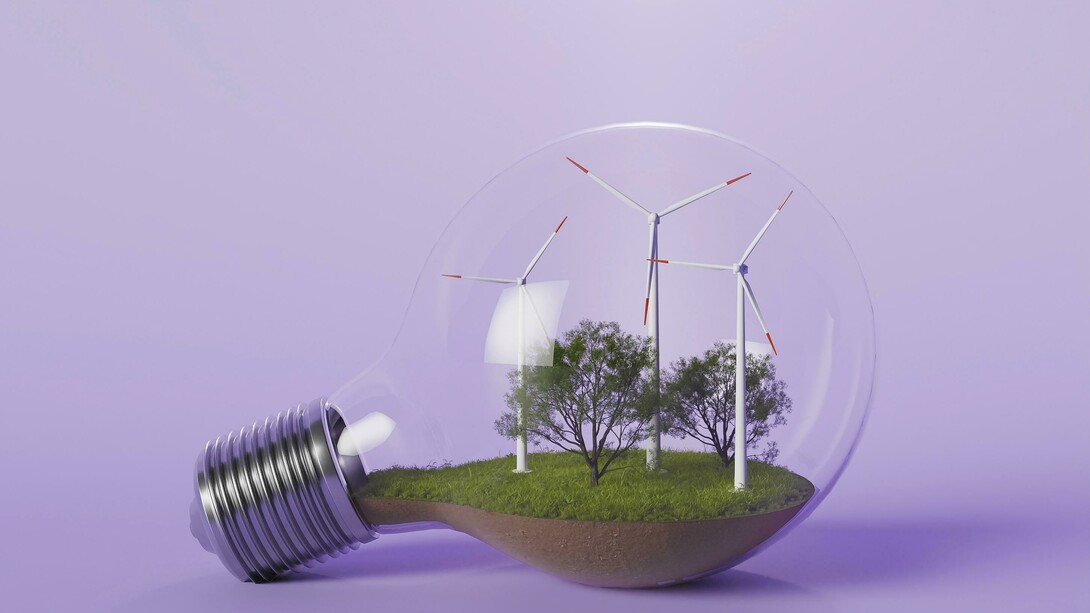
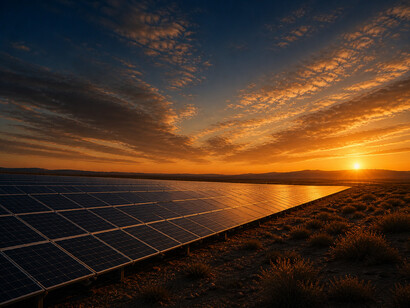
People around the world have recognized the good common and economic sense when thinking long-term- term about energy use. Oil is finite, but photons, geothermal, wind and wave power are infinite.
Oil mining, we all know, is highly expensive to perform: locating the oil, drilling and refining with no small amount of danger to and destruction of the local environment, air, water, soil and health of all local inhabitants, human and otherwise, is an extreme, arduous process.
The use of free photons, wind, wave power and geothermal energy as the next evolutionary step in mass distribution of electricity across the world, in developed and undeveloped countries should be abundantly obvious to all. It costs less in money, and it costs vastly less to the environment.
If we use sound, rational, everyone-wins economic thinking instead of geo-political lobbying and gerrymandering where profit is before people and planet, each nation that engages in renewable energy, will have a cleaner, healthier one.
Oil isn’t going away anytime soon, that should be obvious too, but its vast reduction, per every measure, yields both a paradigm shift and would make a significant shift in the reduction of contaminants in our air-water-soil and reduced exacerbation of the already insane imbalance of excess carbon dioxide in our atmosphere.
Seeing the destruction of the dinosaur age of oil
There are those dinosaurs who love liquefied dinosaur bones who continue to live in the past despite the profound havoc and destruction of the Earth and the wars that have been caused in its wake for over a century.
They haven’t quite yet caught on to the tidal wave of interest, common sense and large-scale economic value of using renewable energy sources in place of fossil fuels. They are still entrenched in old paradigm thinking and obsessed with the bubble of their own profits, no matter the expense to everyone else. The irony is that there is much more profit to be enjoyed using renewables.
The only way fossil fuels make sense economically is by externalizing the real costs incurred, as renowned futurist and green economist, Hazel Henderson, always reminded us in her extensive writing, talks and massive video collection at Ethical Markets.
I was fortunate enough to know Hazel well and to have been close to her for the last 10 or so years of her life. I was on her Global Advisory Board and sat at her feet more than once to learn about how fossil fuel economics really flowed at the expense of everyone except the oil companies themselves.
It is important to speak of Hazel here because she was a pioneer in every sense. As one example, she brought the discussion of the use of solar energy to public awareness back in the late 1950s in NYC. What we see today with the flourishing of solar energy worldwide is in no small part due to her lifelong commitment to its deployment.
Externalization is the accounting term for excluding expenses incurred by an operation, such as oil drilling and refining, that would affect the land, water, and environment where the drilling is taking place, or affect those who live in the area whose air, water, and soil become contaminated due to this operation.
Those costs typically run into the many millions but do not show up on the company’s balance sheets. They do show up, however, on the towns’, municipalities’ or the state’s balance sheets. Remediation, litigation due to violations of law, and medical expenses are not at all factored into the cost of doing business. We, the taxpayers, pay for these.
Add to this the extraordinary tax benefits bestowed upon oil companies by the government to the tune of hundreds of millions of dollars, in addition to the externalities.
And they call this free-market Capitalism! These are socialist measures bestowed upon the wealthiest companies in the world, in addition to accounting abnormalities that may be legal but are horribly unethical.
Where most refineries spew pollution
Since most drilling and refinery operations are deliberately placed in economically poorer, often Black neighborhoods, the pushback tends to be less. This isn’t because the pain or the anger are less, but because the black voices are all too often muffled.
Thankfully, this is changing as more and more people become aware of this underhanded, though no less uncommon, practice.
The actual costs incurred by local and State governments for these externalized costs, purely a euphemism used by companies that do everything to avoid being responsible for the damage they do to local ecosystems, the habitat, and the people living there, are staggering. A very conservative, rough estimate by the International Monetary Fund, between 2016 and 2025, is over 7 trillion dollars.
But this is not just a quantitative, monetary matter. These are people’s lives that are at stake, lives horribly shortened or plagued by disease through respiratory illnesses, water-borne diseases, and more.
There is no way to reimburse someone for the quality of their lives being damaged in their own homes, as is typical of these oil operations.
Some of the largest lawsuits in history have resulted in damage to the water, air and habitat of Americans all over the U.S. by oil companies. This has also happened in one of the most pristine regions of the world, the Amazon, resulting in damage and even destruction to the homes of many indigenous people.
Human rights attorney Steven Donziger1 represented the indigenous communities in what was the largest judgment in history — $9.5 billion against Chevron — due to the destruction of these communities' water, air, and soil, rendering their homes uninhabitable.
My interview with Donziger about this matter and the legal entanglement Chevron created to evade paying the judgment is explored in depth.
The geopolitical chessboard is all about oil
There is nary a move that takes place — one government acting against another — that doesn't involve the purchase or transport of oil. Virtually every encroachment or military conflict everywhere involves oil, with very few exceptions.
In a phrase: if you want to understand how the world works, follow the oil-money trail.
While ironically, in its day, oil was the environmentally friendly alternative to whale oil — which resulted in the mass killing of whales — it has since become an albatross around the planet's neck.
Oil wars & slicks are becoming a historical fossil of our past
I don’t think I need to review just a handful of the main wars over the past decades. Once the rhetoric and propaganda about “spreading Democracy” subsides, we see what was really the motive behind wars: oil.
While Presidents across the world use war as a weak way of demonstrating what they think of as their strength, if oil were not part of the equation, it would dramatically reduce the likelihood of war.
The causes of war are nothing as noble as the promulgation of Democracy. They are laid out in technicolor in the film with Dustin Hoffman called Wag the Dog.
The benefits of putting oil wars behind us would have economic and health benefits for the People of every country. Additionally, financial power would be less concentrated in the hands of the few in the oil business and, of course, those in the military-industrial complex.
Certainly, oil isn’t disappearing anytime soon, as it has, to date, quite literally, a “death-grip” around society’s neck. However, the good news is that the ratio of oil to the use of renewable energy is significantly changing by the month.
Due to this preposterous, illegal war against Iran, horrible as the Iranian regime is to its People and needs to be addressed in itself without question, the seriousness of our dependence on oil has come into sharp contrast as a result of this war, unlike at any other time.
People are also recognizing that there is a solution, a smart, practical way out of this debacle: renewable energy writ large.
Moving beyond oil into the renewable energy age
Oftentimes in life, we see that there is a major challenge before us, but few reasonable, affordable options. However, due to the multi-decade research and development in the solar and wind industries, today we have solid solutions and a clear direction for a renewable energy future. This is exceedingly exciting.
This transition has been in process for decades, with Germany and China long in the lead. Even oil-rich Texas has surged ahead with both massive solar and wind farms across the State.
The cost of renewable energy has fallen dramatically over the past 20 years
Solar photovoltaic panels have dropped in price since 2010 by almost 85%. Onshore wind has dropped about 55%.
The oil and gas markets are in constant flux and are being constantly manipulated by OPEC and other oil producers, when it isn’t the commodity brokers.
In contrast, when solar, wind, wave, and geothermal energies are engaged, the energy sources are limitless and provide a level of energy security that oil cannot provide. The Strait of Hormuz is the most obvious modern example.
Of course, sunlight is intermittent, but this is easily covered with an increase in battery storage, which is becoming less expensive over time, and the blended use of other easily available renewable energy sources, such as wind, wave in certain instances, and geothermal, virtually anywhere.
Renewable energy systems can be easily designed so that one source can cover for the other, so that intermittency is virtually eliminated as an issue, despite the nay-sayers who state that this makes renewable energy unreliable, but nothing could be farther from the truth. Anyone who might say that has not been brought up to speed with the level of renewable energy systems today.
The cost of oil is going up while the cost of renewable energy is going down. In fact, the cost of designing and constructing a blended renewable energy system is less than the production of oil to provide the equivalent amount of energy. Why then even bother with oil?
Renewable energy technology advances by the month
There are innovations and advances occurring virtually monthly and quarterly in vertical axis2 wind technologies, in superior design and profitable solar installations3 and 1 MW, highly-powered and mobile energy generation.4
The efficiencies are increasing, the costs are decreasing, and the ease of installation has become handiwork, with a significant increase in employment in the green sector. (International Renewable Energy Agency (IRENA), Renewable Power Generation Costs).
Additionally, clean energy investments generate more jobs per dollar than fossil fuel investments.
From every angle, renewable energy is the economically and ecologically smartest choice for both small residential and utility-scale power generation.
Full disclosure: Renewable Energy Development has still far to go
It needs to be said that the production of solar panels and wind turbines creates their own environmental challenges. They use materials that are toxic and polluting, such as those used in battery production. This is disturbing to full-fledged environmentalists, but we realize that these technologies are still in development.
These are far from ideal in their present state, which remains near embryonic compared to what is possible. But the number of brains working assiduously on cleaning up the chemistries and production is significant and not to be underestimated.
Their current state notwithstanding, long-term use of solar and wind is still a far better alternative than oil in every respect, and is being improved and upgraded continuously.
Oil or renewables – Which is quickest to generate?
To identify a location that is oil-rich, to construct an entire rigging operation, to transport the crude oil to a refinery, and then transport it again to gas stations and other vendors across the world typically takes 5–10 years. It is typically a multi-billion-dollar venture. It destroys every habitat it touches — the air, water, soil, and people in the local environment. It is toxic and a blight on the landscape, to put it mildly.
Once up, OPEC and other rich, oil-producing nations control the price and the market. It is always stacked against the consumer. It costs Americans billions of taxpayer dollars in subsidies and in absorbing the externalized costs. The entire species that it took Nature billions of years to develop has gone extinct. Indigenous peoples have been chased off their sacred lands — all for a commodity we no longer need.
Solar panels can be installed on the roof of a house within days, sometimes within a week. A larger installation, after permits are issued and the design is complete with panels and batteries on-site, could be completed and generating power within 1–3 months, depending on its actual size.
Once assembled, wind turbines can be up and running in 1–6 weeks.
All of these technologies have been made to be bird-friendly and eco-friendly. There are some downside costs — that is, the use of some difficult materials in the construction of panels and turbines — but these pale in comparison to the usefulness and low cost of these sustainable energy sources.
Other Energy Sources
Interestingly, Nikola Tesla and others invented innovative methods of energy generation far out of the ordinary. There are numerous examples of these, sometimes called “free energy devices”. As far back as 2012, I was the MC of the Breakthrough Energy Conference outside of Amsterdam, Netherlands, co- moderating panels with the internationally-renowned thought leader, Sacha Stone.
At this and at the subsequent Conference the following year, held in Boulder, Colorado, we were all delighted to see the advances being made in these alternative energy systems, which continue today. Another energy system that uses renewable energy and an innovative way of both utilizing and storing it is one designed by one of the world’s top electric motor developers, Ray Caamano, CEO and CSO of Blue Power Systems5.
Caamano took a design and technology he initially built for EVs, which is arguably the most efficient motor in the marketplace and applied it to stationary power generation, something no one else had ever done. As a result, Blue Power Systems is a top-tier energy architecture that also addresses many of the demanding needs for power that we as an energy-consuming society could really use as we move progressively into an increasingly AI world.
Even short of that, systems such as this have massive utility just for the increase in energy use, including air-conditioning for an ever-heating planet.
No more wars?
At least we don’t have to have wars about oil. Next, regarding commodities, it will likely be about water — but we have sustainable solutions for this too.
The entire geopolitical chess game will change, and the usual power brokers’ power will diminish with time. The massive deployment of renewable energy globally isn’t an answer to everything, of course — no one thing is —, but it sure would bring developing countries up and make energy prices affordable for people everywhere.
We need real leaders to deal with real change & the climate crisis
Currently, we have a mockery of leadership. Either our politicians aren’t educated, or they are willfully ignorant because their coffers are filled by oil company contributions. These are not leaders but pawns, and the world has no more time or tolerance for such selfish ignorance.
This Administration has handed the entire green, renewable industry to China on a silver platter. Under Biden, we had a vastly growing, ripening renewable energy industry, weaning ourselves off oil and thereby reducing CO₂ pollution and emissions. It was a booming green economy — until the current Administration, which doesn't apparently have the mental capacity to understand that the climate is in crisis and that temperatures worldwide are rising precipitously.
We have real answers, and to grow the green, renewable footprint, we need real leadership.
However, make no mistake—renewable energy is moving forward, gaining market share and will continue to do so, regardless of the peculiarities of political leadership.
Notes
1 Steven Donziger 2 [Vertical axis](www.chavaenergy.com) 3 Solar installations 4 [Energy generation](www.bluepowersystem.com) 5 Blue Power Systems
Innovations and advances:
Clean energy investments: