English
 Español
 Français
 Deutsch
 Italiano
 Português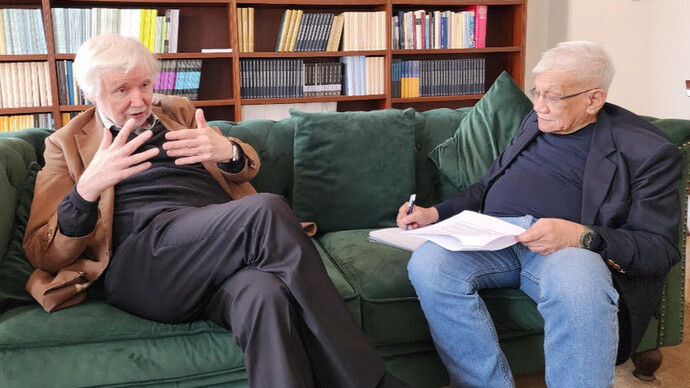
Few countries have had the long experience of living in close quarters with Russia. Finland’s border with Russia is 1,340 kilometers (about 835 miles) long. In the 20th century, the Finns fought the Russians thrice, the most bloody engagement being the winter war of 1939-40, which was precipitated by the Soviet government’s demands that Finland cede territory that it said was necessary for the security of Leningrad.
Finland maintained a policy of neutrality during the Cold War in a desire not to antagonize the Soviet Union, a policy that continued after the collapse of the Soviet Union until the Russian invasion of Ukraine in February 2022.
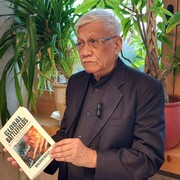
Thus, many were caught by surprise when the country’s Social Democratic-led government decided to join the North Atlantic Treaty Organization (NATO) when Russia invaded Ukraine. To explain this momentous shift in Finnish foreign policy, during a visit to Helsinki in late February this year, I interviewed Erkki Tuomioja, who served as the country’s foreign minister during Social Democratic-led coalition governments from 2000-2007, and again from 2011-2015. Erkki was one of the architects of the decision to join NATO.
The interview also covered the rise of the far right, US relations with Europe, the European Union, and the Nordic countries as a “middle power.”
The author would like to acknowledge the assistance of Professor Bonn Juego of the University of Jyväskylä in arranging this interview.
Along with Sweden and Switzerland, Finland was long regarded as the paragon of neutrality in foreign relations. What was the rationale that led to the break with this long-standing transition in 2022, with the outbreak of the Ukraine-Russia war? In your view, was this rationale for joining NATO valid and justifiable?
Erkki Tuomioja: Public opinion in Finland had been very stable for the previous 30 years, concerning NATO membership, with about 60% against and 25% for membership, but this almost changed overnight, as Russia started its war against Ukraine. And public opinion, I think quite credibly, although we had no referendum, but quite credibly, I would say that 75 to even up to 90% of the people were at the time ready to join NATO.
For NATO membership, there were the 25% who had always been for the past 30 years. Then there were those, and it is difficult to gauge how many, who thought that Finland could be the next country for Russian attack, being a neighboring country, and so on.
And then there were the rest who were for NATO membership, as showing the middle finger to Russia, because Russia and Putin had just earlier, a few months earlier, warned Sweden and Finland against joining NATO. And there was a feeling that, of course, Finland has the sovereign right to determine its own choices. So, all of these factors together changed the opinion.
I myself would have actually wanted to see us looking into the possibility of a bilateral defense agreement with Sweden, which would have also had some sort of international guarantees, given the fact that Sweden had been very closely de facto allied with the US previously.
But it became apparent that this did not fly either in Finland or Sweden.
The majority were for joining NATO, and this was much clearer, of course, in Finland than in Sweden. And once this became clear, I myself took the position that we could not prevent NATO membership since it was clear that the majority was going to drive it through in any case.
It would be extremely important for us to get Sweden to do the same, with the same timetable, because having Sweden and Finland with different positions, one in NATO and one outside, would have been very negative.
So, I had a lot of conversations and talks with my Swedish colleagues at the time and tried to persuade them that even if this may be a wrong choice or a bad choice, it's better that we do it together. And that was the argument that I think that many in Sweden, among the social democrats, agreed with. For example, Peter Hultqvist.
Does Finland have any reasonable fear of, or apprehension, of being territorially invaded by Russia as in 1939?
I don't think that we are in the same position as Ukraine or even the border countries because we are not part of the Russkij Mir or the Russian world. Putin denies the existence of any independent nationality for the Belarusians or Ukrainians and thinks they should be part of Russia.
Neither was Finland part of the Soviet Union. We were not a Soviet republic like the Baltic countries were. So, I think it's very unlikely that we would be a target of Russian aggression.
But if there were to be a military conflict in the Baltic Sea region, which would call in NATO, because the Baltic countries are in NATO—all of them, for a long period already—it would be very difficult for Finland to stay out of it. So we would be drawn possibly into a conflict, whether we were part of NATO or not. And also, it was felt that being part of NATO would be more secure than being outside it.
I did an interview with Wolfgang Streeck, the former head of the Planck Institute, where he mentioned something quite provocative. He said that the position of the European Union and Germany is being driven mainly by the interests of the three Baltic states. So, what is your opinion of his view?
I would say that after the fall of the Soviet Union, the West, meaning the US and the EU and so on, treated Russia in a rather cavalier manner, in a condescending manner, which led to resentment on the Russian side.
So—and I have said this in public—I think that the West made quite a lot of serious mistakes in dealing with Russia after the collapse of the Soviet Union.
There was still the possibility for a democratic evolution in Russia, but that was, an opportunity was missed.
I've always said that never underestimate the degree of paranoia in Russia regarding Western intentions. And they do remember the Swedish Charles the 12th, Napoleon, Hitler, all of whom invaded, or tried to invade, Russia.
But having said this, I also want to say that this gives no justification for the Russian war started against Ukraine.
I don't think that Putin or the Russian leadership believes that NATO would be attacking Russia, but they use it for their own internal propaganda purposes, and they have convinced quite a lot of Russians that this may be true. I don't think that NATO has any intention or capability of attacking Russia, but this is part of the Russian mentality.
Well, I would say that the Baltics or Poland did not have that much influence on EU policy prior to the war, before February 2022. But after that, of course, there were a lot of people from the German president down, one of whom said that we should have listened to the Baltics, and believed them more than we did at the time.
So, I think that the Baltics do not run the EU policy, but they have been listened to because they have been, so to speak, proven right to some extent.
But of course, I also think that the Baltic countries and Poland's own policies have been somewhat provocative from the Russian viewpoint, so that they're not wholly without blame either.
Isn't the Ukraine war more than just a case of Russian aggression? Russia and Ukraine have such an intertwined cultural, linguistic and political history. Some have made the argument that Putin's action in Ukraine has been motivated by the desire to protect the interests of the Russian minority there and it was their push to draw Russia into their internal fray rather than Putin's own desire or calculations that accounted mainly for Russia's moves.
Well, I think Putin uses the Russian minority, the Russian-speaking minority for his own ends. And actually, the vast majority of Russian speakers also voted for independence after the dissolution of the Soviet Union.
So, I think they are using this more as an excuse because, in his infamous article before the war, denied the existence of a separate Ukrainian nationality.
I would say that today, at least, not least because of the Russian attitude and Russian policies, there is a real Ukrainian nationality, a national consciousness, which does not want to be part of Russia.
Prior to the war, of course, we had the Minsk Agreements, which neither side actually respected—neither the Russians or the Ukrainians—but both said that they would respect them and wanted to respect, but this was, of course, changed because just prior to the war, the Russian Duma, on the proposal of Putin, incorporated the Russian-speaking provinces from East Ukraine into Russia.
Nobody can really tell what the Russian speakers in the occupied territories think, but I would say that after 2014, when the Russians wanted to have huge demonstrations against Ukraine in eastern Ukraine, I think there were many fewer people than Moscow expected. There were only 10,000 people and not the hundreds of thousands that the Russians expected to demonstrate against Ukraine.
It is an open question if the Russian speakers in eastern Ukraine want to join or not; they have never been given any opportunity to express their free opinion.
You know that James Baker, the Secretary of State of Reagan, famously promised Gorbachev that NATO would not expand eastwards and that this promise has been consistently cited by the Russian government to criticize a process that it sees as an aggressive drive to bring NATO right to the border of the Soviet Union.
So, the US and NATO have long advocated bringing Ukraine into NATO, beginning with President Bush's assertion in 2008 that he would not allow Moscow to veto Russian's, Ukraine's membership. So, don't you think NATO's moves have played a big role in explaining Russia's actions in Ukraine?
It may explain to some extent, but it does not justify Russia’s aggression.
Whatever Baker said was never put on paper and was never ratified by NATO or anybody else. So, it was just an understanding from one side to another. But I think it would have been wise to follow that advice and not push NATO to the Russian frontiers as has been done.
Nevertheless, that gives no real justification for the aggression that Russia has started. That's two different things. It may motivate it, but it doesn't justify it.
Now, though the General Assembly resolution condemned Russian activity in the Ukraine, few countries in the Global South have shown little appetite to go beyond this action, and in fact, many have been apprehensive about the US’s use of international financial and trade relations with Russia, like the Swift international payments system to disrupt international and financial trade relations with Russia. Do you think they are justified in their refusal to join NATO's economic blockade of Russia?
Well, I've, of course, wanted to see all countries join sanctions, but on their own decision, of course, and not by force or pressure from the US or anywhere else. But I have talked with quite a few people from the global south.
And their response is, “You're applying double standards.” So, and there's no good answer to that, it's true, because immediately after the illegal occupation of Crimea, we imposed the first sanctions on Russia, but we have not taken any sanctions at all during the past 55 years of illegal occupation of the Palestinian territories.
And even today, the West has not reacted except for ineffective finger wagging at Israel for the ethnic cleansing or even genocide, which it is being charged with.
So I think that these double standards are the real and understandable cause why so many countries in the global south have not wanted to join. But had we had similar sanctions against Israeli aggression, I think that many of the countries of the global south would have been ready to join.
Can you comment on the Trump administration's push to make the Zelensky government make territorial concessions, saying that this is the way to bring peace to the region?
Well, it is part of Trump's quest for the global peace prize. He wants it at any cost.
He's not interested in Ukraine. He's only interested in getting his name on the peace treaty. And he's willing to sacrifice any Ukrainian interest to get that. So, I think that we have to be realistic about it. I don't trust Trump or the US except for their consistency in this, Trump's search for vainglory, his quest for the Nobel Peace Prize.
In its National Security Strategy 2025, the Trump administration says that Europe is threatened with “civilizational erasure” owing to what it considers the EU's inability to control its borders. On the other hand, many civil society organizations, as well as countries in the global south, consider the EU's immigration policies, like its subcontracting immigration control to governments like Libya in the Mediterranean, to be draconian and contradictory to respect for human rights. So, what would be the main points of an immigration and border policy that you would favor?
Well, first of all, I think it's pretty disingenuous for the United States to talk about this, being a country that was based on illegal immigration in the past, killing the native population. So, I wouldn't really try to even answer anything that the Americans say on this subject.
But I also think that Europe needs immigration. We need immigration, and first of all, we should be open to giving asylum to those who really need asylum.
Of course, they have to comply with international law and assess individually, investigating whether they need asylum or not, but if they do, then it should be granted.
And as regards other immigration, immigration for work, we have more latitude, but we do need this type of immigration. In Finland, we wouldn't function; our public services, public transportation, and health services would not function without immigrants.
And actually, I think the real question, at least in 50 years, will be whether we are trying to solve our labor shortage problems and the problems of an aging population through immigration, how will the countries in the global south, from which we are looking for these immigrants into our country, respond to us? How will they deal with us when they face the same problems of an aging population and a shortage of labor?
That is the real question. So while there’s still time, let’s look for a viable solution for both migrants and the people here now. Obviously, immigration works both ways.
It is also beneficial, actually, for many of the developing countries, given the fact that immigrants’ payments to their families in the countries exceed by far any official development aid that is granted in today's world.
Is there an awareness among the majority of Finnish people that, in a strategic sense, immigration is important to the Finnish economy?
It's a very divisive issue.
I think there is, of course, awareness also in the business community of this need.
But it is a question of identity politics, which the far-right populist nationalist right is using. And it's very divisive.
I think that the two or three parties in the government have reached their maximum support at 20% and even that is now falling because their economic policies are hurting their voters. But the people in the current government who understand immigration are not prepared to challenge the far right on the issue because they have gained the support of the populists for their economic policies that hurt the low-income people, increasing the differentials, wage differentials, and wealth differentials in Finland, and they have acquiesced in the anti-immigration policies of the True Finn Party, for opportunistic reasons to keep the government and their majority in power.
It is said that the far right in Europe has the momentum, that it’s only a matter of time before the National Rally in France will win the presidency. And the AFD in Germany will be in a position to enter government. So, what do you think about this prognosis? And what advice would you give progressive and liberal policymakers about how they can stem the far-right tide?
Well, I won't agree that the far-right will necessarily win in France and Germany. It looks like it today, but it's not inevitable. Even in the UK, we have the Reform Party as the biggest party for the time being, but that does not necessarily mean it's sustainable until the next elections. So, I don't agree with that prognosis.
But there are two schools of thought on how to deal with this populist far right.
One is that you should take them into government and force them to tone down their policies and make them more amenable, which was the case with previous populist parties in Europe, but the other is to keep erecting a strong firewall, like the German position today. Even the Christian Democrats are for this firewall and do not want any cooperation at this moment with the AFD. And I think that the latter position is the right one, because taking these far-right people into the government will inevitably actually poison the policies of the others as well.
So, we have seen this in Sweden, we have seen this in Finland. In Sweden, they are not in the government, but they are the guarantee for the majority of the government, and they actually have more influence than the Finnish far right, which is in the government.
So, my position is that we should keep this firewall and look instead at our current social and economic policies because they have been partly responsible for the far-right’s success so far.
Many people have been dissatisfied with the left-wing parties because they have been too much in favor of neoliberal policies in the past and have not addressed the growing inequalities in the right manner and therefore they went over to the populist right. But once in government, the populist right has never delivered anything that would really advance the interests of the working-class people who voted for them.
Do you think, given this, that the Social Democrats in Denmark have made the wrong decision in embracing an anti-immigrant position?
Well, I have been very critical and skeptical about the Danish party's policies.
Indeed, they have actually managed to bring down the support of the far right, and without involving those parties in government either. But they have also taken over some of the policies that I think are illegal and unsustainable against immigrants. But, on the other hand, Denmark is still a social democratic welfare state in many aspects. So, the basis of that state has not been so far eroded.
But, of course, Denmark is in flux because of the threats against Greenland. The five Nordic countries have very much in common, but the Danes were always, in the past 20 years, the odd man out; now they are very interested again in Nordic cooperation because of the American threat to Greenland.
So, as far as the welfare state is concerned, I would say that the only country which is still holding on to these principles is Norway—but Iceland to some extent too. But in Sweden and Finland, we have very right-wing governments.
But of course, the Norwegians’ secret is that they have this huge oil wealth, which has allowed them to continue welfare policies.
It is said that the European Union began as a way to peacefully bind Germany to Europe and prevent it from again disrupting Europe with a war of conquest, as it did during the Second World War. However, there are those who say that under the current Merz government, Germany is using its economic power to bring about a more pronounced political and economic leadership role. So, what do you think of this analysis? Is a more assertive Germany a problem for Europe?
No, I don't see Germany as a problem yet. But we have to be very careful and monitor the developments closely. But on the whole, I would say that the sense that Germany is not yet a problem is something which the other countries in Europe share—including Poland, by the way. Notwithstanding its very, very unstable relationship with Germany, it is in favor of more defense spending in Germany.
So, so far, what Germany is doing has not affected in a negative way, I would say, the European balance.
What about the AfD? Are you worried about it?
As far as the far-right AfD is concerned, the only way they can come to power is in alliance with the Christian Democrats. I mean, they will not get a majority on their own. That's quite clear, I think.
And one brake which is working against taking the AFD into government by the Christian Democrats is that they are very, let's say, to some extent, pro-Russian, and that is something which is an anathema to the Christian Democrats.
What do you think about Vice President Vance? Do you think that it will backfire, his endorsement of the AFD?
It remains to be seen, of course, but I don't think that this actually really gives them that much because even AFD voters, some of them are rather skeptical about American intentions. They may agree on immigration, that we should stop immigration, and so on, as the Americans are saying, but otherwise, they're not necessarily that much in favor of American policies.
The AFD, like the other far-right parties, has a very populist social and economic program, and it’s this that is critical, not what the Americans want.
Do you think that, given all the different moves by the Trump administration and its rhetoric about Europe, there is a possibility within the medium and long term of American military withdrawal from Europe?
I wouldn't trust Trump, America under Trump, or even before Trump. So, if they are ready to throw Ukraine under the bus, they can also do it in Finland or any other country, if that's not in their interest.
There has been a lot of commentary about how Vance's speech in Munich last year was different from Rubio's speech in Munich a few weeks ago. Was there really a difference?
No, I don't think so. I think that, though Rubio's tone was much more muted, the core of his message was the same. And I think that most European analysts agree with this analysis that it was a question of presentation, not of substance.
He did say that the US is a child of Europe.
Well, it is, in a way, yes. Although it's actually becoming much more global today, given the influx of people from Latin America and Asia and so on, so notwithstanding Trump’s policy, it's already the most multicultural country in the world, in a sense. But whereas the majority of the US is uncomfortable with it, its neighbor to the North, Canada, is very comfortable with it.
And talking about Canada, how did you react to Prime Minister Carney's speech in Davos?
I think he got kudos for his presentation from most people in Europe, because he was saying, given the exposed position of Canada to the US as a neighbor, he dared to say what very few people in Europe, or leaders in Europe, at least, dared to say openly. So, I would say that Canada is actually more of a Nordic country today than Denmark, Sweden, or Finland.
And what do you think about his idea of bringing middle powers together? Is that a realistic possibility? For the Nordic countries to work together?
Yes, I think it is… I would say that the Nordic countries, if they acted together, would also be a very formidable middle power. But for that to happen, we need to have a new government, which I believe we will have, both in Sweden and Finland, after the next elections.
You mean there will be social democratic governments?
Well, at least, social democratic-led governments.
Now, just focusing more on the EU. The EU, it is often said, is suffering from a democratic deficit as evidenced by the relatively weak development of the European Parliament relative to the executive institutions like the EC, as well as the erosion of control of national governments in such areas as trade, currency, and the budget. So what policies would you propose to address this?
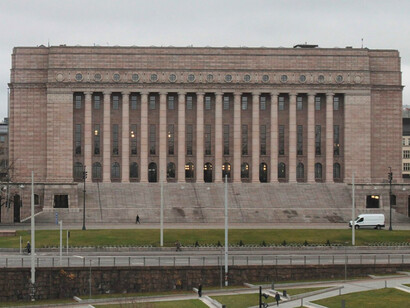
On the democratic deficit, I would say that, having worked in the EU and also chairing the European Affairs Committee in our Parliament for two periods, I would say that the real and the most blatant democratic deficit is in the way that the national parliaments throw away their governments’ authority. They have very little or no influence on what their governments do in the EU.
In Finland, we have a system whereby the government cannot really take any votes or position in the EU without having prior and informed approval from parliament. And it has to inform us immediately, the Finnish parliament, if there is any proposal that affects the treaty-making, budgetary, or legislative powers of our parliament. And we cannot allow such a proposal to go to a decision without having the opinion of parliament.
It is not formally binding, but de facto, it works out that way. And very few other governments, other parliaments in the EU have the same sort of powers. Originally, when the EU was started, it was mostly about agricultural policies. And that didn't create much interest. But it is only now that the national parliaments have become more involved.
And I think we need the European Parliament, yes.
But my idea is that it was a mistake to introduce direct elections to the European Parliament. Because that means that the voting turnout in European elections is much lower than in national elections. And that affects the democratic legitimacy of the European Parliament.
So, I would return to the system whereby the members of the European Parliament come from the national parliaments. They have to be elected there first, because that will really make them much more responsible, because currently, the European Parliament acts as our former secondary school association in Finland, which has its annual meetings, where resolutions are voted on on every subject in the world without any effect in the real world. And the European Parliament, because it has limited powers, also acts in the same way.
And I would say it does it in a very irresponsible way in that sense. And that's because they are living in their own bubble in Brussels and Strasbourg. This would not be the case if the members of the EU Parliament were first elected to the national parliaments. I think that that might, of course, make it more difficult to get some decisions made, but it would also increase the legitimacy of the European Parliament if that’s the way its representatives were chosen.
I would say that maybe the transfer of power, real power to the European Parliament, can be done, but the legitimacy of democracy resides for the time in national parliaments.
If there is a problem, a fundamental problem, people will not look to the European Parliament to change it, to address it. They’ll agree that we need the change, but they will look to the National Parliament to do it.
So what about on-trade?
Now, I'm familiar with this because I have had to deal with trade issues connected with the WTO and the EU. Well, trade is the strongest power that the European Union has because it has the full mandate to control trade policies, trade agreements, etc.
I have to say that I was very disappointed with the European response to the original tariffs set by Trump, because instead of uniting the whole of the world in defense of the WTO and the multilateral system of trade, the European Union concluded with an agreement with the Americans trying to minimize European losses and without any respect or care for what happens to the rest of the world. And I would say that many others are also disappointed with the European Union's response.
Do you find any problems with the Eurozone and the European Central Bank?
I'm not that much a fan of Central Bank independence. I think that the Central Bank's independence should be limited because in a democratic society, governments are responsible to their electorates and should have the last word.
As for the Euro, the Euro criteria, deficit criteria, for example, were taken out of thin air, or perhaps, there was no real basis for it, and there was also the matter of the criteria for joining the Eurozone. Employment should have been added as a condition for joining, that if you had too much unemployment, you would not be ready to join this common currency.
But I was very skeptical of Finland joining, and I would say the jury is still out whether or not it has been beneficial. Sweden has remained outside, and it has not hurt Sweden, to say the least.
But the Euro was a political project. It was not primarily an economic project, but a political one trying to force a degree of political union, which the governments and member states and electorates were not ready to accept.
But having a Eurozone means that you have to have much more power for the coordination of financial policies, which otherwise would not have been possible.
To avoid being squeezed out in a world dominated by, technologically by China and the United States, what must Europe do?
Well, given its population and its economic strength, Europe should have much more strategic independence, but it has failed to develop its technological capacity to do this. So, we are behind both China and the US, and both China and the US are using their technological power to impose policies on others. The US has more today than China, but China has the same capacity.
So, if we're talking about technology policy, this would mean a stronger role for the European Commission. Well, I mean, putting more money into research and development. While national governments are responsible for R&D in their countries, the EC could and should do much more.
So what specific contributions do you think Finland can make to addressing regional as well as global problems?
I think that the Nordic countries as a bloc, as a unit could have much more positive influence, given the fact that in all of these international beauty contests, where countries are ranked based on their achievements—in education, lack of corruption, good governance, even happiness—on almost all of these, the five Nordic countries are placed in the top ten. So, I think that we know something regarding equality and gender equality and the position of women, and that is, I think, one of the main secrets of any Nordic success that we may have had. We are not perfect, but we are ahead of the rest of the world in that respect anyway.
Although the normal Finnish reaction when they are told that they are living in the happiest country in the world is, “Oh, I didn't know that things were so much worse elsewhere.”
I think that one central ingredient in the so-called Nordic model certainly is the high degree of trust.
I mean, Finland is one of the very few countries where most people can and do trust the police, for example.
There are examples of bad decisions and even corruption, but on the whole, people can trust officials, and there is no petty corruption at all. You don't have to pay any bribes to get service.
So, I think that the Nordic, so-called Nordic model has a lot of things that it could still give to the world.
Also, as a middle power we should, we should also try to put disarmament and arms control back on the international agenda. Because that has been lacking for the past 10-15 years. For instance, the START agreement has lapsed. I mean, the situation is, of course, difficult given the way that the Russians and even the Chinese are acting, but the West is no better in that respect.